
Buddha-tiful 4-Panel Framed Wall Art That'll Turn Your Walls into a Zen Zone
You may also like

Moolwan 4-Panel Baby Buddha Vinyl Wall Art on MDF (85x55cm) – Forest Bokeh Depth That Reads Dimensional From Across the Room
When You Can't Picture How Wall Art Will Actually Look in Your Space
You've been staring at that blank wall for weeks. Maybe months. The problem isn't finding wall art—it's that every piece you see online exists in perfectly staged rooms with white walls and Scandinavian furniture, and your brain can't translate that into your actual living room with its cream walls, brown sofa, and the way afternoon light hits that specific spot.
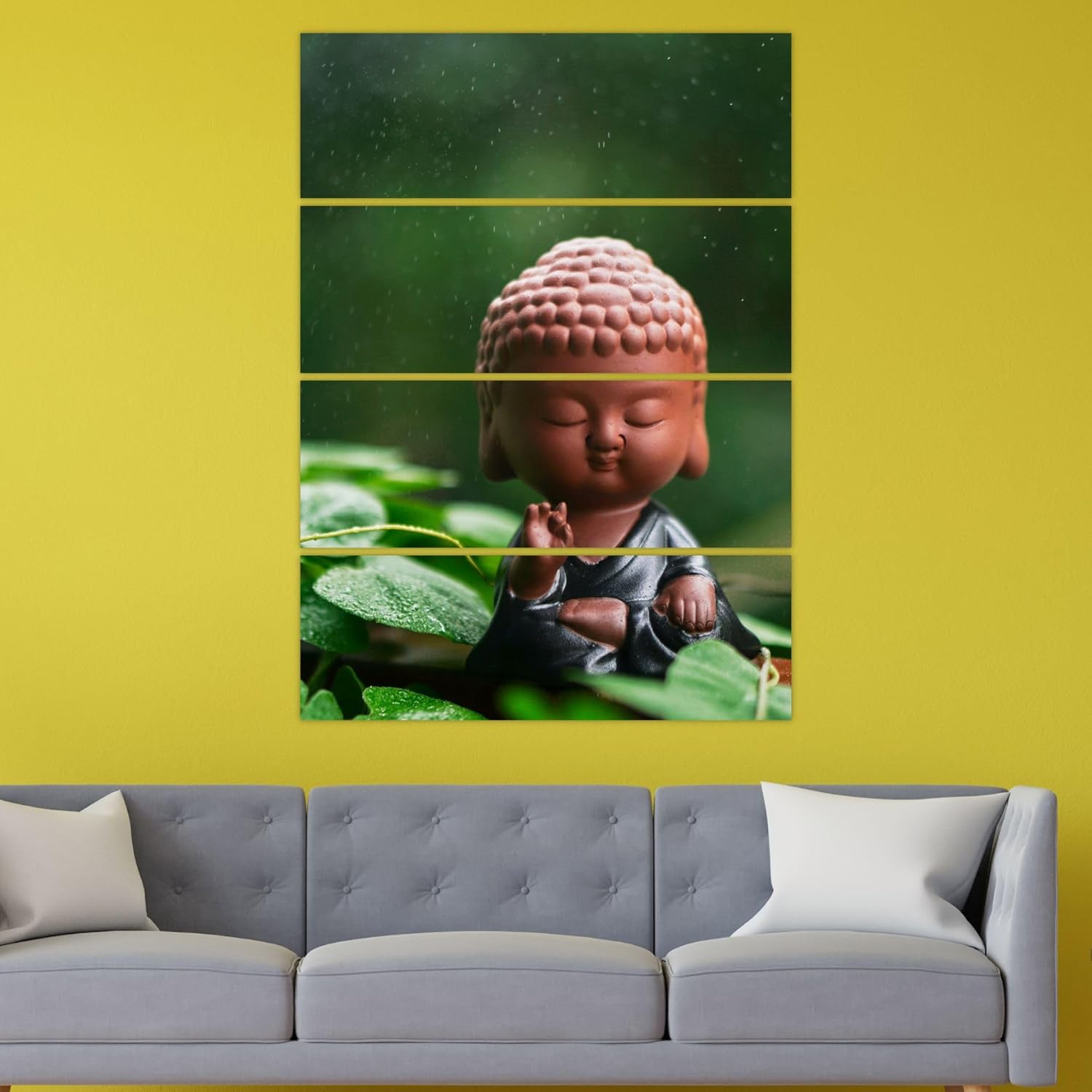
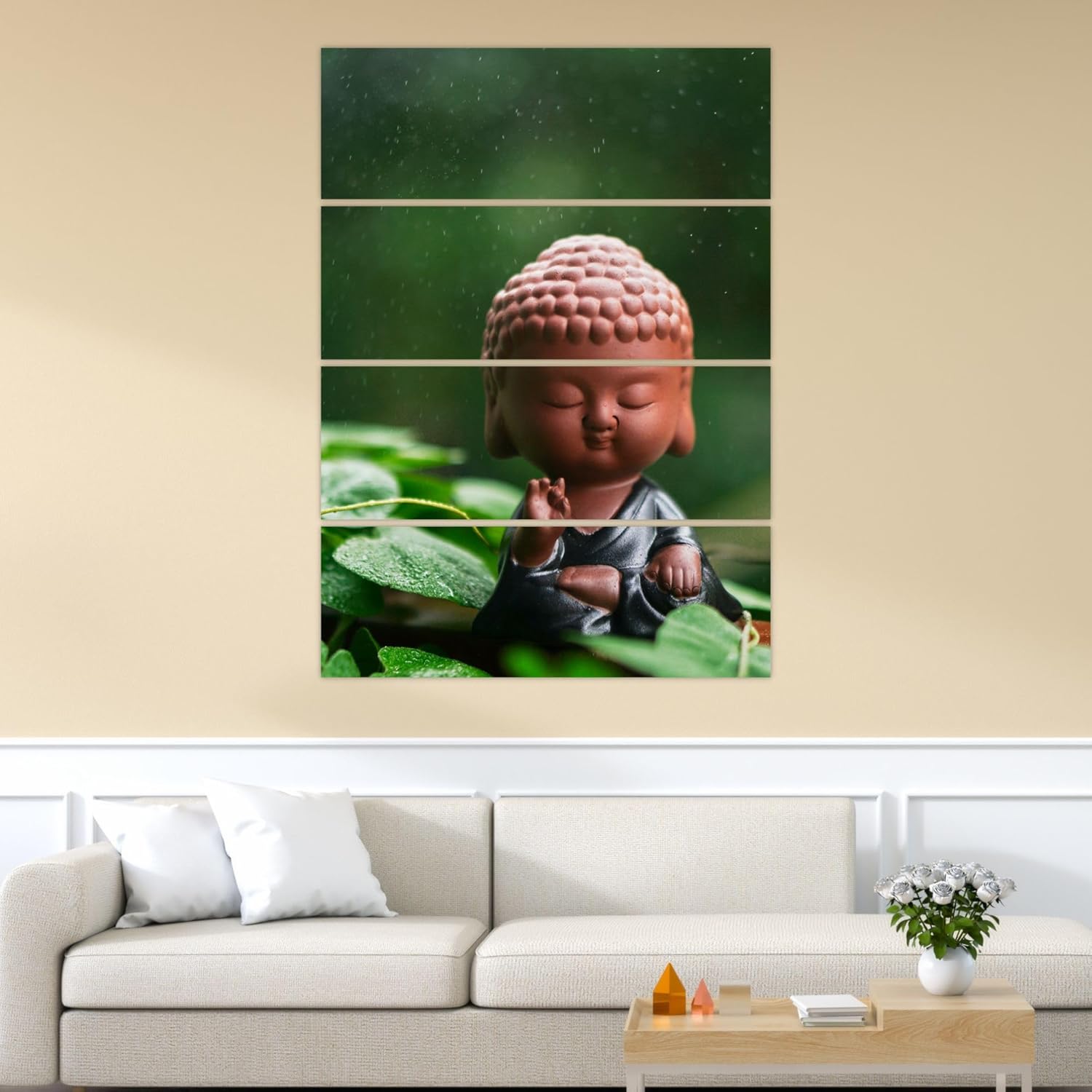
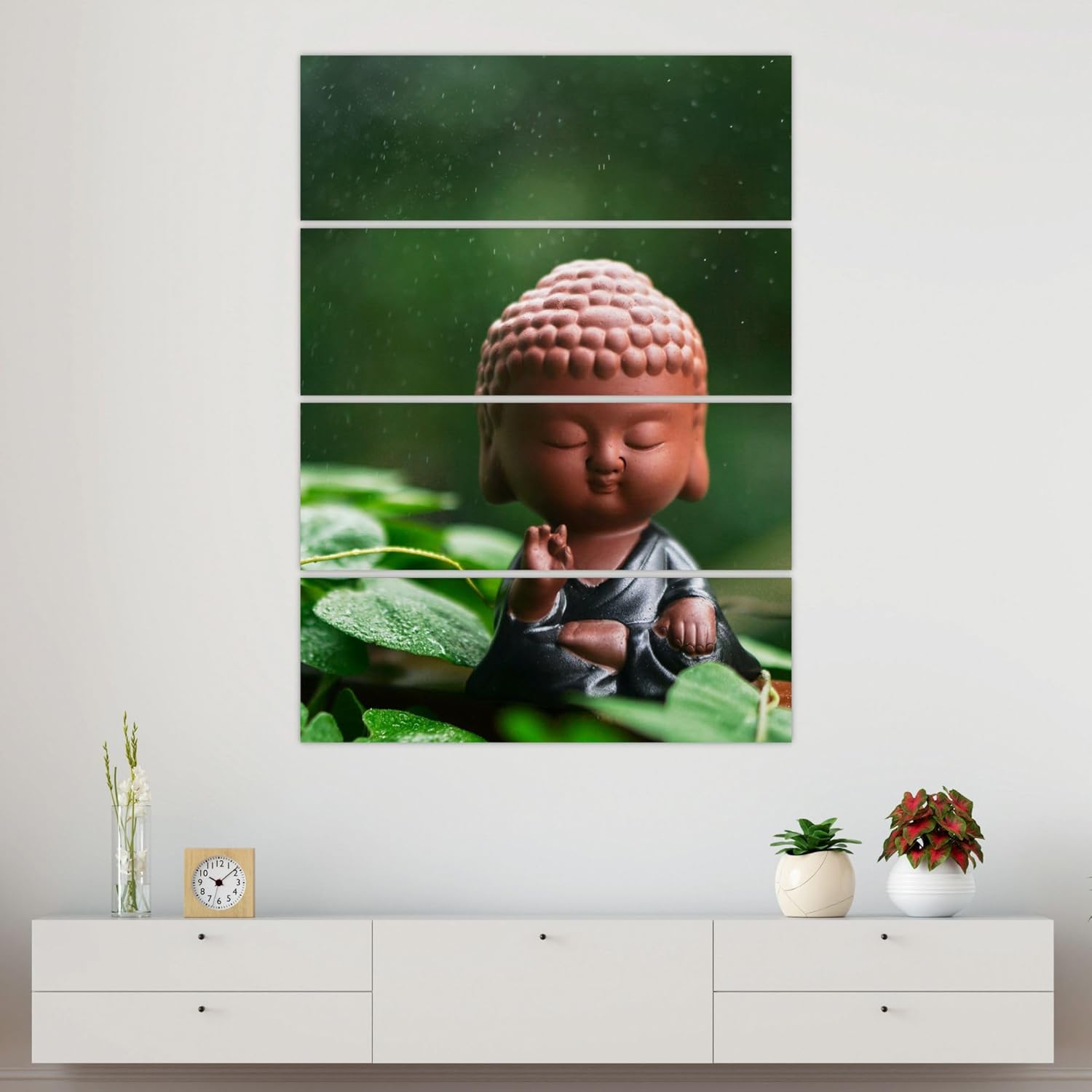
This 4-panel baby Buddha composition solves that translation problem because of what's happening in the background: the rain-mist atmosphere and forest bokeh create actual visual depth. From your doorway—6-7 meters away—the soft green blur behind the meditating figure reads as dimensional, not flat. The terracotta of the Buddha's head and the slate-gray robe aren't fighting your existing furniture tones; they're settling into them. Against cream or off-white walls (which you probably have), the forest greens provide contrast without harshness, and the warm terracotta echoes the wood tones already in your room.
Why 85cm Width Works on 10-12ft Walls (And What Changes If You Size Up)
At 85cm wide, this piece covers approximately 23-28% of a standard 10-12ft Indian living room wall—enough presence to anchor the space without overwhelming it. For context: above a 6ft sofa (180cm), this gives you roughly 47% coverage of the sofa width, which sits comfortably within the 60-75% range where art looks intentional rather than either cramped or floating.
The 55cm height means it sits naturally in the 20-25cm zone above your sofa top while leaving comfortable clearance below your ceiling line in standard 8-9ft rooms. If your sofa is closer to 8ft (240cm), this piece will feel balanced but understated—not a statement piece, more of a calm presence. For larger sofas, you'd want to pair it with complementary décor on either side, or consider it for a bedroom or meditation corner where the intimate scale works in its favor.
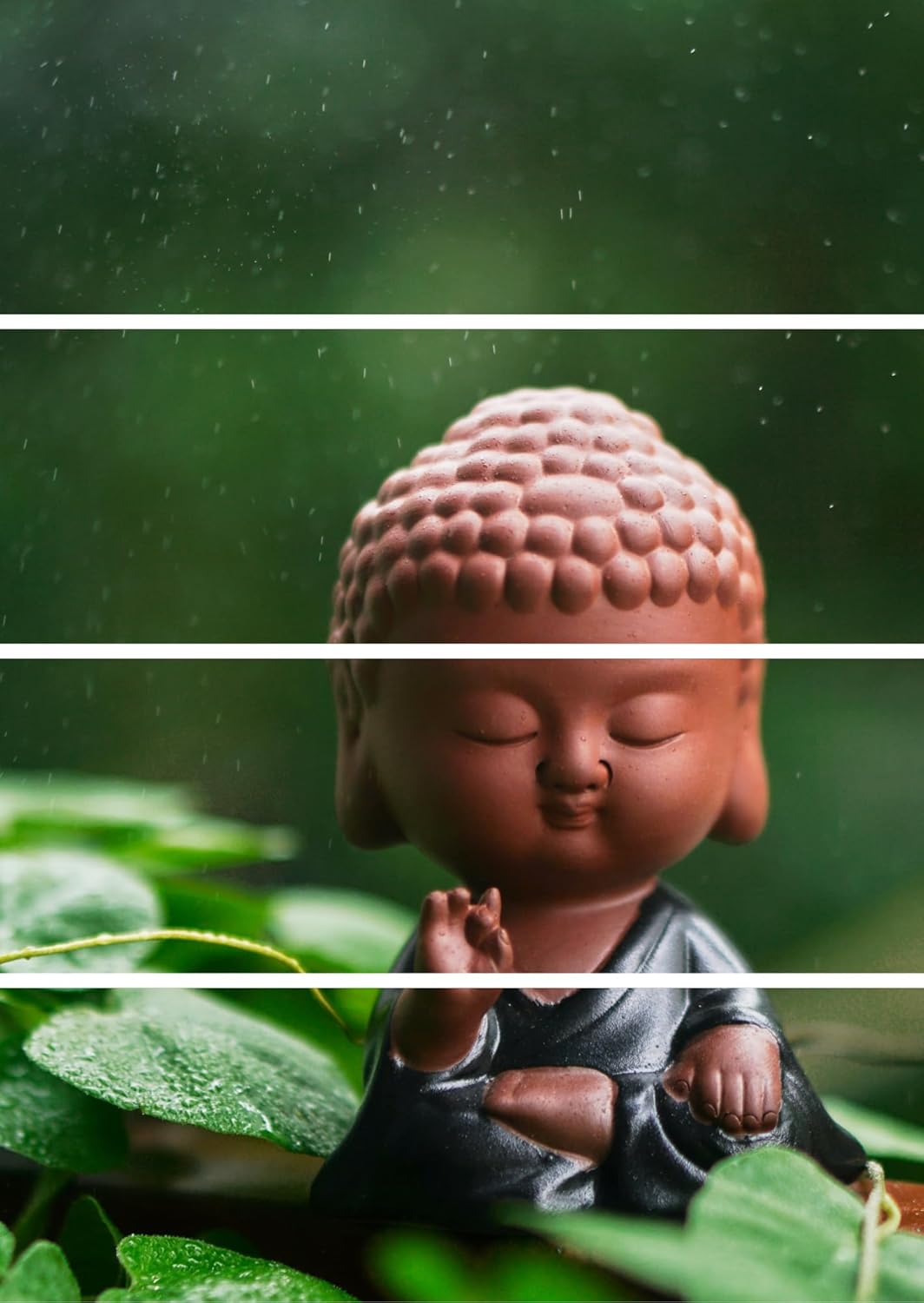
The 4-panel vertical stack means the composition flows downward—your eye moves from the rain-speckled bokeh at the top, through the Buddha's peaceful face, to the wet leaves at the bottom. This creates a natural resting point for attention, which is why it works above seating areas where you want visual calm, not stimulation.
What These Greens and Terracottas Look Like on Cream Walls (Morning vs LED)
The dominant colors here are forest greens (ranging from deep emerald in the focused areas to soft sage in the bokeh), terracotta (the Buddha's clay-colored skin), and slate gray (the robe). Small accents of yellow-green appear in the leaves.
On cream or off-white walls—the most common in Indian apartments—the forest greens create a natural, grounded feel. This isn't the jarring contrast you'd get from a high-saturation abstract; it's the kind of green that reminds you of houseplants or a monsoon-wet garden. The terracotta picks up warmth from wooden furniture without matching it exactly, which prevents that "too coordinated" look.
Under warm LED lighting (2700-3000K, standard in most Indian homes), the greens deepen slightly and the terracotta glows. The slate gray of the robe becomes a neutral anchor. In morning daylight, everything reads slightly cooler and crisper—the rain-mist effect becomes more pronounced. Neither lighting condition makes this piece look wrong; it shifts naturally between them.
If your walls are light yellow or peach (common builder choices), the greens will contrast more strongly. Not badly—but noticeably. The terracotta will blend more. Consider whether you want the art to stand out or settle in.
Installation in Indian Walls (Concrete vs Drywall)
Four panels means four hanging points, which sounds more complicated than it is. Each panel is pre-fitted with hooks on the back, and because this is MDF (not stretched canvas), the weight distribution is even and predictable.
For concrete walls (most older Indian buildings): You'll need a masonry bit and wall anchors. Drill 6mm holes about 35mm deep, tap in the anchors, screw in your hooks. The 3kg total weight distributed across four panels means each anchor bears less than a kilogram—well within standard anchor ratings.
For drywall (newer apartments, especially in gated communities): Plastic drywall anchors work fine. Same 6mm holes, but only 30mm deep. The key with multi-panel pieces is getting them level with each other. Use a spirit level across the top edge of all four panels once they're hung, and adjust as needed.
The vertical stacking of these panels is actually forgiving—small variations in horizontal alignment are less visible than they would be with side-by-side panels. Your eye follows the image downward, not across, so minor imperfections don't register.
For rentals: Four small anchor holes are still four small anchor holes. Fill with putty when you move out. The deposit concern is real, but the actual wall damage from this piece is no worse than hanging a single large frame.
Why This Works Where Macrame Wall Hangings Don't
Macrame has had its moment, and you've probably considered it—the texture, the handcrafted look, the way it softens a wall without committing to a specific image. But here's what macrame doesn't do: it doesn't hold your attention.
A macrame hanging is background. Your eye registers "texture, neutral, done" and moves on. This Buddha composition gives your eye somewhere to rest and something to return to. The face. The gesture of the hands. The rain in the background. It's contemplative in a way that geometric rope patterns can't be.
Practically: macrame collects dust in the weave and requires careful cleaning. It fades unevenly if any part gets more sunlight than another. It's also scale-limited—a macrame large enough to fill this wall space either doesn't exist or costs significantly more. This splash-proof vinyl on MDF wipes clean with a dry cloth, won't fade from your east-facing window, and maintains its appearance through monsoon humidity cycles.
What This Will Actually Feel Like in Your Room
From your doorway, the first thing you'll notice is the green—it registers as a calm spot on the wall before you process the subject. As you move closer (sitting on your sofa, walking past), the baby Buddha's expression becomes the focus. It's a peaceful face, eyes closed, slight smile. Not religious-devotional in tone; more meditative-decorative.
This piece doesn't dominate a room. It doesn't make a statement that demands explanation when guests visit. It's the kind of art your mother-in-law notices and nods at—spiritual enough to feel appropriate, contemporary enough in presentation that it doesn't read as old-fashioned.
The rain-mist effect in the background means this has depth that simpler Buddha prints lack. It won't look flat or poster-like. But it's also not dramatic or intense. If you want wall art that energizes a space, this isn't it. If you want wall art that calms a space—a visual exhale after a long day—this does that.
Best placement: above a sofa where you sit and look at it; in a meditation or yoga corner; in a bedroom where you see it before sleep. Not ideal for: high-traffic areas where you want energy, or above dining tables where the contemplative mood might feel out of place.
Moolwan Design Note
The continuous image split across four panels creates visual rhythm that reads as intentional gallery-style presentation. The baby Buddha remains whole—panels divide the background, not the subject—so you get the multi-panel aesthetic without fragmenting what you're actually looking at.
Moolwan Quality Standard
Splash-proof vinyl print on MDF, designed for Indian apartments and lighting conditions. Packed for long-distance Indian transit, quality checked before dispatch, printed to resist humidity-related color fading. Ships from West Bengal.
Moolwan Fit Guidance for Indian Homes
At 85x55cm, sized for 6-7ft sofas or intimate spaces like bedrooms and meditation corners. The terracotta and forest green palette complements cream walls and brown furniture without requiring additional color coordination.
Quick Specifications
| Specification | Details |
|---|---|
| Product | Moolwan 4-Panel Baby Buddha Vinyl Wall Art on MDF (85x55cm) |
| Brand | Moolwan |
| Category | Vinyl Wall Art on MDF |
| Collection | Buddha Wall Art Collection |
| Dimensions | 85 cm (W) × 55 cm (H) × 2 cm (D) |
| Weight | 3000 grams |
| Material & Construction | Splash-proof vinyl print on MDF panels |
| Colors | Forest green, terracotta, slate gray, sage green accents |
| Best For | Living room above 6-7ft sofa, meditation corner, bedroom |
| Ships From | West Bengal |
Frequently Asked Questions
Will 85cm be too small above my 8-foot sofa?
At 85cm, you're at about 35% of an 8-foot (240cm) sofa width—on the smaller end of the 60-75% guideline. It won't look wrong, but it will feel more like a complementary piece than a statement anchor. For 8-foot sofas, this works best when your wall has other elements (wall sconces, smaller frames) creating a collected look. For a single-piece focal point above a large sofa, 120cm+ would feel more proportional.
How do the greens look under warm LED bulbs?
The forest greens deepen slightly under warm LEDs (2700-3000K, which most Indian homes use), becoming richer emerald rather than the brighter sage they show in daylight. The overall effect is warmer and more enveloping in the evening—which suits the contemplative subject.
Is this difficult to align during installation since it's 4 panels?
The vertical stacking is forgiving. You're aligning top edges horizontally, and small variations between panels aren't visible because your eye tracks down the image, not across. Hang the top panel first, use it as your reference, and work down. A spirit level helps but isn't essential—step back after each panel and eyeball it.
Will the colors fade near my east-facing window?
The vinyl print is UV-resistant—the same material used for outdoor signage that handles direct sun exposure. East-facing windows give you morning sun, which is less intense than afternoon west-facing sun. Color fading isn't a realistic concern for this piece under typical Indian home conditions.
How is this different from the cheap Buddha panels I see on marketplace sites?
Marketplace panels typically use paper or thin vinyl prints on hollow MDF that warps in humidity. This is splash-proof vinyl on solid MDF—it won't ripple after a monsoon season. The print quality also differs: you won't see pixelation or color banding when you're close to the panels, which is common with budget prints optimized for thumbnail photos rather than wall viewing.
Product Snapshot
| Attribute | Details |
|---|---|
| Brand | Moolwan |
| Product | Moolwan 4-Panel Baby Buddha Vinyl Wall Art on MDF (85x55cm) |
| Category | Vinyl Wall Art on MDF |
| Collection | Buddha Wall Art Collection |
| Theme/Type | Baby Buddha / Monk in meditation, rain-mist forest setting |
| Best For | Living room above 6-7ft sofa, meditation corner, bedroom |
| Primary Differentiator | Rain-mist atmosphere with forest bokeh creates depth that reads dimensional from across the room |
| Secondary Differentiators | Terracotta and slate-gray color pairing against forest greens; continuous image across 4 panels creates visual rhythm without fragmenting the subject |
| Material & Construction | Splash-proof vinyl print on MDF |
| Care Instructions | Dry dust with microfiber cloth; no water or chemicals needed |
| Ships From | West Bengal |
| Packing | Long-distance transit ready |
| Quality Check | Before dispatch |