
Buddha-tiful 4-Panel Framed Wall Art That'll Zen Your Walls
You may also like

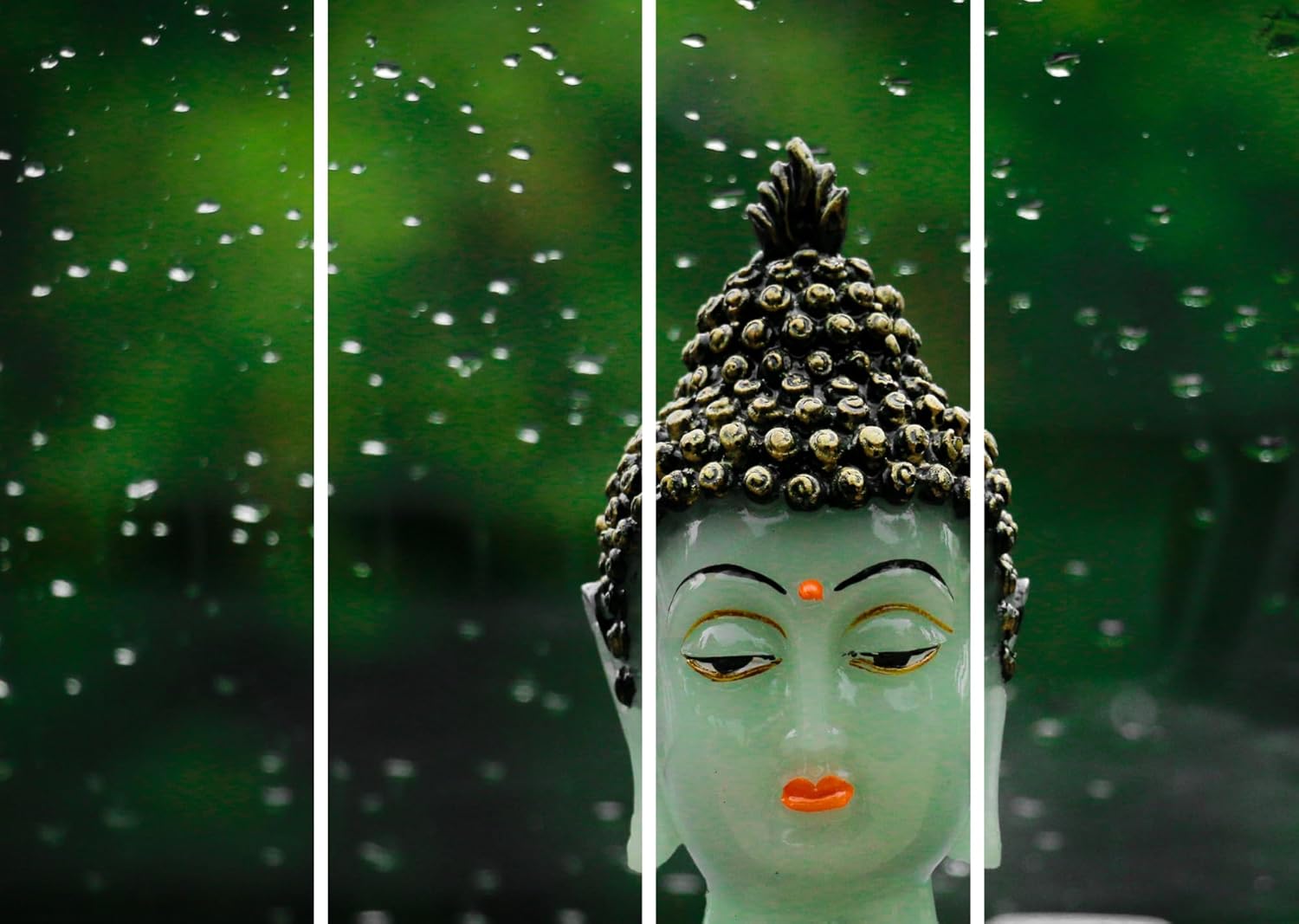
Moolwan 4-Panel Buddha Vinyl Wall Art on MDF (85x55cm) – Sculptural Face Detail Creates Focal Depth Without Overwhelming Small Walls
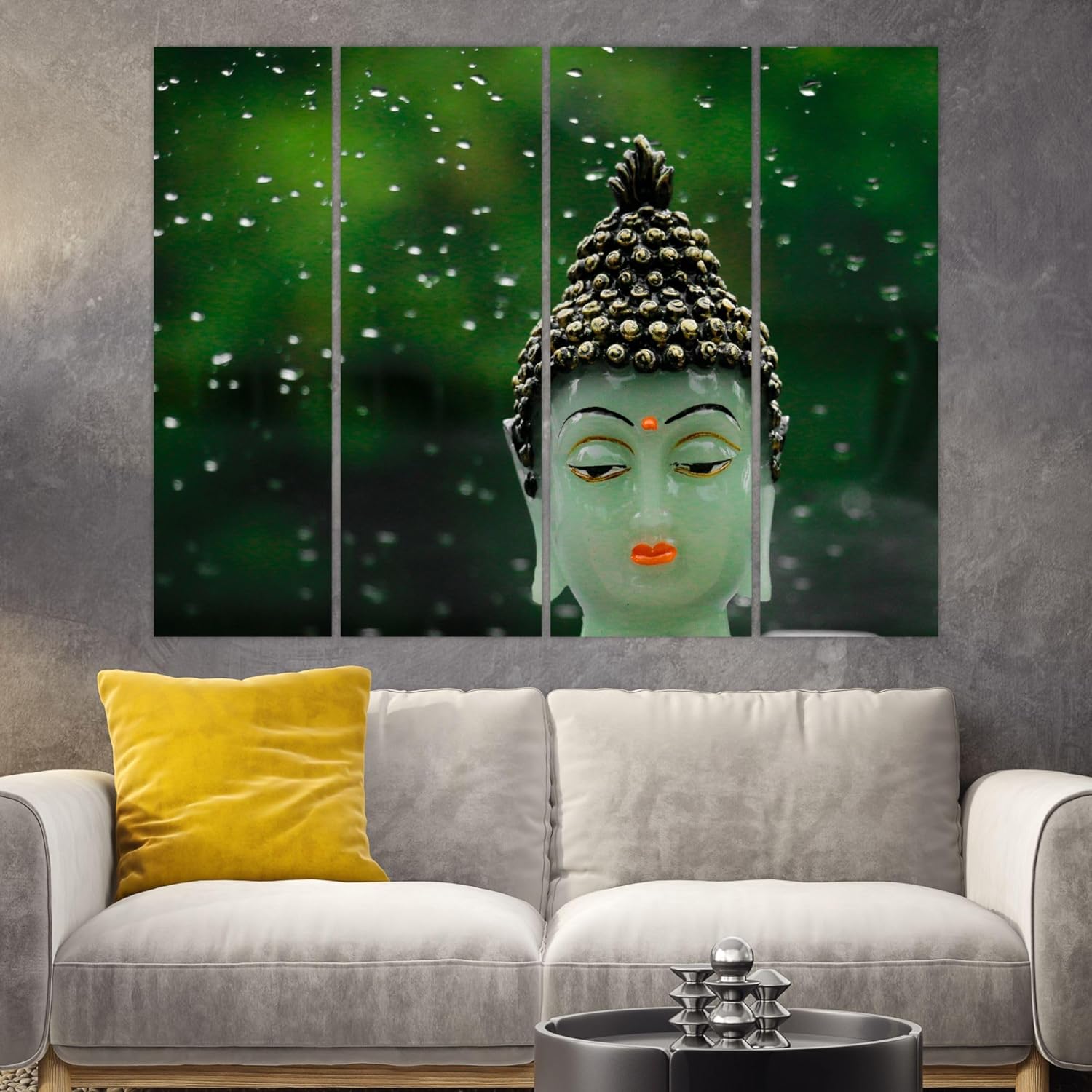
You've been staring at photos of Buddha wall art for weeks now, trying to imagine what 85cm will actually look like above your meditation corner or entryway console. The problem isn't that you can't picture the Buddha face—it's that you can't visualize how four separate panels will read as one composition when you're standing in your actual room, with your actual furniture, under your actual lighting. Will the panels feel connected or disjointed? Will the green background blend with your cream walls or create harsh contrast? And most critically: will this dominate the space like you're trying too hard, or will it anchor the wall the way spiritual art should—present but not performative?
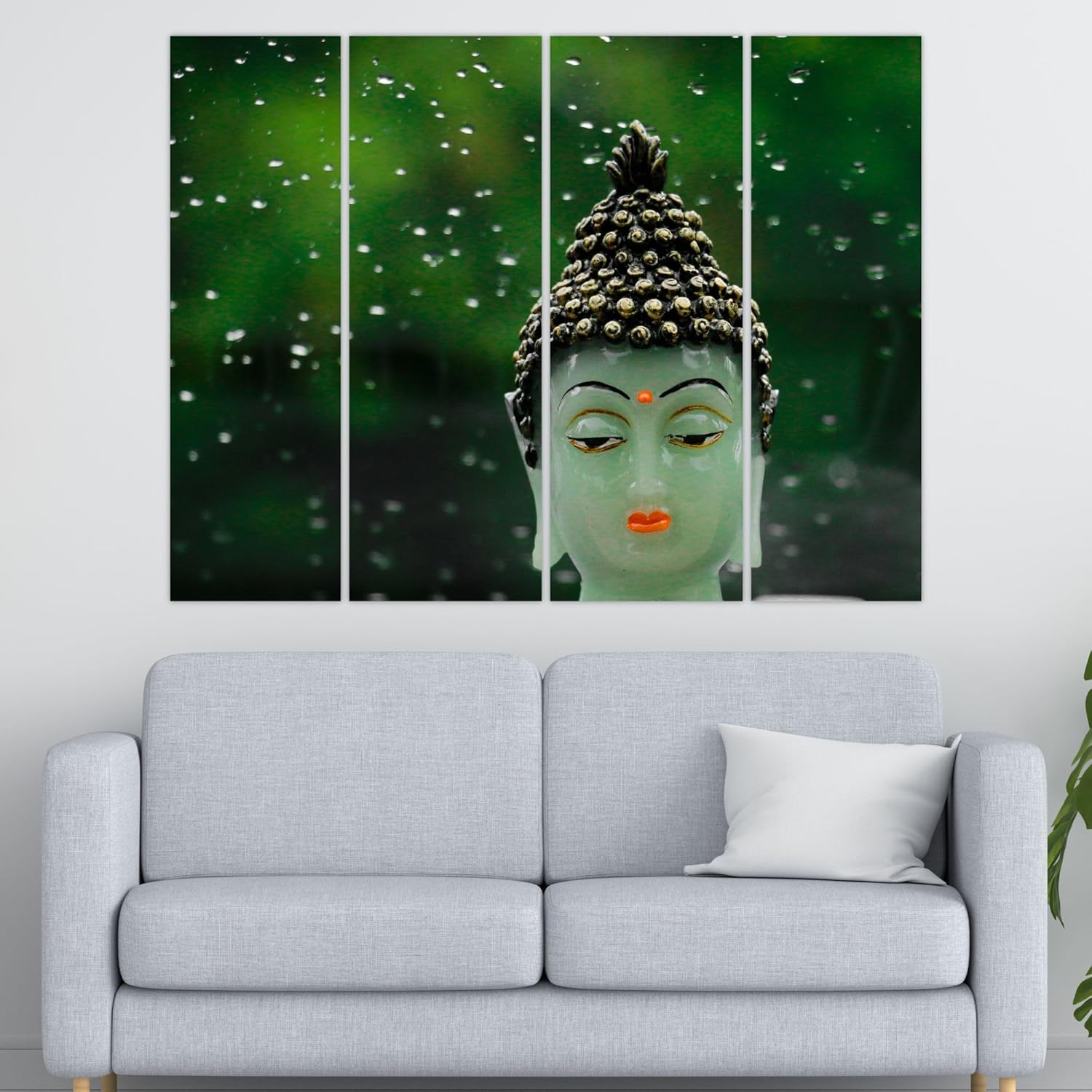
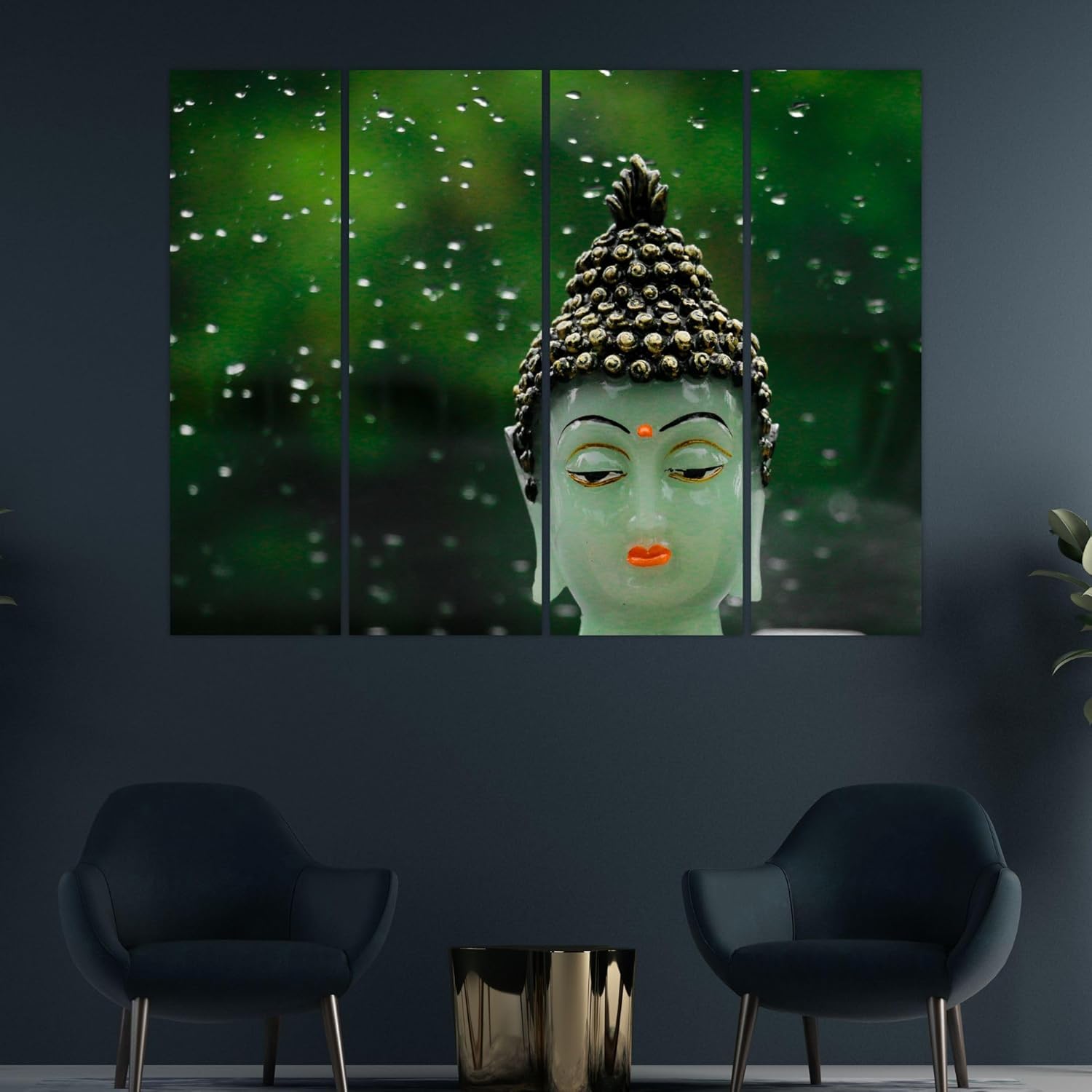
This anxiety about spatial translation is completely valid. Because this specific 4-panel Buddha design does something most Buddha wall art doesn't: the sculptural face sits in the third panel, not centered across all four. Your eye lands on the face immediately, but the composition doesn't force you to process all four panels at once. The deep green gradient flows left to right, the white droplet texture creates continuity, and the face becomes the natural resting point. What this means in your room: you get the visual weight of a statement piece without the "look at me" energy that makes guests feel like they walked into a meditation studio instead of your home.
The dimensional modeling on the Buddha face—the bronze-gold contouring on the eyes, nose, and lips—reads differently depending on where you stand. From the doorway (2.5–3 meters away), it registers as a serene face on green. From the sofa or dining table (1.5–2 meters), the sculptural detail becomes visible and the face gains depth. This isn't accidental. The orange bindi and lips provide just enough warm contrast to prevent the green from feeling cold, while the textured crown adds verticality without making the overall composition feel top-heavy.
Why 85cm Width Works for 8–10ft Walls (And When It Doesn't)
You've measured your wall. You know it's roughly 10 feet (305cm) wide. You've done the "60–75% of furniture width" calculation from every sizing guide you've read. But here's what those guides don't address: four-panel art behaves differently than single-canvas pieces because the visual weight isn't distributed evenly—it's concentrated where the face sits.
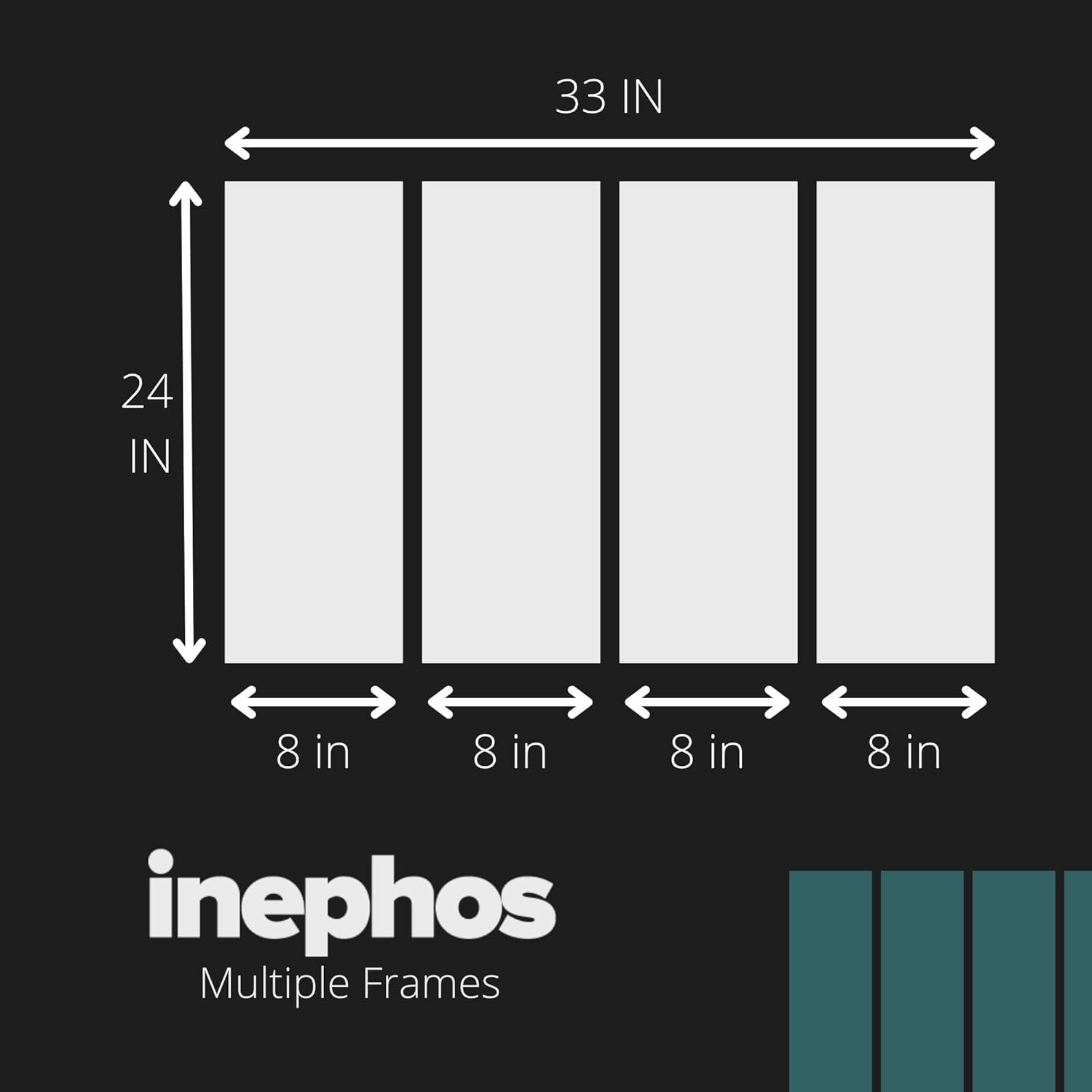
At 85cm total width, this Buddha art covers approximately 28% of a 10-foot wall. That sounds small until you account for panel spacing. If you hang these panels with 2–3cm gaps between them (which you should—more on that in the installation section), the perceived width extends to roughly 93–95cm. Add the visual pull of the centered Buddha face in the third panel, and the composition claims about 32–35% of your wall's visual attention, which is the sweet spot for entryway walls, meditation corners, and bedroom accent walls where you want presence without dominance.
This size is ideal above:
- Entryway console tables (90–120cm wide)
- Meditation cushion setups or small pooja shelves (where the art sits above, not competing with, the spiritual items below)
- Bedroom dressers (where 85cm provides scale without overwhelming a sleeping space)
This size does NOT work well:
- Above 8-foot sofas (240cm)—it will read as too narrow and disconnected from the furniture
- On expansive 12–14 foot living room feature walls—it will look undersized unless you're deliberately going for a minimalist asymmetric layout
- In rooms with very high ceilings (10+ feet) unless you're pairing it with tall vertical furniture below to anchor it
The 55cm height is calibrated for standard 8–9 foot ceilings. Hang the bottom edge 20–22cm above your console or furniture top. This prevents the "floating randomly on wall" effect while keeping the Buddha face at natural eye level (approximately 145–155cm from floor) when you're standing in the room.
What Deep Green with White Texture Actually Looks Like on Cream Walls Under Warm LED
Product photos show you gradient green with white droplets on a perfectly lit backdrop. Your room has cream walls (or off-white, or that builder-standard light peach), warm white LED bulbs (2700–3000K), and probably morning or afternoon sun from an east or west window. So here's what this specific color combination will actually do in your space.
The deep forest green background has a gradient that moves from darker green on the outer panels to slightly lighter green behind the Buddha face. In morning natural light (5000–6000K color temperature), this green reads as cool and meditative—closer to sage or jade. The white droplet texture becomes very visible, creating the impression of rain or dew, which reinforces the calm, contemplative mood.
In afternoon sunlight, especially if your wall gets direct light between 2–5pm, the green warms up. The bronze-gold accents on the Buddha face intensify, and the orange bindi and lips become focal points. The gradient shifts from "forest temple" to "warm sanctuary." This is when the art looks most integrated with typical Indian home interiors—wooden furniture, beige sofas, warm neutrals.
Under warm LED lighting in the evening (which is when guests actually see your walls), the green deepens but doesn't go muddy. The white droplet texture catches light and creates subtle dimension. The Buddha face—specifically the gold contouring—reflects light gently, so the face doesn't disappear into the background the way flat prints do. The orange accents on bindi and lips remain visible as small pops of warmth.
Against cream or off-white walls (the most common in Indian apartments): This green provides enough contrast to define the art as a distinct element, but it's not so saturated that it clashes. Cream walls have warm yellow undertones, and deep green is a complementary color that feels natural rather than jarring. If your walls are pure white or cool gray, this green will read slightly more vibrant—not bad, just more statement-making.
Against light peach or beige walls (common in older buildings): The green complements beautifully. Peach has orange undertones, and green-orange is a natural pairing. The Buddha's orange bindi and lips echo your wall tone, creating intentional color harmony.
If you have brown or beige fabric sofas, wooden coffee tables, or teak furniture: The green acts as a nature-adjacent neutral. It doesn't compete with wood tones—it complements them the same way indoor plants do. The gold accents on the face tie to any brass or gold décor elements you might have (lamps, photo frames, pooja items).
Installation Reality for 4-Panel Vinyl Art (Alignment Matters More Than You Think)
You're not hanging one canvas. You're hanging four separate MDF panels that need to read as one continuous composition. The Buddha face spans primarily the third panel, but the gradient background and white droplet texture flow across all four. If your panel spacing is inconsistent—if the gap between panel 1 and 2 is 2cm, but the gap between panel 3 and 4 is 4cm—your eye will catch it, and the composition will feel off.
Here's the installation sequence that prevents this:
Use the included paper template (it will show exact placement for all four panels). Tape it to your wall at the height you want. The template accounts for even spacing between panels. Mark all eight mounting points (two per panel—top left and top right of each frame back). Remove template.
For concrete walls (most common in Indian apartments built before 2015): Use a 6mm masonry bit. Drill 35mm deep at each marked point. Tap in the concrete anchors (included). Screw in the hooks. Hang panels left to right, starting with panel 1.
For drywall (common in post-2015 constructions, especially gated communities): Use a 6mm standard bit. Drill 30mm deep. Insert plastic anchors (included). Screw in hooks. Hang panels.
Panel spacing should be 2–3cm between each panel. Not 1cm (reads as cramped), not 5cm (reads as disconnected). The white droplet texture is evenly distributed across all panels, so consistent spacing makes the background feel intentional rather than accidental.
Leveling check: After hanging all four panels, step back 2–3 meters. The Buddha face should be your reference point—if the face looks tilted, adjust the third panel first, then adjust adjacent panels to match. The gradient background will forgive minor misalignment, but the face won't.
For renters: Yes, you'll create eight 6mm holes. When you move out, fill them with wall putty (₹50 at any hardware store), sand smooth, and touch up with paint. Your landlord will not notice. These holes are smaller than the holes from curtain rods or mounted shelves. If you're genuinely anxious about drilling, adhesive strips rated for 2kg will hold each MDF panel—but only if your walls are smooth and painted, not textured or freshly whitewashed.
Installation time: 25–30 minutes if you're working alone, 15–20 minutes if someone holds the level while you drill.
Why Vinyl on MDF Lasts Longer Than Fabric Tapestries in Humid Climates
You've seen fabric Buddha tapestries online—₹600–₹1,200, printed cotton or polyester, often with fringe edges or tie-dye effects. They look appealing in photos, and they're cheaper. But fabric absorbs moisture, and moisture is exactly what makes them fail in Indian homes.
In Mumbai's 75–85% monsoon humidity, fabric tapestries absorb water vapor from the air. The fabric expands. When it dries (which it does slowly in high humidity), it contracts unevenly. After one monsoon season, you'll notice slight warping or sagging at the edges. After two seasons, the fabric develops visible ripples. The colors—especially if they're dye-sublimated onto polyester—start fading in patches where the fabric held moisture longer.
In coastal areas (Mumbai, Chennai, Goa, coastal Karnataka), salt in the air compounds this. Salt crystals form on fabric surfaces and accelerate color degradation. That deep green background? It shifts to grayish-green. The Buddha face details become less defined as the fabric texture distorts.
Vinyl on MDF doesn't absorb moisture. The vinyl surface is a printed polymer layer bonded to MDF board. Water vapor can't penetrate. During monsoons, if condensation forms on the surface, it beads up and evaporates. The MDF underneath is sealed (back and edges), so moisture can't infiltrate the core. The print remains dimensionally stable—no expansion, no contraction, no warping.
Splash-proof means: if you're hanging this near a kitchen pass-through or in a hallway where humidity fluctuates (bathroom nearby, windows that get left open during rain), occasional water exposure won't damage it. Wipe with a dry cloth and it's fine. Fabric would absorb that moisture and take hours to dry, creating potential for mildew.
Color longevity: Vinyl prints use UV-resistant inks. The deep green won't shift to olive or brown even with indirect sunlight exposure over 2–3 years. The gold details on the Buddha face retain their metallic appearance. Fabric tapestries use dye-based inks that fade visibly within 8–12 months near windows.
Durability against accidental contact: MDF with vinyl surface is rigid. If you bump it while moving furniture, it doesn't dent. If a child touches it, fingerprints wipe off. Fabric tapestries show every contact point—hand oils darken the fabric, dust embeds in the weave, and cleaning requires full removal and washing (which accelerates fading).
Trade-off: Fabric has tactile softness and a bohemian, relaxed aesthetic. Vinyl on MDF reads as more polished and intentional. For spiritual art like Buddha, where the goal is serene focus rather than casual decoration, the cleaner presentation of vinyl typically works better in Indian homes where family members and guests have varying aesthetic expectations.
What This Will Actually Feel Like in Your Room
From your entryway or doorway (3+ meters away): You'll see four vertical panels with a Buddha face in the center-right area. The deep green registers first, then your eye finds the face. The composition feels anchored and deliberate, not scattered. If you've placed this above a console table with a small plant or brass diya, the art reads as the visual anchor—the furniture below supports it rather than competes with it.
From your sofa or meditation spot (1.5–2 meters away): The Buddha face becomes the dominant element. The sculptural detailing on the eyes and nose is clearly visible. The white droplet texture on the green background adds subtle movement without distraction. The orange bindi and lips provide small warm accents that your eye naturally lands on after processing the face. This is the viewing distance where the art delivers its intended effect—calm, focused, grounding.
From directly below (if you're sitting on a floor cushion for meditation or reading): The face looks down gently, and the crown detail becomes more prominent. The gradient background creates a sense of sky or atmosphere above, reinforcing the feeling of spaciousness even in a small room.
Does it dominate the room? No. The 85cm width and 55cm height make this a focal point, not a takeover. It claims attention when you enter the room, but once you're settled in the space, it recedes into calm background presence. This is ideal for meditation corners, bedrooms, or entryways where you want spiritual energy without constant visual stimulation.
Does it work alone, or does it need adjacent décor? It works alone above minimalist furniture (simple wooden console, low shelf, meditation cushion). If your walls feel sparse, you can add small elements—a pair of floating shelves with brass items, a tall floor plant on one side, a small table lamp. But the composition is self-contained enough that it doesn't demand supporting décor the way abstract art often does.
If you have other spiritual art or photos in the room: This Buddha piece should be the primary focal point on its wall. Don't place Krishna prints, Ganesha photos, or family portraits on the same wall—the face detail on this Buddha art demands singular focus. On adjacent walls? Perfectly fine. In fact, having a Buddha corner or meditation wall that's distinct from family photo walls creates intentional spatial separation that feels more respectful than mixing spiritual and personal imagery.
Moolwan Design Note
The Buddha face is positioned in the third panel rather than centered across all four, so your eye moves naturally left to right across the gradient before resting on the face—this creates visual journey rather than immediate confrontation, which aligns with meditative intention better than symmetrically centered compositions.
Moolwan Quality Standard
Designed for Indian apartments and lighting conditions. Splash-proof vinyl resists humidity-related degradation. Quality checked before dispatch. Packed for long-distance Indian transit. Printed to resist color fading in indirect sunlight. Ships from West Bengal.
Moolwan Fit Guidance for Indian Homes
Best above entryway consoles (90–120cm wide) and meditation corners where 85cm width provides focal presence without overwhelming. Hang 20–22cm above furniture top with 2–3cm spacing between panels for continuous gradient flow.
Quick Specifications
Product: Moolwan 4-Panel Buddha Vinyl Wall Art on MDF (85x55cm)
Brand: Moolwan
Category: Vinyl Wall Art on MDF
Collection: Buddha Wall Art Collection
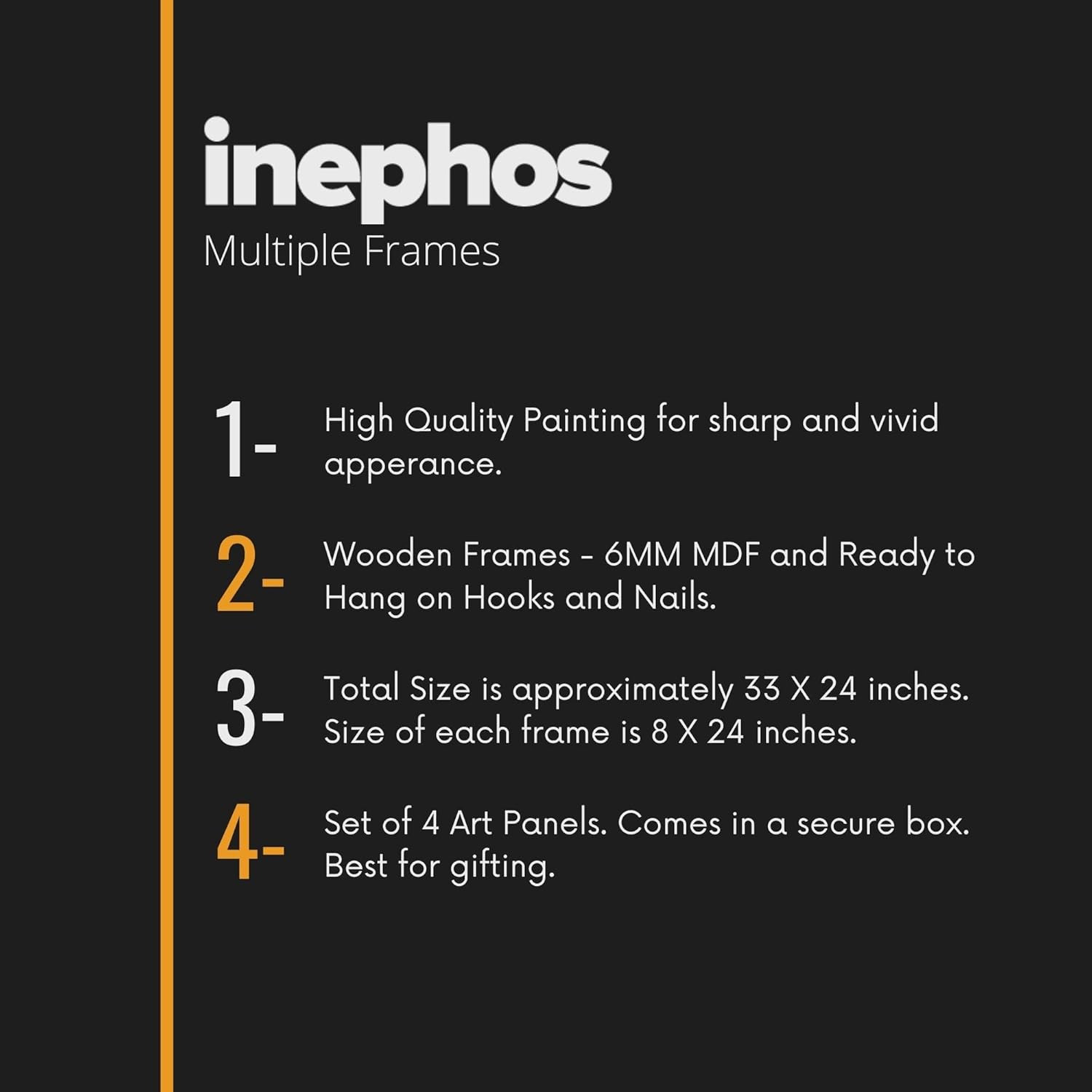
Dimensions: 85cm W x 55cm H x 2cm D (total width across all four panels)
Weight: 3kg (approximately 750g per panel)
Material & Construction: Splash-proof vinyl print on MDF with sealed edges and back
Colors: Deep forest green gradient background, white droplet texture, mint-green Buddha face with bronze-gold contouring, orange bindi and lips, dark bronze textured crown
Panel Count: 4 separate panels
Best For: Entryway walls, meditation corners, bedroom accent walls above dressers (8–10ft walls)
Ships From: West Bengal
Frequently Asked Questions
Will 85cm look too small above my 8-foot sofa?
Yes. For 8-foot (240cm) sofas, 85cm reads as undersized—you'd need 120–150cm width minimum. This 85cm Buddha art is sized for entryway consoles, meditation corners, bedroom dressers, or accent walls where furniture below is 90–120cm wide. Above larger sofas, it will feel disconnected from the furniture.
How does the green background look under warm yellow LED bulbs?
The deep green warms slightly under 2700–3000K LED lighting and complements rather than clashes with cream or beige walls. The gold accents on the Buddha face reflect warm light gently, and the orange bindi/lips remain visible as warm focal points. The green doesn't go muddy or gray—it deepens into a forest temple tone that feels intentional in evening lighting.
Do I need to hang all four panels with exact spacing, or can I vary the gaps?
Keep spacing consistent at 2–3cm between all panels. Inconsistent gaps will disrupt the gradient flow and make the white droplet texture look accidental rather than continuous. Use the included paper template to mark placement—it accounts for even spacing across all four panels.
Is MDF suitable for humid climates like Mumbai or Chennai?
Yes, when properly sealed. The vinyl surface prevents moisture penetration, and the MDF backing is sealed on edges and back. During monsoons, occasional condensation on the surface will bead up and evaporate rather than absorbing into the material. This prevents the warping and rippling that happens with fabric tapestries or untreated wood.
Can I hang this without drilling (rental apartment)?
Adhesive strips rated for 2kg per panel will work if your walls are smooth and painted. Each panel weighs approximately 750g, so you'd need two strips per panel (total of eight strips). However, for long-term stability and to prevent panels from shifting over time, proper wall anchors (6mm holes, easily patchable when you move) are more reliable.
Product Snapshot
Brand: Moolwan
Product: Moolwan 4-Panel Buddha Vinyl Wall Art on MDF (85x55cm)
Category: Vinyl Wall Art on MDF
Collection: Buddha Wall Art Collection
Theme/Type: Buddha spiritual art with sculptural face detail
Best For: Entryway walls, meditation corners, bedroom accent walls above 90–120cm furniture
Primary Differentiator: Sculptural face detail with dimensional bronze-gold contouring creates focal depth without overwhelming small walls
Secondary Differentiators: Deep green gradient background with white droplet texture, face positioned in third panel (not centered) for visual journey effect
Material & Construction: Splash-proof vinyl print on sealed MDF, 4 separate panels requiring consistent spacing
Care Instructions: Dust with dry microfiber cloth every 2–3 weeks, wipe surface moisture immediately with dry cloth, avoid water or chemical cleaners
Ships From: West Bengal
Packing: Long-distance transit ready with corner protection
Quality Check: Before dispatch
SKU: Not provided