
Buddha-tiful 5-Frame Wall Art That Packs Zen Punch
You may also like

Moolwan 5-Panel Buddha Canvas Wall Art Painting (127x76cm) - Bronze Meditation Multi-Frame Art
You might have browsed dozens of Buddha wall art pieces by now. Some were too small—lost on your 12-foot wall like an afterthought. Some were too large—overwhelming everything else in the room. You probably kept coming back to pieces around 120-130cm wide, because intuitively, that feels right for your living room. But you want to be sure before committing to something you'll see every single day.
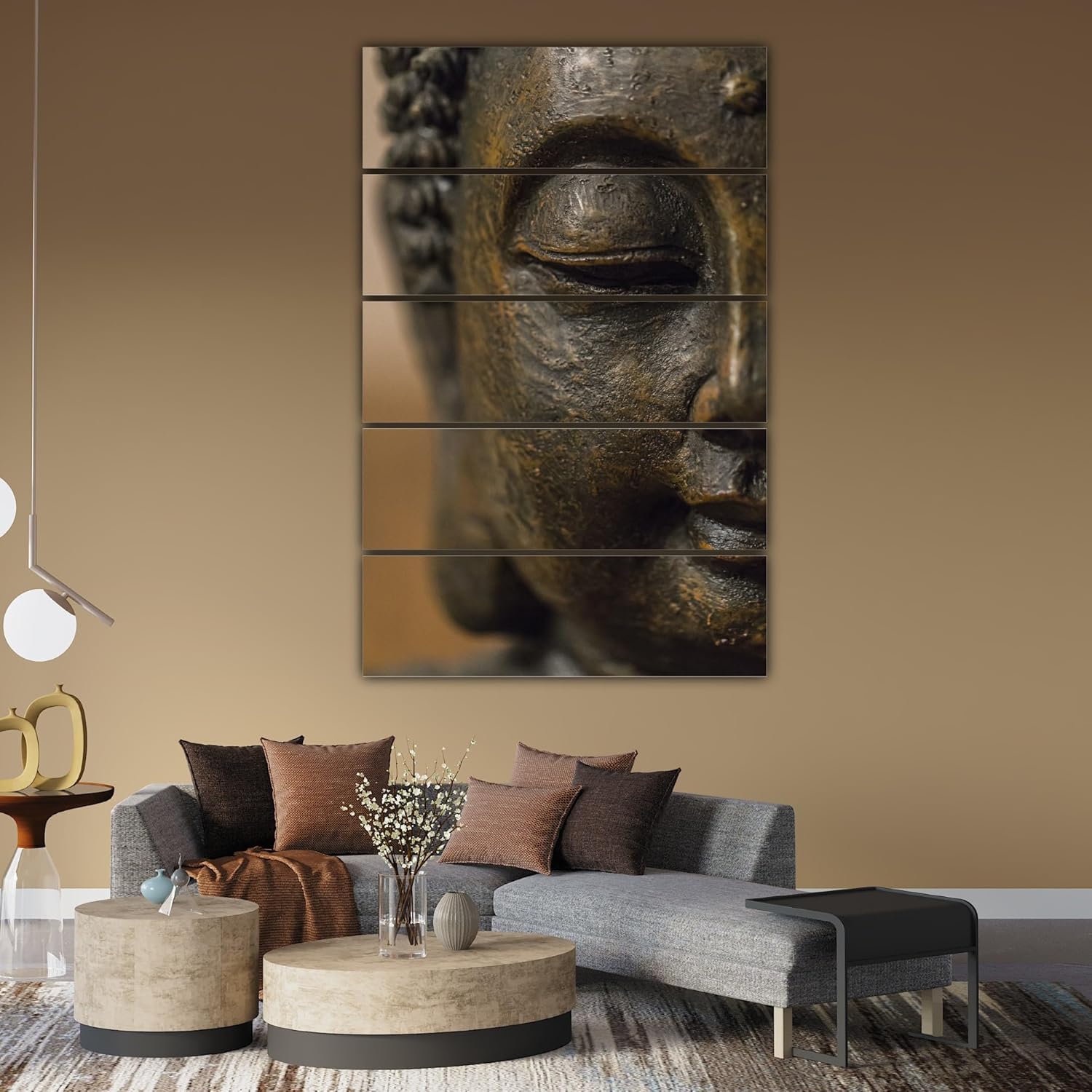
Here's what this 127cm Buddha canvas actually means for your space: on a standard 12-foot (360cm) Indian living room wall, it covers roughly 35% of the horizontal space. That leaves about 116cm on each side—enough breathing room for the art to command attention without dominating the wall. If your sofa is the typical 6-8 feet wide, this piece sits proportionally above it, creating that intentional gallery look rather than something hastily hung.
Why 127cm Works on 12-Foot Walls (and What Happens If You Go Smaller or Bigger)
The mathematics matter more than aesthetics when you're spending money on wall art. At 127cm wide, this piece fills your field of vision when seated on the sofa without requiring you to turn your head. Go smaller—say 90cm—and you're looking at 25% wall coverage. The Buddha gets lost, the investment feels wasted, and that empty wall space starts bothering you within weeks.
Go larger—160cm—and you risk the piece looking cramped, especially if you have windows, doorways, or furniture breaking up the wall. Most Indian living rooms have 8-10 ft ceilings, and a 76cm height works within that vertical space without making the ceiling feel lower.
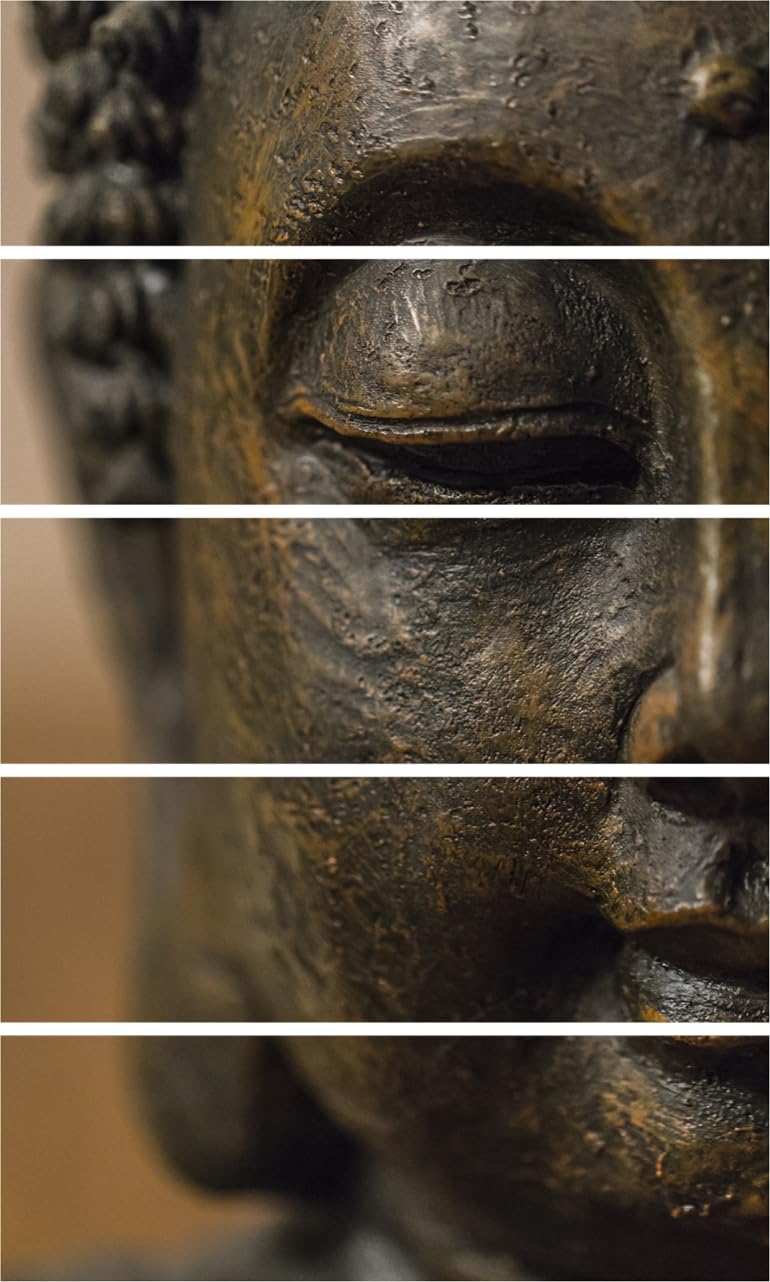
The 5-panel design adds another dimension: the total 127cm span creates visual rhythm. Each panel is approximately 25cm wide with small gaps between them, so your eye moves naturally across the Buddha's face from the textured hair details to the serene closed eyes to the peaceful lips. This isn't a single overwhelming image—it's a composition that unfolds.
Why Bronze and Ochre Tones Work in Indian Living Rooms (Not Just Online Photos)
Your walls are probably cream, off-white, or that common builder's peach. The bronze and ochre palette in this Buddha piece works precisely because these warm metallics complement—rather than compete with—neutral wall colors. Unlike bright blues or stark whites that demand attention, bronze tones feel grounded, almost like they belong with the wooden furniture already in most Indian homes.
In morning natural light, the bronze appears lighter, almost golden. Under evening LED lighting, the deeper charcoal shadows become more pronounced, adding depth. This isn't a piece that looks dramatically different throughout the day—it's consistent, which matters when you're living with it.
The patina-like texture in the photography adds visual interest without being busy. From your sofa (typically 2-3 meters viewing distance), you see the overall Buddha composition. Walking closer, you notice the surface details—the textured bronze, the subtle gradations. This works whether guests are entering your room or sitting within it.
Installation Takes 15 Minutes (Even If You're Not Handy)
At 3kg total weight distributed across 5 panels, this won't pull your wall down. Each panel is pre-framed with hardware attached, so you're not dealing with loose canvas and separate frame assembly. The 0.6cm depth means panels sit flush against the wall—no awkward shadowing or tilting.
For rental homes with security deposit concerns, you're looking at 5 small nail holes rather than heavy-duty anchors. Position the center panel first, then work outward, keeping 2-3cm gaps between panels for that gallery spacing. A basic level tool (or your phone's level app) ensures alignment.
The pinewood frame construction handles Indian humidity—whether Mumbai monsoons at 85% humidity or Delhi summers at 45°C. The moisture-resistant canvas coating prevents that warping or sagging you might have seen on cheaper imports.
How This Compares to Smaller Sizes You've Been Considering
If you've been looking at 90cm versions, here's the honest difference: on a 12-foot wall, 90cm covers only 25% of the space. That might work above a narrow console table, but above an 8-foot sofa, it looks undersized. You'll notice the disproportion every time you sit down.
If you've considered 150cm+ pieces, assess your wall honestly. Do you have uninterrupted wall space, or are there light switches, doorways, or windows nearby? A 150cm piece needs roughly 4 feet of clear wall on each side to breathe. Most Indian living rooms don't have that luxury.
The 127cm sweet spot exists because it works in the typical 12x14 ft living room with standard furniture placement. It's large enough to be a statement, proportional enough to not be a mistake.
Setting Realistic Expectations: Colors, Lighting, and Your Space
This is canvas printing, not metal sculpture. The bronze tones are printed—you won't get the reflective quality of actual bronze. What you get is the visual warmth and the textured appearance of bronze, which photographs beautifully and creates that meditative atmosphere without the weight or maintenance of metal.
Under direct sunlight, avoid placement on walls that get harsh afternoon exposure. The UV-resistant inks handle normal light levels, but continuous direct sun will fade any printed art over time. East-facing or north-facing walls are ideal; west-facing works with curtains.
From 3 meters (typical living room viewing distance), you see the complete Buddha composition. From 1 meter, you see the panel divisions and surface texture. Both views work—this isn't a piece that falls apart up close or gets lost at distance.
Quick Specifications
- Dimensions: 127cm (W) × 76cm (H) × 0.6cm (D)
- Weight: 3kg (spread across 5 panels)
- Panel count: 5 pre-framed canvas panels
- Colors: Bronze, ochre, deep charcoal with warm gradations
- Subject: Buddha face meditation close-up
- Canvas: 340 GSM cotton with moisture-resistant coating
- Frame: 1.5" kiln-dried pinewood (12% moisture content)
- Inks: Eco-solvent UV-resistant printing
- Installation: Pre-attached hanging hardware included
- Delivery: 5-6 days metro cities, 6-8 days tier-2/3 cities
- Price: ₹2,796