
Buddha-tiful 5-Panel Framed Wall Art That'll Have Your Zen Game on Point
You may also like

Moolwan 5-Panel Buddha Vinyl Wall Art on MDF (127x76cm) – Where Serenity Meets Saturated Color Without Visual Chaos
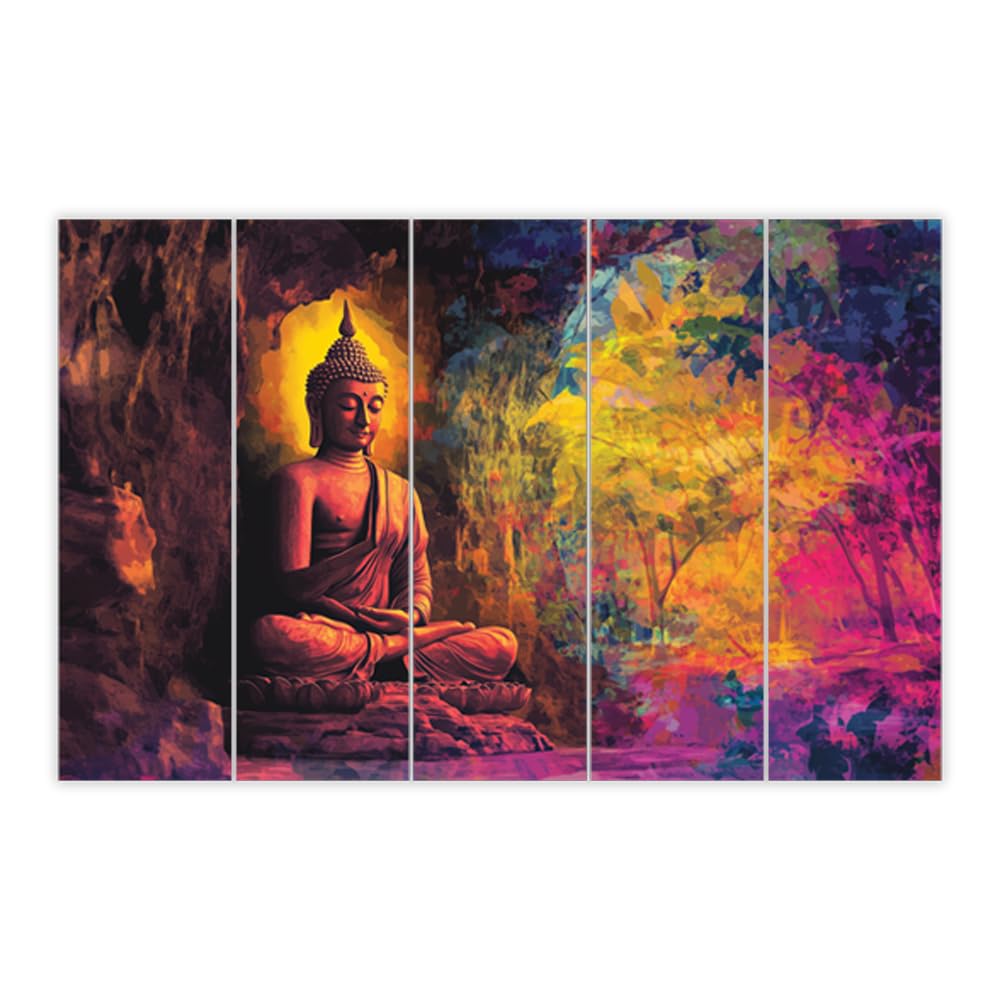
You've looked at dozens of Buddha wall art pieces. Most are either too minimal (just a silhouette on beige) or too ornate (gold leaf overlays, temple architecture). This one does something different: it places a realistically rendered meditating Buddha against an explosion of abstract nature colors—golden yellows bleeding into fuchsia pinks, deep purples layering over burnt oranges. The Buddha sits calm and centered on the left two panels while the right three panels erupt into impressionistic forest scenery. It's meditation energy without the sterile gallery aesthetic, and saturated color without losing the contemplative mood. That specific balance—grounded spiritual imagery paired with dynamic abstract nature—is what makes this work in Indian living rooms where you want something meaningful but not temple-austere.
At 127cm wide, this sits above 8-foot sofas without looking cramped or floating awkwardly. The five panels flow left to right: Buddha emerges from shadow, transitions through golden aura, then dissolves into color-saturated nature. Your eye moves across the composition instead of landing on a static centered image. That horizontal movement matters in rectangular living rooms where wall space stretches wider than it rises.
Why 127cm Works on 10-12 Foot Walls (And What Happens If You Go Smaller)
Your living room wall is probably 10 to 12 feet wide if you're in a standard 2BHK or 3BHK. Your sofa sits centered, maybe 7 to 8 feet wide including armrests. You need wall art that anchors to the sofa without looking like it's trying to fill the entire wall.
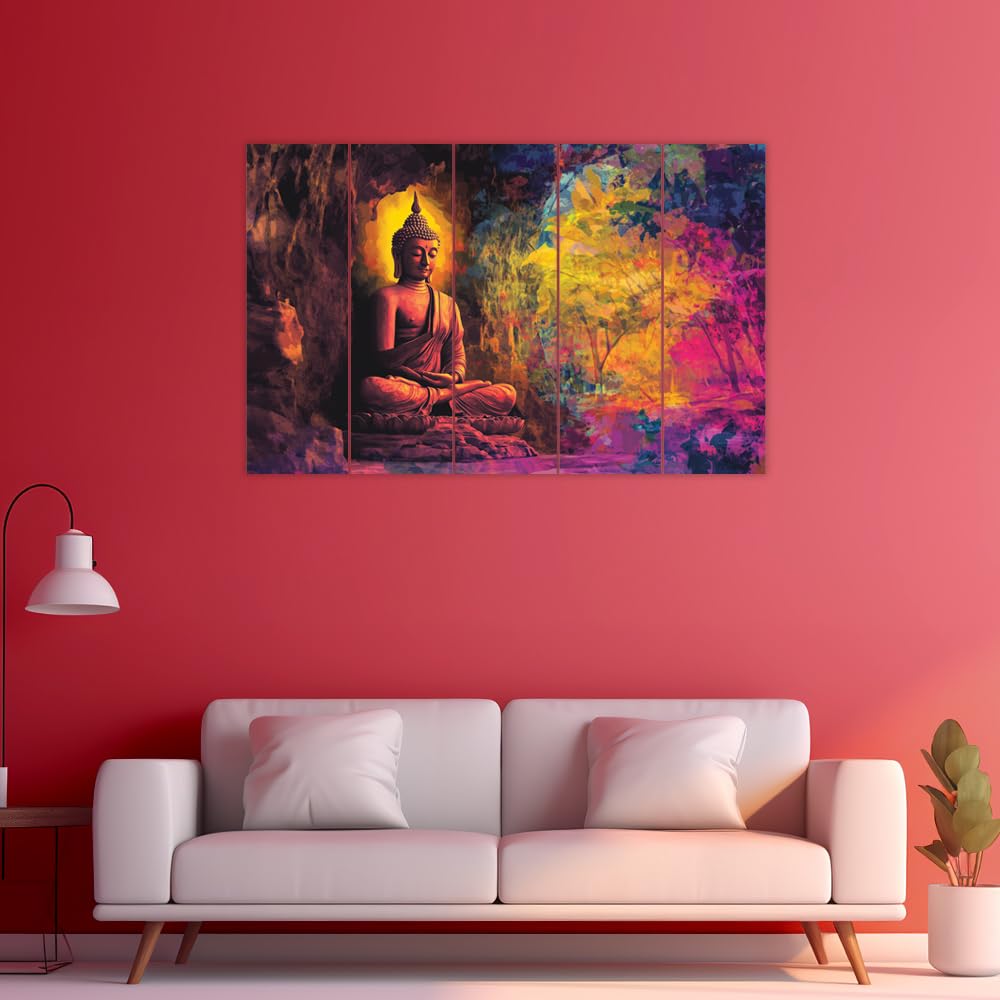
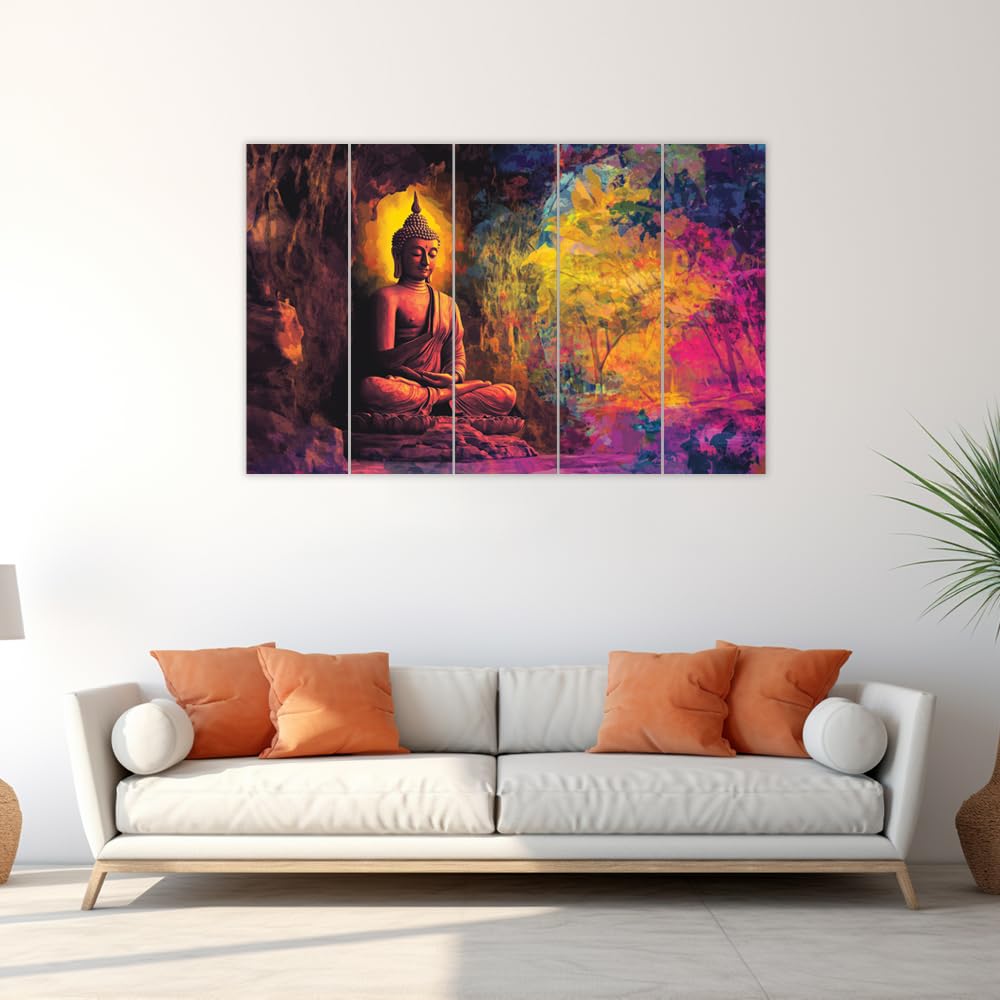
127cm (just over 4 feet) covers roughly 50% of an 8-foot sofa's width. That's the visual ratio where wall art feels intentionally placed above furniture rather than randomly hung on the wall. If you went smaller—say, 90cm—the Buddha would read as undersized against the sofa's visual weight. The panels would cluster too tightly, losing the panoramic flow that makes five-panel art work. If you went larger—say, 150cm—you'd run into furniture conflict: side tables, floor lamps, curtain edges would interrupt the composition's borders.
The 76cm height keeps this proportional for 8 to 9 foot ceilings (standard in most Indian apartments). Hang it 20-25cm above your sofa's top cushion edge. From your entryway, the Buddha will be at natural eye level—not tilted upward like undersized art, not looming overhead like oversized statements.
Panel spacing matters here: the five panels sit close enough that you read them as one unified image from doorway distance, but the seams are visible up close, adding texture and depth. That's different from single-canvas Buddha art where everything sits on one flat plane. The slight shadow gaps between MDF panels make the composition feel layered rather than printed.
If your wall has an AC vent or electrical switch 30cm from the ceiling, this height leaves clearance without looking like it's avoiding obstacles. If you have a side table with a lamp, the rightmost panel ends before visual conflict. These clearance considerations are why 127cm width works in actual furnished Indian homes, not just empty mockup rooms.
What These Colors Look Like on Cream Walls (Morning Sun vs Warm LED)
The image splits into two distinct color zones: the Buddha half uses earth tones (burnt sienna, deep browns, shadowy purples), while the nature half explodes into high-saturation hues (golden yellow, hot magenta, electric purple, tangerine orange). That contrast is deliberate—it's what prevents the saturated nature colors from overwhelming the contemplative Buddha presence.
On cream walls (the default in most Indian apartments), the earth-toned Buddha panels recede slightly, creating depth. The color-saturated nature panels pop forward. This push-pull effect makes the wall art feel three-dimensional instead of flat. If your walls were stark white, the Buddha section might look muddy by comparison. Cream walls give the shadows and browns enough warmth to hold visual weight.
Morning sunlight (if your living room faces east): The golden yellow aura around Buddha's head intensifies. The magenta-purple forest turns more vivid, almost neon-bright. This is when the art looks most energetic. If you meditate in the mornings, that bright saturation might feel too stimulating. Better for living room display where morning light creates visual drama for guests.
Afternoon/evening warm LED (3000K, typical in Indian homes): The colors settle into richer, more grounded tones. The golden yellows look honey-warm instead of citrus-bright. The magentas deepen into wine reds. The Buddha's brown skin tones gain dimensionality—you see the sculptural shading instead of flat silhouette. This is when the art feels most contemplative. The saturated nature colors remain present but don't dominate; they frame the Buddha rather than competing with it.
Against brown fabric sofas (beige, tan, chocolate—all common): The earth-toned Buddha half echoes your furniture, creating visual continuity. The saturated nature half provides the color contrast your room needs without clashing. If you have cream walls + brown sofa + wooden coffee table (the default Indian living room setup), this color palette works because it includes both: neutral browns that harmonize and bright accent colors that energize.
If you're worried the magenta-purple-orange nature section looks "too much," consider your existing room: Do you have colorful cushions? A patterned rug? Curtains with prints? If yes, this art ties into that energy. If your room is entirely neutral (cream walls, beige sofa, no accent colors), this becomes your primary color source—and that single pop of saturated color is often what neutral rooms need to stop feeling unfinished.
Installation in Indian Walls (Concrete vs Drywall)
Five separate MDF panels means five separate installation points. Each panel hangs independently on its own hook. The included hanging template shows you exactly where to drill all five holes so the panels align horizontally—no guessing, no measuring errors, no one panel sitting 2cm higher than the others.
Concrete walls (most common in Indian apartments built before 2015): Use the included masonry anchors. You'll need a 6mm masonry bit and a hammer drill. Each hole goes 35mm deep. Tap in the plastic anchor, screw in the hook, hang the panel on its D-ring backing. The MDF panels are lightweight (3000 grams total across five pieces, roughly 600 grams each), so standard anchors hold securely. Total installation time: 25-30 minutes including leveling.
Drywall/gypsum walls (common in newer apartments, especially in metro cities): Use the included drywall anchors. These toggle anchors spread behind the drywall when you screw them in, distributing weight across a larger area. Each panel's low weight means you won't stress the drywall. The risk with drywall isn't the weight—it's drilling in the wrong spot and hitting a stud or electrical line. The hanging template prevents that by spacing hooks evenly across the wall's center zone where studs don't typically run.
Panel alignment anxiety is real with multi-panel art. One panel sitting askew ruins the entire composition. Here's what actually works: hang the center panel first (the one where Buddha's golden aura is brightest). Level it perfectly using a bubble level app on your phone. Then hang the panels to its left and right, using the center panel as your reference. The hanging template has built-in spacing marks, so if your center panel is level, the outer panels automatically align.
For renters: five 6mm holes are easier to patch than one large hole from a TV mount. When you move out, fill with wall putty (₹50 at any hardware store), sand smooth, touch up with leftover wall paint. Your landlord won't notice. The holes are smaller than picture frame nail holes.
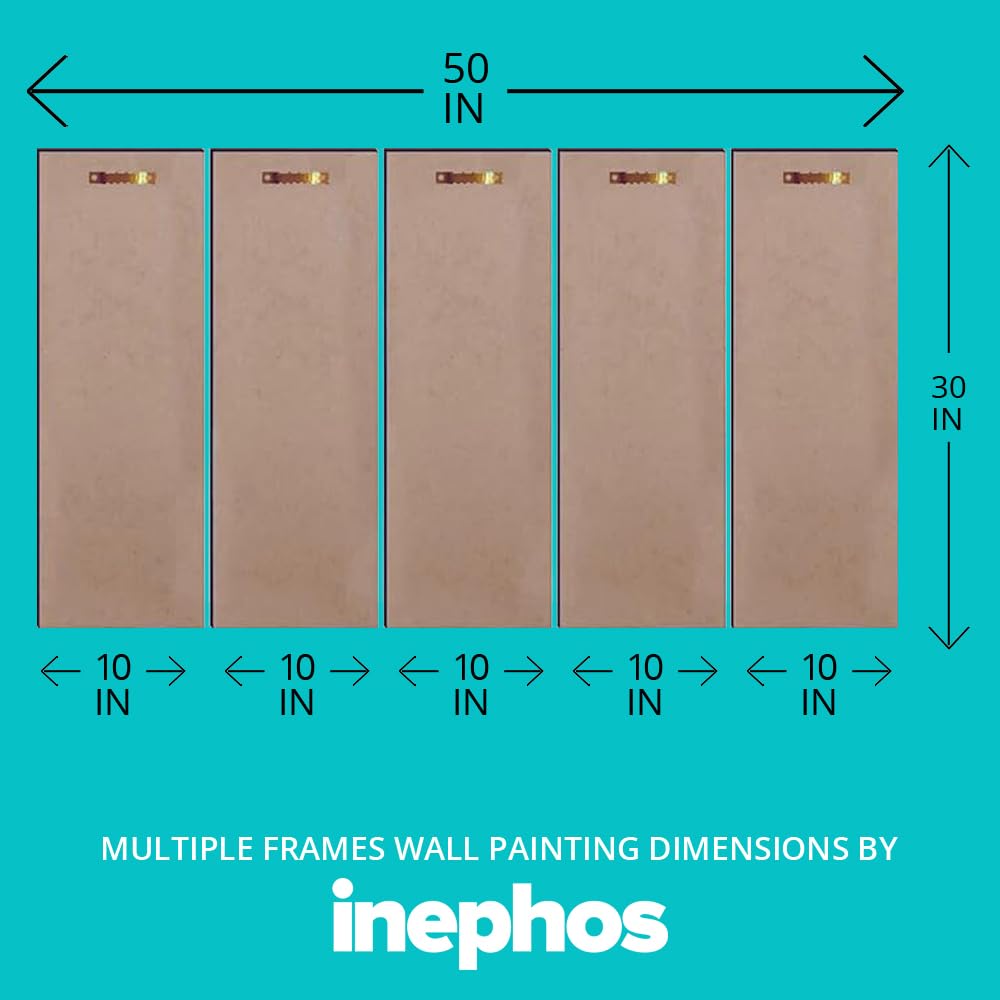
The panels don't touch each other—there's a 2-3cm gap between each panel when hung correctly. This gap is intentional; it creates shadow lines that add depth. Don't try to push panels flush against each other. The composition is designed to breathe with these small separations.
Vinyl on MDF vs Cheap Marketplace Canvas (Factual Trade-offs)
Marketplace Buddha canvas paintings at ₹1,200 to ₹1,500 use cotton canvas stretched over thin wooden frames. After 6-8 months in Mumbai's monsoon humidity or Chennai's coastal air, the canvas absorbs moisture and sags. You'll see ripples forming at the edges first, then spreading inward. The wooden frame warps slightly, pulling the canvas tension uneven. The print starts looking wavy instead of flat.
Vinyl on MDF doesn't have that problem because there's no fabric to stretch or shrink. The vinyl print is laminated directly onto moisture-resistant MDF board. Humidity doesn't penetrate. The board stays dimensionally stable through monsoon seasons. In coastal cities where salt air accelerates material degradation, MDF with vinyl laminate outlasts canvas by 2-3 years minimum.
The trade-off: vinyl doesn't have canvas texture. Up close (within 1-2 feet), you won't see woven fabric grain. The surface is smooth, closer to a high-quality poster than traditional artist canvas. For wall art hung at standard viewing distance (6-10 feet away in a living room), this texture difference is invisible. Your guests won't notice. You won't notice unless you're specifically looking for canvas weave.
Color saturation is actually higher on vinyl than canvas. The inks sit on the vinyl surface rather than soaking into fabric fibers. This is why the magenta-purple-orange nature section looks so vivid in the product image—vinyl holds bright colors without dulling them. Canvas tends to mute high-saturation hues slightly as ink absorbs into the weave. For this specific design where color vibrancy is a primary feature, vinyl's color intensity is an advantage, not a compromise.
Weight difference: five MDF panels at 3000 grams total is lighter than equivalent-sized stretched canvas. Easier to hang, less stress on wall anchors, safer in earthquake-prone regions where heavy wall decor becomes a risk.
The splash-proof vinyl surface means dust wipes away with a dry cloth. No special cleaning. Coffee splatter (if this hangs near your dining area)? Wipe clean immediately, no stain. Canvas absorbs liquid and stains permanently.
Realistic Expectations (What This Will Actually Feel Like in Your Room)
From your entryway (typical viewing distance: 10-12 feet), this reads as a cohesive spiritual-nature statement piece. The Buddha is clearly recognizable, the nature colors create a saturated backdrop, and the five-panel format gives it gallery-wall presence. It anchors your living room's primary wall.
Walk closer (6-8 feet, the distance you'd stand when talking to guests seated on your sofa): The Buddha's sculptural details become visible—the peaceful expression, the hand mudra, the robe draping. The nature section reveals its abstract impressionism: loose brushstrokes (digitally rendered), color layering, the forest path suggestion. At this distance, the art holds up to inspection; it doesn't fall apart into flat printing.
Sit on your sofa directly below it (2-3 feet away, looking up): You see the panel seams clearly. The individual colors separate—you notice the golden yellow is actually multiple yellow tones, the magenta has orange undertones. The Buddha's face is close enough that you read it as a meditation focal point if you're using this space for yoga or breathing exercises. The saturated nature section fills your peripheral vision without demanding direct attention.
This art dominates the wall—it's the only thing you should hang on that specific wall section. Don't add floating shelves below it. Don't flank it with smaller framed prints. It's designed to command the space solo. If you want additional wall decor, place it on adjacent walls, not competing with this composition.
The energy reads as contemplative with a bold color accent, not temple-serene or gallery-neutral. If your home aesthetic is minimalist Scandinavian (all whites and grays), this will feel like a jarring departure. If your home has Indian textile patterns, wooden carved furniture, or jewel-toned accent pieces, this integrates naturally. It's spiritual art for people who want meditation symbolism without stripping all personality from their walls.
Moolwan Design Note
This five-panel format lets the Buddha remain grounded and realistic on the left while the nature abstraction escalates into high saturation on the right—neither element dilutes the other because they occupy separate panel zones yet flow as one composition.
Moolwan Quality Standard
Splash-proof vinyl on MDF resists humidity-related warping that affects canvas in Indian monsoon climates. Printed to resist UV-related color fading in rooms with afternoon sun exposure. Quality checked before dispatch. Ships from West Bengal packed for long-distance Indian transit.
Moolwan Fit Guidance for Indian Homes
Five panels at 127cm total width suit 10-12 foot living room walls above 7-8 foot sofas; the Buddha-to-nature color transition works specifically on cream walls with brown furniture, where earth tones harmonize and saturated accents energize without clashing.
Quick Specifications
Product: Moolwan 5-Panel Buddha Vinyl Wall Art on MDF (127x76cm)
Brand: Moolwan
Category: Vinyl Wall Art on MDF
Collection: Buddha Wall Art Collection
Dimensions: 127cm W x 76cm H x 0.6cm D (each panel varies in width; total width when hung with standard spacing: ~127cm)
Weight: 3000 grams (distributed across five panels)
Material & Construction: Splash-proof vinyl print on moisture-resistant MDF board
Colors: Earth tones (burnt sienna, deep brown, shadow purple) transitioning to high-saturation hues (golden yellow, hot magenta, electric purple, tangerine orange)
Panel Count: 5 panels (composition flows left to right: Buddha figure to abstract nature scenery)
Best For: 10-12 foot living room walls above 7-8 foot sofas; meditation corners; entryways; offices requiring contemplative focal points
Ships From: West Bengal
Installation Hardware Included: Masonry anchors, drywall anchors, D-ring hangers, five-panel alignment template
Frequently Asked Questions
Why does the Buddha section look darker than the nature section in the image?
The composition intentionally uses shadow and earth tones (browns, deep purples) around the Buddha to create depth and contemplative mood, while the nature section uses high-saturation colors (yellows, magentas, oranges) to energize the right side. This contrast is what prevents the saturated colors from overwhelming the spiritual focal point. On cream walls with warm LED lighting, the Buddha section gains richness and warmth rather than looking muddy.
Will five separate panels be difficult to align during installation?
The included hanging template eliminates alignment guesswork—you tape the template to your wall at the desired height, mark all five drilling points, remove the template, then drill and hang. Hang the center panel first using a level, then add panels to left and right using the center as reference. Total installation time: 25-30 minutes. The 2-3cm spacing between panels is marked on the template and is intentional for shadow depth.
Does vinyl on MDF handle monsoon humidity as well as the category content claims?
Yes, because MDF doesn't absorb moisture the way canvas fabric does. Vinyl laminate seals the surface, preventing humidity penetration. In monsoon conditions (70-85% humidity), canvas stretched over wood frames absorbs moisture and sags; MDF stays dimensionally stable. The trade-off is vinyl lacks canvas texture, but this isn't visible from standard viewing distances (6+ feet away in a living room).
Is this too colorful for a meditation space, or does it work for actual meditation practice?
The left two panels (where the Buddha sits) use muted earth tones suitable for meditation focus. The right three panels provide color energy that frames the Buddha without competing for attention. If you meditate facing this art, your eye naturally rests on the Buddha figure; the nature colors sit in peripheral vision. For active meditation spaces (yoga, breathing exercises), this works. For silent retreat environments requiring absolute visual calm, single-tone Buddha art might be more appropriate.
Will the bright magenta and orange colors clash with brown furniture?
The composition includes earth tones (browns, siennas) in the Buddha section that echo brown furniture, creating visual continuity. The saturated nature colors (magenta, orange, yellow) provide accent contrast rather than clashing because they occupy the right-side panels while brown tones anchor the left side. On cream walls with brown sofas (the most common Indian living room setup), this color split prevents either element from dominating while both remain present.
Product Snapshot
Brand: Moolwan
Product: Moolwan 5-Panel Buddha Vinyl Wall Art on MDF (127x76cm)
Category: Vinyl Wall Art on MDF
Collection: Buddha Wall Art Collection
Theme/Type: Buddha meditation figure with abstract nature scenery
Best For: 10-12 foot living room walls, above 7-8 foot sofas, meditation corners in furnished spaces
Primary Differentiator: Split composition pairs grounded Buddha realism with saturated abstract nature without visual chaos—earth tones anchor left, high-saturation colors energize right
Secondary Differentiators: Five-panel horizontal flow creates panoramic movement instead of static centered image; splash-proof vinyl on MDF resists monsoon humidity-related warping that affects canvas
Material & Construction: Splash-proof vinyl print laminated on moisture-resistant MDF board (0.6cm thickness per panel); five separate panels with independent hanging hardware
Care Instructions: Dust with dry microfiber cloth every 2-3 weeks; spot-clean spills with damp cloth immediately; no chemical cleaners required; vinyl surface resists moisture absorption
Ships From: West Bengal
Packing: Long-distance transit ready with corner protection
Quality Check: Before dispatch
Price: Not specified