
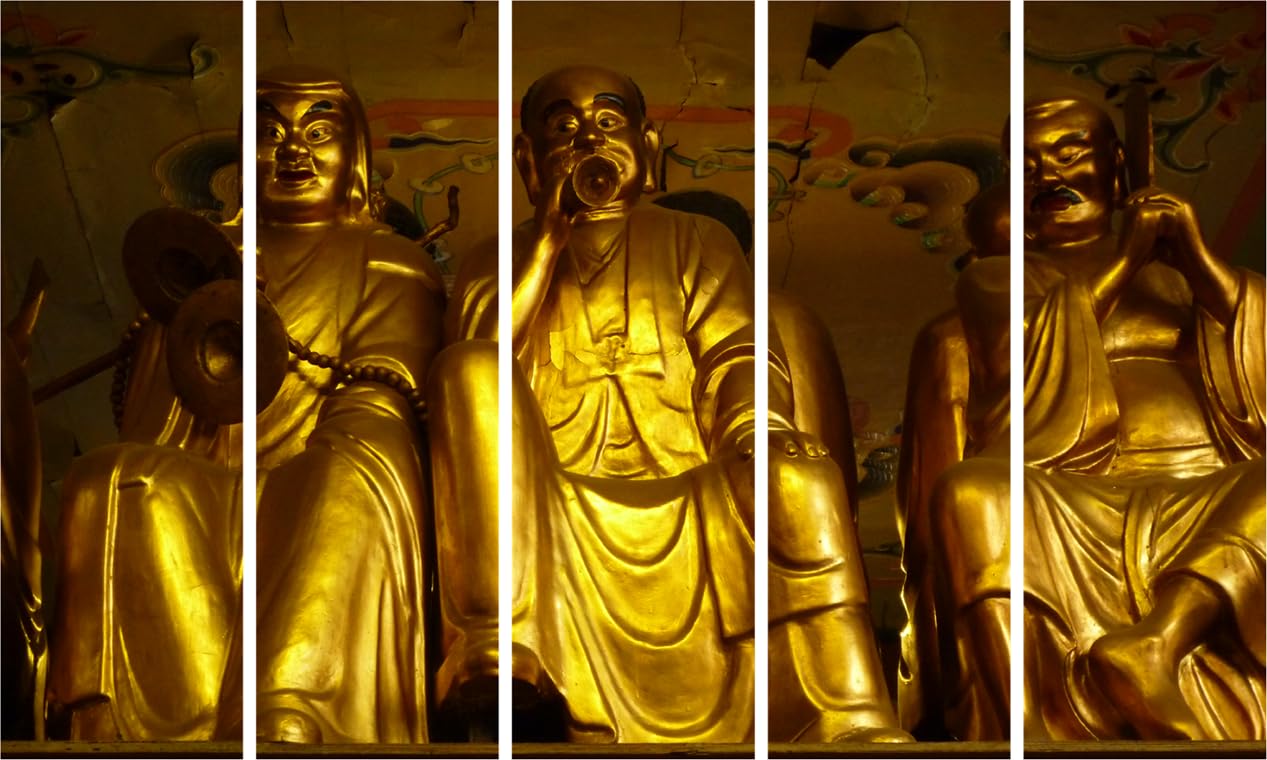
Buddha-tiful Framed Multi-Panel Wall Art for Zen Bliss
You may also like

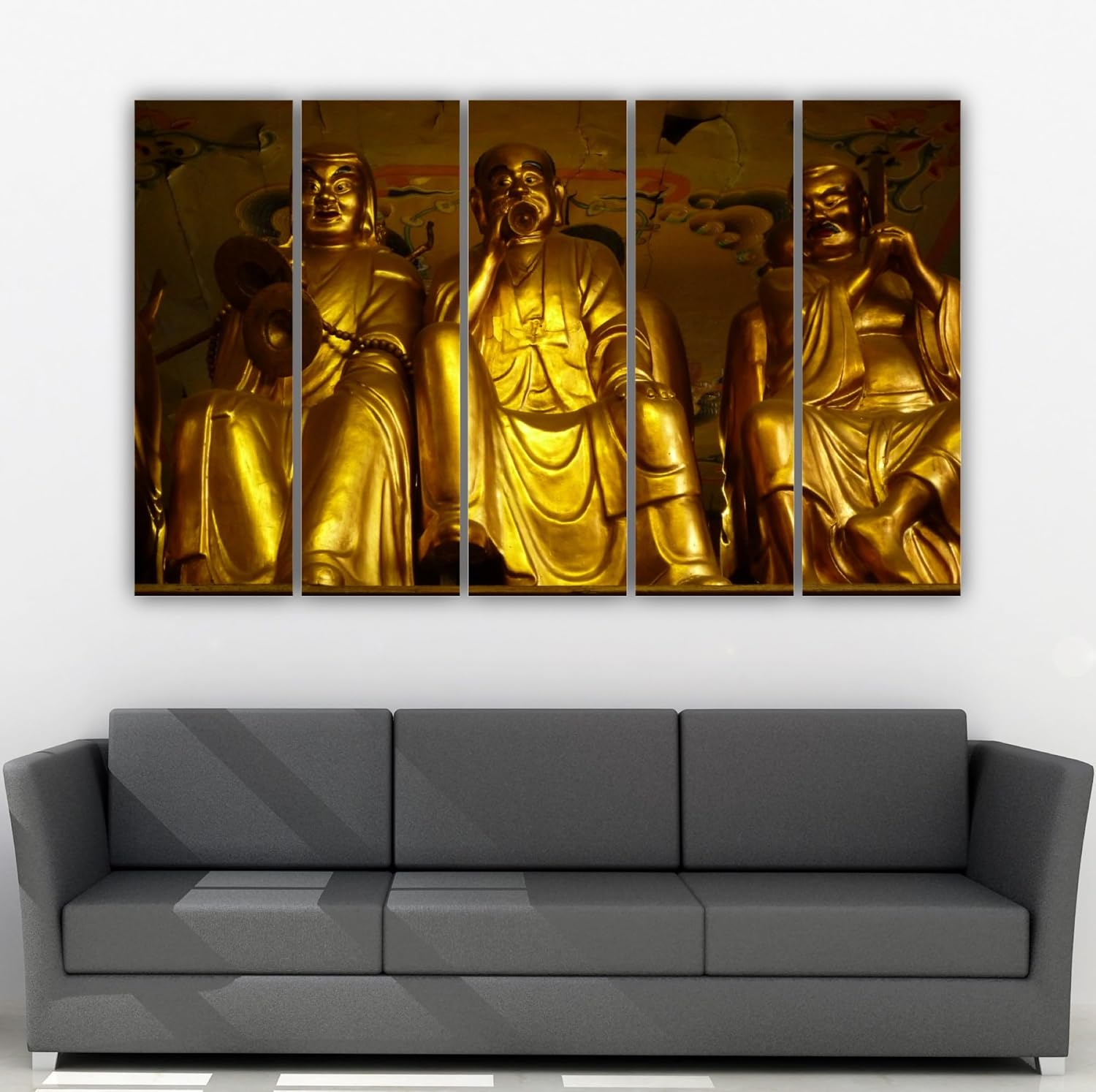
Moolwan 5-Panel Golden Buddha Canvas Wall Art Painting (127x76cm) - Framed Zen Temple Art
You've measured your living room wall three times. Maybe four. The tape measure says 360cm, but you're still not confident because online product photos never show real Indian homes. Every design guide says something different, and none account for your cream-painted walls, the brown fabric sofa underneath, or the window that sits 90cm from where this would hang. You keep second-guessing: is 127cm actually right, or will it look lost on that 12-foot wall?
Here's what the math actually says—and why this specific Buddha canvas wall art painting works for the space you're picturing.
The Visual Math: How 127cm Fits 12ft Walls in Indian Homes
A standard Indian living room wall runs about 360cm (roughly 12 feet). This 5-panel golden Buddha canvas wall art painting spans 127cm—that's 35% of your wall width. You'll have approximately 116cm of empty wall on each side if you center it.
Why does 35% coverage matter? At this ratio, the art commands attention without overwhelming your space. Go smaller—say, 90cm—and you're down to 25% coverage. The panels will look like they're floating awkwardly, especially above an 8-foot sofa. Go larger—150cm or more—and you risk the Buddha figures visually crowding your wall, leaving less than a meter of breathing room on either side.
At 76cm height, the panels sit comfortably above furniture. If your sofa back rises about 90cm from the floor and you mount this 15-20cm above, the center of the artwork lands roughly at eye level (150-160cm from ground). That's the viewing sweet spot—where the golden details of these Buddha statues catch your eye naturally when you walk into the room.
Why Golden Tones Work in Indian Living Rooms (Not Just Online Photos)
The dominant gold and amber palette in this canvas wall art painting does something specific against Indian wall colors. Most builder flats and family homes feature cream, off-white, or light yellow walls—warm neutrals that can sometimes feel flat or institutional.
Gold adds depth without clashing. Unlike cooler metallics (silver, chrome), gold sits on the warm side of the color wheel. Against cream walls, it creates subtle contrast rather than harsh separation. The darker background in this piece—deep browns and blacks around the Buddha figures—anchors the gold and prevents it from appearing too bright or garish.
If you have wooden furniture in the room—a teak coffee table, a sheesham TV unit—the gold resonates with those warm undertones. Brown fabric sofas (probably the most common choice in Indian living rooms) complement rather than compete.
One thing to note: the gold will look different under warm LED lighting (evening) versus natural daylight (afternoon). Under warm lights, it deepens to almost amber. In daylight, it appears brighter and more metallic. Both work—just know the shift happens.
Rental-Friendly Mounting: How to Hang Without Losing Your Deposit
At 3000 grams (3kg), this 5-panel set is lighter than most furniture-grade frames. You have two installation options depending on your rental situation.
If drilling is allowed: Two wall plugs with screws per panel provide the most secure hold. Fifteen minutes of installation with a basic drill. The 0.6cm depth means panels sit nearly flush against the wall—no awkward gaps or shadows.
If you're protecting a ₹50,000 deposit: Adhesive mounting strips rated for 2kg per strip can work. Use three strips per outer panel, two per inner panel. The key is surface prep—clean the wall with a dry cloth to remove dust, let the adhesive cure for 24 hours before hanging. This method leaves no holes, no marks, no deductions when you move out.
The 5-panel design actually helps here. Each individual panel carries only a portion of the total weight, so the load distributes across multiple mounting points rather than concentrating on two hooks.
How This Compares to Smaller Buddha Prints You've Been Considering
You've probably seen Buddha canvas prints at ₹800-1,200 on marketplace apps. Here's the honest difference:
Canvas quality: This piece uses 340 GSM cotton canvas with moisture-resistant coating—important because Indian humidity (especially monsoon season, 70-85%) can cause cheaper canvas to sag or warp over 2-3 years. Budget prints typically use 200-250 GSM canvas without coating.
Frame construction: Kiln-dried pinewood frames at 1.5" depth, dried to 12% moisture content. This prevents warping as humidity fluctuates between seasons. Cheaper options use raw wood or MDF that swells and contracts.
Print longevity: UV-resistant eco-solvent inks hold color for 8-10 years without noticeable fading. The gold in this piece will stay gold, not turn muddy brown after three monsoons.
Visual impact: Single-panel prints at similar prices tend to max out at 60-80cm width. This 5-panel set covers 127cm—nearly double the visual presence. The multi-panel format also adds depth perception that single frames can't replicate.
What This Will Look Like in Your Living Room (Not Just Online Photos)
Let's set realistic expectations. Standing 8-10 feet away (typical sofa-to-wall distance in a 12x14 ft living room), you'll see the overall composition—the three seated Buddha figures in their golden robes, the temple backdrop with its decorative ceiling. The multi-panel separation adds a contemporary gallery feel.
At 4-5 feet away (walking past to the balcony or dining area), you notice the texture—the fabric weave of the canvas, the shadowing in the robes, the facial expressions. This is where the print quality either impresses or disappoints, and 340 GSM canvas holds detail at this distance.
In morning natural light (east-facing windows), the gold appears warm and inviting. Under evening warm-white LEDs, it takes on a richer, almost bronze tone. Both create a calming presence—appropriate for a Buddha-themed piece meant to anchor a peaceful corner of your home.
One honest note: this won't transform a cluttered room. If you have mismatched furniture, too many decorative items competing for attention, or walls crowded with family photos, adding this won't fix the visual chaos. It works best on a relatively clean wall where it can breathe—above a sofa, beside a TV unit, or anchoring an empty wall that needs a focal point.
Quick Specifications
- Dimensions: 127cm (W) × 76cm (H) × 0.6cm (D)
- Weight: 3000 grams
- Panels: 5-panel framed set
- Canvas: 340 GSM cotton, moisture-resistant
- Frame: 1.5" kiln-dried pinewood
- Inks: UV-resistant eco-solvent
- Best for: 10-14 ft walls in living rooms, meditation spaces, entryways
- Mounting: Wall plugs or adhesive strips (rental-friendly)
- Delivery: 5-6 days metro cities, 6-8 days tier-2/3