
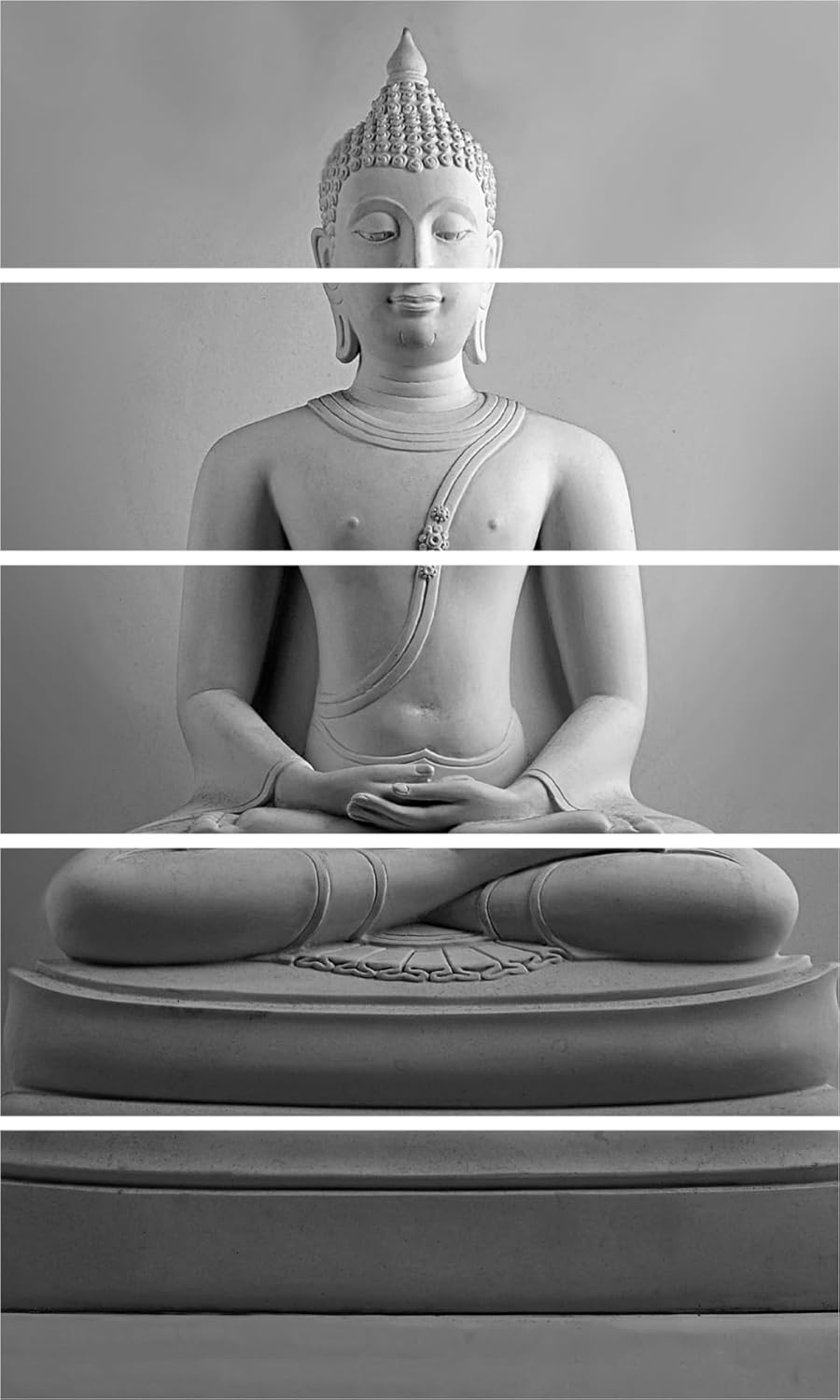
Buddha-tiful Multi-Panel Wall Art That'll Zen Your Space - 150x76cm Framed Bliss
You may also like

Moolwan 5-Panel Buddha Canvas Wall Art Painting (150x76cm) - Meditation Wall Decor
You might have browsed dozens of Buddha wall art pieces by now. Some were too small—lost against your 12-foot wall, looking more like an afterthought than a focal point. Some were too large—overwhelming the space, dominating rather than harmonizing. You probably kept coming back to 150cm—because intuitively, it feels right. But you want to be sure.
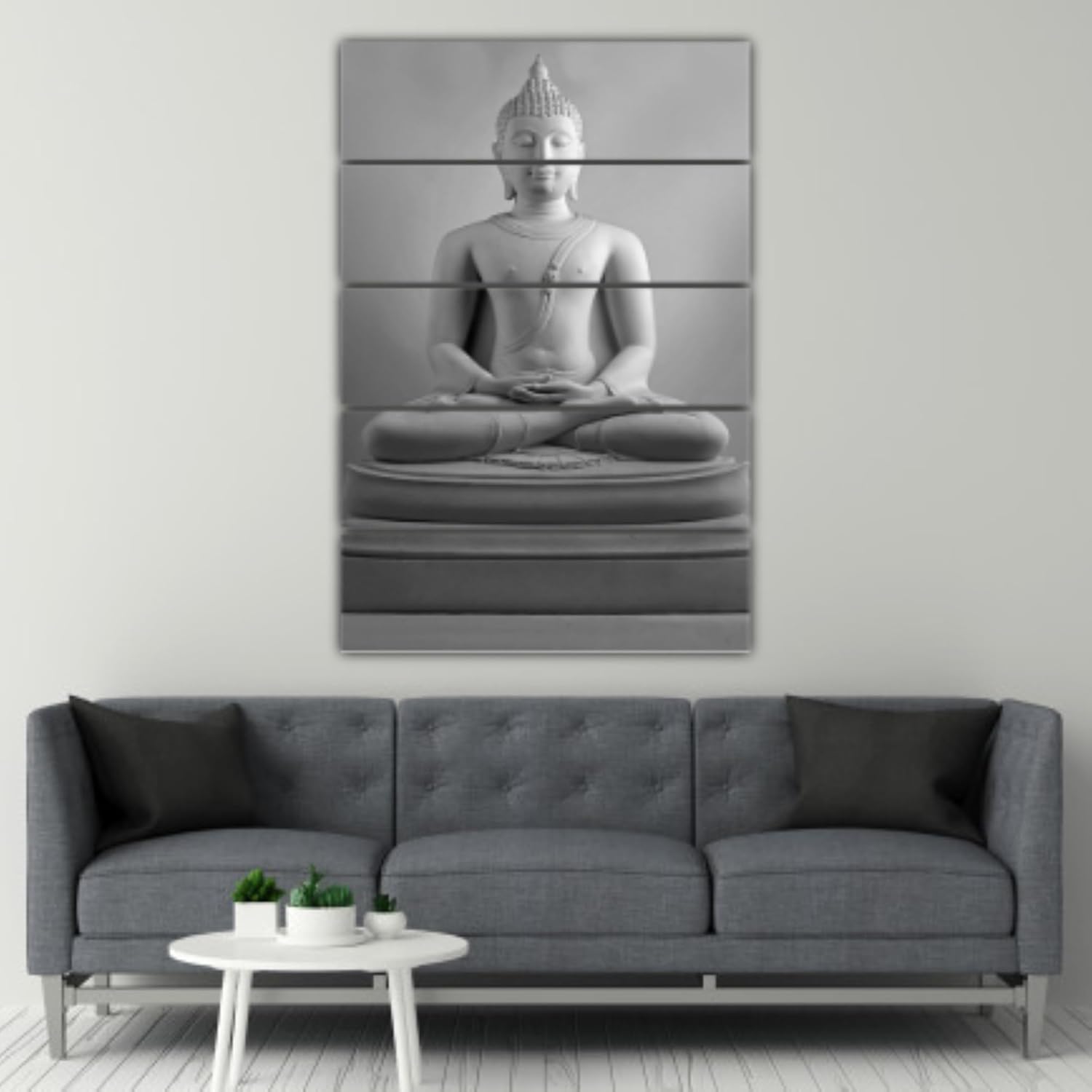
Here's what makes this specific. Your living room wall is probably 12 feet (360cm) wide. This 150cm canvas covers 42% of that width—leaving 105cm of breathing room on each side. Not centered awkwardly with too much empty space. Not cramped. The 76cm height works with standard 8-10 foot ceilings without touching furniture or feeling disconnected from the room's proportions.
The 5-panel arrangement matters here. Each individual panel is roughly 30cm wide, creating natural visual breaks that prevent the piece from feeling like a single heavy block. Your eye moves across the Buddha's form in sections—head, upper body, meditation posture, lower body, base—which creates depth even though it's mounted flat against your wall.
The Visual Math: How 150cm Fits 12ft Walls in Indian Homes
Let's be precise about coverage. Your wall: 360cm. This canvas: 150cm wide. Math: 150 ÷ 360 = 0.417, or roughly 42% coverage.
That leaves 210cm of wall space total—105cm on the left, 105cm on the right. This is the proportional sweet spot for feature walls. If you've been looking at 120cm alternatives, that's only 33% coverage—starts looking undersized once mounted. If you've considered 180cm pieces, that's 50% coverage—can feel visually heavy, especially with the 5-panel segmentation adding visual weight.
Here's the comparison with your sofa, which is probably 6-8 feet (180-240cm) wide. The 150cm canvas width falls right in that visual range—it echoes your furniture proportions without competing with them. If your sofa is 8 feet wide, this canvas is 20-30cm narrower, creating intentional asymmetry that prevents the "everything lined up perfectly" look that feels staged rather than lived-in.
Ceiling height context: Standard Indian homes have 9-10 foot ceilings (270-300cm). This 76cm height occupies roughly 25-28% of vertical space when mounted at eye level (center point around 150cm from floor). That's proportional—visible from across the room without requiring neck strain to appreciate the Buddha's serene expression.
Why Golden Browns with Black Frames Work in Indian Living Rooms (Not Just Online Photos)
Your walls are probably cream, off-white, or that builder's beige that's everywhere. The golden brown tones in this Buddha canvas create warm contrast without clash. Not competing. Not disappearing. The black frames add definition—they separate each panel visually, which matters more than you might think.
Here's what happens in actual Indian lighting. Morning: natural light through your windows hits the golden tones, bringing out warmth. The grayscale Buddha sculpture (photographed in monochrome) reads as calming neutral against those golden accents. Afternoon: when direct sun shifts, the black frames become more prominent, adding structure. Evening: under LED tube lights or yellow bulbs, the golden browns harmonize with warm artificial light rather than looking washed out or color-shifted.
Compare this to bright, saturated Buddha art (lots of reds, deep blues). Those colors demand specific lighting and can look drastically different morning vs. evening. This palette is forgiving—the neutral Buddha form with golden brown backing works across lighting conditions because it's not fighting for color dominance.
Your furniture context matters. If you have wooden coffee tables, TV units, or dining furniture in brown tones (most Indian homes do), this canvas echoes those colors without matching too precisely. The black frames provide contrast against brown furniture, preventing the "everything blends together" effect.
Pooja shelf consideration: if you have a wooden pooja shelf or cabinet nearby, the golden browns create thematic continuity—spiritual elements sharing a color family—without the canvas looking like it's trying to be religious furniture itself.
Rental-Friendly Mounting: How to Hang Without Losing Your Deposit
The 3000 grams (3kg) total weight matters for installation. That's light enough that you're not dealing with heavy-duty anchors or worrying about plaster damage. Each of the 5 panels comes with its own mounting hardware—usually hooks pre-installed on the back.
Here's the rental-friendly approach. Use 3M Command Picture Hanging Strips rated for 2kg per hook (available at any hardware store for ₹200-300). These are adhesive strips that hold strong but remove cleanly without leaving marks—crucial for getting your ₹50,000 deposit back. For 5 panels at 600g each, one 2kg-rated Command Strip per panel is sufficient with safety margin.
Alternative if your walls are concrete or you're comfortable with minimal holes: use 6mm plastic anchors with screws (the ones that expand inside the wall). These create holes about the width of a pen tip—easy to fill with wall putty (₹50 for a small container) when you move. Most landlords won't even notice these after a quick touch-up.
Installation timeline: 15-20 minutes if you're working alone, under 10 minutes with help. You'll need: measuring tape, pencil for marking, level (or just use your phone's level app), and whatever mounting method you choose. The 5 panels need spacing between them—aim for 2-3cm gaps so they read as a connected composition rather than separate pieces floating randomly.
Starting point: measure your wall width (probably 360cm), subtract canvas width (150cm), divide remainder by 2 (105cm each side). Mark the center, then work outward. The center panel goes at eye level (150cm from floor to the Buddha's face), then align the others horizontally using your level.
How This Compares to Smaller Buddha Art You've Been Considering
You've probably looked at 120cm Buddha canvases. Here's the honest difference. On your 12-foot wall, that 120cm piece covers 33% width—it's proportional, but you'll notice the empty wall space more. The visual impact is softer, less focal-point energy. If your room is smaller (10x12 ft), the 120cm makes more sense. If your room is standard (12x14 ft) or larger, you'll probably wish you went bigger after living with 120cm for a month.
The 180cm alternatives you might be eyeing: they're 50% wall coverage. That can look striking in open-plan homes or if you have a dedicated meditation room with minimal furniture. But in a typical living room with a sofa, TV unit, and other elements, 180cm can feel like it's demanding attention rather than offering calm. The Buddha becomes a statement piece instead of a serene presence.
Price comparison context: marketplace Buddha canvases at ₹1,200-₹1,500 are typically printed on thinner material (200-250 GSM vs. the 340 GSM cotton canvas here), with frames made from MDF or lighter wood that can warp in monsoon humidity. The UV-resistant inks matter—cheaper prints fade noticeably within 6-12 months, especially if your wall gets indirect sunlight. This isn't just brand markup; the material difference affects how long the colors stay consistent.
The 5-panel format specifically: you could buy a single-piece Buddha canvas at similar size. The multi-panel version creates depth through segmentation—your eye registers the physical gaps between panels, which adds dimensionality. Single-piece large canvases can read as "flat poster" even when framed. The panel breaks prevent that.
Setting Realistic Expectations: Colors, Lighting, and Your Space
The golden brown tones will look warmer in evening light than in product photos taken under studio lighting. This isn't a problem—it's actually desirable for living rooms where you spend most evening hours. But if you're judging against how it looks on your phone screen right now at noon, remember that your room's lighting creates the final appearance.
The grayscale Buddha sculpture: it's photographed in a way that emphasizes the sculptural details—texture, shadows, form. Once mounted on your wall, viewing distance changes perception. From 6-8 feet away (where you sit on your sofa), you'll see the Buddha as a calming figure. The fine details like the textured crown or hand position read more clearly from 3-4 feet when you're standing nearby.
Wall texture consideration: if your walls have rough texture or small bumps (common in builder-grade apartments), the canvas will sit slightly away from the wall surface due to the frame depth. This creates a subtle shadow border around each panel, which actually enhances the floating effect—the canvas appears lifted rather than pasted flat.
Furniture proportions: the 150cm width works if your TV unit or console table is 4-6 feet wide. If your TV unit is significantly longer (8+ feet), consider whether you want the canvas above the TV (in which case this size might feel secondary to the TV) or on an adjacent wall (where it becomes the spiritual focal point while TV remains functional).
Climate reality: the moisture-resistant coating matters during monsoons. Canvas without this protection can develop spots or slight discoloration from humidity. You won't need to take this down during rainy season—it's designed for 70-85% humidity that's standard in Indian homes June through September.
Quick Specifications
- Dimensions: 150cm W x 76cm H x 1.5cm D (depth from wall when mounted)
- Panel Configuration: 5 panels with uniform spacing
- Weight: 3000 grams total (600g per panel average)
- Material: 340 GSM cotton canvas, moisture-resistant coating
- Frame: 1.5-inch kiln-dried pinewood (12% moisture content), black finish
- Inks: Eco-solvent, UV-resistant for fade prevention
- Mounting: Pre-installed hardware on each panel, rental-friendly options available
- Subject: Buddha sculpture in meditation posture, monochrome with golden brown backing
- Color Palette: Golden brown, neutral gray, black frames
- Suitable For: Living rooms, meditation spaces, bedrooms, covered balconies
- Delivery: 5-6 days metro cities, 6-8 days tier-2/3 cities
- Price: ₹3,996