
Cake-tastic Multi-Frame Framed Photography Wall Art That'll Frost Your Fancies
You may also like

Moolwan 5-Panel Wedding Cake Canvas Wall Art Painting (127x76cm) - Multi-Frame Photography Art
You might have browsed dozens of wall art pieces by now. Some were too abstract—beautiful online, but you couldn't picture them in your actual living room. Some were too generic—the kind you see in every furniture showroom. You probably kept coming back to something around 127cm wide—because intuitively, it feels right for that wall above your sofa. But you want to be sure.
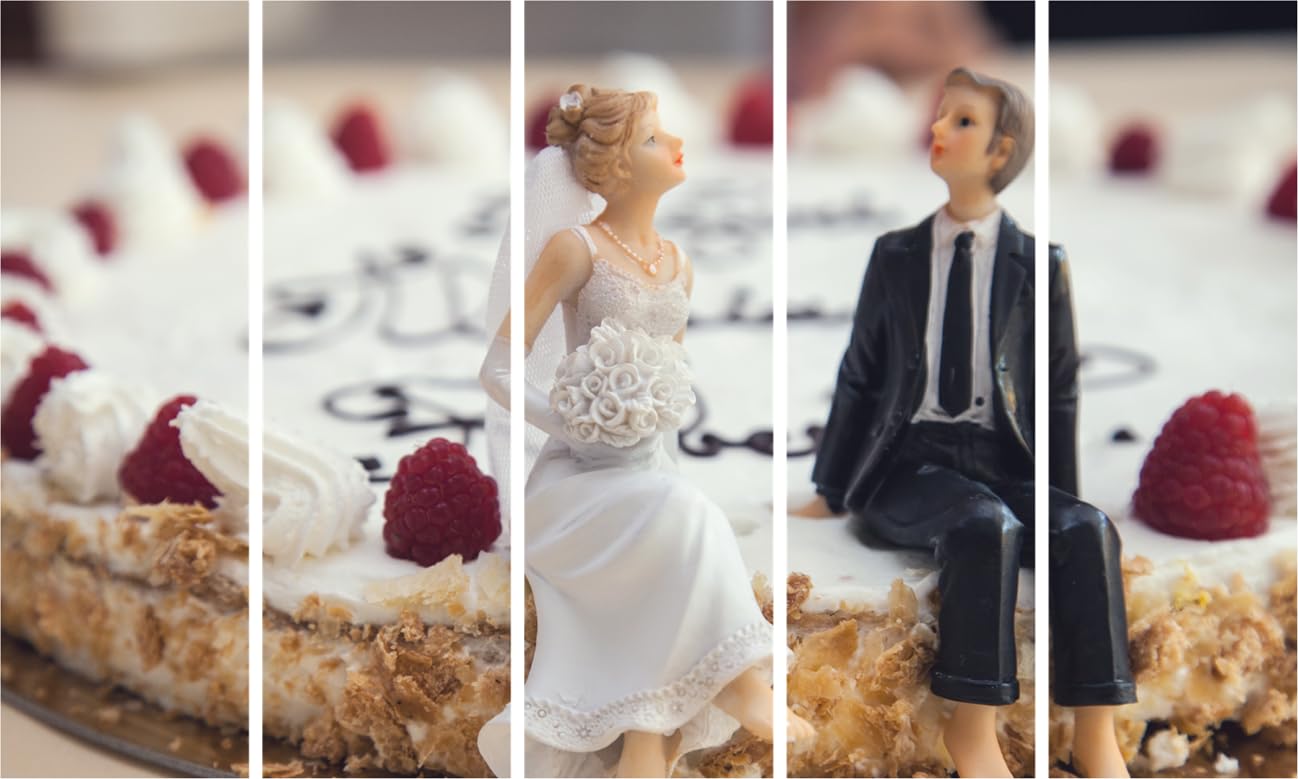
This 5-panel wedding cake canvas captures something most wall art doesn't: celebration frozen in time. The bride and groom figurines sitting on the edge of a raspberry-adorned cake create a scene that's romantic without being clichéd. The multi-frame split adds gallery-style depth that single canvases can't achieve.
Why 127cm Works on 12-Foot Walls (and What Happens If You Go Smaller or Bigger)
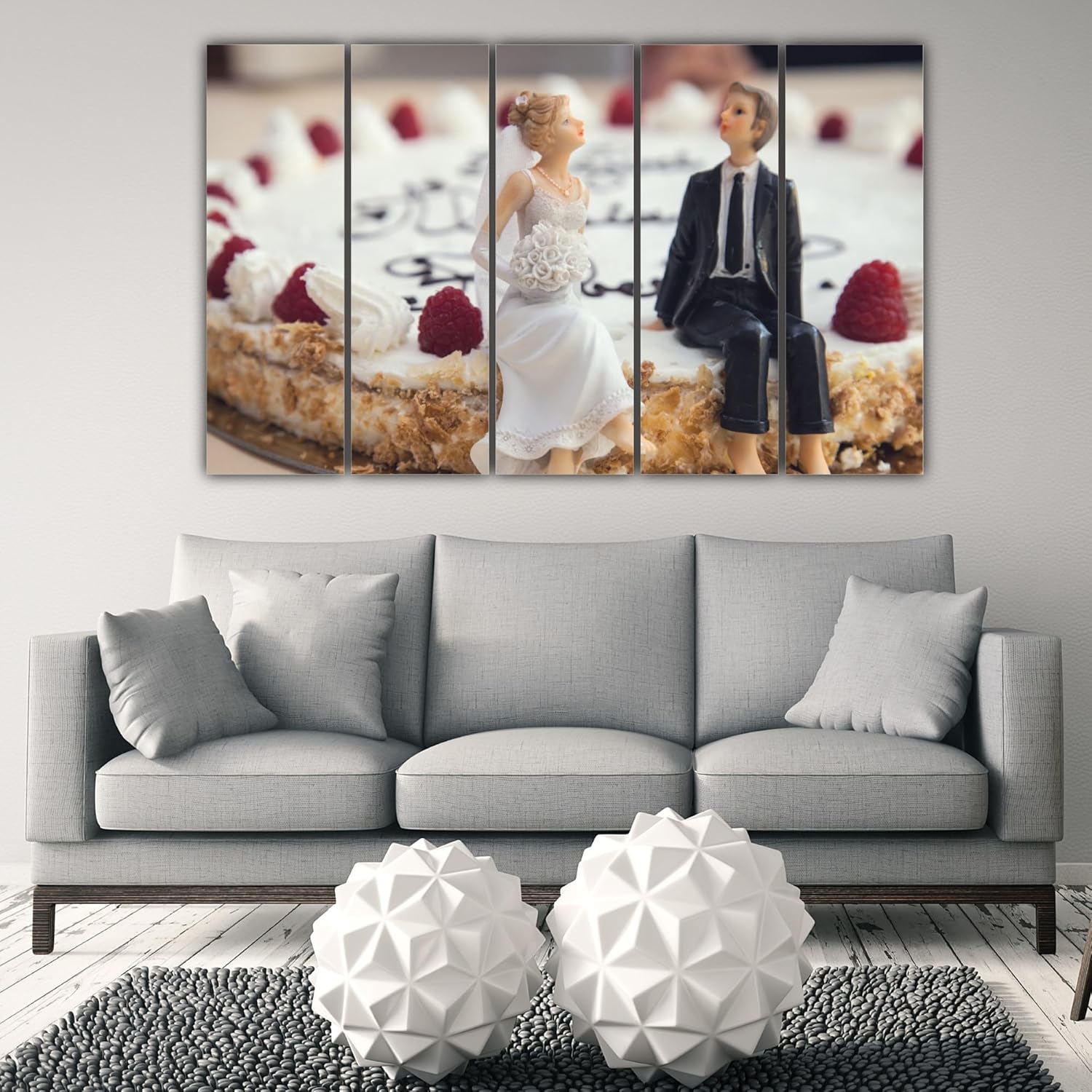
Your wall is probably around 12 feet (360cm) wide. At 127cm, this canvas covers approximately 35% of that wall—leaving roughly 116cm of breathing room on each side. This is the sweet spot for Indian living rooms.
Go smaller (say, 90cm), and you're looking at just 25% coverage. The art gets swallowed by the wall, looking like an afterthought rather than a centerpiece. Go larger (150cm+), and you risk overwhelming the space—especially if your ceiling height is the standard 9-10 feet.
The 76cm height means this sits comfortably above an 8-foot sofa with proper clearance. Hang the bottom edge 20-25cm above your sofa back, and you'll have proportional spacing that looks intentional, not cramped.
What These Colors Will Actually Look Like (Morning vs. Evening Light)
The cream and white tones in the cake photography are forgiving—they complement the off-white and builder's cream walls found in most Indian apartments. The raspberry reds add warmth without competing with your existing furniture, whether that's a brown leather sofa or beige fabric sectional.
In morning natural light, the golden-brown crust details and warm tones come forward. Under evening LED or tube lighting (the reality for most Indian homes after 6 PM), the contrast between the white wedding dress and black suit remains sharp. The image doesn't muddy or flatten the way some art does under artificial light.
The soft bokeh background means this piece doesn't demand a specific wall color to work—it adapts.
Rental-Friendly Mounting: How to Hang Without Losing Your Deposit
Five panels mean five mounting points. Each panel weighs approximately 600 grams—light enough for standard picture hooks without wall plugs. For rental apartments where your ₹50,000 deposit depends on wall condition, use adhesive picture hooks rated for 1kg each.
Total installation time: 20-25 minutes. The challenge isn't weight—it's alignment. Measure once, mark your points with painter's tape (doesn't damage walls), then hang. The 5-panel design is forgiving; slight variations in spacing (1-2cm) add character rather than looking like mistakes.
How This Compares to Single-Panel Art You've Been Considering
Single-panel canvas at this size often looks flat—one image, one frame, one visual note. The 5-panel split creates movement. Your eye travels across the scene: from the whipped cream rosettes on the left, across the bride's delicate dress, to the groom's formal suit on the right.
Compared to gallery wall arrangements (multiple separate frames), this is simpler to hang and creates cohesion. No calculating spacing between 6 different frames. No wondering if that botanical print actually matches that abstract piece you impulse-bought.
This is one scene, one story, presented with depth.
Setting Realistic Expectations: Colors, Lighting, and Your Space
The canvas uses 340 GSM cotton with moisture-resistant coating—important during Indian monsoons when humidity hits 70-85%. The eco-solvent UV-resistant inks mean the raspberry reds won't fade to pink after two summers of afternoon sun.
From 8-10 feet away (typical sofa-to-wall viewing distance), the image reads as a cohesive celebration scene. Move closer—2-3 feet—and you'll notice the texture of the canvas weave, the slight sheen of the coating, the individual brushstroke-like printing details.
This isn't museum-grade art. It's well-made decorative photography that will hold up for years in real living conditions—the kind with ceiling fans, monsoon humidity, and the occasional splash from enthusiastic chai drinking.
Quick Specifications
- Dimensions: 127cm (W) x 76cm (H) x 0.6cm (D)
- Panels: 5-panel split design
- Weight: 3 kg total
- Canvas: 340 GSM cotton, moisture-resistant coating
- Frame: 1.5" kiln-dried pinewood
- Inks: Eco-solvent, UV-resistant
- Delivery: 5-6 days (metro), 6-8 days (tier-2/3 cities)
- Best for: 10-14 ft walls, living rooms, bedrooms, celebration spaces