
Can We Keep a God Idol in the Bedroom?
Traditional Vastu and most Hindu household customs advise against keeping a god idol in the bedroom, since the bedroom is linked to rest and intimacy, not worship. If space is limited, a small idol or plaque can be placed in the north-east corner of the room, ideally in a covered cabinet, away from the bed and never facing it directly.
We help Indian homeowners balance sacred tradition with real apartment constraints — most Indian homes today do not have a separate pooja room, and that tension is exactly why this question comes up so often. Below is what Vastu Shastra actually recommends, what practicing Hindu families commonly follow, and how to set up a respectful prayer corner even in a one-bedroom flat.
What Vastu Shastra Says About Idols in the Bedroom
Vastu Shastra treats the bedroom as a space of rest, privacy, and marital intimacy, and treats worship as a separate, purified activity. The two are considered incompatible in the same room because the energy of sleep (tamasic) and the energy of prayer (sattvic) are believed to conflict. This is the primary reason most Vastu consultants and household priests discourage placing idols in bedrooms.
The rule is not absolute, though. Vastu texts differentiate between a full idol (murti) meant for daily ritual worship and a small photo, plaque, or symbolic decorative piece kept for daily reminder rather than active puja. The stricter caution applies mainly to consecrated idols used for ritual worship — abhishekam, aarti, or daily offerings — since these are believed to require a dedicated, undisturbed space.
Why the Restriction Exists
- The bed should never face or be adjacent to the idol, as this is considered disrespectful during sleep.
- Bedrooms often double as dressing areas, which conflicts with the purity expected around a worship space.
- Physical intimacy in a room with a consecrated idol is considered inappropriate in most traditional households.
If you already have an idol in your bedroom and cannot relocate it immediately, the most common guidance is to keep it covered with a small cloth when not in active use, and to reposition the bed so it does not directly face the idol.
Prefer a symbolic décor piece over a ritual idol? Browse Moolwan's curated home decor items for tasteful spiritual accents that work in any room.
Shop Home Decor ItemsWhere to Keep the God Idol Instead
The north-east direction of the house, known as Ishan Kon, is considered the most auspicious zone for worship in Vastu Shastra. A dedicated pooja room, or even a small wall-mounted mandir unit, works best when placed in this corner, away from the bathroom, kitchen, and staircase.
If a separate pooja room is not possible, the next best options — in order of preference — are the living room's north-east corner, a clean kitchen shelf away from the stove and sink, or a covered wall-mounted cabinet in the hallway. Each of these keeps the idol in a shared, low-disturbance zone rather than a private rest space.
Setting Up a Compact Prayer Corner
- Choose the north-east or east-facing wall of a common room.
- Use a small wooden or wall-mounted unit raised at least 1–2 feet off the floor.
- Face the idol east or west when you pray, never south.
- Keep the space free of shoes, laundry, and unrelated clutter.
For apartments where every room doubles up, Moolwan's room decoration ideas collection shows layout options that carve out a compact worship corner without losing usable floor space — useful if your living room is also your dining or workspace.
Bedroom Idol Placement: What's Allowed vs. Not Recommended
| Item | In the Bedroom? | Guidance |
|---|---|---|
| Consecrated ritual idol (daily puja) | Not recommended | Move to a north-east corner in a shared room; avoid facing the bed. |
| Small symbolic idol or figurine (decor, no ritual) | Acceptable with care | Place in a covered north-east shelf, not facing or above the bed. |
| Framed deity photo or wall art | Acceptable | Hang on the north or east wall, away from direct eye level from the bed. |
| Idol facing the bed directly | Avoid | Considered disrespectful in both Vastu and common religious practice. |
| Idol above the headboard or on the same wall as the bed | Avoid | Believed to disturb both sleep and the sanctity of worship. |
| Idol inside a wardrobe or under stairs within the bedroom | Avoid | Cramped, low, or enclosed placements are considered disrespectful regardless of room. |
Choosing the Right Piece for a Sacred Corner
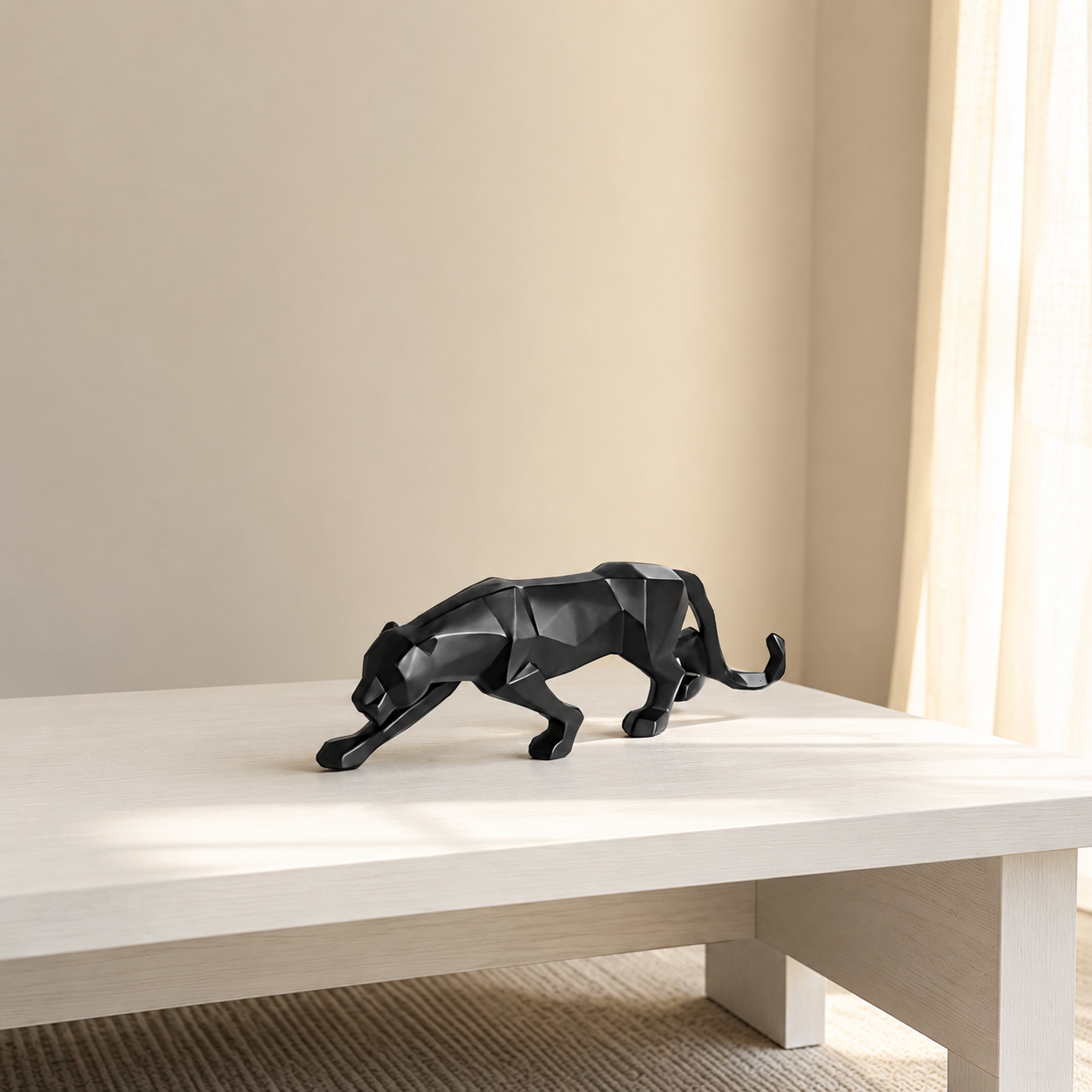
Not every deity representation needs to be a ritual idol. Many Indian homeowners today choose curated ceramic or resin showpieces as a symbolic, decorative alternative — appropriate for shelves, entryway consoles, or a living room accent wall, and easier to maintain than traditional brass or stone idols.
Moolwan Ceramic & Resin Showpiece Specifications
- Ceramic showpieces: 92% clay composition, heat-resistant to 60°C, humidity-tolerant up to 85% RH, 5+ year lifespan.
- Resin showpieces: 94% purity epoxy resin, 3H pencil-hardness scratch resistance, humidity-tolerant up to 60% RH, 3+ year indoor lifespan.
- Size guidance: Small (10–16cm) for a shelf or study desk, Medium (16–21cm) for a showcase or console, Large (25–34cm) as a standalone focal piece.
- Weight range: 150g–600g, engineered light enough for Indian drywall and floating shelves.
These specifications matter because Indian homes face humidity swings and temperature shifts that mass-produced imports are rarely tested for. A showpiece rated for 85% relative humidity will hold its finish through a Mumbai monsoon or a Chennai summer in a way an untested import will not.
If you're decorating a shared prayer corner rather than a private bedroom altar, Moolwan's modern home decor items collection includes finishes sized specifically for compact Indian apartments — matte and glazed options that stay easy to clean even in a high-traffic hallway or kitchen shelf.
How Moolwan Approaches This Balance
Moolwan is a manufacturer-direct Indian home décor brand built to solve a specific problem: most décor sold in India is either mass-produced without regard for climate, or priced up by multiple middlemen before it reaches your home. Moolwan designs and manufactures in-house — canvas wall art, ceramic and resin showpieces, and curated gifts — engineered specifically for Indian humidity, heat, and space constraints, and priced direct to the buyer.
What Moolwan stands for is simple: beautiful, durable, meaningful décor without inflated pricing or compromised quality. What Moolwan sells: canvas wall art paintings on 340 GSM cotton canvas with UV-resistant inks, modern ceramic and resin showpieces, and curated gifting pieces designed for Indian homes navigating the same tension this article addresses — tradition and modern space, in the same room.
Ready to Set Up Your Prayer Corner the Right Way?
Explore décor built and tested for Indian homes — not adapted from someone else's climate.
Frequently Asked Questions
Can I keep a small Ganesha or Krishna idol on my bedroom shelf?
A small, non-ritual decorative idol is generally considered acceptable if it's placed in the north-east corner, not facing the bed, and kept clean. Idols used for daily active puja are still better placed outside the bedroom.
Which direction should a god idol never face in the bedroom?
The idol should never directly face the bed, and it should not be placed on the south wall. South-facing placement and bed-facing placement are the two most commonly cited violations in Vastu guidance.
Is it okay to keep an idol in a studio apartment with no separate pooja room?
Yes — use a covered wall-mounted unit in the north-east corner of the living or kitchen area, raised off the floor, and keep it visually and physically separated from the sleeping area with a curtain, screen, or furniture divider.
Does keeping an idol in the bedroom bring bad luck?
Vastu doesn't frame this as luck; it frames it as an energy mismatch between rest and worship. Most guidance recommends relocating the idol rather than treating its bedroom placement as an omen.
What's a respectful alternative if I want a spiritual accent in my bedroom?
Choose symbolic wall art, a small brass diya, or a framed deity print rather than a consecrated idol. These carry meaning without the ritual purity requirements a worshipped idol needs.


