
Console Table vs Coffee Table: Which Surface Best Displays a Modern Home Statue?
The Short Answer
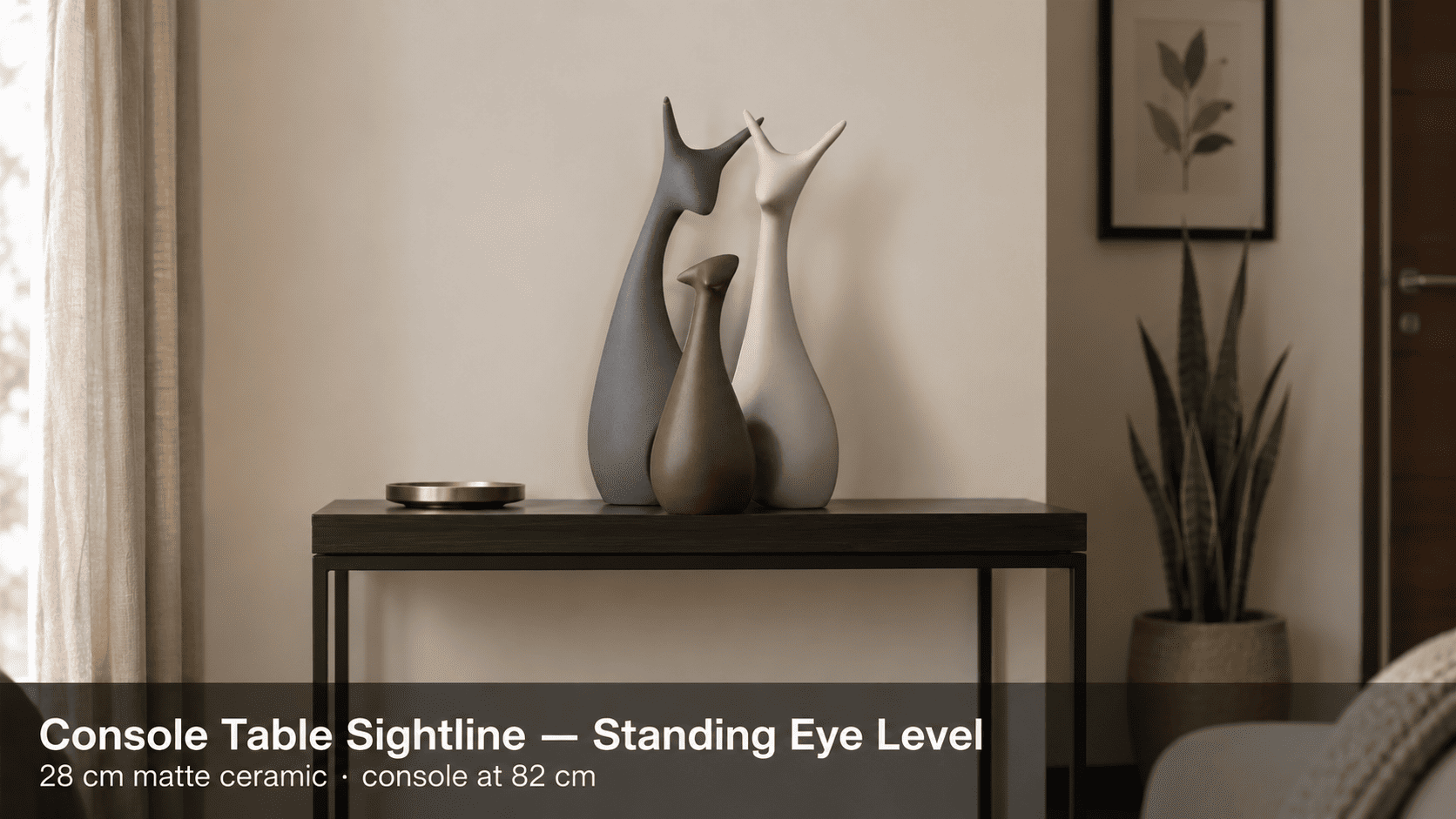
Console tables suit showpieces 21–34 cm tall because the standing sightline (eye level at 150–165 cm) makes taller pieces land as focal points, not obstacles. Coffee tables demand pieces under 20 cm because the seated sightline drops to 100–110 cm, and anything taller physically blocks conversation. Moolwan's climate-rated ceramic and resin showpieces cover both size bands.
Human visual perception assigns prominence to objects positioned within 15–20 degrees of the natural eye axis — a physiological constant that determines whether a decorative statue commands a room or disappears into it. Moolwan helps design-conscious Indian homeowners choose surfaces and statue sizes that exploit this sightline rule, engineering every showpiece in the modern home décor collection to land at the correct visual weight for the surface it occupies. The decision between a console table and a coffee table is not a matter of taste alone; it is a function of sightline height, surface dimensions, room footprint, and the specific size band of the piece.
Why Sightline Height Determines Which Surface Works for Your Showpiece
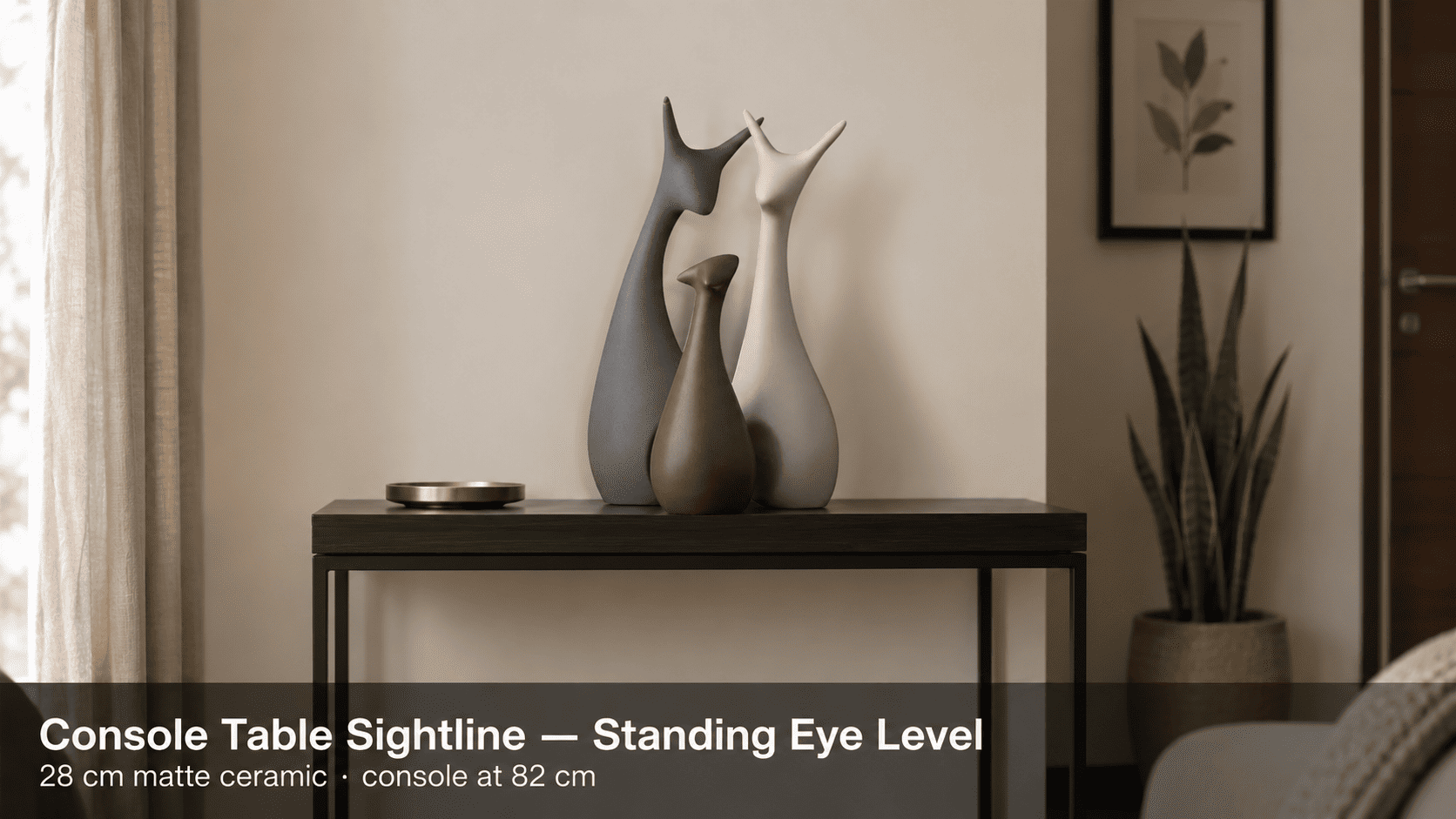
A person standing in a living room has a natural eye level of approximately 150–165 cm from the floor. At this height, a console table surface sitting at 75–90 cm positions a 25–34 cm showpiece squarely within the comfortable viewing cone — the zone where the brain registers an object as intentional décor rather than background clutter. This is why taller statues on console tables read as curated focal points: the combined height of surface plus piece meets the eye without requiring the viewer to tilt their head down.
A person seated on a sofa, by contrast, has an eye level that drops to roughly 100–110 cm above the floor. A coffee table surface sits at 40–50 cm. A statue taller than 20 cm on a coffee table therefore occupies a significant portion of the seated visual field — interrupting conversation sightlines across the table and creating a sense of crowding. The physiological constraint is not aesthetic preference; it is geometric. Pieces in the 10–19 cm (Small to low-Medium) size band clear the seated sightline cleanly while still registering as deliberate décor.
Indian apartment living rooms, which average under 150 sq ft of floor area, compound this constraint because coffee tables are proportionally closer to seating than in larger Western room plans. At a seating distance of 60–90 cm from the table edge — the norm in compact Indian layouts — even a 22 cm piece visually dominates the table surface and narrows perceived table depth.
How Surface Width and Depth Govern Statue Size and Clustering
Console tables in Indian homes typically span 90–120 cm in width and 25–35 cm in depth — a narrow, elongated format that concentrates visual weight at the centre or at deliberate off-centre positions. A single medium-to-large showpiece (21–34 cm height, 400–600 g) anchors the surface without competing with wall art above, because the piece's vertical axis reads against the wall behind it rather than against horizontal furniture lines. Surface depth of 25–35 cm physically limits clustering to one primary piece plus one secondary accent, which enforces the visual restraint that makes console displays look curated rather than crowded.
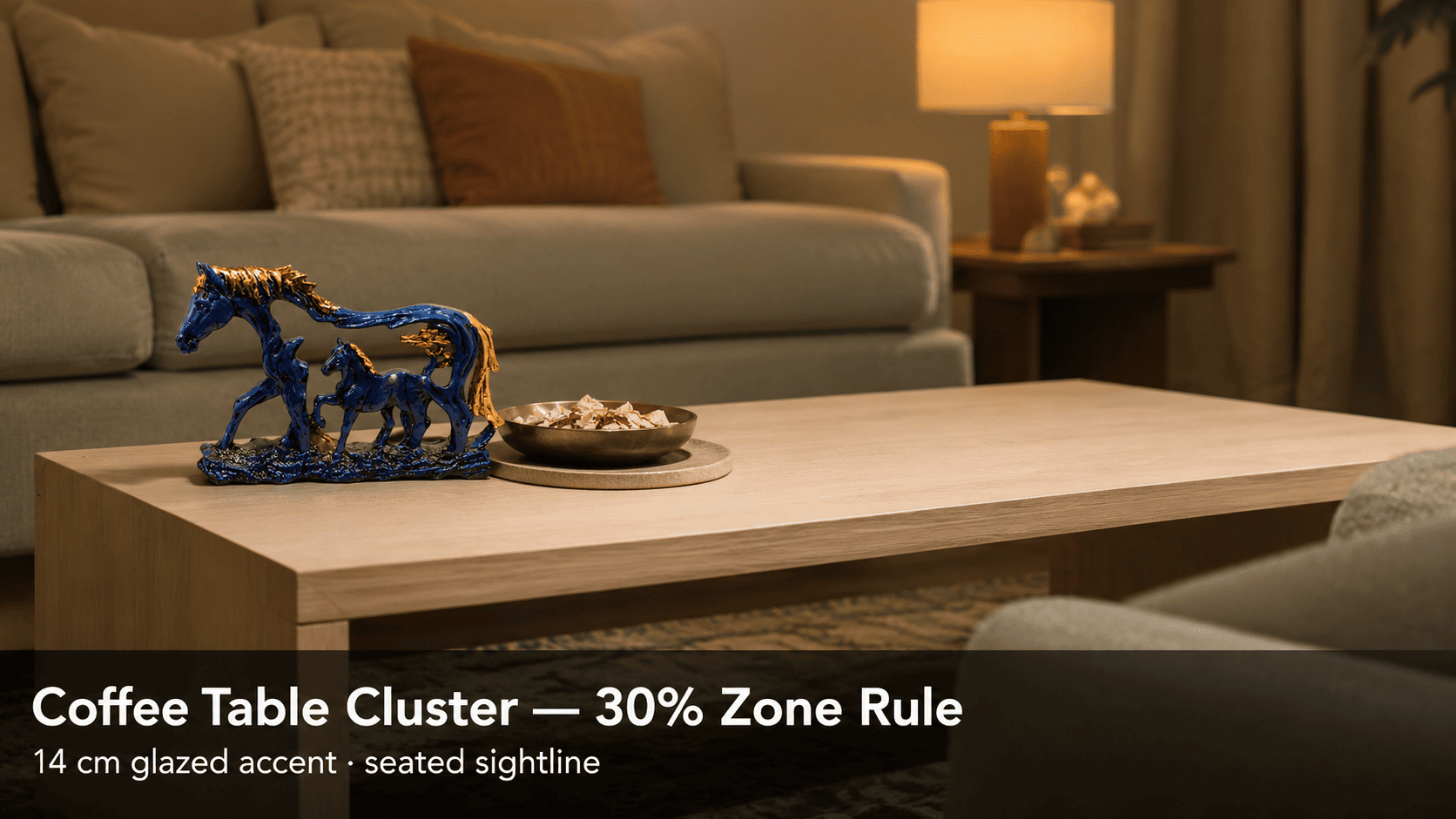
Coffee tables occupy a wider and deeper footprint — typically 90–120 cm long and 50–60 cm deep — but the usable décor zone shrinks because the functional centre of the table (for remotes, coasters, trays) must remain clear. Interior designers consistently apply a 30–40% surface rule for coffee table décor: only 30–40% of the total surface area should be occupied by decorative objects, because the human eye reads an overfull surface as stressful rather than styled. This means the effective décor zone on a standard Indian coffee table is approximately 30–45 cm wide, accommodating small pieces (10–16 cm, 150–250 g) or a tight cluster of two pieces at most.
Material durability adds a further surface-specific variable. Coffee table surfaces in active living rooms are high-contact zones — books, cups, and phones land on them daily. High-density ceramic pieces at 92% clay composition with a 5+ year lifespan under drop-tested 15 cm impact tolerance are better suited to coffee table placement than lower-density resin pieces, because ceramic's greater mass (400–600 g in large formats) also anchors it against accidental displacement.
| Surface Type | Surface Height (cm) | Usable Décor Width (cm) | Recommended Showpiece Height | Recommended Weight Range |
|---|---|---|---|---|
| Console table (entry/living) | 75–90 cm | 30–60 cm | 21–34 cm (Medium–Large) | 400–600 g |
| Coffee table (living room) | 40–50 cm | 30–45 cm (functional zone) | 10–19 cm (Small–low Medium) | 150–350 g |
| Narrow console (bedroom/hallway) | 75–85 cm | 20–35 cm | 16–21 cm (Medium) | 250–400 g |
| Ottoman / low display surface | 35–45 cm | 25–40 cm | 10–16 cm (Small) | 150–250 g |
Because room-specific variables — sofa arm height, the presence of a wall mirror above the console, or natural light direction from Indian east-facing windows — can shift the optimal size band by one tier, browse the full size-band and material selection in Moolwan's modern home décor collection to confirm the right piece for your specific surface and layout.
Design Rule
To prevent visual overload on either surface type, Moolwan's Sightline-First Placement Rule mandates that the total height of the statue plus surface must sit within 10 cm of the viewer's dominant sightline for the posture in which they most commonly occupy the room — standing for console tables (target: 100–115 cm combined height), seated for coffee tables (target: 55–65 cm combined height). Selecting a showpiece outside this band forces the viewer's eye to work, which the brain registers as visual fatigue rather than aesthetic pleasure.
Which Surface Gives a Modern Home Statue Greater Visual Authority?
Console tables consistently produce stronger focal-point impact for a single modern home statue because they operate on the wall-adjacent vertical plane: the statue is read against a flat backdrop rather than against the horizontal clutter of a living table surface. The human eye, when entering a room, scans from the doorway across a horizontal arc at standing eye level. A console table positioned in this arc — typically opposite the entry point or along the primary wall — places the showpiece directly in the entry sightline, giving it disproportionate visual weight relative to its actual dimensions.
Coffee tables deliver a different kind of display authority: intimacy and accessibility. Because a coffee table statue is encountered at close range during seated interaction, it invites inspection — texture, finish quality, and material detail become legible in a way they cannot be from the standing distance of a console table display. Resin showpieces with 3H pencil hardness surface coating and 94% purity epoxy composition make better coffee table candidates than console choices for this reason: their finish precision is a close-range payoff that reading distance obscures.
The decision therefore maps to intent. A modern home statue intended as a room-defining focal point belongs on the console. A showpiece chosen for finish quality, gifting occasion, or conversation-starting detail belongs on the coffee table, where it will be seen at 60–90 cm rather than 200–300 cm.
Ready to choose the right showpiece for your surface? Shop the full size-band and finish range in Moolwan's modern home décor collection — every piece climate-rated for Indian humidity, manufactured direct, no middleman markup.
Finish, Material, and Climate Fit: What Changes Between the Two Surfaces
Finish selection interacts with surface type in a specific way that affects long-term appearance. Console tables in Indian entry halls and living rooms are exposed to ambient sunlight during morning hours, which causes glossy surfaces to develop micro-yellowing in high UV-exposure zones within 18–24 months. Matte-finished ceramic showpieces resist this because the micro-textured surface absorbs and scatters UV wavelengths rather than reflecting them back at full intensity, preserving the original finish tone across a 5+ year lifespan — a critical durability advantage in east- and south-facing Indian rooms.
Coffee table placement brings a different material stress: humidity cycling from air conditioning. Indian AC units cycle ambient humidity between 40% RH (during peak cooling hours) and 80%+ RH (after the unit shuts off at night). Resin pieces rated to 60% RH tolerance are therefore better suited to console table or low-AC-exposure positions. Ceramic pieces rated to 85% RH are the more durable coffee table choice because they tolerate the wider humidity swing without surface crazing, seam separation, or base warping — failure modes that commonly appear in lower-density decorative materials within two monsoon seasons.
Weight is a practical third variable. Console tables with thin legs — a common form in modern Indian furniture — have a lower safe surface load than appears intuitive. A 600 g large ceramic piece at one end of a 30 cm deep console can create a micro-tipping moment if the table is not wall-anchored. Pieces in the 250–400 g medium range are the mechanically safer choice for freestanding console tables, while heavier pieces should be centred over the table's leg span.
How to Style a Modern Home Statue on Each Surface Without Overcrowding
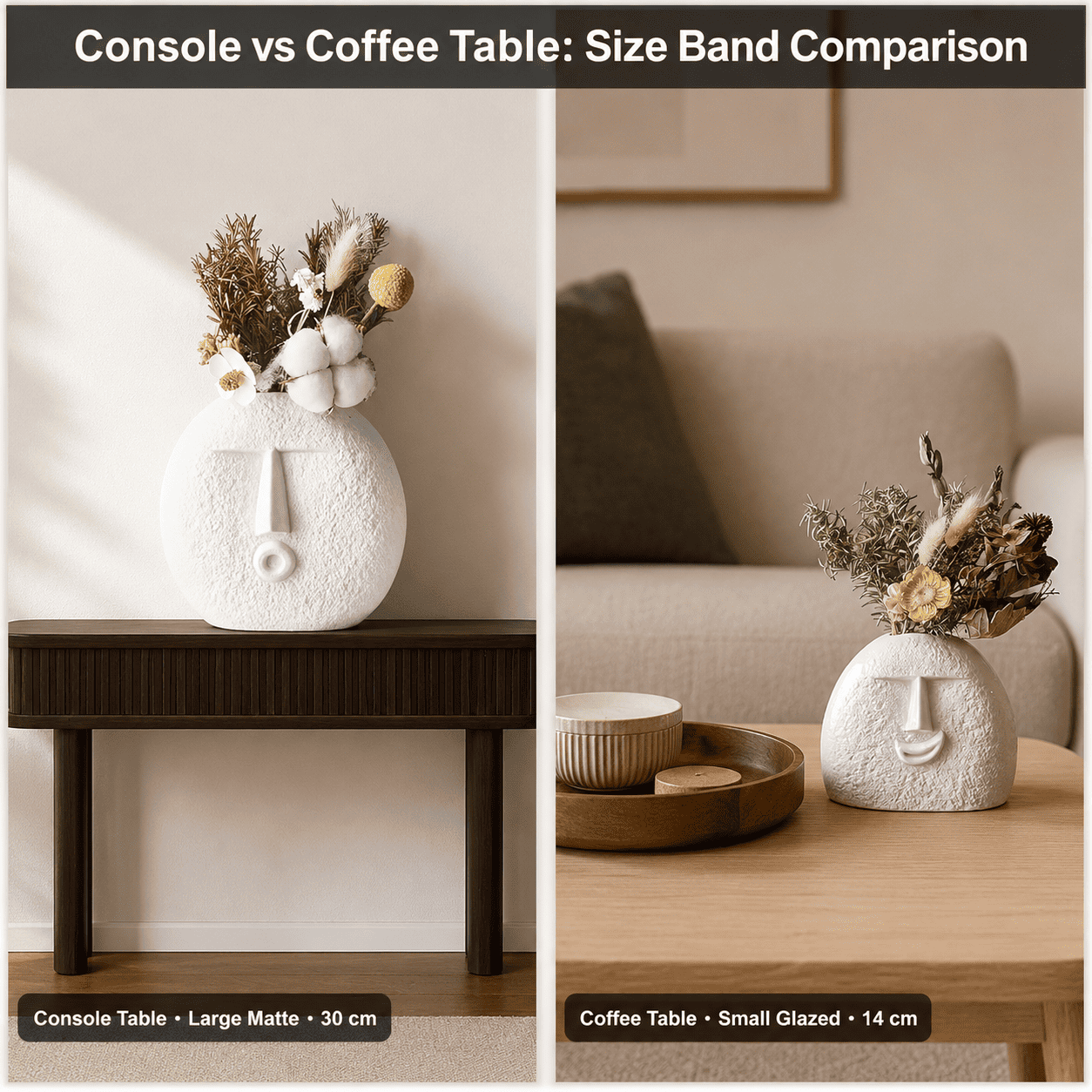
Console table styling follows a vertical composition logic: the statue is the tallest element, flanked — if at all — by a single flat accent (a small tray or a low vase under 12 cm). This vertical hierarchy directs the eye upward, which creates the perception of a taller wall and more generous room proportions — a documented optical effect in interior design where vertical accent stacking increases perceived ceiling height by 10–15% in spaces under 2.8 metres. Limiting the console to one primary piece and one secondary flat accent prevents horizontal crowding on the shallow 25–35 cm surface depth.
Coffee table styling follows a clustering logic with a defined negative space rule: group small pieces within a 30 cm diameter cluster at one end or off-centre, leave the remaining 60–70% of the surface functionally clear. This preserves the table's usability, which matters because a coffee table that cannot be used for its primary function within 60 seconds — without needing to relocate décor — will always be cleared, permanently removing the display. The cluster should contain no more than three pieces, with the tallest piece not exceeding 19 cm, to stay below the seated sightline obstruction threshold.
Frequently Asked Questions
Can the same statue work on both a console table and a coffee table if I want to rearrange later?
A medium-format showpiece in the 16–21 cm size band is the only tier that functions on both surfaces without visual mismatch: it clears the seated coffee table sightline at 100–110 cm and still registers as intentional décor on a console at 75–90 cm surface height. Pieces outside this overlap zone — anything above 21 cm or below 14 cm — are optimised for one surface and will read as incorrectly scaled on the other. If dual-surface flexibility is the priority, target the 16–21 cm medium range in a matte ceramic finish (humidity-rated to 85% RH), which tolerates both console-zone UV exposure and coffee table humidity cycling without finish degradation.
Does the colour or finish of the statue need to change between a console and coffee table display?
Finish choice should respond to ambient light conditions at each surface, not to the surface type itself. Console tables in east- or south-facing Indian rooms receive direct morning sunlight, which bleaches glossy surfaces and creates harsh glare — matte and semi-matte finishes are more durable here because micro-texture diffuses light rather than concentrating it. Coffee tables in the centre of a room typically sit in indirect or evening lamp light, where glazed finishes deliver more visual depth at the close-range seated distance. The practical rule: matte for sunlight-adjacent positions, glazed for lamp-lit or indirect-light positions.
How many statues or showpieces should be grouped on a console table?
One primary showpiece plus one low secondary accent (under 12 cm) is the correct maximum for a console table with 25–35 cm depth. The shallow depth of a standard Indian console physically prevents a stable three-piece cluster without pushing pieces to the edge of the surface, which creates a tipping risk — particularly with ceramic pieces at 400–600 g. A two-piece arrangement within a 20–25 cm horizontal span also preserves the 70% of clear surface area that prevents the console from reading as cluttered rather than styled, because the human eye interprets more than 30% surface coverage on a narrow horizontal surface as visual noise at standing distance. Moolwan engineers its modern home décor pieces in complementary height ratios to support this two-piece rule without requiring the buyer to source a matching secondary piece independently.
Is resin or ceramic a better material for a coffee table showpiece in an air-conditioned room?
Ceramic at 92% clay composition with 85% RH humidity tolerance is the more durable choice for an air-conditioned Indian room, where AC cycling creates daily humidity swings between 40% and 80%+ RH. Resin at 94% purity epoxy tolerates up to 60% RH — adequate for consistently air-conditioned spaces, but at risk of micro-seam separation and surface haze in rooms where the AC is switched off overnight. For coffee tables in non-continuously-conditioned rooms (the norm in most Indian apartments outside peak summer), the ceramic material set's broader humidity range provides a 5+ year lifespan without requiring seasonal repositioning or surface treatment.
Because a showpiece that survives 5+ years of Indian humidity cycling and seasonal AC use delivers a genuine cost-per-use advantage over pieces that need replacing after two monsoon seasons, investing in climate-rated ceramic or resin pieces is the financially rational choice for both surfaces. Bring home a surface-matched showpiece from Moolwan's modern home décor collection — manufacturer-direct, no distributor markup, sized for Indian rooms and rated for Indian conditions. If you are also looking at accent pieces beyond statues, the Moolwan unique home décor collection carries curated accent objects across finish types and size bands; for a broader overview of living and bedroom décor categories, the Moolwan home décor range provides a full category view to help you coordinate across surfaces.


