
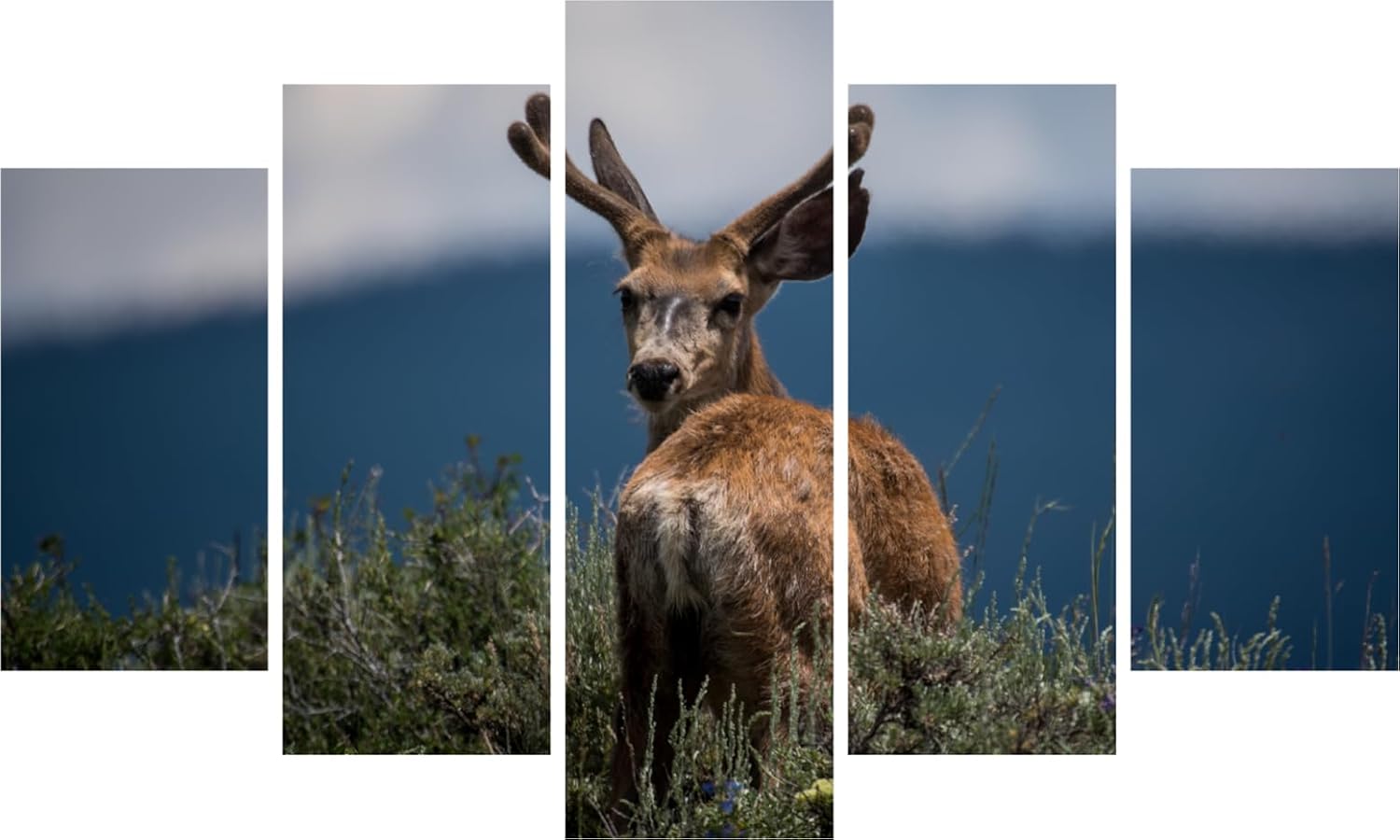
Deer-lightful 5-Panel Framed Wall Art That Gallops Elegance Into Your Room
You may also like


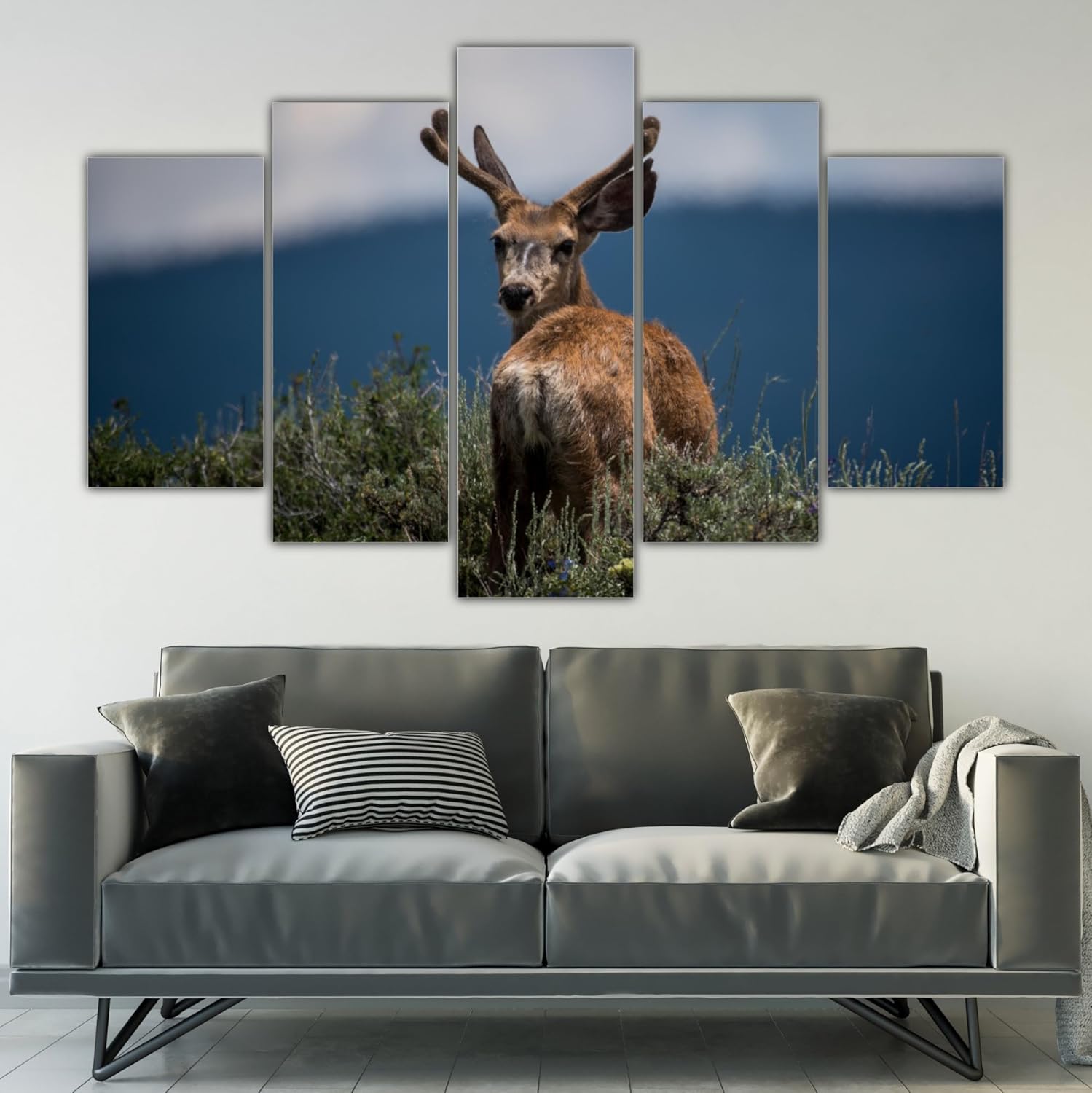
Moolwan 5-Panel Swamp Deer Canvas Wall Art Painting (127x76cm) - Nature Wildlife Multi-Frame Art
You might have browsed dozens of nature wall art pieces by now. Some were too small—lost on your wall, looking like an afterthought. Some were too large—overwhelming the space, making the room feel cramped. You probably kept coming back to 127cm—because intuitively, it feels right. But you want to be sure.
Here's the spatial reality: if your living room wall is 12 feet (360cm) wide, this 127cm canvas covers about 35% of that width. That leaves 116cm on the left and 116cm on the right—enough breathing room to feel intentional, not cramped. Your sofa is probably 6-8 feet wide. This artwork sits comfortably above it without looking miniature or oversized. The 76cm height works on standard 8-10 foot Indian ceilings without feeling top-heavy.
The five-panel design does something clever: it creates movement across your wall. Your eye travels naturally from left to right, following the deer through its habitat. This isn't a static rectangle—it's a visual journey. And at 3kg total weight, installation doesn't require professional help or wall reinforcement.
Why 127cm Works on 12-Foot Walls (and What Happens If You Go Smaller or Bigger)
Let's talk coverage math because this determines whether the artwork looks proportional or awkward.
Your 12-foot (360cm) wall can handle 90-150cm artwork comfortably. Anything smaller than 90cm reads as undersized—guests notice empty wall space rather than the art. Anything over 150cm starts competing with your furniture for visual dominance. At 127cm, this canvas hits the sweet spot: noticeable presence without overwhelming.
If you went with a 90cm version, you'd gain 37cm on each side. That extra space might seem safe, but it often reads as indecisive—like you couldn't commit to filling the wall properly. If you sized up to 150cm, you'd lose 11cm on each side. The impact increases, but so does the risk of feeling cramped, especially if you have side tables or lamps flanking your sofa.
The 76cm height matters just as much. Hung at standard eye level (145-160cm from floor to center), the top edge sits around 200cm—comfortably below your ceiling line. This leaves visual space above, preventing that "squashed against the ceiling" look that happens with oversized art in standard Indian homes.
Why Green and Brown Earth Tones Work in Indian Living Rooms (Not Just Online Photos)
Your walls are probably cream, off-white, or that light yellow that came with the builder's package. The green-brown palette in this deer artwork isn't fighting those colors—it's complementing them.
Here's what happens: the rich forest greens read darker than your wall but aren't as dark as your wood furniture. They create a visual bridge between light walls and dark wooden elements. The brown tones echo your coffee table, TV unit, or dining chairs, creating color continuity across the room. This prevents the "floating art" problem where a painting looks disconnected from everything else.
In morning sunlight coming through your east-facing window, the greens appear brighter—almost fresh and mossy. By evening under warm LED lights (probably 3000K in your living room), those same greens settle into deeper, calmer tones. The browns remain consistent, grounding the piece throughout the day. This color stability matters because you'll see this artwork in different lighting conditions daily.
The deer subject itself brings nature indoors without being too literal. It's not abstract enough to confuse guests ("What is it?") and not photorealistic enough to feel like a zoo poster. The balance works for Indian sensibilities—nature appreciation that still feels sophisticated.
Installation Takes 15 Minutes (Even If You're Not Handy)
The five panels arrive pre-framed with hanging hardware already attached to each piece. You need: a measuring tape, pencil, five wall hooks (₹30 each at hardware stores), and 15 minutes.
The installation logic: mark five evenly-spaced points along a horizontal line. Each panel hangs independently, so if one hook placement is slightly off, you can adjust without redoing the entire arrangement. The 1.5-inch pinewood frames are light enough that standard wall hooks hold securely—no drilling into concrete required.
For rental properties where wall damage means deposit deductions, consider adhesive hooks rated for 1kg each. Each panel weighs approximately 600g (3kg total ÷ 5 panels), so adhesive hooks work if your wall surface is clean and dry. The splash-proof coating on the canvas means this works in rooms without dedicated climate control—important during Mumbai monsoons or Delhi summer heat.
The multi-panel design has a practical advantage: if you move homes, you can reconfigure the spacing to fit different wall widths. Not permanently locked into one exact measurement.
How This Compares to Smaller Sizes You've Been Considering
You've probably looked at 90cm and 110cm versions thinking they're safer choices. Here's the honest difference.
A 90cm canvas on your 12-foot wall covers 25% of the width. That's 135cm empty on each side. In furniture terms, imagine your 8-foot sofa with just a 3-foot painting above it. The proportions feel off—the sofa visually overpowers the art. Guests notice the gap, not the painting.
At 110cm (30% coverage), you're closer to balanced, but there's a psychological factor: it looks like you almost committed to proper size but held back. The difference between 110cm and 127cm is just 17cm total (8.5cm per side), but that 5% coverage shift moves from "adequate" to "intentional."
Going larger to 150cm (42% coverage) works if your wall is completely clear—no windows, no side tables, no floor lamps flanking the sofa. But most Indian living rooms have elements competing for that wall space. The 127cm size accounts for real-world room layouts, not showroom styling.
Price-wise, you're looking at ₹2,796 for the 127cm versus ₹2,496 for smaller sizes. That ₹300 difference buys you proper proportions—not a premium for more material, but confidence that it looks intentional rather than undersized.
What This Will Look Like in Your Living Room (Not Just Online Photos)
Product photos are shot in controlled lighting with perfect wall spacing. Your living room has windows, ceiling lights, and furniture casting shadows. Here's realistic expectation-setting.
Morning: If you have an east or south-facing window, natural light hits the canvas at an angle. The green tones brighten, and the deer's fur details become more visible. This is peak viewing time—the colors are most accurate to what you see online.
Afternoon/Evening: As you switch to artificial lighting (probably warm white LED), the greens shift slightly toward olive, and browns deepen. This isn't color inaccuracy—it's how canvas art responds to light temperature. The moisture-resistant coating prevents that "washed out" look some cheaper canvas develops under LED.
Viewing Distance: From your sofa (probably 8-10 feet away), you see the complete composition—all five panels working together. Walk within 3-4 feet, and you notice the canvas texture, the frame depth (1.5 inches), and individual details like the deer's antlers or vegetation. Both viewing experiences work because the composition is designed for medium-distance viewing.
Wall Texture: If your wall has that slightly rough texture common in Indian homes, it doesn't interfere. The frames create a small gap between canvas and wall, preventing direct contact. This matters for long-term appearance—no texture imprinting through the canvas over years.
The splash-proof coating handles Indian climate reality: 70-85% humidity during monsoons, dry heat in summer. You won't see warping or color fade from normal environmental exposure. Direct afternoon sunlight through an unshaded window will eventually affect any canvas art, but in typical indoor conditions with curtains or blinds, this holds up years without noticeable degradation.
Quick Specifications
• Dimensions: 127cm (W) × 76cm (H) × 1.5cm (D) - five separate panels
• Weight: 3kg total (approximately 600g per panel)
• Panel Configuration: 5-panel horizontal split with deer and forest scene
• Canvas: 340 GSM cotton with moisture-resistant coating
• Frame: 1.5-inch kiln-dried pinewood (12% moisture content)
• Inks: Eco-solvent UV-resistant for color longevity
• Colors: Forest green, brown, beige earth tones
• Subject: Swamp deer in natural woodland habitat
• Finish: Splash-proof protective coating
• Mounting: Pre-attached hanging hardware on each panel
• Installation: Rental-friendly, no heavy drilling required
• Price: ₹2,796
• Delivery: 5-6 days (metro cities), 6-8 days (tier-2/tier-3 cities)
• Recommended Wall: 12-foot (360cm) width for balanced proportions
• Recommended Room: 12×14 ft living rooms, bedrooms, study areas
• Brand: Moolwan