
Deer-lightful Swamp Deer Multi-Frame Wall Art That'll Make Your Walls Go Wild (127x76cm)
You may also like

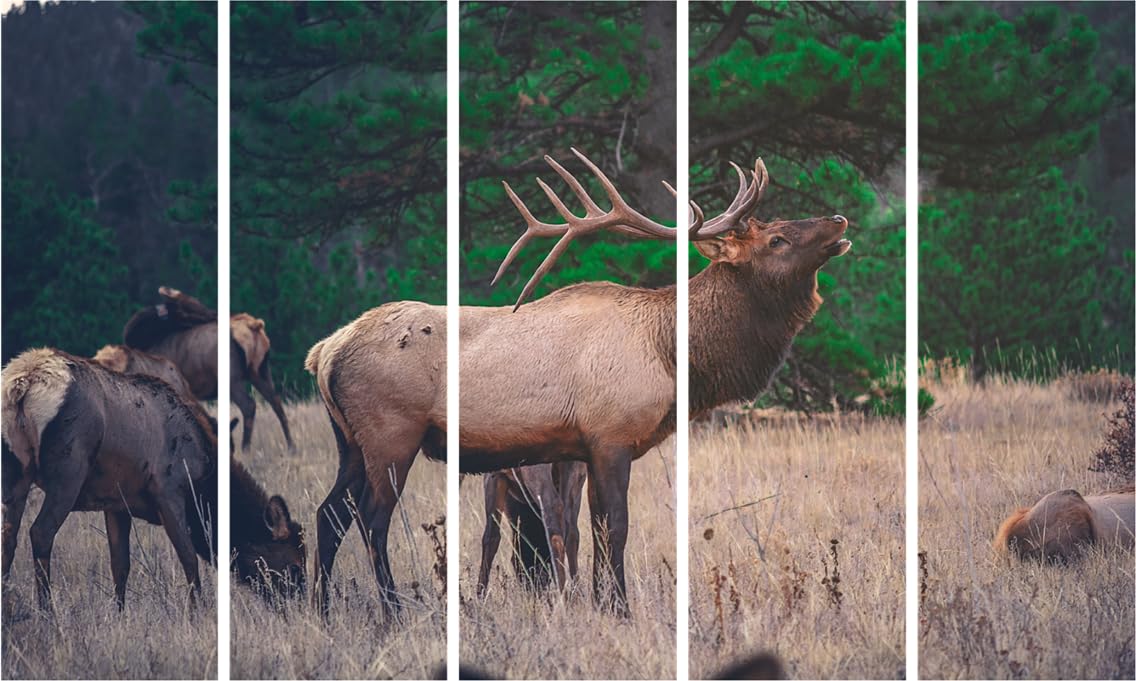
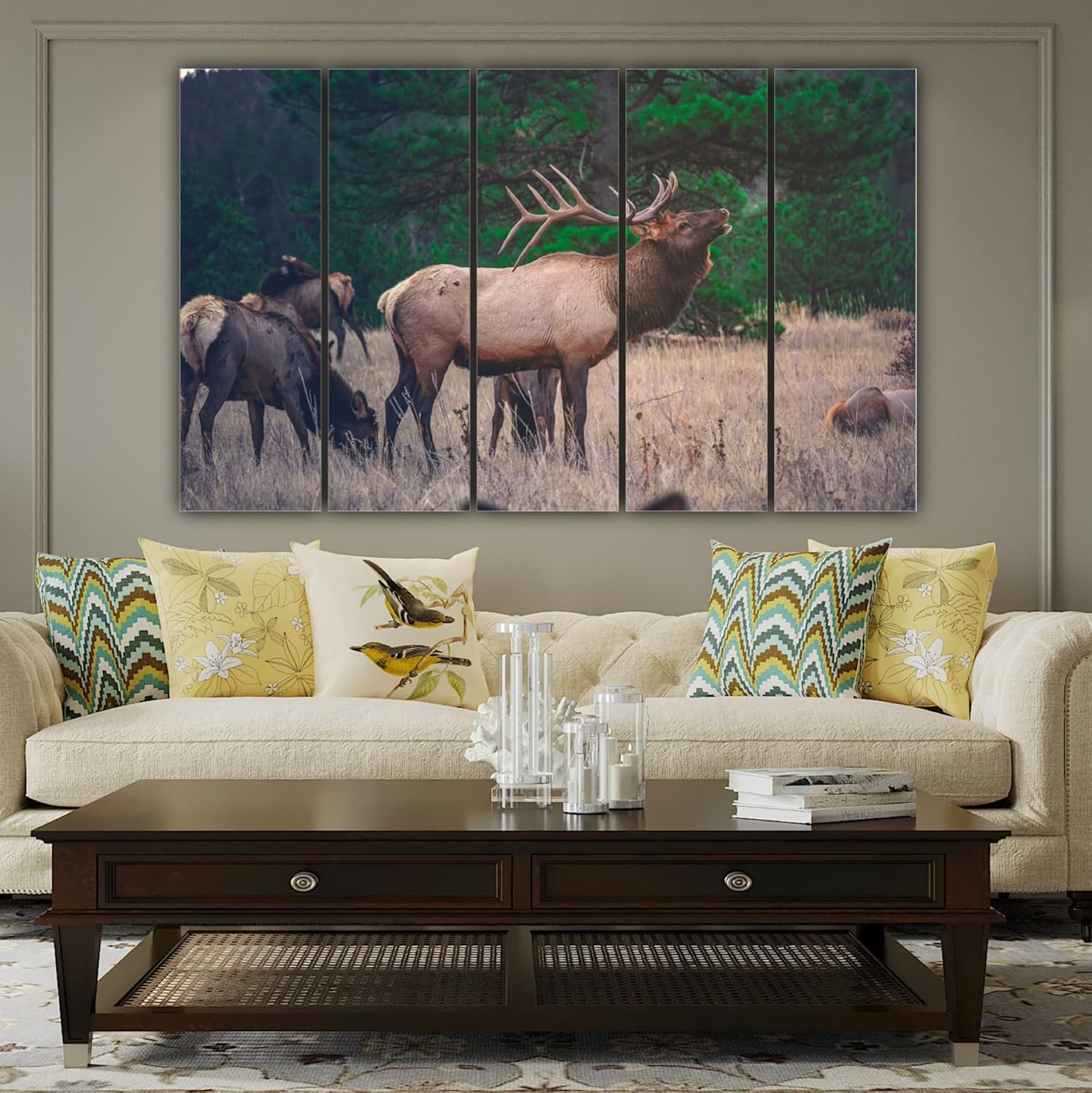
Moolwan 5-Panel Elk Canvas Wall Art Painting (127x76cm) - Multi-Frame Wildlife Nature Art
You've measured your living room wall three times. Maybe four. The tape measure says 360 cm (12 feet), but you're still not confident because every product shows different proportions. Every guide says something different, and none account for your 8-foot-wide sofa sitting below. You keep second-guessing: is 127cm actually right?
Here's the spatial reality: on a standard 12-foot wall, this 127cm canvas covers 35% of the width. That leaves 116cm of breathing space on each side—enough to feel intentional, not cramped. The 76cm height works with 8-10 foot ceilings without overwhelming the vertical space. If your sofa is probably 6-8 feet wide, this sits comfortably above it with balanced proportions on both sides.
The 5-panel design stretches the elk scene horizontally across 127cm, creating a cinematic wilderness panorama. Each panel is approximately 25cm wide, and the multi-frame layout adds dimensional depth—the panels appear to float slightly off the wall rather than lying flat. This matters in Indian homes where single large frames can feel heavy against cream or off-white walls.
Why 127cm Works on 12-Foot Walls (and What Happens If You Go Smaller or Bigger)
Your 12-foot wall (360cm) is standard in most 12x14 ft living rooms. Here's the coverage math:
127cm canvas on 360cm wall:
- Canvas: 127cm (35% coverage)
- Left space: 116cm
- Right space: 116cm
- Visual effect: Balanced focal point above furniture
If you went with 90cm instead:
- Canvas: 90cm (25% coverage)
- Side spaces: 135cm each
- Problem: Looks small and lost, especially above an 8-foot sofa
If you went with 150cm instead:
- Canvas: 150cm (42% coverage)
- Side spaces: 105cm each
- Problem: Feels tight, reduces breathing room for lamps or décor
The 127cm size hits the proportional sweet spot—noticeable without dominating. In a room with brown or beige fabric sofas and a wooden coffee table, this creates a wilderness focal point without fighting for attention.
Why Browns and Greens Work in Indian Living Rooms (Not Just Online Photos)
The color palette matters more than most product pages admit. This elk canvas uses:
- Warm browns (elk fur tones)
- Forest greens (background foliage)
- Golden tan (dried grassland)
- Deep earth tones (shadows and depth)
Against cream, off-white, or builder's peach walls (the reality of most Indian homes), these colors create natural contrast without clash. The browns echo wooden furniture—if your coffee table or TV unit is walnut or teak, the elk's brown tones tie the room together visually. The greens add freshness without looking artificial or overly bright.
In morning natural light through windows, the greens appear vibrant. Under evening LED bulbs (probably warm white in most Indian homes), the browns deepen and the scene feels cozier. The 5-panel layout prevents color monotony—each panel shows a different section of the herd, so the eye moves across the scene rather than getting stuck on one large flat image.
If your walls are light yellow (common in older apartments), the golden grassland tones in the canvas will harmonize naturally. If you have darker accent walls (charcoal grey, navy), the contrast becomes dramatic and the elk stand out more boldly.
Installation Takes 15 Minutes (Even If You're Not Handy)
Weighing 3kg (3000 grams) total, this splits across 5 panels—each panel is under 600 grams, lighter than most framed photos. The 0.6cm depth means it sits close to the wall without jutting out awkwardly.
For rental homes where you're protecting that ₹50,000 deposit, here's what works:
- Adhesive hooks (Command strips rated for 1kg each handle this easily)
- Nails are fine too (small holes patch with toothpaste + paint)
- The pinewood frame has mounting hardware pre-installed
The 5-panel design requires spacing between panels—typically 2-3cm gaps. Most products include a paper template showing exact placement. You measure once, mark lightly with pencil, mount the center panel first, then work outward. Total time: 15-20 minutes if you're careful, 10 minutes if you've done this before.
Because each panel is lightweight, there's no risk of pulling paint off the wall when you eventually move. The moisture-resistant coating on the canvas handles 70-85% humidity during monsoons without warping or sagging.
How This Compares to Smaller Sizes You've Been Considering
You might have 90cm or 100cm canvases saved in other tabs. Here's the honest difference:
127cm vs. 90cm:
- 127cm: Fills 35% of a 12-foot wall (balanced presence)
- 90cm: Fills 25% of the same wall (looks undersized above an 8-foot sofa)
- Visual impact: 127cm reads as intentional; 90cm reads as placeholder
127cm vs. 150cm or larger:
- 127cm: Leaves 116cm breathing room on each side
- 150cm+: Starts crowding side tables, lamps, or pooja shelves
- Practical concern: Harder to center above furniture without feeling squeezed
The 76cm height also matters. It's tall enough to create vertical presence but short enough to work with pooja shelves or storage units below. If you're placing this above a sofa, 76cm prevents the canvas from visually "sitting on" the sofa back—there's clear separation.
If your living room has windows on adjacent walls, the 127cm width doesn't compete with window proportions the way oversized canvases (160cm+) might.
What This Will Look Like in Your Living Room (Not Just Online Photos)
Product photos are styled perfectly. Your home has real constraints. Here's what to expect:
Viewing distance: From your sofa (probably 8-10 feet away), the 127cm width feels substantial but not overwhelming. You'll see the entire elk herd scene clearly—the bugling elk in the center, the herd on the sides, the forest backdrop.
Lighting changes: In bright afternoon sunlight, the greens pop and the scene feels vibrant. Under warm LED bulbs at night, the browns dominate and the scene feels moody and dramatic. Both look intentional—it's not one of those canvases that only works in specific lighting.
Color accuracy: The browns and tans will match the product image closely. Greens might appear slightly darker than online photos show, especially in lower light. This is normal for eco-solvent inks on canvas—they favor richness over hyper-brightness.
Panel gaps: The 2-3cm spacing between panels is visible and intentional. It's part of the design—it creates rhythm and prevents the image from looking like one continuous photograph blown up and split. Some people initially expect no gaps; within a week, the gaps feel natural and actually improve the visual flow.
Texture: The 340 GSM canvas has subtle texture—you'll see fine weave patterns up close. From 8+ feet away (normal viewing distance), it reads as smooth. This texture prevents the "cheap poster" look and adds gallery-quality depth.
If guests comment, it's usually: "Where did you get this?" The elk theme appeals broadly—it's nature-focused without being abstract or polarizing. Your mother-in-law probably won't question it the way she might question bold modern art.
Quick Specifications
- Dimensions: 127cm (W) x 76cm (H) x 0.6cm (D)
- Panel Configuration: 5 separate panels with 2-3cm spacing
- Weight: 3kg total (under 600g per panel)
- Canvas: 340 GSM cotton with moisture-resistant coating
- Frame: 1.5" kiln-dried pinewood (12% moisture content)
- Inks: Eco-solvent UV-resistant (fade-resistant)
- Subject: Elk wildlife scene with forest and grassland backdrop
- Color Palette: Browns, greens, tans, golden tones
- Mounting: Pre-installed hardware, adhesive-hook compatible
- Suitable For: Living rooms, bedrooms, offices
- Ideal Wall Size: 10-14 foot walls
- Climate Suitability: Handles 70-85% humidity, 5°C-45°C temperature range
- Brand: Moolwan
- Price: ₹3,296
- Delivery: 5-6 days metro cities, 6-8 days tier-2/3 cities