
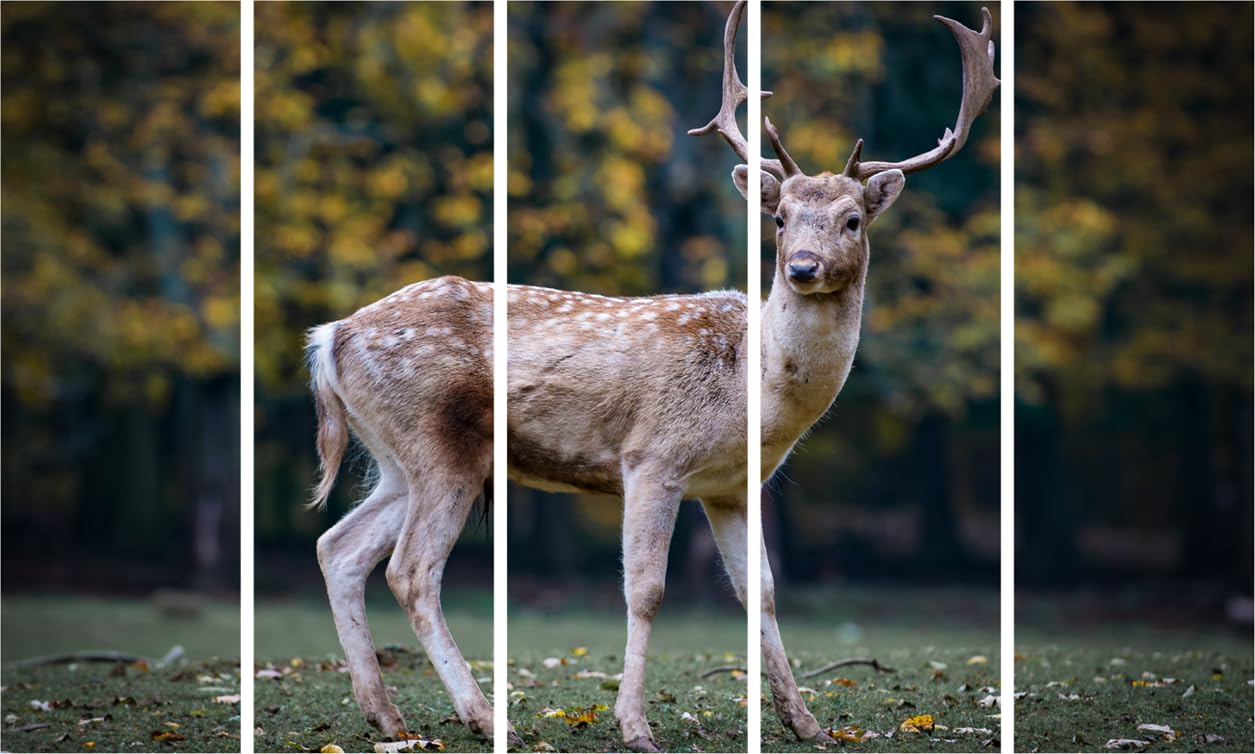
Deer-Lightful Swamp Strut: Multi-Frame Framed Wall Art That'll Make Walls Say 'Oh Deer!'
You may also like

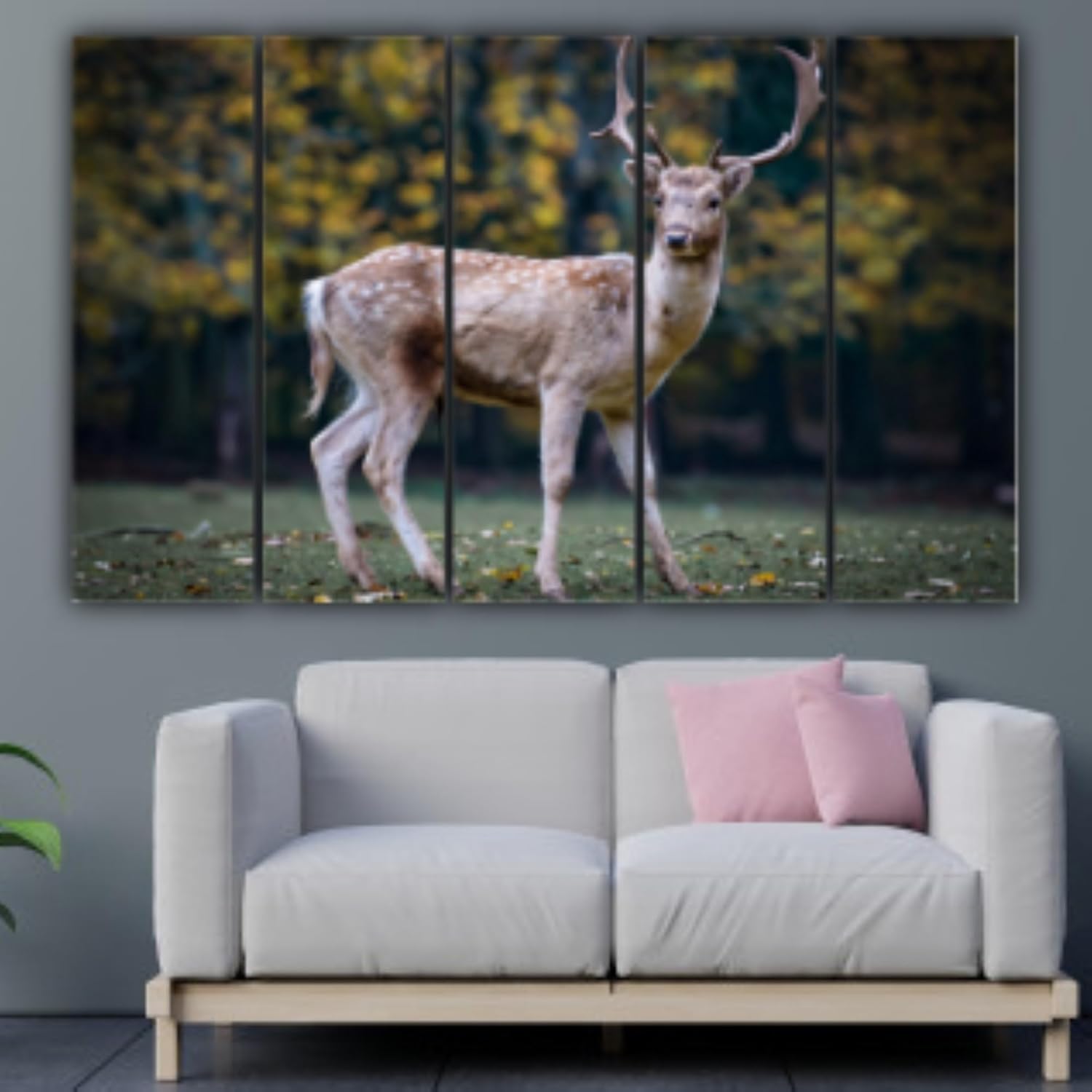
5-Panel Spotted Deer Canvas Wall Art Painting (127x76cm) - Multi-Frame Nature Wall Decor
You might have browsed dozens of wildlife paintings by now. Some felt too small—90cm looked lost on your 12-foot living room wall, like you were trying to fill space with something that wasn't quite enough. Some felt too big—150cm would dominate the wall, but only if you have zero other elements nearby, no windows, no side furniture, nothing competing for visual attention. You probably kept coming back to this spotted deer, this 127cm width, because something about the proportions feels right. But you want to know for sure.
Here's why this is the one: 127cm covers about one-third of a standard 12-foot (360cm) living room wall—leaving 116cm of breathing room on each side. This creates visual balance without crowding. Your wall probably has other elements—maybe a window 3-4 feet away, maybe side tables flanking your sofa, maybe a floor lamp in the corner, maybe that AC vent you can't do anything about. The 127cm width works with these elements instead of fighting them. And at 76cm tall, this fits comfortably under 8-10 foot ceilings without reaching awkwardly toward the ceiling line or sitting too low. The five-panel layout—each panel about 24cm wide with 2cm gaps between them—creates horizontal rhythm that makes your wall, and your entire room, feel wider.
And the colors—warm browns, soft tans, those cream-colored spots on the deer's coat, the muted forest greens in the background—these aren't the cool-toned nature scenes that look disconnected from Indian homes. These are warm earth tones. Browns with enough golden undertone that they feel grounded, not sterile. Your living room walls are probably cream, off-white, or that light yellow shade common in Indian apartments. Your sofa is probably brown or beige fabric, maybe with wooden arms. Your coffee table is probably wood. This canvas will feel like it was chosen specifically for that combination, not like you're forcing a wildlife calendar image into your actual home.
Why 127cm Works on 12-Foot Living Room Walls (and What Happens If You Go Smaller or Bigger)
Your living room wall is probably 10 to 12 feet wide (300-360cm in most Indian 2BHK and 3BHK apartments). The ceiling is probably 8 to 10 feet high. Here's the visual math:
127cm canvas on a 12-foot (360cm) wall:
116cm of space on the left side
116cm of space on the right side
Coverage ratio: Canvas covers 35% of wall width
Effect: Anchored, intentional, balanced—not floating in the middle, not overwhelming the space
Now consider your furniture arrangement:
Your sofa is probably 6-8 feet (180-240cm) wide, sitting 6-12 inches from the wall
Hanging height: 20-25cm above sofa top puts canvas center at 140-160cm from floor (perfect eye level when you're sitting 8 feet away)
Side elements: You probably have a side table (18-24 inches wide), floor lamp, or window within 3-4 feet of sofa edge
The 127cm width spans the primary seating area without crowding your side furniture or blocking natural light from nearby windows
If you went with 90cm instead:
25% wall coverage—reads as an accent piece, not a focal point
On a 12 ft wall, you'll have 135cm of empty space on each side
Effect: Your eye constantly notices all that blank wall around the artwork
Specific problem: You'll probably end up buying matching pieces to fill the space, or the single piece will always feel inadequate
If you went with 150cm instead:
42% wall coverage—works beautifully if you have a completely blank wall with nothing else
But if you have a window 4 feet from your sofa edge, or a side table and floor lamp, the 150cm width will crowd those elements
Effect: Makes the wall feel fuller, but might make the room feel tighter
Specific problem: You'll be constantly adjusting side furniture positions, moving your lamp back, wondering if it's too much
The 127cm is the balanced choice: fills the wall without dominating it, works above standard Indian sofas without overwhelming side furniture, leaves room for your floor lamp and side table to exist comfortably without repositioning your entire living room layout.
And at 76cm tall, this sits proportionally under 8-10 foot ceilings. From your sofa (8-10 feet away), you see the full composition—the deer's stance, the background depth, the way the panels create flow. Walk up close, you see the canvas texture, the individual spots on the deer's coat, the subtle color gradations in the background. Both viewing distances matter—and this size works for both.
The five-panel layout adds another spatial benefit: instead of one solid 127cm rectangle, you get five 24cm panels with 2cm gaps. This creates visual rhythm—your eye travels across the scene left to right, following the deer's posture and the natural background flow. This horizontal movement makes your wall, and by extension your room, feel wider than it actually is.
Why This Spotted Deer Works in Homes That Don't Look Like Pinterest
Every product photo shows wildlife art in perfectly styled rooms—white walls, minimal furniture, dramatic lighting. Your home doesn't look like that.
Your walls are probably cream or off-white. Your sofa is probably brown fabric. You have a wooden coffee table. Your flooring is vitrified tiles or marble. You might have a pooja shelf visible from the living room. Your TV is on the opposite wall. This is what actual Indian homes look like. And here's why this particular deer canvas works in that reality:
The color palette is warm, not cool. Those forest greens aren't the bright emerald greens that clash with cream walls. They're muted, olive-toned greens with brown and yellow undertones. The deer's coat—tan and brown with cream spots—echoes your wooden furniture instead of competing with it. The blurred background has golden autumn tones that complement the warm LED lighting most Indian homes use (3000K warm white). When your mother-in-law visits, when guests see this in video calls, it won't read as "trying too hard"—it'll read as intentional, nature-inspired, calming.
The subject is universally acceptable. A deer in a forest isn't controversial. It's not abstract art that your father will question. It's not modern minimalism that feels cold. It's not religious imagery that needs to match your pooja room aesthetic. It's nature. Everyone finds nature calming. Your grandmother won't have opinions about it. Your children will probably like looking at it. It works in living rooms, bedrooms, home offices, even formal dining areas.
The style is photographic, not illustrated. This matters more than you'd think. Illustrated or painted deer can look childish, or overly artistic, or like something from a calendar. This is photographic wildlife art—it has depth, realistic lighting, natural texture. It looks curated, not decorative. It looks like you chose it because you appreciate nature photography, not because you needed something to fill wall space.
And the five-panel format? It makes the piece feel intentional. A single-panel deer photo could be mistaken for a large print you got framed. The multi-panel layout signals "I chose this specifically"—it's clearly wall art, clearly meant for this space, clearly a deliberate design decision.
The Quality Difference You'll Notice the Day It Arrives
You've probably seen similar deer paintings on marketplace sites for ₹1,200. So why spend ₹2,496 here?
Because the moment you unpack this canvas, you'll feel the difference. Literally. The canvas has weight. When you hold it, the frame feels solid—real wood, not hollow MDF. The canvas surface is tight, drum-tight, no sag or ripple anywhere. The corners are square, professionally braced. The back is sealed with kraft paper so dust can't accumulate between canvas and wall.
340 GSM cotton canvas: This isn't the thin 200 GSM canvas marketplace sellers use. Hold it up to light—you can't see through it. The weave is dense. When you touch it (and you will, just to see), it feels substantial. This is the same weight professional photographers use for gallery prints. It won't sag. In two years, it'll still be tight on the frame.
Eco-solvent inks with UV resistance: Your living room probably gets morning or afternoon sun at some point. Cheap dye-based inks fade in 6-12 months of sun exposure. You'll notice the browns turning grayish, the greens losing depth, the whole image looking washed out. Eco-solvent inks are chemically stable. They're designed for outdoor signage—tested to withstand direct UV without color shift. This deer will have the same rich browns two monsoon seasons from now.
1.5-inch kiln-dried pinewood frame: The wood is dried to 12% moisture content before assembly. This prevents warping in Indian humidity. During monsoons when your apartment hits 75-85% humidity, cheap frames absorb moisture and bend. The canvas loosens, ripples form at the edges. Kiln-dried pinewood at 12% moisture stays dimensionally stable. Three years from now, your canvas will still sit flat against the wall.
Moisture-resistant polymer coating: This is critical in Indian climates. The coating seals the canvas surface. During monsoons, when condensation forms on walls, the moisture beads up on the canvas surface instead of soaking into the fibers. The canvas doesn't expand and contract with humidity changes. The colors don't dull from moisture absorption. This coating is the difference between canvas that lasts one monsoon season and canvas that lasts five.
The ₹1,296 price difference between this and marketplace options? That's the difference between canvas you're still happy with in three years and canvas you're replacing after eight months because it looks tired and faded.
What This Actually Looks Like in Your Specific Room
Product photos are shot in controlled lighting. Your room isn't controlled.
In morning light (if your living room faces east): The warm browns and tans in the deer's coat will look richer. The forest background will have nice depth. The golden tones will catch morning sun beautifully. If you're someone who has tea in the living room at 7am, this is when the canvas looks most alive.
In afternoon light (if your wall gets 2-4pm sun): The earth tones intensify slightly. The cream spots on the deer stand out more. This is when you'll really see the canvas texture and print quality—and when cheap ink quality becomes obvious (cheap inks look washed out in bright light, while quality inks maintain depth).
In evening/artificial light (warm white LED, 3000K): This is when most guests see your walls. The canvas colors appear warmer, richer. The five-panel gaps create subtle shadow lines that add dimension. The deer seems to have more presence. Good frame quality shows here too—cheap frames create uneven shadows where they don't sit flush against the wall.
Against cream walls (most common in Indian homes): The neutral wall lets the canvas be the focal point without visual competition. The warm browns and forest greens stand out clearly but don't feel jarring. The deer reads as intentional, anchored, part of the room's design.
Against off-white or light yellow walls: The golden tones in the background complement the wall color. The overall effect is cohesive—like the canvas was chosen specifically for these walls, not randomly placed.
With brown or beige sofas (most common Indian furniture): The deer's tan and brown coat echoes your sofa tones without exactly matching them. This creates visual harmony. The forest greens add a complementary accent color that makes the whole seating area feel balanced.
With wooden furniture (coffee tables, TV units, side tables): The earth-tone palette and nature subject feel natural next to wood. It doesn't compete with your furniture's wood grain—it complements it. The room feels intentionally designed around natural materials and colors.
The honest test: when you walk into your living room after this is installed, your eye should go to the canvas in a "that anchors the space nicely" way, not in a "that's sitting on the wall" way. Good wall art integrates into the room's overall feel instead of sitting as a separate decorative element that never quite belongs.
Installation Reality: Easier Than Hanging Curtain Rods
You're probably in a rental. Your lease probably says "no major wall modifications." Your deposit is ₹40,000 or ₹50,000 and you'd very much like to get it back. So when you see "wall mounting required," you're thinking: "Can I actually do this without losing my deposit?"
Here's the reality: the holes you need for this canvas are smaller than the holes from picture frame nails. They're 6mm diameter, 30-40mm deep. When you move out, you fill them with wall putty (₹50 at any hardware store), sand smooth, touch up with paint. Total time: 15 minutes. Total cost: ₹200. Your landlord will never notice.
What you'll receive with your canvas:
Concrete wall anchors (for older buildings with solid walls)
Drywall anchors (for modern apartments with drywall over brick)
D-ring hangers (pre-attached to canvas frame)
Paper hanging template (this is key—more on this below)
Installation steps (15-20 minutes total):
Decide where you want it: Hold the canvas against the wall (or have someone hold it while you stand back). The bottom edge should be 20-25cm above your sofa top. Mark this position lightly with pencil.
Tape the hanging template to the wall: The template shows you exactly where to drill—two marked spots. This eliminates the "I drilled in the wrong place" anxiety. The template accounts for the D-ring positions on your canvas back.
Drill two holes: Use a 6mm bit. For drywall (sounds hollow when you tap), drill 30mm deep and use the plastic drywall anchors. For concrete (sounds solid), drill 35mm deep and use the concrete anchors. Tap anchors in gently with a hammer.
Screw in the hooks: Just until they're snug in the anchors.
Hang the canvas: Line up the D-rings with the hooks. The canvas will sit flat against the wall.
Adjust level: Use a small spirit level (or the level app on your phone) to make sure it's not tilted.
That's it. No measuring, no math, no drilling multiple test holes. The template does the hard part.
If you're genuinely paranoid about drilling: Command strips rated for 5-7 kg will hold this 3 kg canvas. But honestly, the anchor holes are so small and easy to patch that drilling is simpler and more secure. You don't want a ₹2,496 canvas falling off the wall at 2am because the adhesive failed.
Why Moolwan Instead of Marketplace Options
You've seen deer paintings on other sites for ₹1,200 to ₹1,500. So why buy from Moolwan?
Because we manufacture this canvas in-house. We're not resellers sourcing from random suppliers who might change next month. The canvas comes from our textile partner in Surat (artist-grade 340 GSM cotton). The inks are eco-solvent Roland inks (same company that makes commercial printing equipment). The pinewood is sourced from Karnataka, kiln-dried in our facility to exactly 12% moisture content, cut and assembled with corner bracing for frame stability.
Each canvas is inspected before shipping. Not sample-checked—actually inspected. Someone physically verifies the print quality, checks color consistency across all five panels, confirms the frame corners are square, tests that canvas tension is even, ensures the D-rings are properly attached and the hanging template is included.
When you order from Moolwan, you know exactly what you're getting. Same canvas weight, same ink quality, same frame construction, every single time. You're not gambling on which supplier a marketplace seller happens to be using this month.
What's included that marketplace sellers skip:
Both concrete AND drywall anchors (most sellers include one type or cheap hooks that don't actually hold weight)
Hanging template (marketplace sellers expect you to measure and hope for the best)
Kraft paper backing (prevents dust accumulation and looks finished)
Actual quality control (not just "we'll deal with complaints if they come")
Replacement policy that actually works:
Video your unboxing (this protects you)
If there's shipping damage (bent frame, torn canvas, print defects), contact us with the video
Replacement ships within 2-3 days, no fighting through three different ticket systems
The ₹1,200+ difference isn't paying extra for the same thing. It's paying for canvas that still looks intentional and fresh two years from now instead of faded and warped after eight months. It's paying for not losing a Saturday finding the right wall anchors because the included ones were too flimsy. It's paying for your wall art to still make you happy when you walk into your living room three years from now.
What Past Customers Actually Say (6-12 Months Later)
"The deer looks exactly like the photo—same browns, same detail in the spots. After one full monsoon season in Mumbai, no warping at all. The canvas is still tight." — Priya, Mumbai (purchased 127cm spotted deer canvas)
"Installation took maybe 20 minutes. The template made it foolproof. I'm not handy with tools and I got it perfectly level on the first try." — Rahul, Bangalore (purchased multi-panel wildlife canvas)
"My mother came over and said 'this suits the house nicely'—which from her is high praise. The earth tones work with our brown sofa and wooden furniture." — Anjali, Pune (purchased nature-themed canvas)
"Two full summers of afternoon sun on this wall (west-facing window) and the colors haven't faded at all. My cheap marketplace canvas from before turned brownish-gray in six months." — Karthik, Chennai (purchased 127cm nature canvas)
"The frame quality surprised me when I unpacked it. Feels solid, real wood, professionally assembled. You can tell this isn't mass-market stuff." — Deepa, Hyderabad (purchased 5-panel wildlife art)
Shipping, COD, and the Practical Details You're Wondering About
Shipping time: 5-6 days to metro cities (Mumbai, Delhi, Bangalore, Chennai, Hyderabad, Pune). Add 1-2 days for tier-2 and tier-3 cities. You'll receive tracking details within 24 hours of ordering.
Packaging: Triple-layer protection—bubble wrap around the canvas, cardboard corner protectors on all four corners, outer carton. Shipping is rough on framed canvas. This packaging is why your canvas arrives undamaged instead of with cracked corners or bent frames.
COD available: Yes, across all Indian cities where courier services operate. The delivery person will let you inspect the outer carton before you pay. If the box is visibly crushed or torn, refuse delivery and contact customer service immediately.
Video your unboxing: Start recording before you cut the tape. Show all sides of the carton, then the unwrapping process. If there's damage (bent frame, print defect, torn canvas), you'll have video proof for replacement claims. Without video, proving shipping damage is nearly impossible.
What's covered under replacement: Manufacturing defects (print errors, color inconsistency between panels, frame construction issues, canvas not stretched properly) and shipping damage (bent frames, torn canvas, broken corners). Replacement ships within 2-3 days of approved claim.
What's NOT covered: Buyer's remorse ("I thought 127cm would look different"), subjective color complaints when the canvas actually matches the product photo ("the brown looks different on my wall than on my phone screen"), damage after installation, normal wear after 6+ months.
Color accuracy note: Your phone or laptop screen settings affect how colors appear. If your screen is set to "cool" color temperature, browns will look grayer. If it's set to "warm," they'll look more orange. The actual canvas is shot in natural daylight with calibrated cameras. It will match what it looks like on a properly calibrated display, not necessarily your specific screen's settings.
Cleaning: Dust with a dry microfiber cloth every 2-3 weeks. That's it. Don't use water. Don't use cleaning sprays. Don't use furniture polish. The moisture-resistant coating means dust sits on the surface instead of embedding in the canvas weave—it wipes away cleanly with dry cloth.
This Is Where You Decide
You've been searching for three weekends. You've looked at forty-something wildlife paintings. You've measured your wall multiple times. You've calculated whether 127cm is right for your 12-foot wall and your 7-foot sofa and your side table and your floor lamp.
You know what you need now. You know 127cm covers 35% of a 12-foot wall—balanced, not overwhelming. You know the warm earth tones work with cream walls and brown furniture. You know 340 GSM canvas won't sag, eco-solvent inks won't fade, kiln-dried frames won't warp through monsoon seasons. You know the installation is simpler than hanging curtain rods. You know the ₹2,496 price is justified by materials that actually survive Indian climates instead of marketplace canvas you'll be replacing in eight months.
Your wall has been empty long enough. That blank space has been bothering you every time you walk into your living room, every time guests visit, every time you see your room in video calls.
The decision isn't whether to buy canvas wall art. You've already decided that. The decision is whether you're ready to stop researching and start living with a room that finally feels complete—with a spotted deer that makes your wall, and your home, feel intentional instead of unfinished.
5-Panel Spotted Deer Canvas Wall Art Painting - Quick Specifications
Dimensions: 127cm (W) x 76cm (H) x 1.5" (frame depth) Weight: 3 kg Panel Configuration: 5 panels (each ~24cm wide with 2cm gaps) Canvas: 340 GSM cotton with moisture-resistant polymer coating Frame: 1.5" kiln-dried pinewood (12% moisture content) Printing: Eco-solvent UV-resistant inks Design: Photographic spotted deer in natural forest setting Color Palette: Warm browns, soft tans, cream spots, muted forest greens, golden autumn background Ideal For: 12-foot living room walls, above 6-8 foot sofas, 8-10 foot ceilings Room Compatibility: Living rooms, bedrooms, home offices with cream/off-white walls and wooden furniture Climate: Tested for Indian monsoon humidity (70-85%), temperature range 5°C-45°C Installation: Included concrete anchors, drywall anchors, D-rings, hanging template Installation Time: 15-20 minutes Rental-Friendly: 6mm holes, easily patchable Shipping: 5-6 days metro cities, triple-layer protective packaging COD: Available all India Price: ₹2,496