
Dolphin-bulous Multi-Frame Framed Wall Art That'll Make Waves in Your Room
You may also like

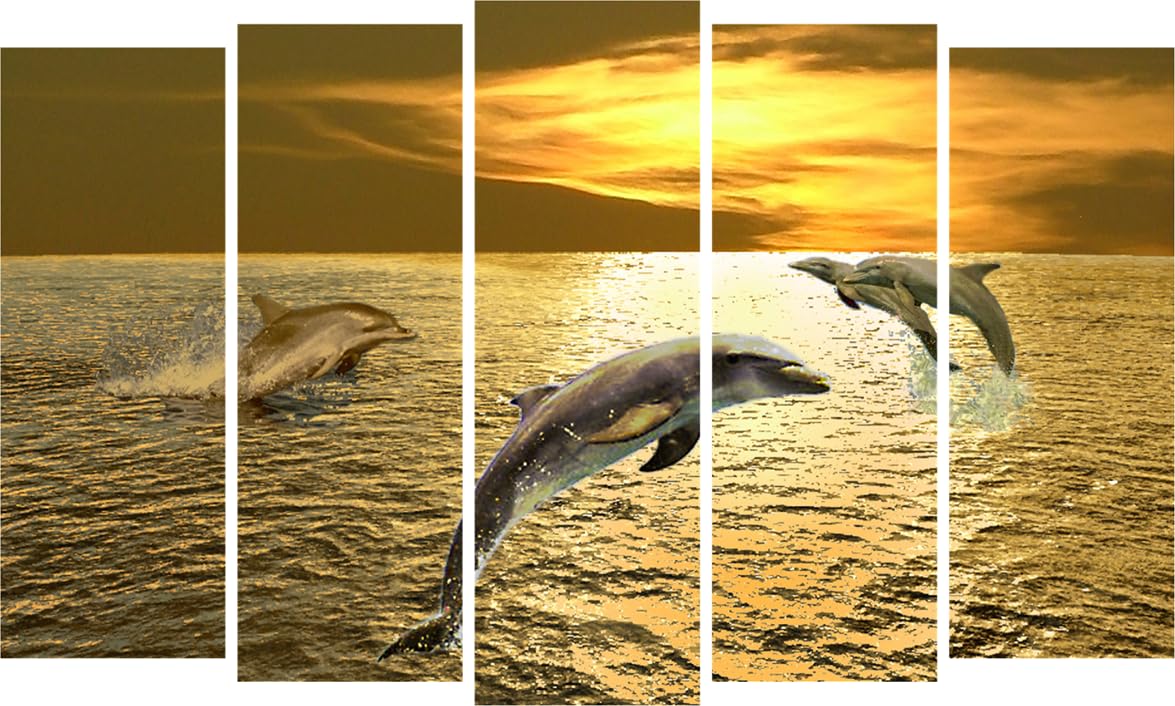
Moolwan 5-Panel Dolphin Ocean Vinyl Wall Art on MDF (127x76cm) – Continuous Leap Scene Across Golden Sunset
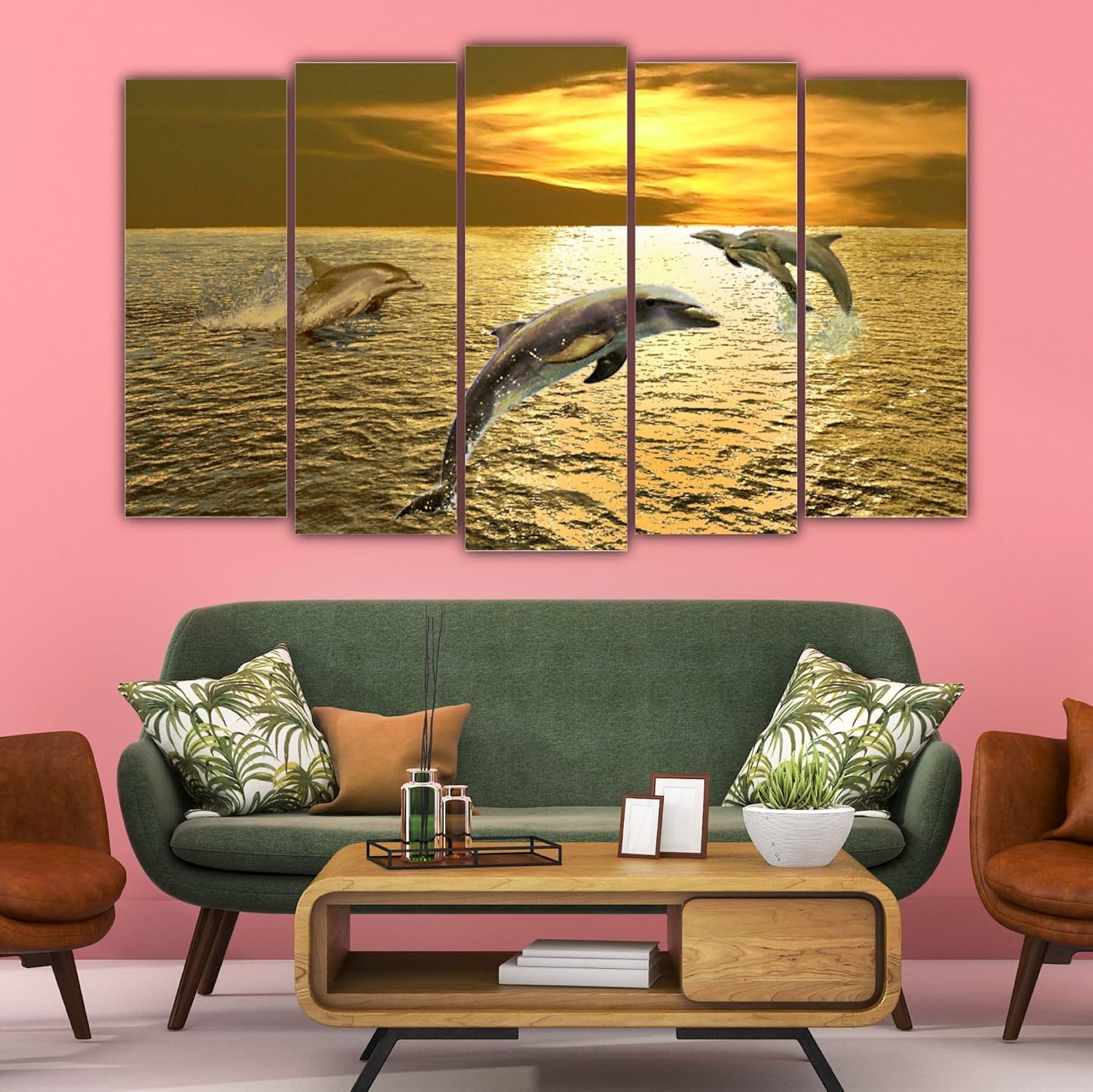
You've measured your living room wall three times. Maybe four. The tape measure says somewhere between 10 and 12 feet, but you're still not confident—because you don't just have blank wall. You have a sofa that's roughly 7 feet wide, a floor lamp 18 inches from the armrest, and whatever width your AC vent or window eats up. You keep second-guessing: does 127cm land proportionally in that specific space, or does it sit awkward between the lamp and the right edge of the sofa?
Here's how it resolves. On a 12-foot (360cm) wall, 127cm covers 35% of the wall width—leaving about 116cm of visual breathing room on each side. That remaining space is exactly where your floor lamp and side table live without being crowded by the canvas. On a 10-foot (300cm) wall, coverage rises to 42%—still balanced, still deliberate. Your eye stays on the scene, not on the gaps.
What the measurement also doesn't tell you: this is a 5-panel layout, not a single rectangle. Each panel is approximately 24cm wide. The gaps between them break the 127cm span into rhythm, so the wall doesn't feel like one solid block. The five dolphins—leaping left to right in a continuous arc from panel one through panel five—create directional movement that makes your wall feel wider than the number says. The composition draws your eye across the room rather than stopping it in one place.
The golden sunset backlighting is the other thing the tape measure doesn't capture. Most ocean art you've been browsing runs cool—deep blues and aqua look striking in styled photos but can feel cold against Indian cream walls under warm LED lighting. This palette is different: warm amber, honey-gold water, charcoal dolphins against a burning sky. It integrates with what's already in your room instead of competing with it.
The Visual Math: How 127cm Fits 10–12ft Walls in Indian Homes
On a 10ft (300cm) wall:
- Canvas covers 42% of wall width
- 86cm of breathing room on each side
- Works best above a sofa where adjacent furniture naturally frames the art
On a 12ft (360cm) wall:
- Canvas covers 35% of wall width
- 116cm of space on each side
- Anchored above a standard 6–8ft Indian sofa without crowding side table or floor lamp
- Hung 20–25cm above sofa cushion top, the canvas center sits at 140–160cm from floor—correct eye level when seated
The 5-panel format matters for these proportions specifically. Each approximately 24cm panel creates a thinner, more refined visual unit than the chunky rectangles of a 3-panel set at the same total width. The gaps between panels read as intentional spacing, not fragmentation. From your doorway, you see one unified scene. Up close, you see five distinct frames building the composition.
If your wall is smaller than 10ft: 127cm begins to dominate—consider 90cm for walls under 300cm.
If your wall exceeds 14ft and is completely blank: 127cm risks reading as an accent piece rather than a focal point. A wider format or flanking décor would serve better.
At 76cm tall, this sits clear of both the sofa top and the ceiling line on standard 8–10ft ceilings. No awkward crowding near the ceiling, no disconnected float above the furniture.
Why Golden Sunset Tones Work on Cream Walls (When Ocean Blues Often Don't)
The composition is built on three specific tones: deep amber (the ocean surface lit from below by the setting sun), warm gold-orange (sky and sun glow covering the upper two-thirds), and charcoal-gray (the dolphins in silhouette against bright, reflective water). There is almost no cool blue in this painting—which is precisely what makes it work in Indian living rooms.
Against cream or off-white walls (most common): The warm amber and gold read as complementary depth, not contrast clash. The wall recedes, the canvas advances. The dolphins stand out clearly against the warm background and the neutral wall simultaneously.
Against light yellow or builder's peach walls: The sunset palette sits in the same warm family—different enough to differentiate, close enough not to fight.
With brown or beige sofas: The golden water tones echo the warmth in most Indian fabric sofas. Wooden furniture—coffee tables, TV units, side consoles—picks up the ochre and amber without needing any accessory to bridge the gap.
In warm LED light (2700K–3000K): The golden tones intensify in a way that reads as depth rather than brightness. The water appears to hold light from within. This is typically when guests see the room.
In morning natural light: The warmth softens but doesn't disappear. The scene reads as calm and settled—it doesn't demand attention before you want to give it.
One specific note: if your walls are cool gray and your furniture is chrome or white, this warm palette will feel at odds with that direction. It is designed for the warmer interiors that most Indian apartments actually have.
Rental-Friendly Mounting: How to Hang Without Losing Your Deposit
Five panels, and the assumption is that means ten holes in your wall. In practice, the included hanging template distributes anchor points efficiently—only what's needed to support the load across all panels, not one set per panel.
Each hole is 6mm diameter, drilled 35–40mm deep. Smaller than curtain rod brackets. When you move out, standard wall putty (₹50 at any hardware store), a light sand, and a paint touch-up renders them invisible. Landlords who inspect for genuine damage won't flag this as a deduction.
For concrete walls: Use the included masonry anchors with a 6mm masonry bit. For drywall: Use the included plastic anchors with a standard drill bit. The D-ring system on each panel rests on the installed hooks—no visible hardware, no exposed screws once the panels are hung.
The template is the step that prevents misalignment. Tape it to your wall at the correct height before drilling. It marks all anchor positions at once. You don't measure each panel individually and hope the math adds up—the template accounts for panel gaps and sequence, so all five hang level from a single setup pass.
At 3kg total across five panels, properly installed anchors on Indian concrete or drywall hold this with substantial margin. It's not going anywhere.
What This Has That Macrame Ocean Art Doesn't
Macrame wall hangings have become a common alternative for people who want coastal texture without committing to a specific print. They're repositionable, visually soft, and often less expensive upfront. The trade-off is direct.
Macrame cannot render a photographic scene. Dolphins leaping across a golden sunset—the specific atmospheric quality of reflected water, the arc of movement, the color gradation in a real sky—isn't something yarn weave can capture. Where this painting delivers a moment, macrame delivers ambient texture. If the goal is a specific visual statement rather than a general coastal feel, the comparison ends there.
At 127cm wide, macrame also scales differently in larger rooms. It typically adds softness without anchoring the wall—it decorates rather than defines. A structured 5-panel set with a defined scene creates a deliberate focal point that holds the room's attention rather than diffusing it.
The durability consideration is practical: natural fiber hangings absorb dust and humidity gradually. In Indian climates with 70–85% monsoon humidity, fibers that absorb atmospheric moisture require periodic airing out and light cleaning to prevent mustiness and color shift over time. Vinyl print on MDF with a splash-proof surface is unaffected by humidity variation across seasons—the surface condition after three monsoons should be the same as after three months.
Morning Light vs. Evening LED: How This Looks Throughout the Day
From your doorway (8–12 feet away): All five dolphins are visible in their full arc—the first leap on the left panel, the central pair mid-flight in panels three and four, the trailing dolphin completing the sequence on the right. The staggered panel heights create rhythm at this distance. Golden ocean and sky read as one continuous scene.
Walking up close: Splash detail at panel two's water surface, individual fin definition on the central dolphin, cloud texture in the sunset sky. The 5-panel structure reveals compositional depth that reading distance compresses.
Morning (cool natural light): Golden tones appear softer and more muted. The scene is present but not demanding—it doesn't pull attention before you've oriented to the room.
Afternoon (direct sun): The warm palette intensifies. Amber water looks vivid. This is also when the difference between UV-stable and UV-unstable inks becomes visible over time—stable inks maintain the original warmth; cheaper alternatives shift toward washed-out yellow-brown.
Evening (warm LED): The golden tones glow. Dolphin movement reads as most dynamic. The panel gaps create subtle shadow depth that adds dimension not visible in flat daylight.
This piece works as a primary focal point—above a sofa or on a dining wall where it's visible from the room's entry. Placing competing art pieces in close proximity (clocks, mirrors, smaller canvases) disrupts the directional movement the dolphin sequence creates. Better to let the 127cm span own its wall section and balance the room with furniture and textiles rather than adjacent art.
Moolwan Design Note
The five panels are intentionally staggered in height so the central dolphin—lowest in the composition and largest in apparent size—appears to break toward the viewer, while the flanking dolphins trail behind. This creates a foreground-background relationship on a flat surface: the scene has spatial depth without 3D elements.
Moolwan Quality Standard
Designed for Indian apartments and lighting conditions. Packed for long-distance Indian transit. Quality checked before dispatch. Printed to resist humidity-related color fading. Ships from West Bengal.
Moolwan Fit Guidance for Indian Homes
The 127x76cm format is calibrated for 10–12ft living room walls in Indian 2BHK and 3BHK apartments—wide enough to function as a true focal point above a standard 6–8ft sofa without crowding adjacent side tables or floor lamps on either side.
Quick Specifications
Product: Moolwan 5-Panel Dolphin Ocean Vinyl Wall Art on MDF (127x76cm)
Brand: Moolwan
Category: Vinyl Wall Art on MDF
Collection: Animal Wall Art Collection
Dimensions: 127cm W x 76cm H x 0.6cm D (assembled set)
Weight: 3kg
Panels: 5 vertical panels, staggered heights, approximately 24cm each
Material & Construction: Splash-proof vinyl print on MDF
Colors: Warm amber, honey-gold, charcoal gray, orange-gold sky
Best For: 10–12ft living room walls; above sofa or dining wall
Ships From: West Bengal
Price: ₹2,496
Frequently Asked Questions
Will 127cm look proportional on my 12-foot living room wall?
On a 12-foot (360cm) wall, 127cm covers approximately 35% of the width—leaving about 116cm of visual space on each side. Above a standard Indian 6–8ft sofa, that ratio creates a balanced focal point that anchors the wall without overwhelming it. On a 10-foot wall, coverage rises to 42%, which works equally well in most room configurations.
The colors look warm golden in the images. Will they look different under my home's LED lighting?
Warm LED (2700K–3000K, standard in Indian homes) will make the golden tones appear slightly richer than they do in natural-light product photos. Cool white LED (5000K+) will mute the warmth slightly. The product photos are shot in calibrated natural daylight—in most Indian homes with warm LED, the painting will appear marginally warmer and more vibrant than shown.
I'm in a rental. How many holes will this require, and can I patch them?
The included hanging template minimizes anchor points for five panels. Each hole is 6mm diameter, 35–40mm deep—smaller than curtain rod brackets and patchable with standard wall putty when you vacate. This falls within the normal wear category in most Indian tenancy agreements.
Will the panels warp or the colors fade through monsoon season?
The splash-proof vinyl surface resists humidity-related color shift. MDF backing is dimensionally stable across normal indoor humidity ranges. Multiple monsoon cycles should not affect surface quality or panel alignment when properly mounted on anchored hardware.
How do I get all five panels level without measuring each one separately?
The included hanging template marks all anchor positions in a single step. Tape it to your wall at your chosen height, mark the anchor points through the template, remove it, and drill. The template accounts for all five panel positions and their gaps—there is no per-panel measuring involved.
Product Snapshot
Brand: Moolwan
Product: Moolwan 5-Panel Dolphin Ocean Vinyl Wall Art on MDF (127x76cm)
Category: Vinyl Wall Art on MDF
Collection: Animal Wall Art Collection
Theme/Type: Ocean wildlife — dolphins in continuous leap at golden sunset
Best For: 10–12ft living room wall above sofa; dining wall
Primary Differentiator: Continuous left-to-right dolphin leap sequence unified across all five panels — a single photographic scene, not five separate prints
Secondary Differentiators: (1) Warm golden sunset palette that integrates with Indian cream walls and brown furniture rather than clashing; (2) Staggered panel heights creating foreground-background depth on a flat surface
Material & Construction: Splash-proof vinyl print on MDF
Care Instructions: Wipe with dry microfiber cloth; avoid water and cleaning chemicals on print surface
Ships From: West Bengal
Packing: Long-distance transit ready
Quality Check: Before dispatch
Price: ₹2,496