
Drawing Room vs Living Room Design: 5 Key Differences
The Short Answer
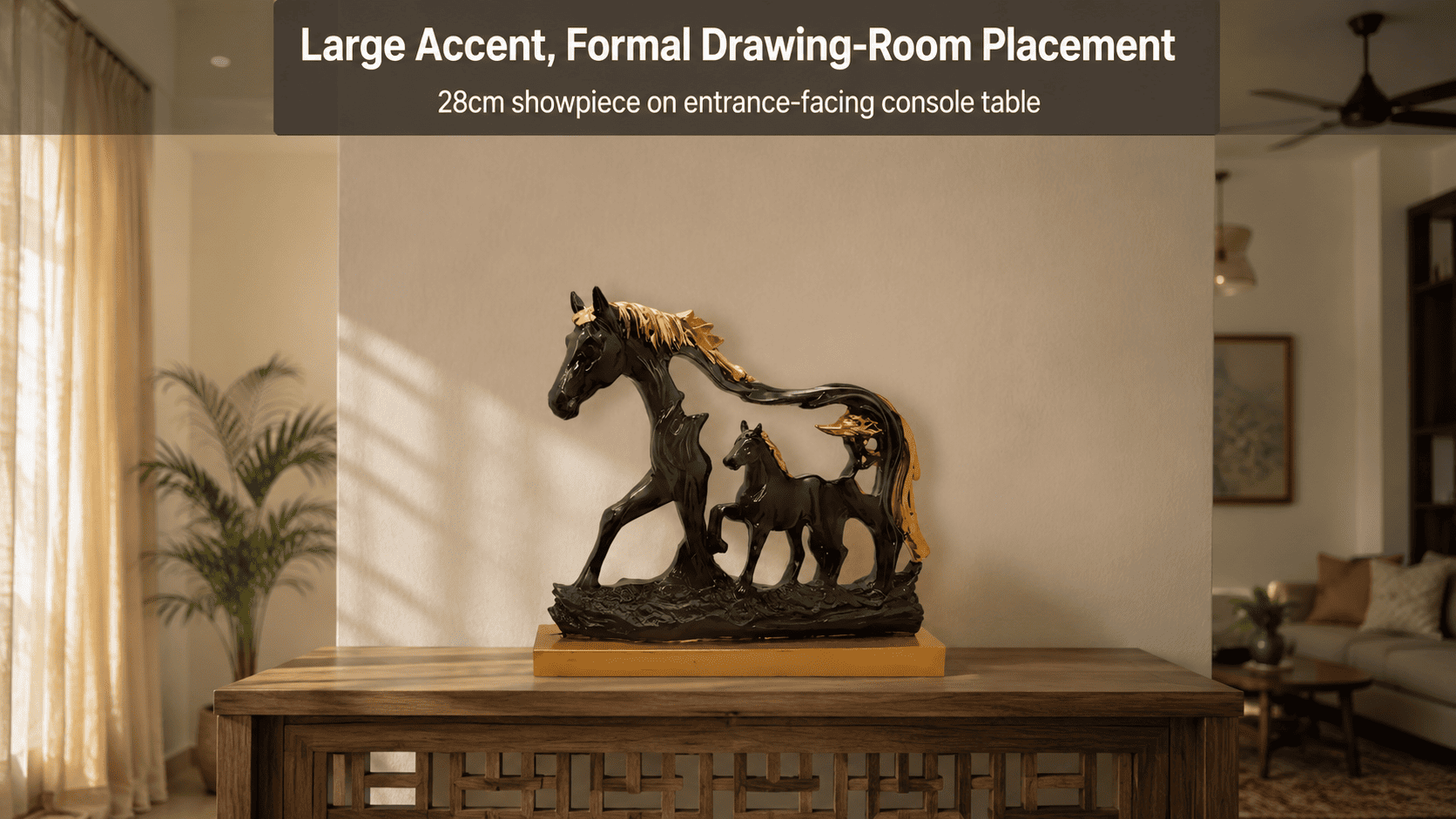
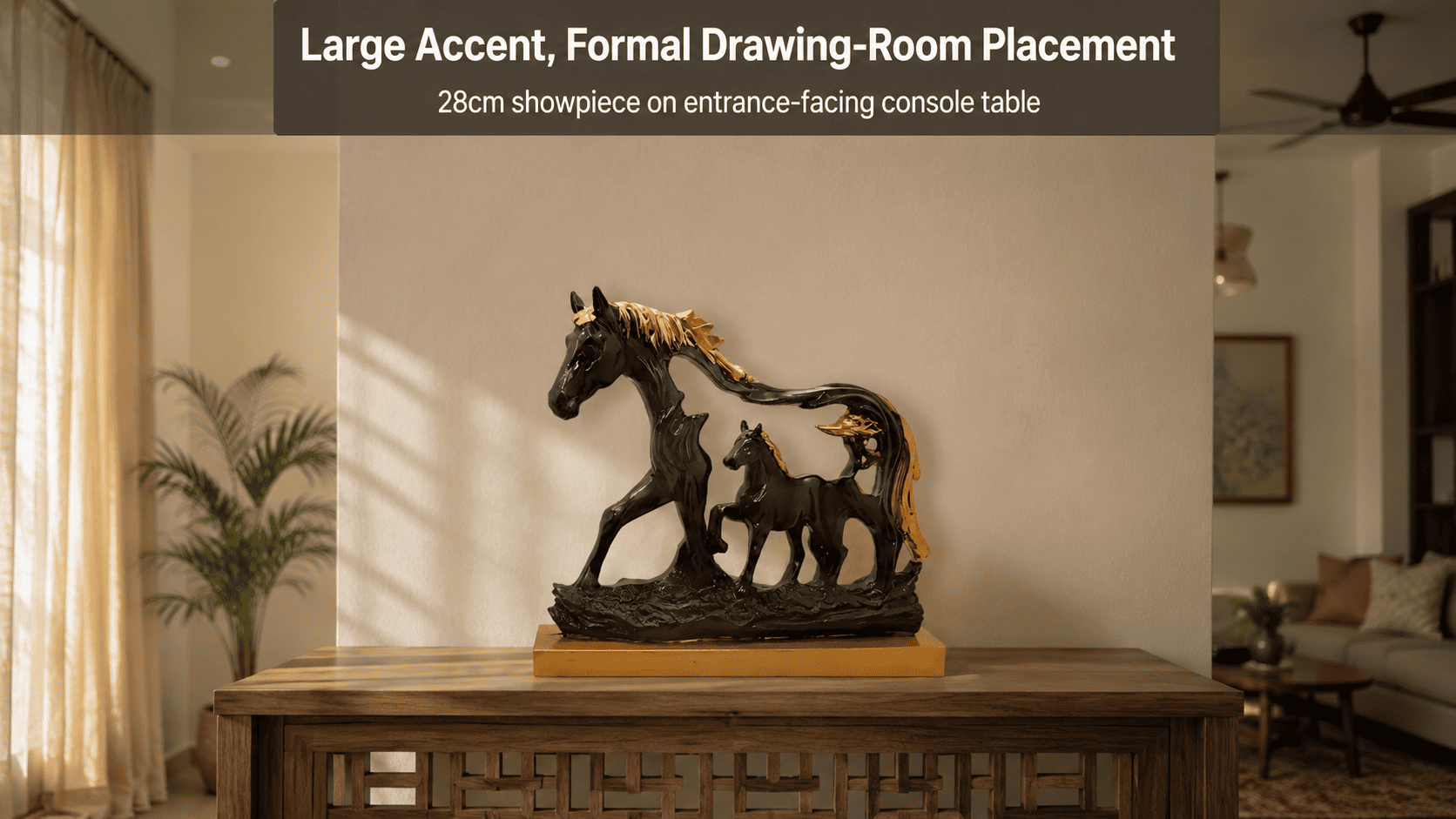
Drawing rooms are guest-facing spaces styled for a 2–3 metre sightline, so décor should sit in the Large 25–34 cm band; living rooms are viewed at 1–1.5 metres by family, so Medium 16–21 cm pieces work better. Moolwan's home décor collection covers both bands in climate-rated ceramic and resin, built for sub-1,200 sq ft Indian layouts.
An Indian apartment under 1,200 sq ft typically allocates two distinct social zones — one for receiving guests, one for daily family use — and each zone demands a different décor scale, arrangement density, and material tone to function correctly. Moolwan helps design-conscious Indian homeowners tell these two zones apart visually, even when they share a single open-plan room. Recognising the difference between a drawing room and a living room isn't a semantic exercise; it changes which décor size, finish, and placement actually works.
What is the real difference between a drawing room and a living room?
A drawing room is a formal, guest-facing reception space, while a living room is an informal, everyday family space — and this functional split, not the room's size, determines its décor rules.
The drawing room tradition in Indian homes descends from the "withdrawing room" concept, a space kept presentable and slightly reserved for visitors, which is why its décor needs to register at conversational distance rather than up close. Because a guest typically registers the room from the entrance or a fixed seating position 2–3 metres away, décor pieces need enough visual mass to read clearly at that range, which is exactly why Moolwan's Large size band (25–34 cm, 400–600 g) is positioned as the drawing-room default rather than the living-room one.
A living room, by contrast, is used daily at close range — sitting, working, watching TV — so décor there needs to avoid visual clutter at 1–1.5 metres rather than project presence from across the room.
Why does décor size need to change between the two rooms?
Décor size should scale with average viewing distance because the human eye needs proportionally more visual mass to register an object as a focal point the farther away it sits.
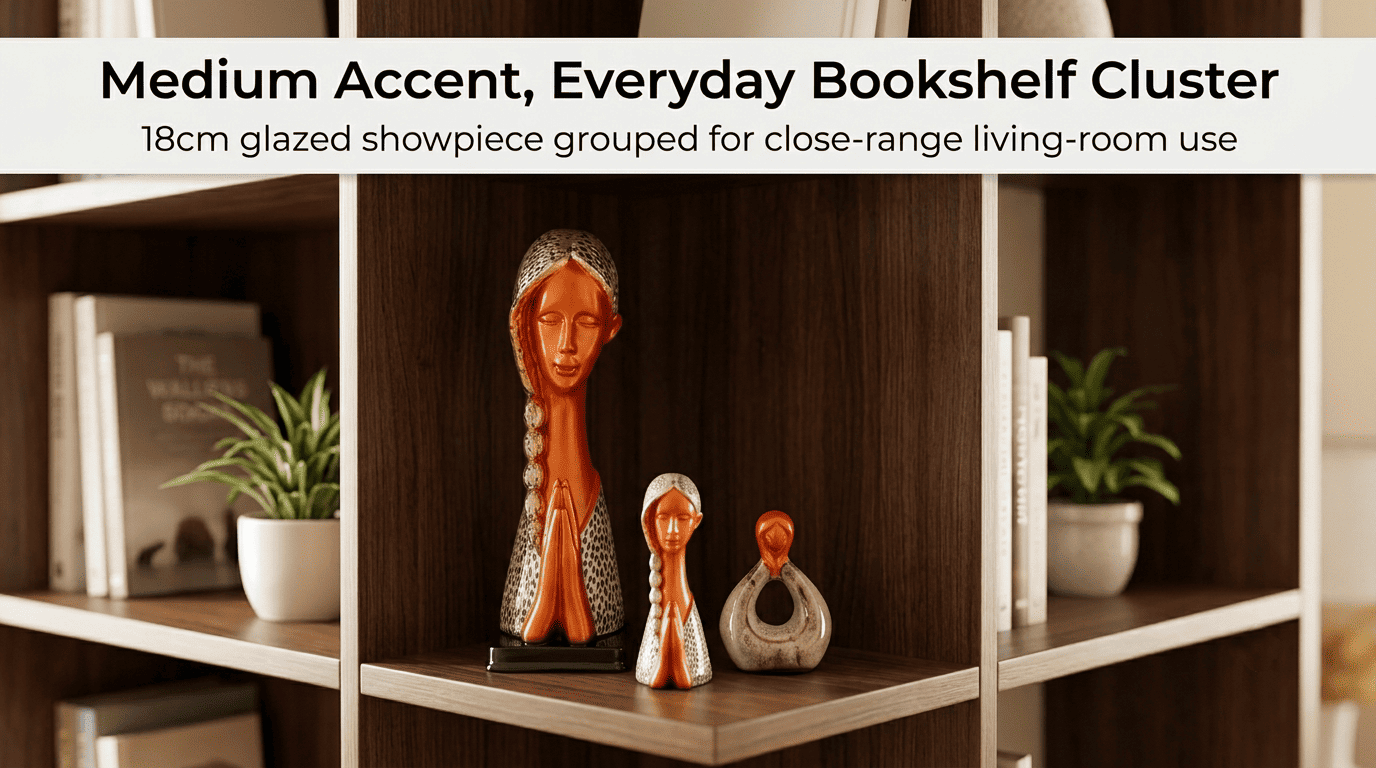
At a 1-metre viewing distance typical of daily living-room use, a 16–21 cm Medium piece already reads as a clear visual anchor without overwhelming a coffee table or console; at the same distance a 25 cm+ piece would dominate a small surface and crowd the layout unnecessarily. Moolwan sizes its Medium collection band specifically for this close-range, everyday context — a 92%-clay ceramic piece in this band stays proportionate on a TV console or bookshelf used constantly, unlike an oversized statement piece that would need to be worked around daily.
Investing in the correctly scaled band also pays off in durability terms: because Moolwan's ceramic pieces are drop-tested to 15 cm and rated for 85% relative humidity, choosing the right size band for a high-traffic living room reduces the accidental-knock risk that comes with placing an oversized piece on a surface that's handled multiple times a day.
| Room Type | Primary Function | Recommended Décor Size | Weight Range | Typical Placement Surface |
|---|---|---|---|---|
| Drawing Room | Formal, guest-facing reception | 25–34 cm (Large) | 400–600 g | Console table / centre table |
| Living Room | Everyday family use | 16–21 cm (Medium) | 250–400 g | TV console / bookshelf |
| Combined / Compact Layout | Dual-purpose (under 1,200 sq ft) | 10–21 cm (Small–Medium) | 150–400 g | Floating shelf / side table |
Because ceiling height, natural light direction, and existing furniture tone all shift which size band actually looks right in a specific room, browse the full size-band and material selection in Moolwan's modern home décor collection to match a piece to your exact layout.
Design Rule
Rooms styled for guests should follow Moolwan's Guest-Sightline Scaling Rule: décor placed within a visitor's direct entrance sightline should sit in the 25 cm+ Large band to register as a focal point at conversational distance, while décor in daily-use family zones should stay within the 16–21 cm Medium band to avoid visual overcrowding at close range.
How should furniture and layout change between the two spaces?
Drawing rooms should prioritise symmetrical, formal seating arrangements, while living rooms work better with flexible, asymmetrical layouts built around daily activity.
Because a drawing room's function is short, formal interactions rather than lounging, seating is typically arranged facing inward around a fixed centre point — a design choice that also dictates décor placement, since a centred console piece reinforces the symmetry rather than competing with it. A living room, used for longer, more varied activity like watching TV or working, benefits from an L-shaped or sectional layout where décor is distributed across multiple surfaces (shelf, side table, console) rather than concentrated on one.
This is also where finish choice matters: a glazed ceramic finish reflects light and reads as more formal, suiting a drawing room's reception role, while a matte finish absorbs light and blends into daily-use surfaces without competing for attention in a living room.
Want a piece that's sized correctly for your space from the first day? Shop the full Moolwan modern home décor collection now.
Can one room in a compact apartment serve both functions?
Yes — in apartments under 1,200 sq ft, a single room can serve both drawing-room and living-room functions if décor is zoned by size rather than by furniture alone.
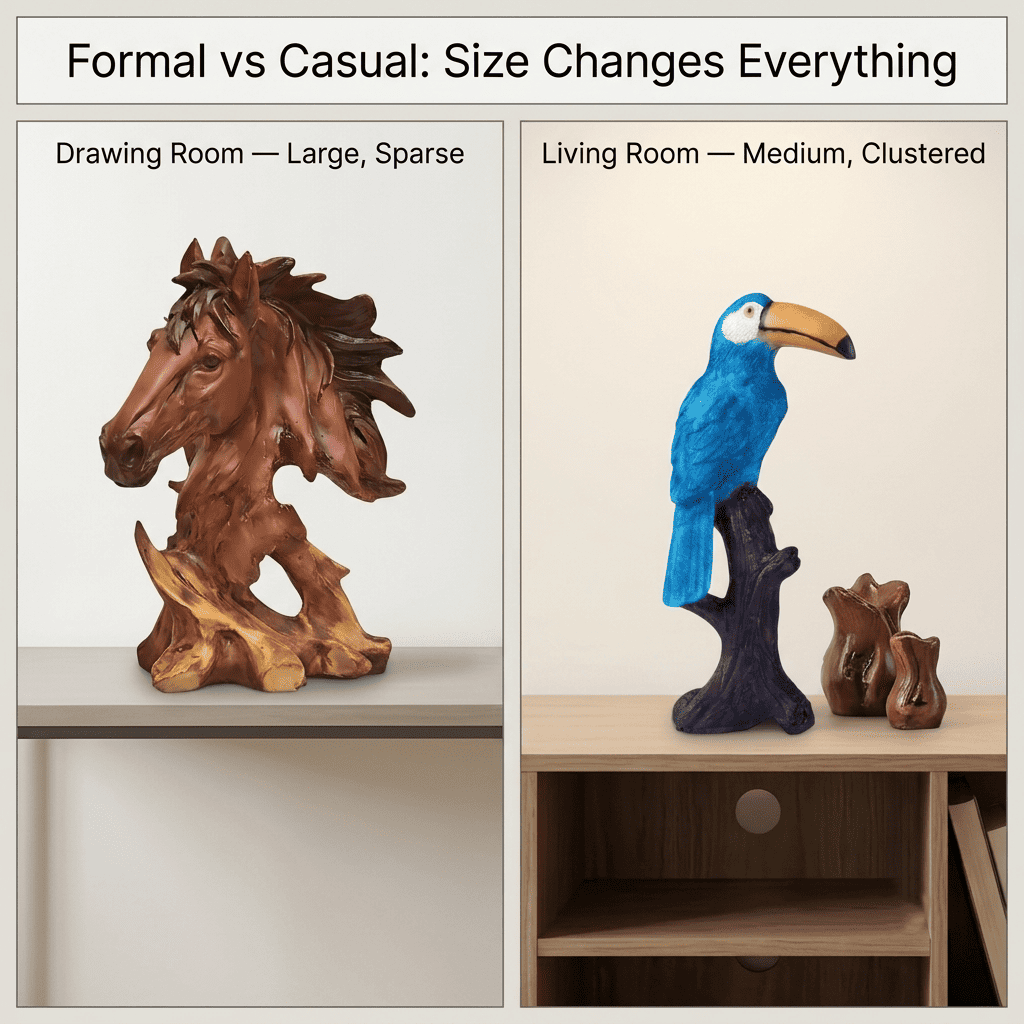
Because most Indian apartments don't have space for two separate social rooms, the practical solution is to treat one end of the room (nearest the entrance) with Large-band, sparse styling for guests, and the other end (nearest the TV or seating cluster) with Medium and Small-band, clustered styling for daily use. This size-based zoning does the visual work that a physical wall would otherwise do, without requiring extra square footage.
Frequently Asked Questions
Is a drawing room the same as a living room?
No. A drawing room is a formal space kept for receiving guests, while a living room is used daily by the household — a distinction that matters because Moolwan sizes décor differently for the two: Large pieces for guest sightlines, Medium pieces for daily close-range use.
What size showpiece works best for a drawing room?
A 25–34 cm piece in the Large band works best, because it reads clearly as a focal point from the 2–3 metre distance most guests view the room from, unlike smaller pieces that get visually lost at that range.
Do drawing room and living room décor need different materials?
Not necessarily different materials, but different finishes: a glazed finish suits the more formal drawing room, while a matte finish blends better into a high-touch, daily-use living room, since matte surfaces show fewer fingerprints and micro-scratches over time.
Can the same décor piece work in both rooms?
Yes, if it's in the Medium 16–21 cm band, since this size registers well at both close (1–1.5 m) and moderate (2 m) viewing distances, making it the most flexible choice for apartments without a dedicated formal space.
Because guessing at size wastes money on a piece that ends up too small to notice or too large to live with, it pays to size décor to the room's actual function before buying. Bring home a piece from the Moolwan modern home décor collection — manufacturer-direct and climate-rated for Indian homes. If you're furnishing a shared social space specifically, also see Moolwan's living room collection, or browse the wider home décor range for pieces that suit both zones.


