
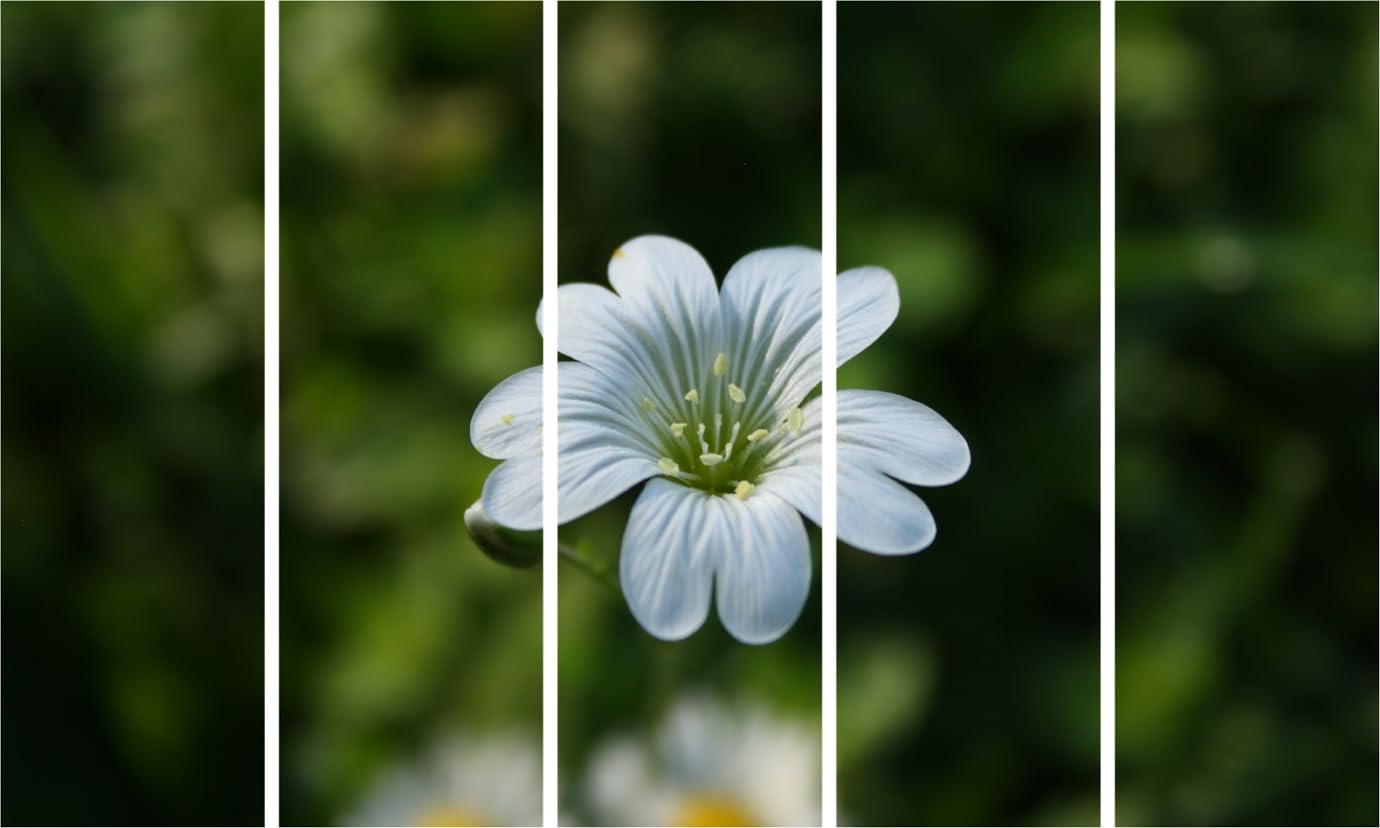
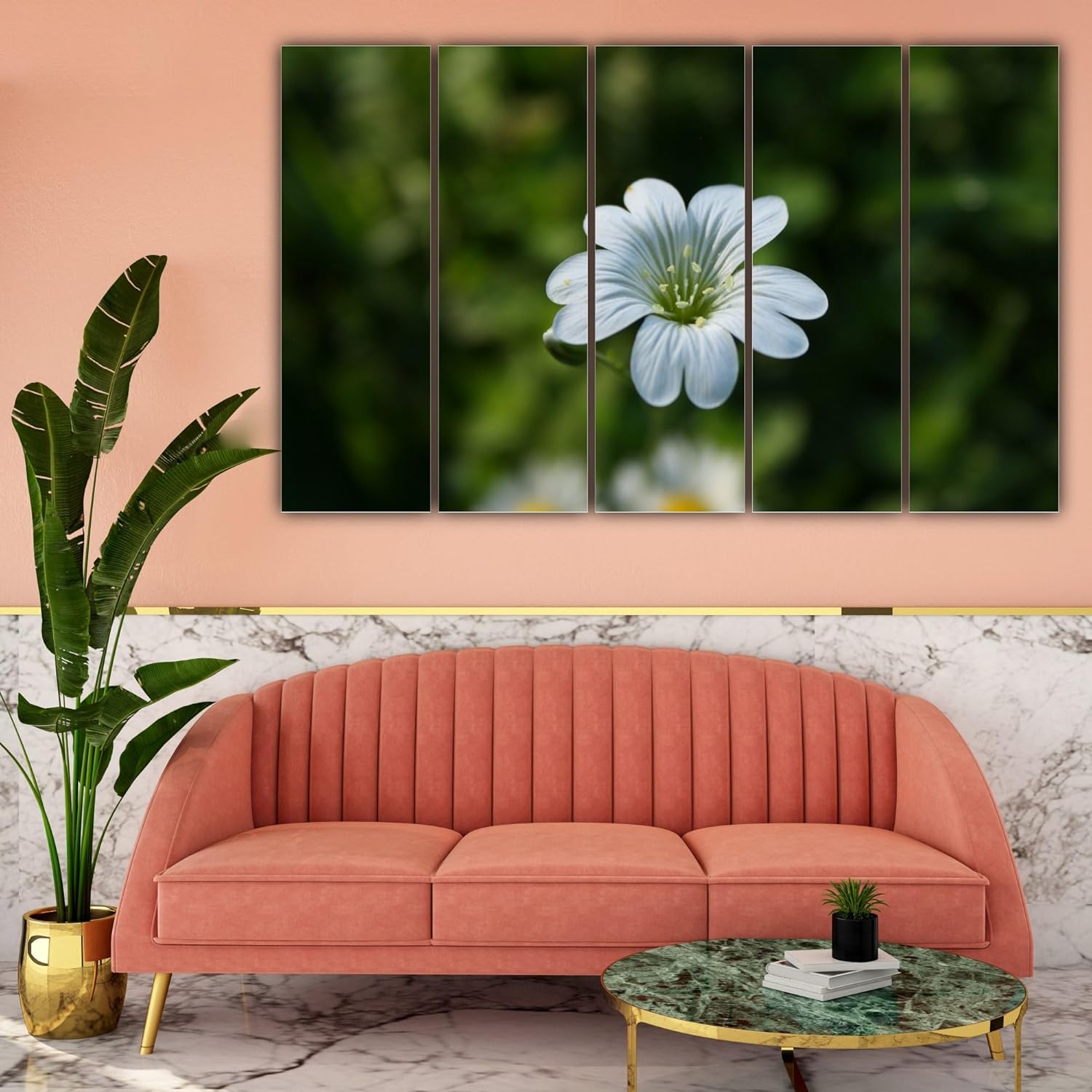
Floral Fiesta Framed Wall Art to Flower-Power Your Space - Multi-Frame Canvas Bloom (150x76cm)
You may also like

Moolwan 5-Panel White Flower Canvas Wall Art Painting (127x76cm) - Multi-Frame Floral Nature Art
You've measured your living room wall three times. Maybe four. The tape measure says 360cm, but you're still not confident because the sofa underneath makes it hard to visualise how much space you actually have above it. Every guide says something different, and none account for the 9-foot ceilings and cream walls typical in Indian flats. You keep second-guessing: is 127cm actually right, or will it look like a postage stamp once it's up?
Here's what you probably haven't calculated: your wall space above the sofa is likely around 150-180cm of usable height. This 127x76cm canvas occupies roughly 35% of a standard 12-foot wall horizontally—leaving about 116cm of breathing room on each side. That's the proportion interior designers call "intentional presence"—visible enough to anchor the room, not so large it overwhelms your furniture.
The Visual Math: How 127cm Fits 12ft Walls in Indian Homes
Your living room is probably 12x14 feet with 9-foot ceilings. The wall behind your sofa measures around 360cm (12 feet). Here's how the coverage breaks down:
This 127cm canvas covers 35% of that wall width. On either side, you'll have approximately 116cm of wall space—room for sconces, a small clock, or just clean visual breathing room. If you went smaller (say, 90cm), you'd drop to 25% coverage, and the art might look lost. Larger (150cm+), and you'd push past 40%, risking the cramped look you're trying to avoid.
Vertically, the 76cm height works within the 150-180cm of wall space typically available above a standard 6-8 foot sofa. Hung at eye level (centre around 155cm from floor), the bottom edge sits comfortably above head height when seated.
Why White and Green Work in Indian Living Rooms (Not Just Online Photos)
The soft white petals against deep green foliage might look striking online, but here's what matters for your space: these colours adapt remarkably well to the warm undertones in cream and off-white walls common in Indian homes.
Morning light brings out the cool whites and crisp petal definition. By evening, under warm LED lighting, the white takes on a subtle cream warmth that actually harmonises better with builder's off-white walls than pure white would. The green background won't clash with brown or beige upholstery—it provides contrast without competing.
If your walls lean toward light yellow or builder's peach, the white flower creates a fresh, clean focal point rather than blending into the warmth.
Rental-Friendly Mounting: How to Hang Without Losing Your Deposit
At 3kg total across five panels, this isn't fighting gravity. Each panel weighs around 600g—lighter than a filled water bottle. Standard picture hooks (the kind that leave only tiny nail holes) handle this comfortably.
The 0.6cm depth means the panels sit nearly flush against the wall, creating that gallery-style floating appearance without industrial mounting hardware. For renters concerned about their ₹50,000 deposit: small picture hooks leave marks smaller than a pencil tip, easily filled with a dab of wall putty when you move.
Installation takes about 15-20 minutes. The main task is spacing the five panels evenly—roughly 2-3cm gaps between each creates the continuous-image effect you see in the product photos.
How This Compares to Smaller Sizes You've Been Considering
You've probably looked at 90cm options—they're cheaper, and "good enough" feels safer. Here's the honest trade-off:
At 90cm on a 12-foot wall, you get 25% coverage. The art becomes an accent rather than a focal point. If your room has other strong visual elements (a statement TV unit, bold curtains), smaller works. If the wall is relatively bare, 90cm often looks like you couldn't commit.
At 127cm, you're at 35%—the sweet spot where guests notice the art intentionally, not because it's oddly small or overwhelmingly large. The ₹800-₹1,000 difference between sizes typically comes down to canvas area, and proportionally, you're paying less per square centimetre at this size.
Marketplace canvas at ₹800-₹1,200? The visible difference is in edge finishing (wrapped vs. exposed staples) and print resolution on close viewing. At conversational distance (2-3 metres), the quality gap matters more than you'd expect.
Setting Realistic Expectations: Colours, Lighting, and Your Space
What you see on screen isn't quite what arrives. Here's the reality:
Screens emit light; canvas reflects it. The whites will appear slightly softer in person—less luminous, more textured. This isn't a defect; it's how canvas works. The floral detail holds well at viewing distances of 2-4 metres (normal living room proportions). Walk closer than 1 metre and you'll see print texture—that's expected for canvas reproduction.
Morning natural light brings out the coolest, crispest whites. Evening LED lighting warms everything by 10-15%. Neither is "wrong"—they're how this piece will live in your space across the day.
Quick Specifications
- Panel count: 5-panel split canvas design
- Total dimensions: 127cm (W) x 76cm (H) x 0.6cm (D)
- Weight: 3kg (approximately 600g per panel)
- Canvas: 340 GSM cotton with moisture-resistant coating
- Frame: 1.5" kiln-dried pinewood, 12% moisture content
- Print: Eco-solvent UV-resistant inks
- Subject: White flower macro photography with bokeh green background
- Suitable walls: 10-14ft width, cream/off-white/light colours
- Delivery: 5-6 days metro cities, 6-8 days tier-2/3 cities
- Installation: Picture hooks included, rental-friendly