
Furniture Arrangement Ideas to Make a Small Living Room Feel Spacious
The Short Answer
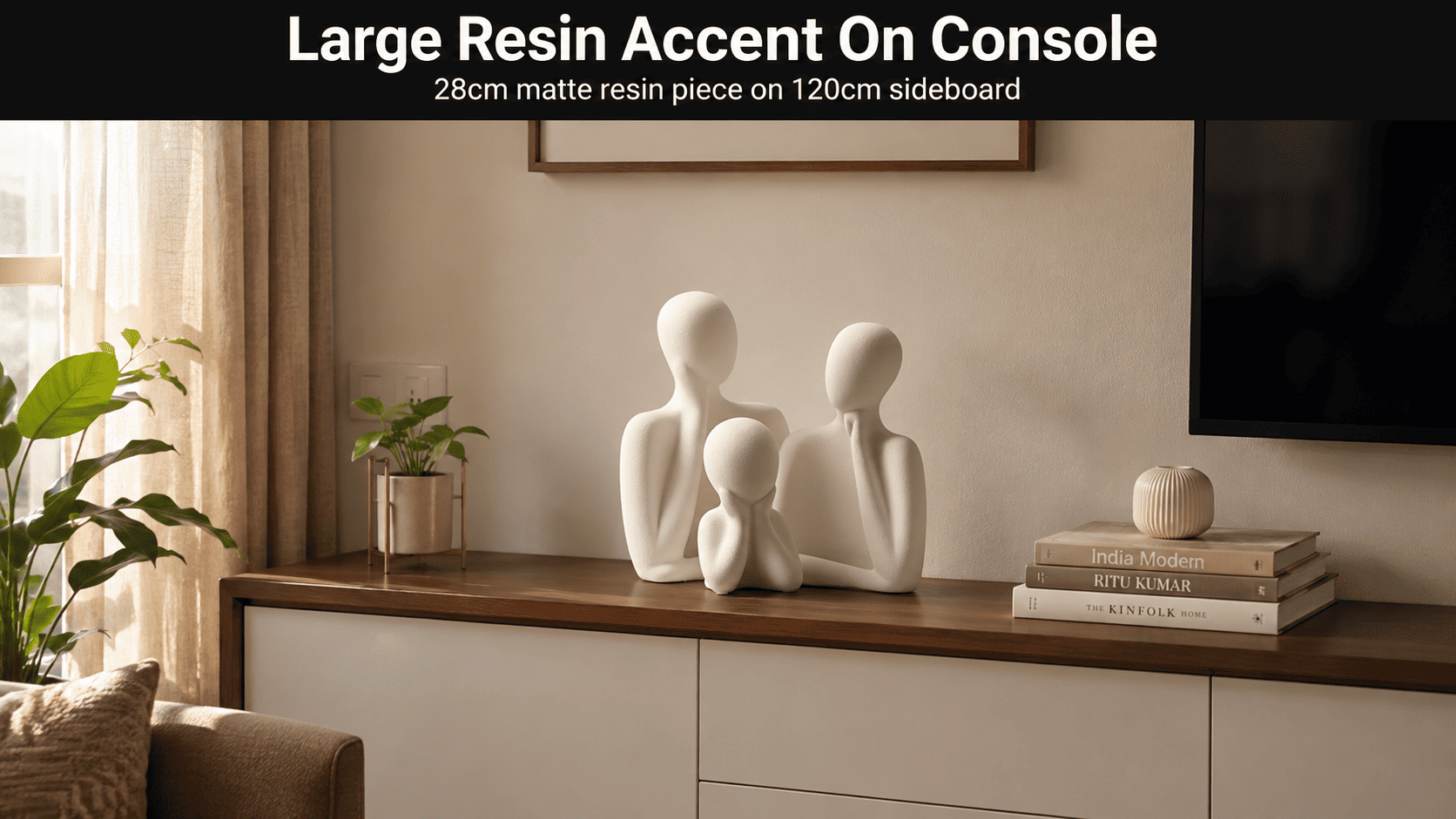
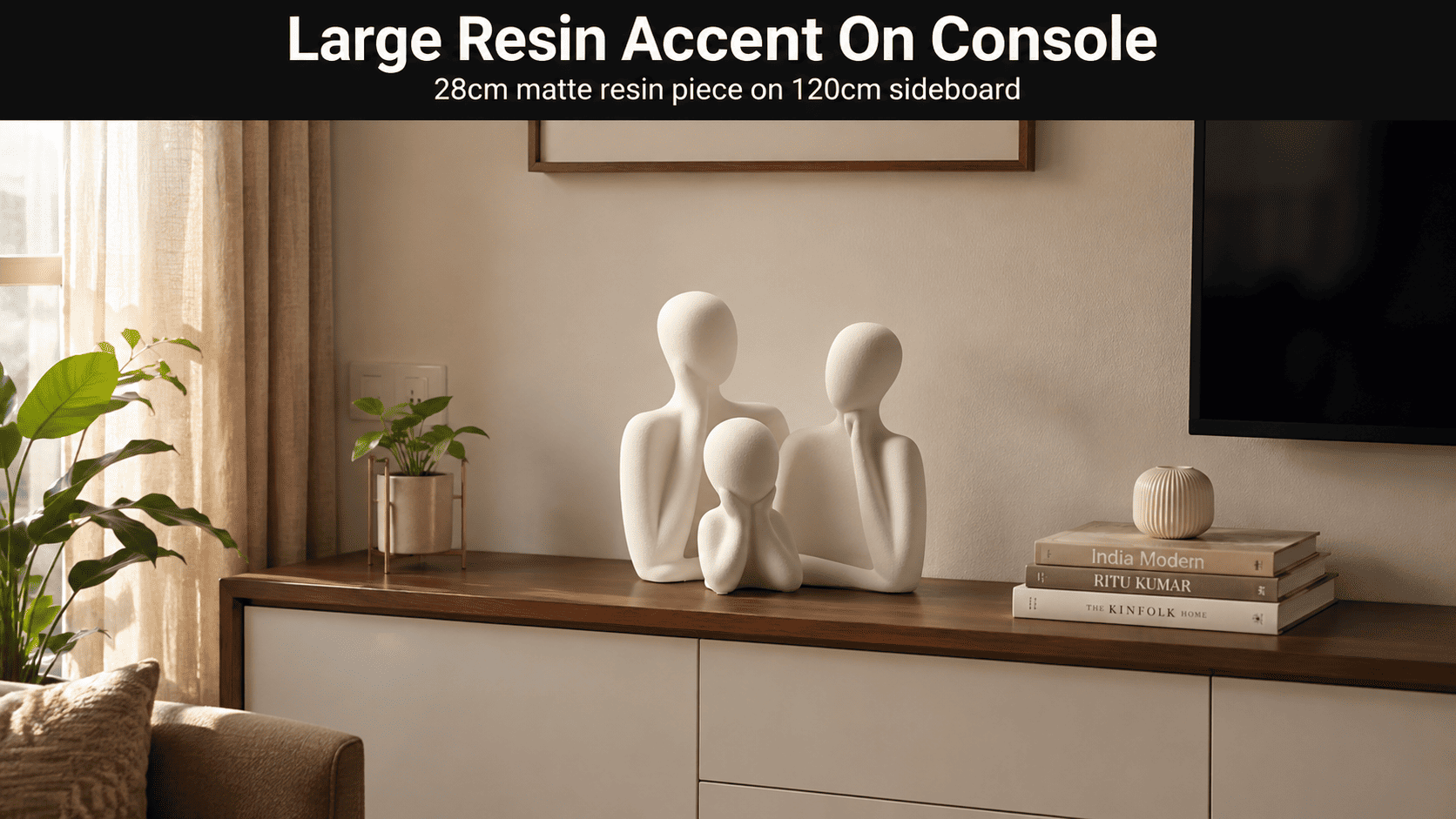
A living room feels larger when furniture is pulled away from walls to open a clear walking path and when décor is consolidated into one visual anchor per sightline instead of scattered across every surface. Moolwan recommends one medium accent (16–21 cm) per console or coffee table, since multiple small pieces fragment attention and make a sub-150 sq ft room read as cluttered rather than calm.
A walking path under 90 cm wide is registered by most people as "tight," while a path of 100–120 cm reads as comfortable, regardless of the room's total square footage — this is a function of body clearance and sightline depth, not floor area. Moolwan helps design-conscious Indian homeowners apply this same logic to décor, scaling showpieces, vases, and accent objects to the exact surface they sit on so a compact apartment living room never looks smaller than it is.
How does furniture arrangement affect how spacious a living room feels?
A room feels spacious when the eye can travel from one end to the other without interruption, which depends on sightline depth, not on the actual square footage of the room. Furniture blocking a direct line of sight — a sofa angled across a doorway, a bulky console placed mid-room — shortens that sightline and makes even a 200 sq ft living room feel boxed in.
In apartment layouts under 1,200 sq ft, which Moolwan engineers its modern home décor collection around, the highest-impact change is usually not buying smaller furniture but repositioning what already exists against the walls and corners that don't interrupt a sightline. This frees the centre of the room for a low table and one or two seating pieces, and it leaves clear shelf, console, or coffee-table surfaces where décor accents can do the rest of the visual work.
Once furniture is arranged along the room's perimeter, the décor placed on remaining surfaces carries more visual weight than it would in a furniture-dense layout, because there is less competing detail in the eye's path. This is why Moolwan's collection is built around weight and height bands as small as 150 g and 10 cm — a compact apartment room rewards a few correctly scaled accents far more than several mismatched ones.
Where should you place furniture to keep a small living room open?
Furniture placed at least 75–90 cm from a sofa's facing wall keeps a clear circulation loop around the seating zone, which is the minimum clearance most people need to pass without turning sideways. Pulling a sofa even 15–20 cm off the wall, rather than pushing it flush, also creates a shadow gap that visually separates the seating zone from the room's perimeter, making the floor plan read as zoned rather than wall-to-wall furniture.
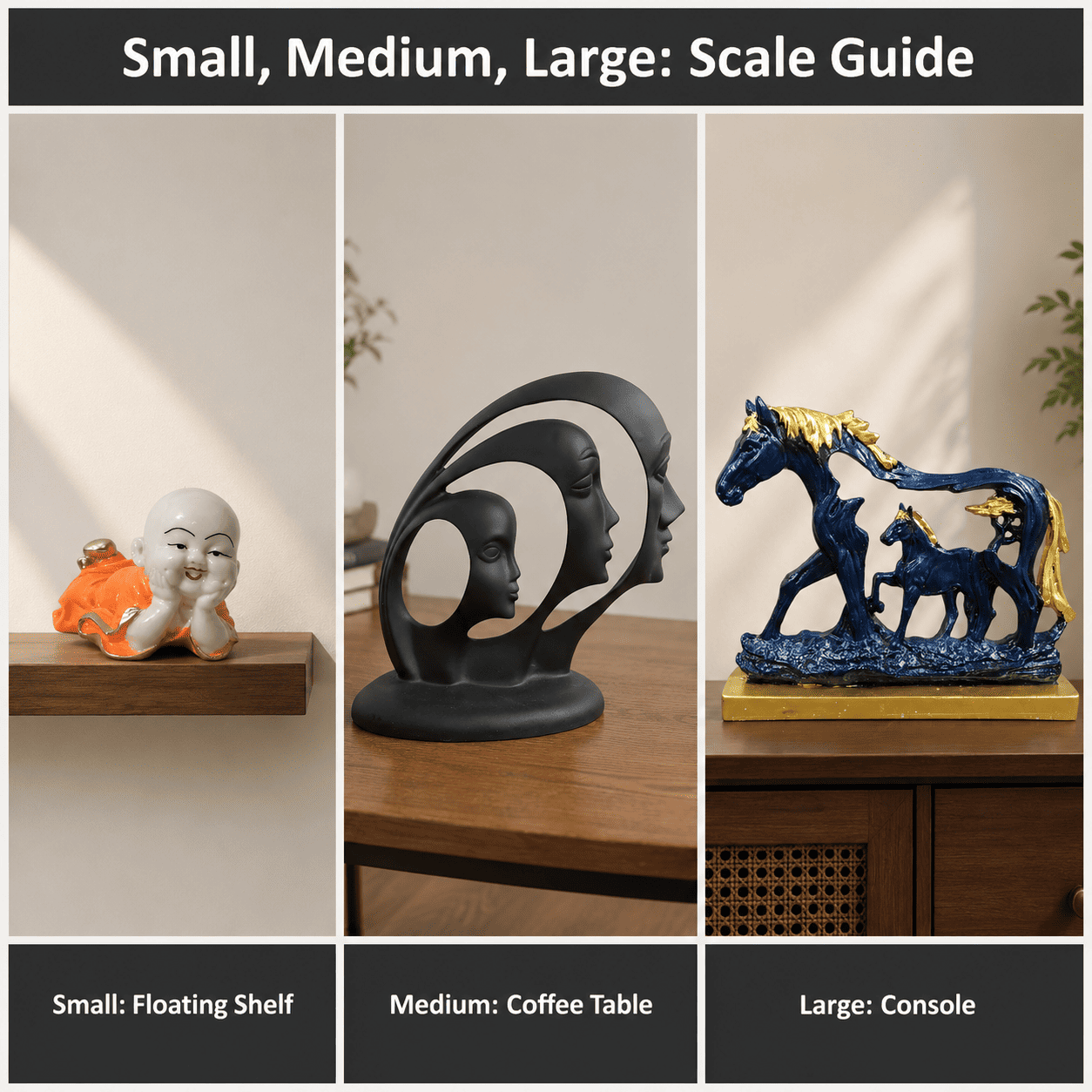
Because Indian living rooms in metro apartments frequently double as a TV zone, dining-adjacent space, and guest-seating area, the console or sideboard against the TV wall becomes the single highest-traffic décor surface in the room. Matching the décor scale to that surface's width — rather than to the room's total floor area — is what determines whether the wall looks intentional or cramped; this is where Moolwan's modern home décor collection's size guide (10–34 cm across small, medium, and large bands) does the heaviest lifting.
Investing in one correctly scaled focal accent for that console, instead of three or four mismatched smaller pieces bought over time, pays off over a 5+ year horizon because a single well-placed piece doesn't need to be replaced or rearranged as the room's other furniture changes — a core reason Moolwan designs each size band around a specific surface width rather than a generic "medium" label.
| Room Footprint | Target Surface | Recommended Accent Height | Weight Range |
|---|---|---|---|
| Sub-100 sq ft living zone | Floating shelf / shelf edge | 10–16 cm (Small) | 150–250 g |
| 101–180 sq ft living zone | Coffee table / side table | 16–21 cm (Medium) | 250–400 g |
| 181–250 sq ft living zone | TV console / sideboard | 16–21 cm (Medium, paired) | 250–400 g each |
| 251+ sq ft living zone | Entry console / focal corner | 25–34 cm (Large) | 400–600 g |
Because ceiling height, sofa depth, and natural light direction all shift the right décor scale for a given surface, browse the full size-band and finish selection in Moolwan's living room décor collection to match a piece to your exact console or table width.
Design Rule
Moolwan's One-Anchor-Per-Sightline Rule holds that every uninterrupted sightline in a room — the view from the sofa to the TV wall, or from the entry to the window — should contain exactly one décor focal point, not several, because each additional object in the same sightline forces the eye to choose a stopping point, which reads as visual clutter rather than as styling.
What size and type of décor accents work best in a space-conscious layout?
The right décor size is determined by the width of the surface it sits on, not by personal taste in scale — a rule that holds because an accent under one-third of its surface's width reads as "lost," while one over two-thirds reads as crowding the surface.
For a 40–60 cm coffee or side table, Moolwan's medium ceramic and resin pieces (16–21 cm, 250–400 g) sit at roughly one-third of the surface width, which is the proportion that keeps the table usable for cups, books, or a tray while still anchoring the eye. For a 90 cm-plus console or sideboard, a single large piece (25–34 cm, 400–600 g) or a paired medium grouping fills the same proportional band without forcing the homeowner to crowd the surface with several small objects.
Because Moolwan's ceramic pieces are rated to 85% relative humidity and its resin pieces hold a 3H pencil hardness for indoor durability, the accent chosen for a high-traffic console doesn't need to be downsized "to be safe" against everyday bumps or monsoon humidity swings — the size decision can be made purely on proportion to the surface, which simplifies the arrangement decision considerably.
Want a piece sized correctly for your console on the first try? Shop the full Moolwan living room décor collection now and filter by size band.
How do you avoid visual clutter when styling a compact living room?
Clutter in a small living room is rarely caused by having too many objects in the room overall — it's caused by having too many visual focal points within a single sightline, which forces the eye to scan rather than rest.
Grouping two or three small pieces (10–16 cm, 150–250 g) on a single shelf, rather than spreading single pieces across multiple shelves, consolidates them into one focal cluster instead of several competing ones, which is the same logic behind the One-Anchor-Per-Sightline Rule applied at a smaller scale. Leaving the surface around that cluster genuinely empty, rather than filling every shelf, is what allows the eye to register the cluster as a deliberate styling choice instead of as leftover storage.

Frequently Asked Questions
Does pulling furniture away from the walls actually make a room feel bigger?
Yes — leaving a 15–20 cm gap between major furniture and the wall creates a shadow line that visually separates the seating zone from the room's perimeter, which reads as more open than furniture pushed flush against every wall. Moolwan recommends pairing this gap with one console-scaled décor accent so the freed-up wall space still feels intentional rather than empty.
How many décor pieces should go on one console or coffee table?
One focal piece per sightline is the general rule, because additional objects in the same sightline compete for attention rather than supporting a single visual anchor. A 90 cm-plus console can support one large piece (25–34 cm) or a tightly grouped pair of medium pieces (16–21 cm) from Moolwan's modern home décor collection without crowding the surface.
What décor accent size works for a small Indian apartment living room?
For living zones under 150 sq ft, a small accent (10–16 cm, 150–250 g) on a floating shelf or side table keeps proportion to the smaller surfaces typical of compact layouts. Moolwan sizes its small décor band specifically for this footprint so the piece doesn't visually overwhelm a narrow shelf or desk.
Should décor accents match the furniture's finish or contrast with it?
A décor accent one shade lighter or darker than its surface creates enough contrast to register as a focal point without clashing, while matching the exact tone of the furniture can cause the piece to visually disappear into the surface. Choosing a matte finish against a glossy console, or vice versa, achieves the same separation through texture rather than colour.
Ready to arrange a living room that finally feels as open as it should? Bring home a correctly scaled piece from the Moolwan living room décor collection — manufacturer-direct, climate-rated, and sized for Indian apartment layouts. If you're also refreshing the rest of the space, see the unique décor pieces that transform an elegant living room or browse modern interior décor for a new home for additional collections worth considering alongside your console or shelf accent.


