
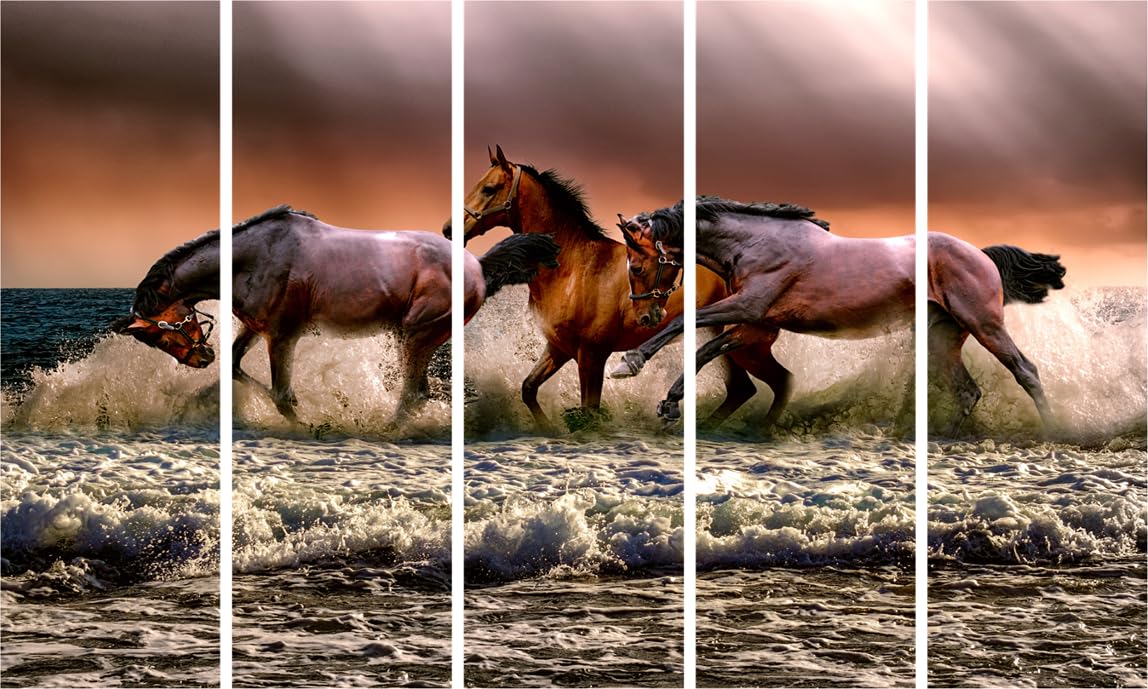
Gallop Into Good Vibes: Framed Multi-Panel Horse Vastu Wall Art (127x76cm)
You may also like

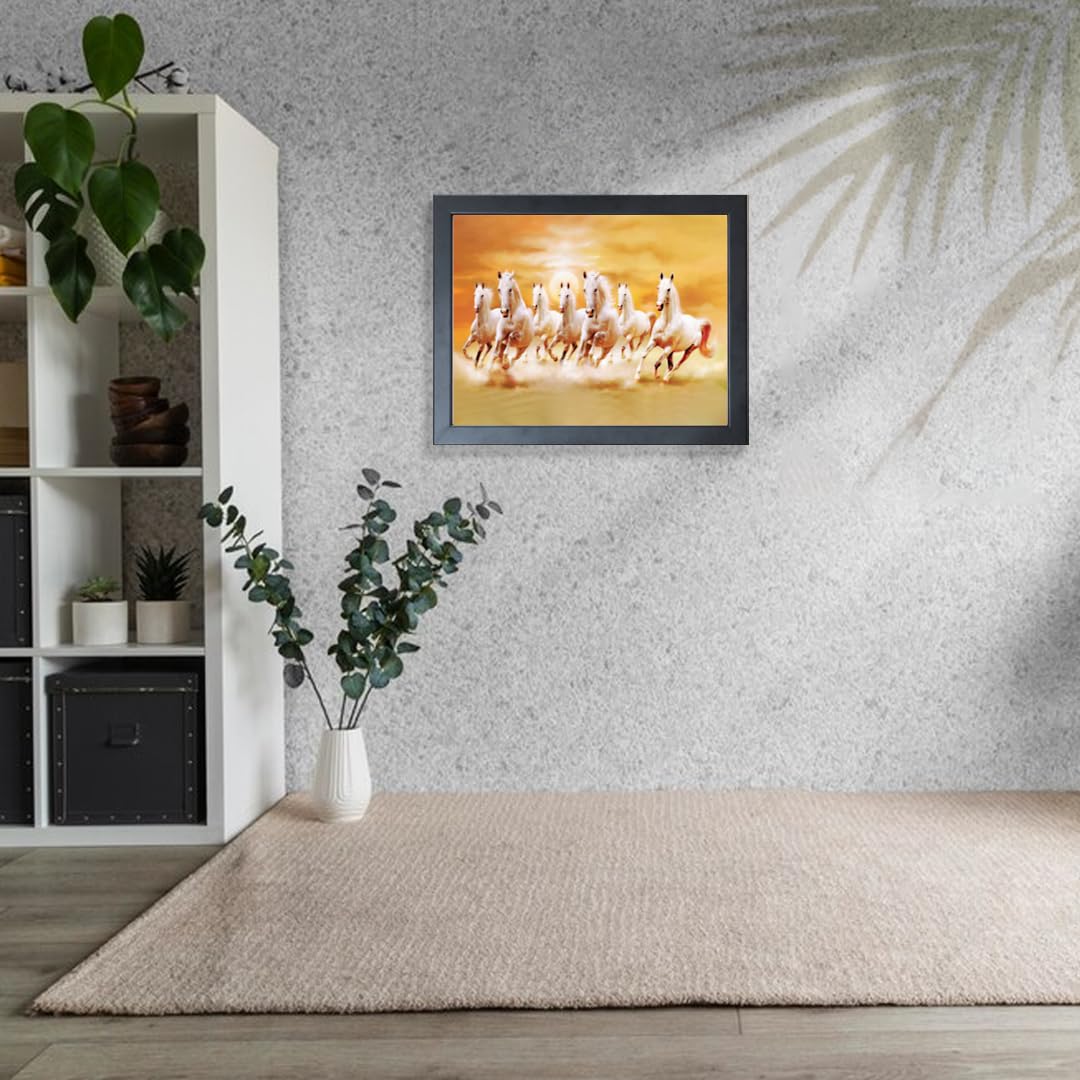
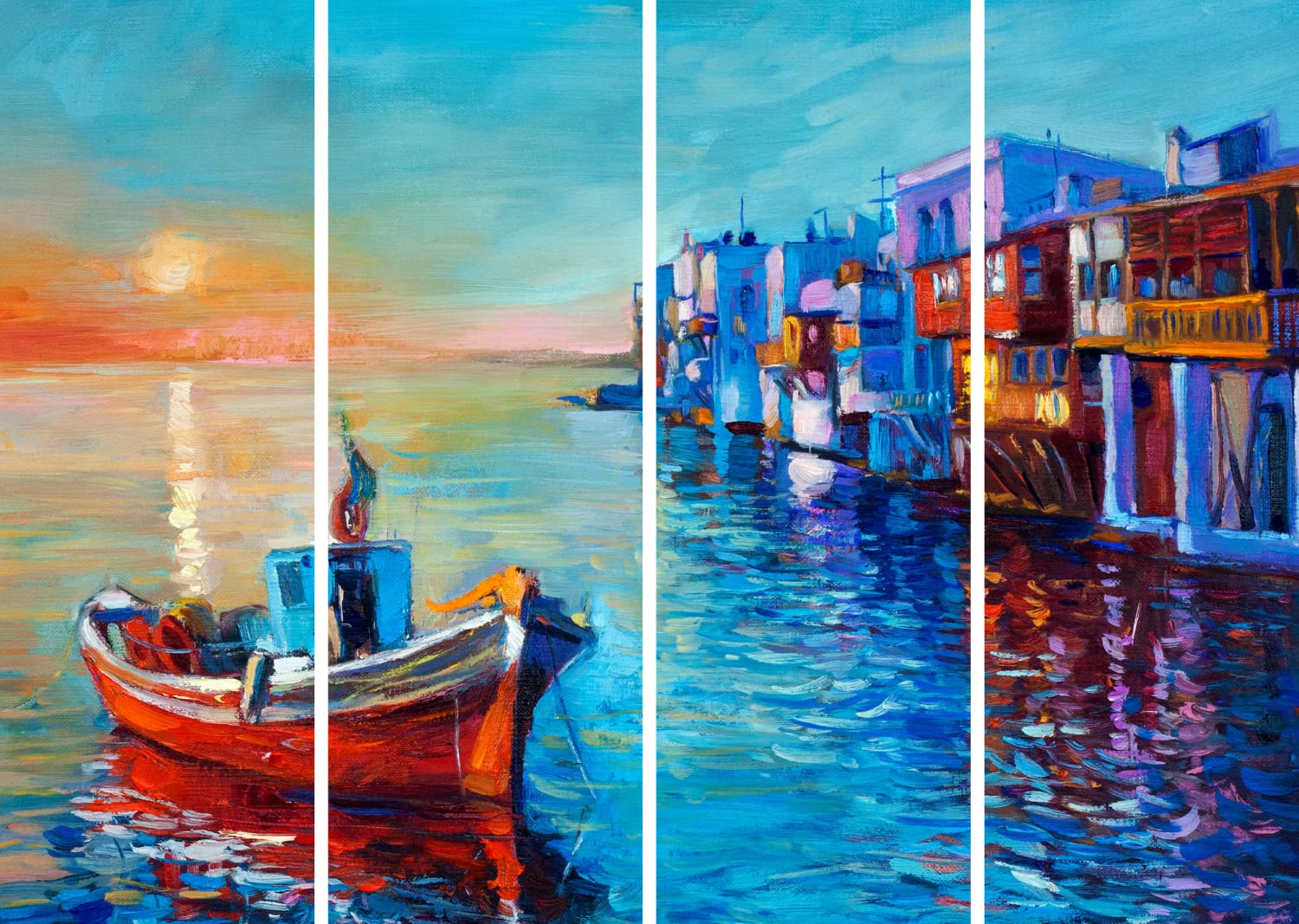
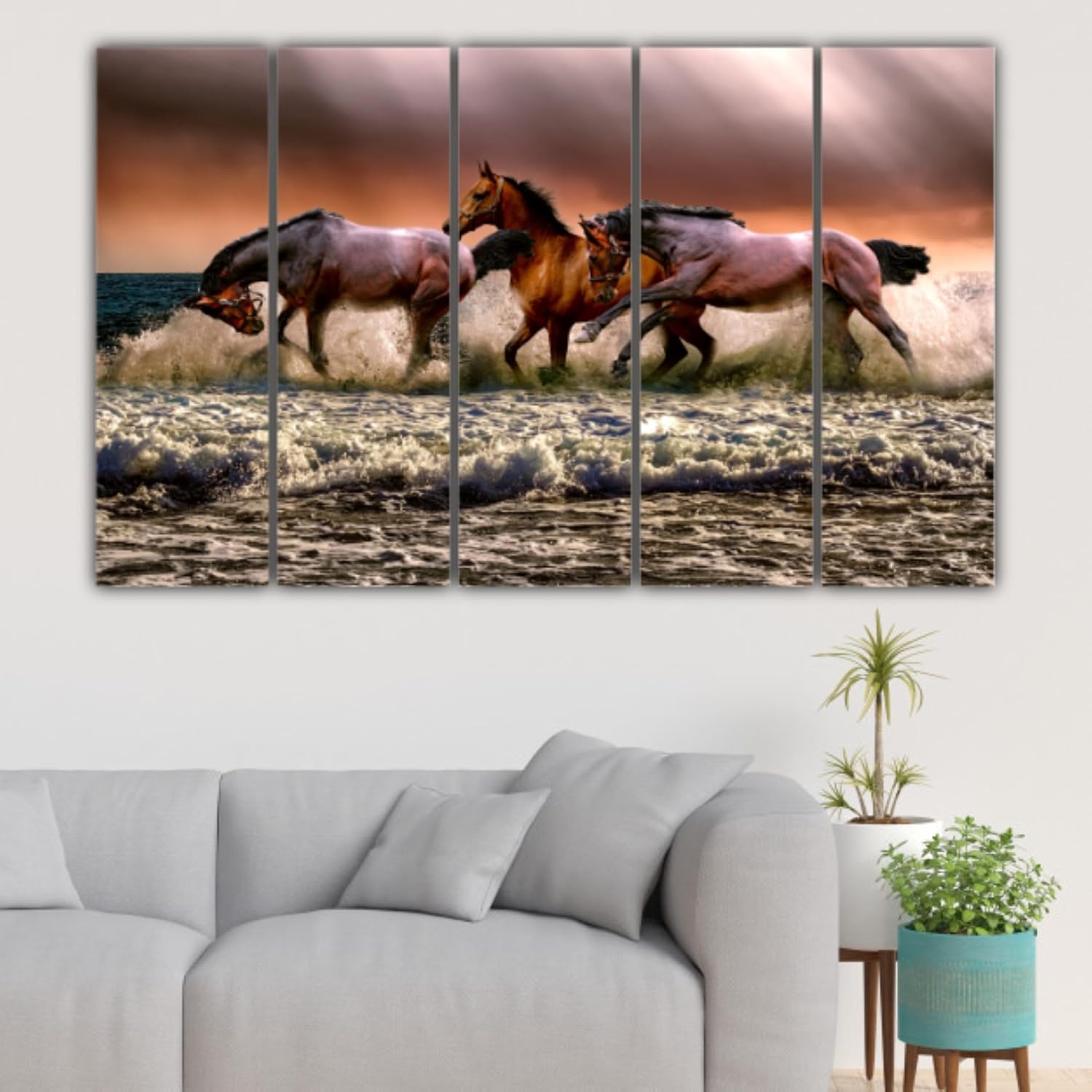
Moolwan 5-Panel Galloping Horses Canvas Wall Art Painting (127x76cm) - Vastu-Inspired Multi-Frame Design
Three weekends of browsing. Fifteen saved items. Eight open tabs. And you're still here because every time you get close to buying, the same question stops you: will 127cm actually look proportional on my 12-foot living room wall, or will it seem awkwardly small? You're not indecisive—you're careful. Because once this is on your wall above the sofa, you'll see it daily. Those galloping horses in dramatic motion need to command attention without overwhelming the space. It needs to be right.
Here's what you're working with: your living room wall is probably 12 feet (360cm) wide. Your sofa underneath is probably 6-8 feet. This 127cm canvas will take up 35% of that wall—leaving 116cm of breathing space on each side. That's intentional negative space, not emptiness. The five separate panels create horizontal movement that guides your eye across the entire composition, making the piece feel wider than its actual measurement. The horses galloping through splashing water spread across those panels, so visually it reads as dynamic and expansive rather than compact.
The color palette matters more than you might think against Indian home walls. You're probably looking at cream, off-white, or that builder's peach. The canvas features rich brown and grey horses against a dramatic orange-golden sunset sky, with turquoise-blue ocean water and white surf. Those warm earth tones—browns, golden amber, sunset orange—create contrast without clashing. The cooler blue water provides visual relief. Against cream walls with wooden furniture (which most of us have), this color combination feels grounded and natural, not jarring. The splash-proof coating means the colors stay vibrant even in 70-85% monsoon humidity.
Why 127cm Works on 12-Foot Walls (and What Happens If You Go Smaller or Bigger)
Let's do the actual math. Your wall is 360cm. This canvas is 127cm. That's 35% coverage. Here's what that means in real space:
- 116cm empty wall on the left
- 127cm canvas in the center
- 116cm empty wall on the right
That 2:1:2 ratio is what designers call the "visual sweet spot" for above-sofa placement. Your 8-foot sofa is roughly 240cm, so the canvas doesn't try to match that width—it sits comfortably within it, creating a layered look.
What if you went with 100cm instead? That's 28% coverage. Those 30cm of extra empty space on each side start feeling unintentional, like you measured wrong. The five panels would compress, losing the sweeping gallop effect. The horses would feel cramped.
What if you went with 150cm? That's 42% coverage. Now you're at 105cm of space on each side—tighter, more dominant. It works if your room is minimalist, but if you have side tables, lamps, or wall décor planned, it starts competing for attention. And at 150cm, you're probably looking at ₹500-800 more.
The 127cm width hits that zone where it looks deliberate without dominating. The five panels spread that width into rhythmic sections, so your eye travels across the movement rather than just registering a single static image.
Why These Colors Work in Indian Living Rooms (Not Just Online Photos)
You've seen the product photo on a white background. But your walls aren't white. Your sofa isn't neutral grey. Your coffee table is probably dark wood. Here's how these colors translate:
Morning Light (7-10 AM): The natural sunlight brings out the warm tones—the golden sunset sky glows, the brown horses show their rich depth, and the blue water looks crisp and refreshing. Against cream walls, the warm palette feels inviting without being overly saturated. The eco-solvent UV-resistant inks mean these colors won't fade even with direct morning sun exposure.
Afternoon LED (1-5 PM): Under white LED tube lights (which most of us have), the orange-amber sky softens slightly, and the horses' grey-brown tones become more prominent. The blue water maintains its vibrancy. The multi-panel format creates natural shadows between frames, adding dimension that single-canvas prints lack. This depth prevents the piece from looking flat under harsh overhead lighting.
Evening Warm Light (7-10 PM): With yellow-toned bulbs (or if you have warm LED strips), the entire composition warms up. The sunset sky intensifies, the horses look richer, and the blue water provides cooling contrast. Against wooden furniture and cream walls lit by warm evening light, this canvas feels cohesive—like it was chosen specifically for your space, not just ordered online.
The colors aren't trying to match your walls—they're creating contrast that grounds your room. Brown leather or fabric sofas work perfectly because they echo the horses' tones. Beige, cream, or even grey sofas benefit from the warmth this canvas introduces.
Installation Takes 15 Minutes (Even If You're Not Handy)
You're probably worried about drilling holes and losing your rental deposit. Here's the reality:
This is five separate panels, each pre-mounted on 1.5-inch kiln-dried pinewood frames. Total weight: 3kg distributed across five pieces, so each panel is roughly 600g—lighter than a typical kitchen cutting board. You're not mounting 3kg of dead weight; you're hanging five lightweight frames.
Rental-Friendly Option: Use 3M Command Picture Hanging Strips (the 5kg capacity ones, ₹400 for a pack). Each panel gets two strips. No nails, no holes, no deposit anxiety. They hold securely on painted walls and remove cleanly. Thousands of renters use them for canvases this size.
Traditional Mounting: If you own your home or don't mind small holes, use L-hooks (₹10 each at any hardware store). Mark your center point above the sofa, measure 15cm gaps between panels, and you're done in 20 minutes. The included hardware pack has pre-attached D-rings on each frame's back.
Spacing the Panels: The five panels aren't meant to touch edge-to-edge. You want 10-15cm gaps between them. Too close (5cm), and it looks like one broken image. Too far (25cm), and the galloping motion loses continuity. At 15cm spacing, the total display width becomes 187cm (127cm canvas + 60cm gaps), which is 52% of your 360cm wall—still well within that comfortable zone.
If you mess up the first placement, the panels are light enough to reposition without help. No need to call your brother-in-law.
How This Compares to the Other Sizes You've Been Considering
You've probably looked at 100cm, 127cm, and 150cm versions of similar multi-panel canvases. Here's the honest breakdown:
100cm Canvas (₹2,496):
- 28% wall coverage (too small for 12 ft walls)
- Works for bedrooms or 8-10 ft walls
- Saves you ₹300
- But you'll second-guess the proportion every time you look at it
127cm Canvas (₹2,796):
- 35% wall coverage (the proportional sweet spot)
- Designed for 12 ft living room walls
- Balances presence with breathing room
- The five panels create movement without overwhelming
150cm Canvas (₹3,296):
- 42% wall coverage (bolder, more dominant)
- Works if you have minimalist side décor
- Costs ₹500 more
- Requires more careful surrounding furniture placement
The price difference isn't huge (₹300-500), but the visual difference is significant. If your wall is 12 feet and you have typical living room furniture, 127cm is engineered for that exact scenario. Going smaller makes the wall feel underdressed. Going larger can work, but it demands more planning around what else is on that wall.
If you were furnishing a 10-foot wall, the 100cm makes sense. If you have a 14-foot feature wall with nothing else on it, the 150cm works. But for standard 12-foot living room walls with typical 8-foot sofas? 127cm is the mathematically correct choice.
What This Will Look Like in Your Living Room (Not Just Online Photos)
Let's set realistic expectations, because product photos are styled perfectly and your living room isn't a showroom.
Viewing Distance: You'll probably view this from 8-10 feet away (sitting on your sofa or standing in the room). At that distance, the five panels merge into one continuous scene of horses galloping through water. You'll see the individual brushwork on the horses, the texture of the splashing surf, and the gradient of the sunset sky. It won't look "printed"—the 340 GSM cotton canvas has enough texture to feel substantial.
What Your Guests Will Notice: The movement. Five panels of horses mid-gallop creates a strong horizontal flow that makes your wall feel wider. The dramatic sky colors (orange-amber sunset) will catch attention immediately. People will comment on the Vastu symbolism—horses represent speed, strength, and positive energy. Whether they believe in Vastu or not, it's a conversation starter.
What Won't Look Like the Photo: The white background in the product image makes the colors pop artificially. On your cream wall, the contrast will be softer—which is actually better. The canvas will feel integrated into your room rather than pasted onto it. The shadows between the five panels will be more pronounced in real life (especially with side lighting from windows), adding depth the product photo doesn't show.
Lighting Reality Check: If your living room has one central ceiling light, the canvas will look slightly flatter during the day. Add a picture light above it or position a floor lamp nearby, and the five panels will create dimensional shadows that make the galloping horses feel more three-dimensional. If you have large windows with afternoon sun, place this on the opposite wall—direct sunlight is fine (UV-resistant inks), but glare on the moisture-resistant coating can create hotspots.
Frame Visibility: The 1.5-inch pinewood frames create a 0.6cm depth—subtle but enough to cast shadows and separate the canvas from the wall. The frames are natural wood tone, not black or white, so they blend with wooden furniture but remain visible. If you prefer the "floating" look, you can't avoid the frames—they're part of the structure. But most Indian living rooms have enough wood already (coffee tables, TV units) that the frames feel cohesive.
Quick Specifications
- Size: 127cm (W) x 76cm (H) x 0.6cm (D) per full assembled display
- Weight: 3000 grams total (600g per panel approx.)
- Panel Count: 5-panel multi-frame design
- Material: 340 GSM cotton canvas with moisture-resistant coating
- Frame: 1.5-inch kiln-dried pinewood (12% moisture content)
- Mounting: Pre-attached D-rings, rental-friendly options available
- Finish: Splash-proof surface for easy maintenance
- Colors: Earth brown, grey horses, orange-amber sunset sky, turquoise-blue ocean
- Subject: Vastu-inspired galloping horses in surf
- Delivery: 5-6 days metro cities, 6-8 days tier-2/3
- Price: ₹2,796
- Best For: 12 ft living room walls, above 6-8 ft sofas
- Brand: Moolwan