
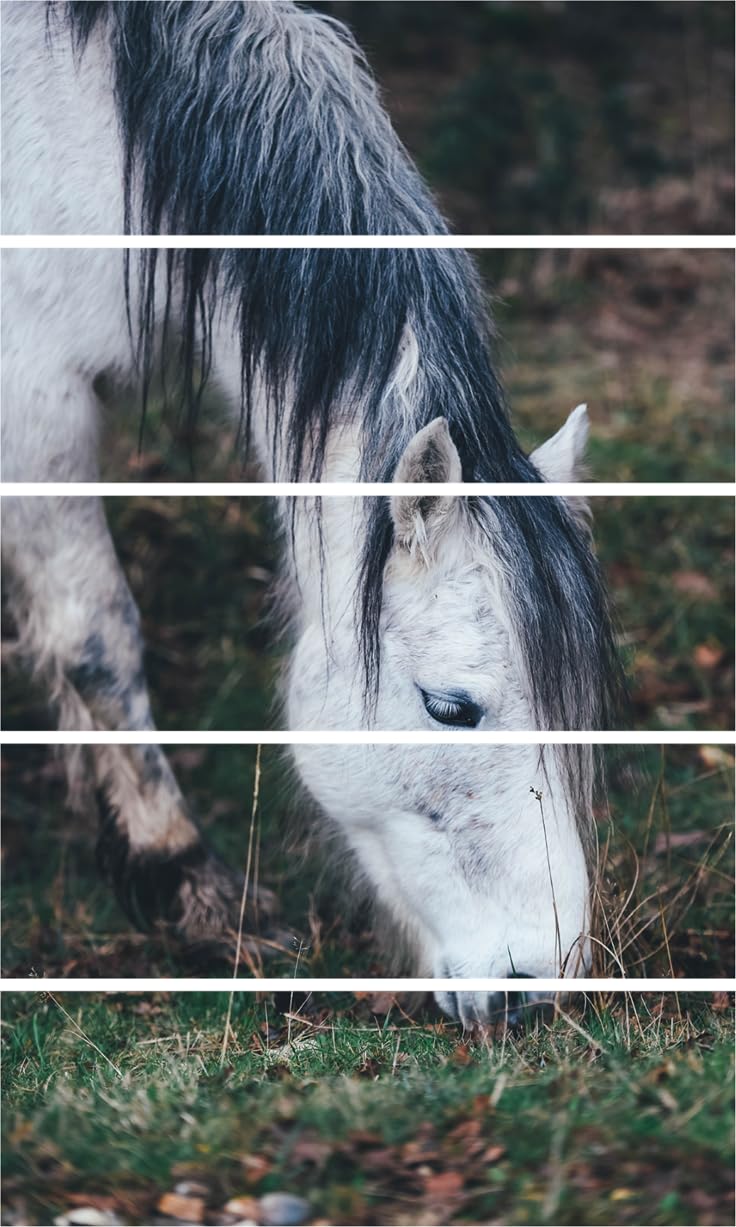
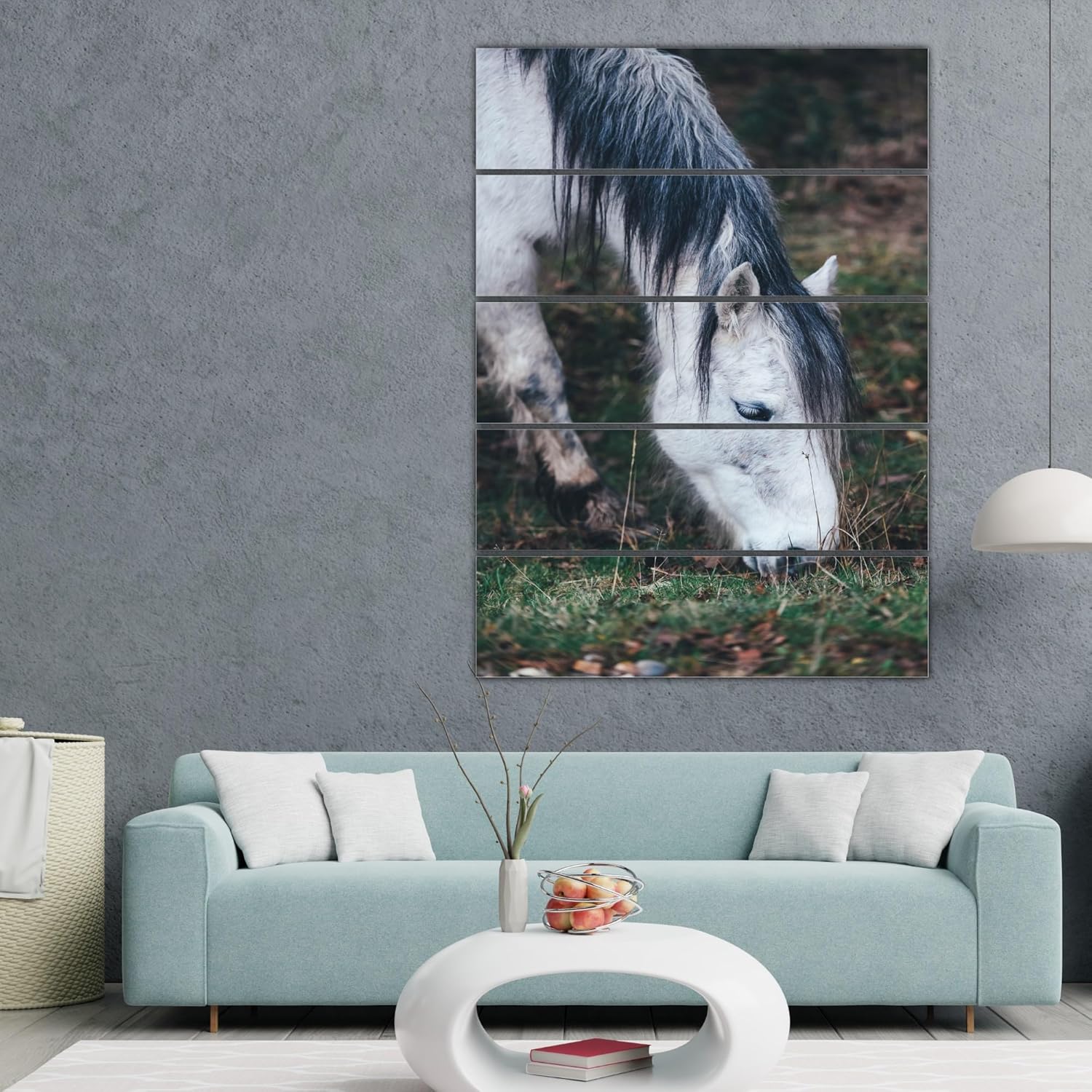
Gallop-tastic Framed 5-Panel Horse Nature Wall Art
You may also like

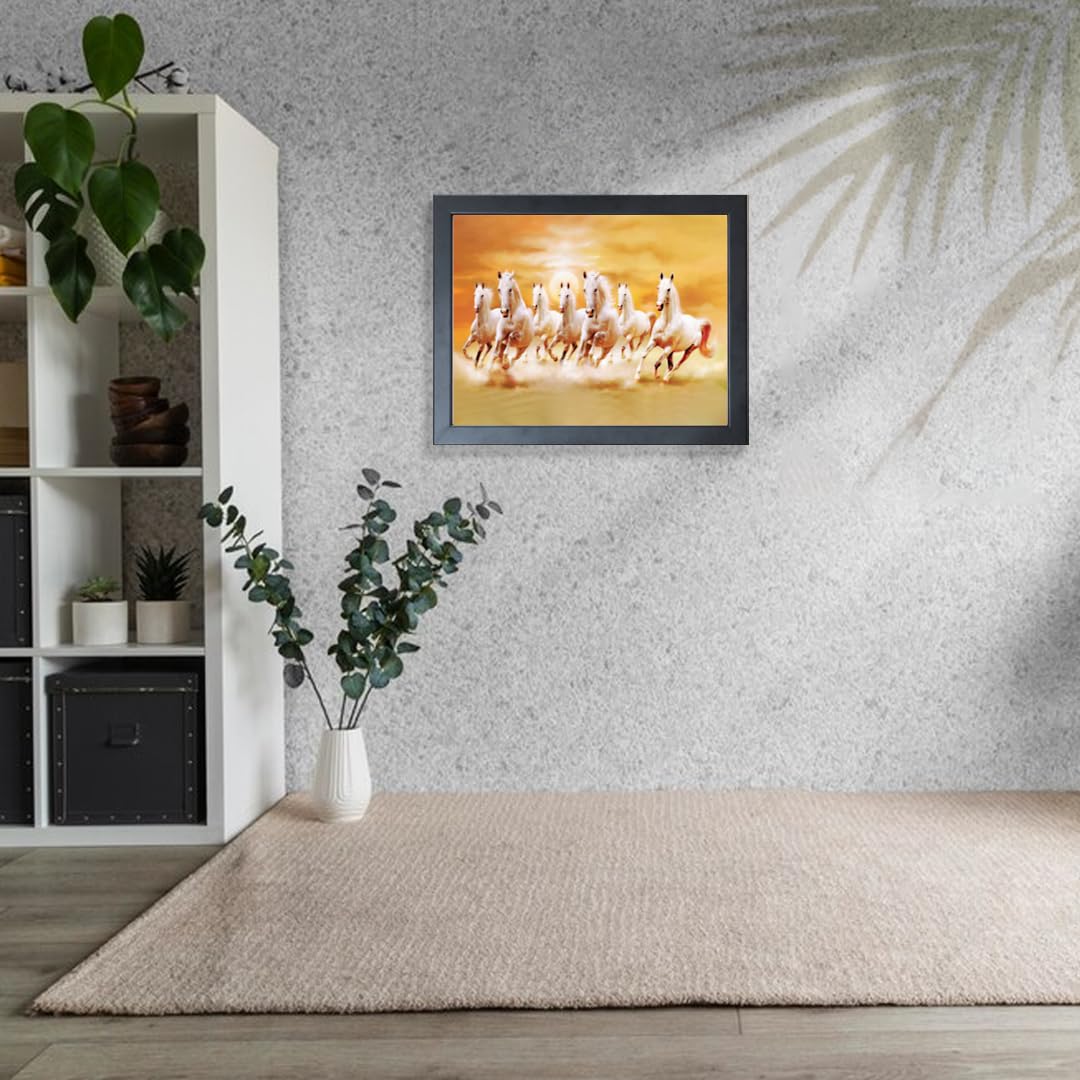
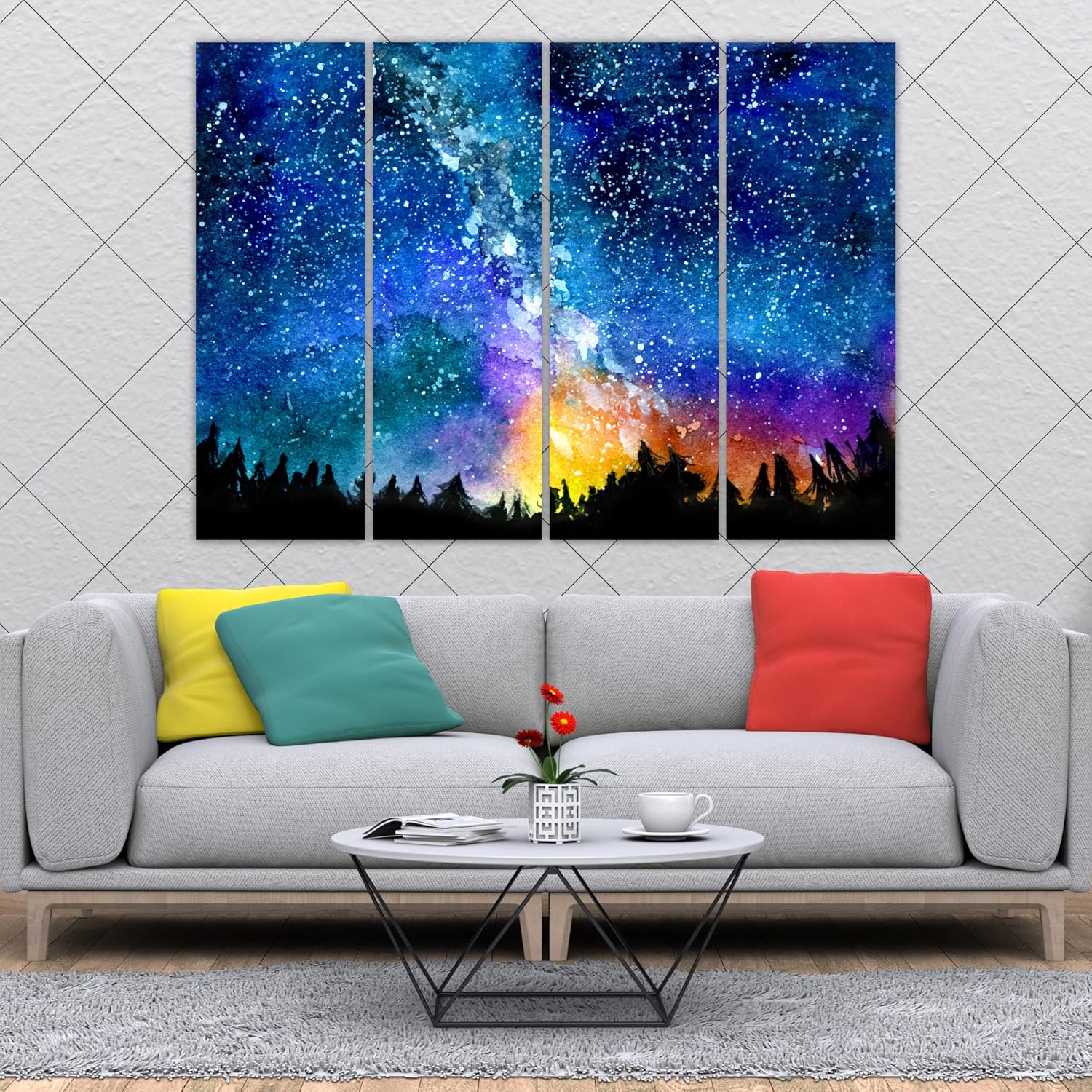
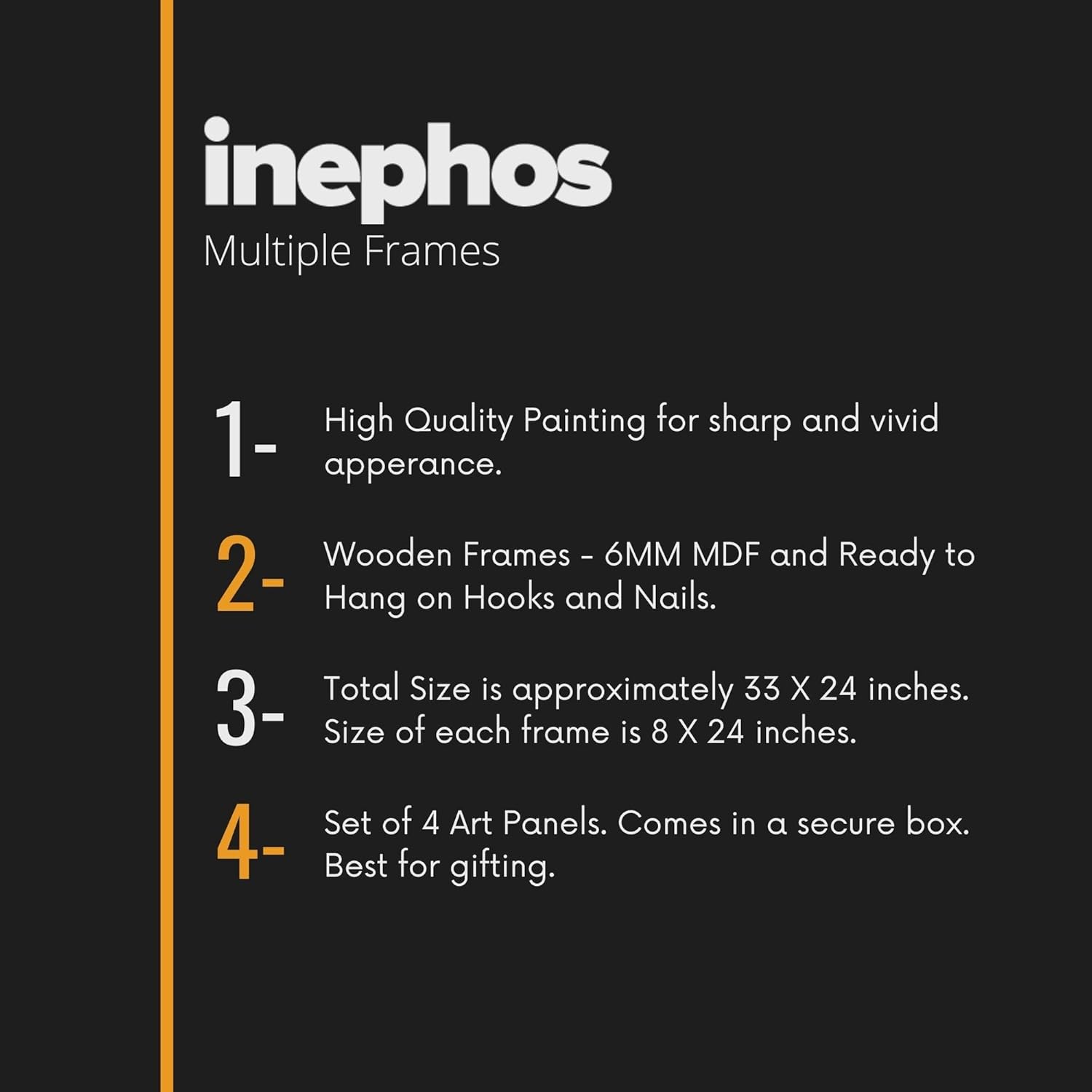
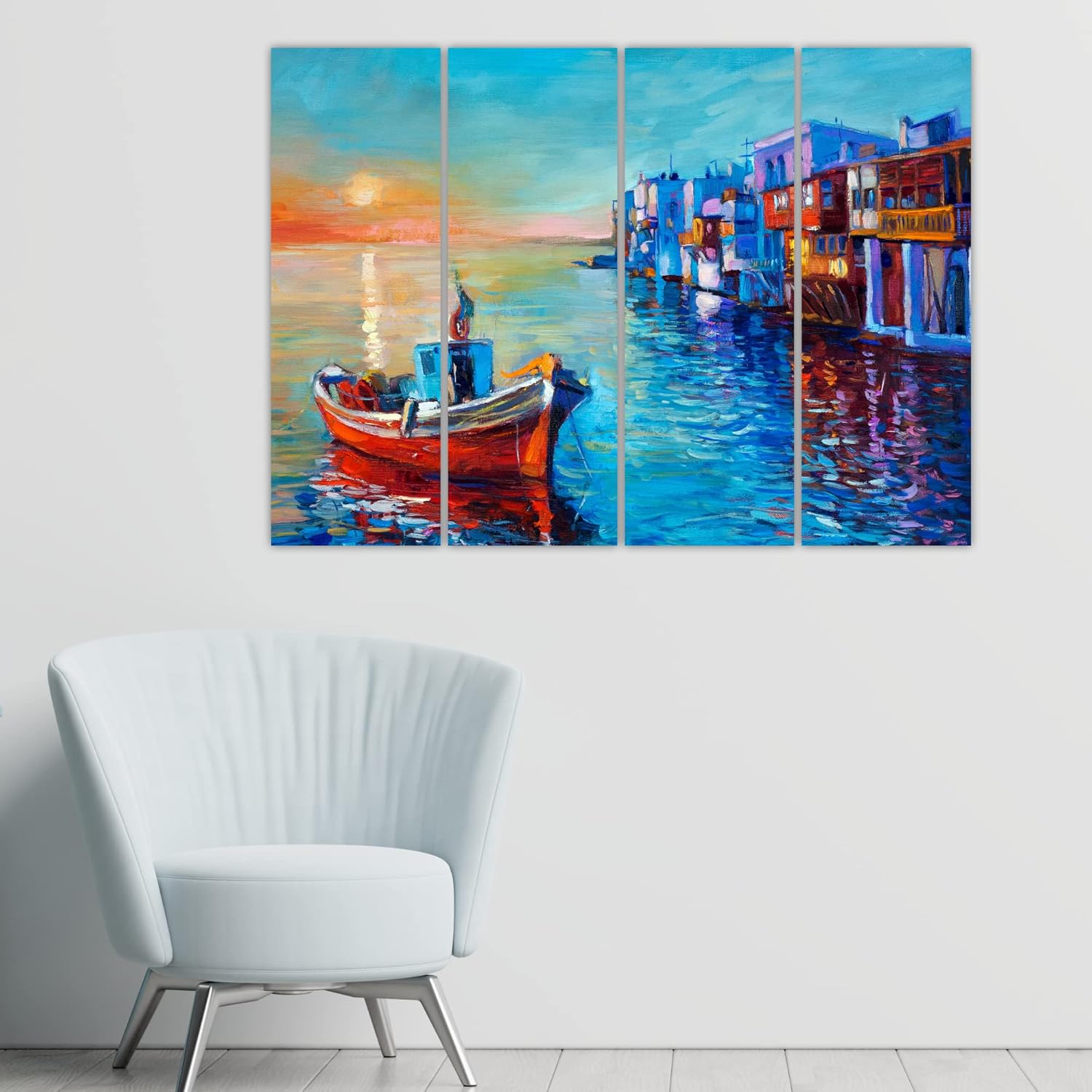
Moolwan 5-Panel White Horse Canvas Wall Art Painting (127x76cm) - Multi-Frame Nature Photography
Three weekends of browsing. Twelve saved items. Eight open tabs. And you're still here because every time you get close to buying, the same question stops you: "Will this actually look proportional on my 12-foot wall, or will it seem lost?" You're not indecisive—you're careful. Because once this is on your living room wall, you'll see it daily. It needs to be right.
This 127cm white horse canvas might have caught your eye because of those soft grays and natural greens—colors that probably already exist in your home. Your walls are probably cream or off-white. Your sofa is probably brown or beige fabric. And you've likely noticed how most wall art either clashes with these neutrals or disappears into them. This 5-panel set sits in that sweet spot: distinct enough to notice, subtle enough to belong.
The spatial math matters more than the subject. At 127cm width, this covers about 35% of a standard 12-foot (360cm) wall—leaving 116cm on each side. That's intentional breathing room. Not so small that it looks like an afterthought. Not so large that it dominates awkwardly. The 76cm height works when your ceiling is 8-10 feet tall, which is standard in Indian apartments and independent homes.
Why 127cm Works on 12-Foot Walls (and What Happens If You Go Smaller or Bigger)
You've probably seen smaller options—maybe 90cm or 100cm pieces. On a 12-foot wall, those cover about 25-28% of the space. The math says "balanced," but when you step back from 8-10 feet away (your typical viewing distance from a sofa), they read as undersized. Your eye expects more visual weight above furniture that's 6-8 feet wide.
Going bigger—say, 150cm or 180cm—flips the problem. You'd get 42-50% coverage, which starts to feel crowded unless your wall is completely bare. If you have windows, wall-mounted shelves, or a pooja area nearby, a larger piece competes for attention rather than complementing the space.
This 127cm width hits the proportional zone. Here's the coverage breakdown:
- Your wall: 360cm (12 feet)
- Canvas: 127cm (42 inches)
- Left margin: 116cm
- Right margin: 116cm
- Coverage percentage: 35%
That 35% is the design equivalent of wearing one statement piece—not everything at once. The 5-panel layout extends the horizontal presence without adding vertical bulk, which matters when your ceiling isn't cathedral-height.
Why White, Gray, and Green Work in Indian Living Rooms (Not Just Online Photos)
Most Indian homes have cream, off-white, light yellow, or builder's peach walls. Bright colors—reds, oranges, intense blues—can clash or demand constant repainting to match. This white horse palette gives you flexibility. The soft grays and whites echo your wall tone, creating tonal variation rather than color competition. The natural greens (from the grass and background) introduce just enough organic contrast without overwhelming.
If your furniture is wooden—teak coffee tables, sheesham TV units, rosewood pooja shelves—the earthy tones in this canvas tie into those browns. If you have leather or fabric sofas in beige, tan, or brown, the color relationship stays cohesive. You're not introducing a new color family; you're deepening the one you already have.
The 5-panel split matters for color distribution too. Instead of one large block of white and gray, the panels create visual rhythm. Your eye moves across the sequence—mane, face, body, ground—which adds interest without adding more hues. In Indian lighting conditions (tube lights, warm LEDs, monsoon-filtered daylight through windows), these neutrals stay consistent. Bright colors can look washed out under harsh tube lights or overly saturated under evening LEDs. Whites and grays adapt.
Rental-Friendly Mounting: How to Hang Without Losing Your Deposit
If you're renting, your ₹50,000 deposit is probably always in the back of your mind. This canvas weighs 3kg total across 5 panels—light enough to mount with damage-free adhesive hooks or Command strips rated for 2kg per hook. You'd need 3-4 hooks for secure distribution, and they remove cleanly when you move out.
Standard installation takes about 20 minutes:
- Mark your center point (usually above the sofa backrest, leaving 15-20cm gap)
- Measure 63.5cm left and right from center (half of 127cm)
- Use a level to mark hook positions for even alignment
- Apply adhesive hooks or use existing nails if available
- Hang panels with built-in frame sawtooth hangers
The 0.6cm depth (frame thickness) keeps the canvas close to the wall, so it doesn't jut out awkwardly. This also means it won't accumulate dust on top, which is practical in Indian humidity and pollution conditions. If you're in a high-humidity area (coastal cities, monsoon season), the splash-proof coating helps prevent moisture warping—a common problem with uncoated canvas in 70-85% humidity environments.
How This Compares to Smaller Sizes You've Been Considering
You might have been looking at 90cm or 100cm options because they're easier to visualize or slightly cheaper. Here's the honest difference:
90cm canvas:
- Coverage: 25% of 12 ft wall
- Visual weight: Undersized above 6-8 ft sofa
- Price difference: ₹200-400 less
- Impact: Feels like placeholder art
100cm canvas:
- Coverage: 28% of 12 ft wall
- Visual weight: Still reads small from 8-10 ft viewing distance
- Price difference: ₹200-300 less
- Impact: Better than 90cm, but lacks presence
127cm canvas (this one):
- Coverage: 35% of 12 ft wall
- Visual weight: Proportional to furniture and room scale
- Price: ₹2,796 (middle range for quality canvas)
- Impact: Intentional, not accidental
The extra ₹300-500 isn't about canvas material—that's standard 340 GSM cotton across sizes. It's about proportional confidence. When someone walks into your living room, they register the art immediately, but it doesn't dominate the conversation. With smaller sizes, guests often don't notice at all, or they notice because something feels off.
If your wall is 10 feet instead of 12, this 127cm still works—you'd have about 40% coverage, which leans toward "statement piece" but stays proportional. On 14-foot walls, you'd get 30% coverage, which is minimalist but intentional if that's your aesthetic.
What This Will Look Like in Your Living Room (Not Just Online Photos)
Product photos are shot with professional lighting—soft, diffused, color-balanced. Your living room probably has tube lights, a window with afternoon sun, and maybe LED strips behind the TV. Here's what changes:
Morning light (8-11 AM):
The white horse coat reflects natural daylight, so the canvas looks brightest during this window. The grays and greens stay true to the image. If your window faces east, expect a slight warm cast.
Afternoon (12-4 PM):
Harsh sunlight can wash out details if the canvas is directly in the sun path. If your wall is perpendicular to the window, the lighting stays even. If the wall faces the window, the splash-proof coating prevents glare but the whites might appear slightly blown out.
Evening LED (6-11 PM):
Warm LED bulbs (2700-3000K, common in Indian homes) add a slight yellow tint. The white horse still reads as white, but the greens shift toward olive. Cool white LEDs (4000-5000K) keep the palette closer to the product image. If you use tubelights (5000-6500K), the colors stay crisp but can feel slightly clinical.
The 5-panel split helps with uneven lighting. If one panel is in shadow and another is in direct light, the separation makes it look intentional rather than like poor lighting. Single-panel canvases show uneven lighting more obviously.
From your typical sofa distance (8-10 feet away), you'll see the composition as a whole—the horse grazing, the naturalistic setting. Move closer (3-4 feet), and you'll notice the print detail, the texture of the mane, the depth in the eyes. This isn't fine-art brushstroke-level detail, but it's crisp enough that it doesn't pixelate or blur at close range.
Expect the colors to be slightly more muted in person than in the product image. That's standard for printed canvas—the monitor displays backlit RGB colors, while the canvas reflects ambient light. The whites might be more off-white (closer to cream), and the greens might be less vibrant. This actually works better in Indian homes, where hyper-saturated colors can feel out of place against neutral walls.
Quick Specifications
- Dimensions: 127cm (W) x 76cm (H) x 0.6cm (D)
- Weight: 3kg total (lightweight for easy mounting)
- Panel Count: 5-panel multi-frame layout
- Material: 340 GSM cotton canvas with moisture-resistant coating
- Frame: 1.5-inch kiln-dried pinewood (12% moisture content)
- Inks: Eco-solvent UV-resistant for color longevity
- Mounting: Splash-proof coating, pre-installed sawtooth hangers
- Color Palette: White, gray, natural green, earthy tones
- Ideal Wall Size: 10-14 ft walls in living rooms, bedrooms, or hallways
- Price: ₹2,796
- Delivery: 5-6 days metro cities, 6-8 days tier-2/3 cities
- Brand: Moolwan