
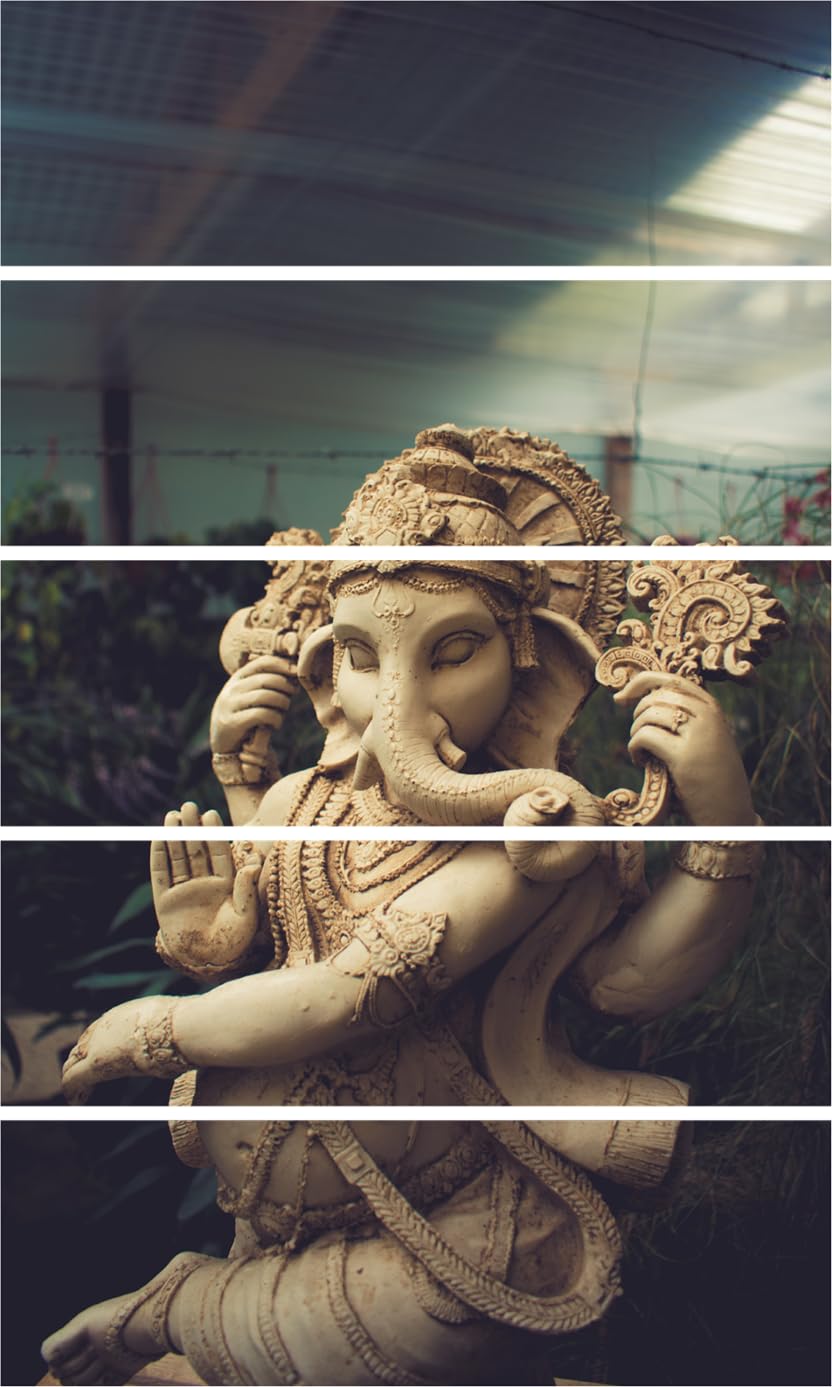
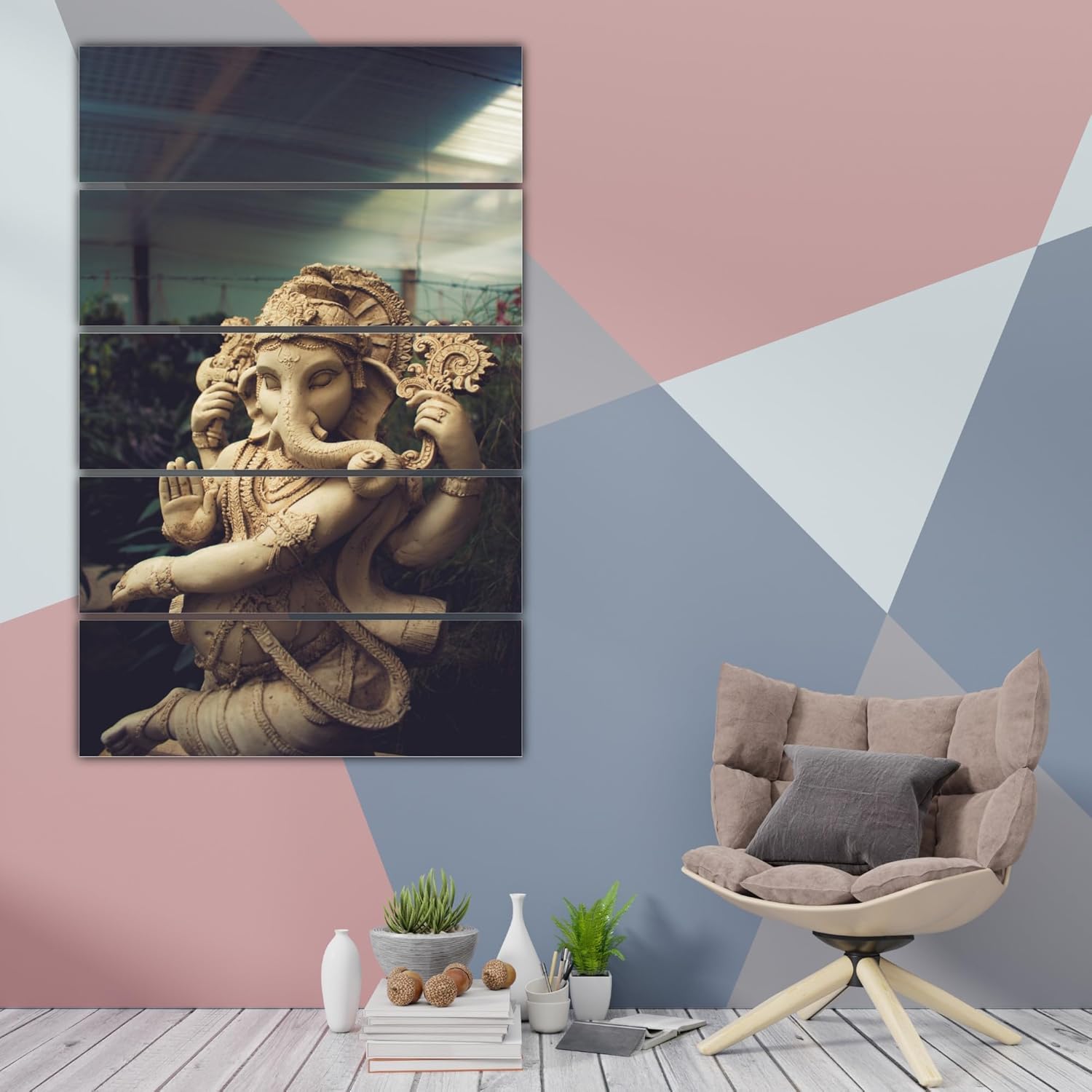
Ganesh-tastic 5-Frame Wall Art That'll Bless Your Walls - Framed Ganesha Grandeur (127x76cm)
You may also like

Moolwan 5-Panel Ganesha Canvas Wall Art Painting (127x76cm) - Framed Spiritual Decor
Three weekends of browsing. Fifteen saved items. Eight open tabs. And you're still here because every time you get close to buying, the same question stops you: will Lord Ganesha's image look proportional above your sofa, or will it feel cramped against your 12-foot living room wall? You're not indecisive—you're careful. Because once this 127cm 5-panel Ganesha canvas is on your wall, you'll see it during morning prayers, family gatherings, and quiet evenings. It needs to be right.
This is where spatial mathematics meets spiritual intention. You're looking at 127cm of width across five panels depicting Lord Ganesha in multicolour tones—gold, cream, beige, with intricate traditional detailing. The 76cm height creates vertical presence without overwhelming standard 8-10 foot ceilings. At 3kg total weight distributed across five frames, this is substantial enough to command attention but light enough for rental-friendly installation. The splash-proof canvas coating matters in Indian humidity—your walls probably see 70-85% moisture during monsoons, and unprotected canvas warps within months.
Why 127cm Works on 12-Foot Walls (and What Happens If You Go Smaller or Bigger)
Your living room wall is probably 12 feet wide—that's 360cm in practical terms. A 127cm canvas covers 35% of that width. Here's the visual breakdown: 116cm of wall space to the left, 127cm of Ganesha canvas in the center, 116cm to the right. This creates balanced negative space—not too crowded, not too lost. Your eye registers the art as intentional, not accidental.
If you went with 90cm instead (a common "safer" choice), you'd have 135cm on each side. The canvas would read as undersized, especially above a 6-8 foot sofa. The proportions feel timid. If you jumped to 160cm, you'd have only 100cm per side—visually tight, and you'd worry about it overwhelming the pooja shelf or TV console nearby. 127cm hits the middle ground where Indian living rooms breathe properly.
The five-panel format matters here. Unlike a single-frame canvas that can feel like a poster, the staggered arrangement creates depth. The central panel (largest) draws focus to Ganesha's face, while the flanking panels extend the composition horizontally. This works with how your family naturally gathers—sitting on the sofa, they'll see the full narrative unfold left to right.
Why Multicolour Gold and Cream Work in Indian Living Rooms (Not Just Online Photos)
You've seen the product images with perfect lighting. Now picture your actual wall: cream or off-white paint (builder standard), probably with a slight yellow undertone from years of settling. Morning sunlight streams through east-facing windows, making everything warmer. Evening tube lights cast that familiar cool white glow.
This canvas uses gold tones in Ganesha's ornaments and crown, cream in the background, with earthy beige and soft traditional patterns. Gold doesn't fight cream walls—it complements them, especially when your wooden coffee table and teak TV unit already introduce warm brown tones. The cream background prevents the harsh contrast you'd get with pure white canvases (which can look clinical or bluish under LED lights).
The multicolour aspect is intentional. You're not getting flat, single-tone minimalism—you're getting visual richness that matches how Indian homes layer textures: embroidered cushions, patterned curtains, brass diyas on shelves. This canvas reads as "complete" rather than "needing more décor" because the color palette is self-sufficient. Your mother-in-law won't suggest adding more elements—it's already balanced.
From Box to Wall in 20 Minutes: What Installation Involves
The 3kg weight splits across five separate panels. Each panel has a pre-mounted hanging system on the back. You're not drilling five separate holes—you're working with the alignment guide that comes in the package. Mark the center point on your wall (probably 60-70 inches above the floor if you're centering it above a sofa), then position the central panel first.
The splash-proof canvas means you're not stressing about accidental water damage during installation. Your hands might be sweaty from anxiety about getting it perfect—that's fine, the canvas won't show moisture marks. Once the central panel is up, the side panels align based on the template spacing (approximately 2-3cm gaps between frames for the floating effect).
Rental concern: use adhesive hooks rated for 1kg each (five hooks total, well within capacity). These peel off cleanly without damaging paint. If you own your home, standard picture hooks work. The 0.6cm depth means the canvas sits flat against the wall—no awkward jutting that catches shadows or dust.
How This Compares to Single-Frame or 3-Panel Versions You've Been Considering
You've probably looked at single-frame Ganesha canvases at the same 127cm width. They're ₹200-400 cheaper. Here's what you give up: the dimensional depth. A single frame is flat—visually and literally. The five-panel format creates staggered layers that catch light differently throughout the day. When someone walks past, the panels shift in perspective slightly, making the image feel alive rather than static.
Three-panel versions are also available (usually same width). They're simpler to hang but lack the extended narrative. Ganesha's trunk, hands, and symbolic elements spread across five panels tell a more complete story than three compressed sections. If your wall space allows it—and at 127cm width, you have room—five panels justify themselves in visual interest.
Marketplace alternatives at ₹800-1,200 use thinner canvas (220-280 GSM vs. Moolwan's 340 GSM), non-resistant inks, and cheaper frames (often MDF instead of pinewood). You'll see color fading within 6-8 months, especially near windows. The splash-proof coating here isn't marketing fluff—it's the difference between canvas that survives Indian monsoons and canvas that develops mold spots by September.
What This Will Look Like in Your Living Room (Not Just Online Photos)
Morning: If your living room faces east, natural sunlight will hit the gold tones in Ganesha's crown and jewelry around 7-9 AM. The canvas will look warm, almost glowing—ideal for morning prayers if you have a nearby pooja area. The cream background won't glare because it's not pure white.
Afternoon: Indirect daylight creates softer contrast. The multicolour palette holds up without looking washed out. If your curtains are sheer (common in Indian homes for airflow), you won't get harsh shadows across the panels.
Evening: Tube lights or LED ceiling fixtures cast even light. The gold won't look orange (a problem with overly saturated yellows). The traditional detailing—Ganesha's ornaments, the textured background patterns—will be visible from 8-10 feet away (typical sofa-to-wall viewing distance). If you have decorative string lights or diyas on a shelf nearby during festivals, the canvas integrates with that aesthetic rather than clashing.
Viewing angle: The five-panel stagger means you can see the full composition from the sofa, dining area, or entryway. Unlike single frames that look different when viewed at sharp angles, this spreads horizontally enough to remain coherent from 45-degree sightlines.
Quick Specifications
- Dimensions: 127cm (W) x 76cm (H) x 0.6cm (D)
- Weight: 3000g total (distributed across 5 panels)
- Panel Configuration: 5-frame multi-panel (central panel largest, flanking panels create staggered composition)
- Canvas Material: 340 GSM cotton with splash-proof, moisture-resistant coating
- Frame: 1.5" kiln-dried pinewood (12% moisture content)
- Inks: Eco-solvent, UV-resistant (fade-resistant for 3-5 years)
- Design: Lord Ganesha in multicolour palette (gold, cream, beige, traditional ornamental details)
- Mounting: Pre-mounted hanging system on back, rental-friendly adhesive hook compatible
- Climate Suitability: Designed for 70-85% humidity and 5°C-45°C temperature range
- Delivery: 5-6 days metro cities, 6-8 days tier-2/3 cities
- Price: ₹2,796 (Moolwan standard range ₹2,796-₹4,596)
- Brand: Moolwan