
Glass-tastic Multi-Frame Photography Framed Wall Art That'll Make Your Walls Sparkle - Premium Decor (127x76cm)
You may also like

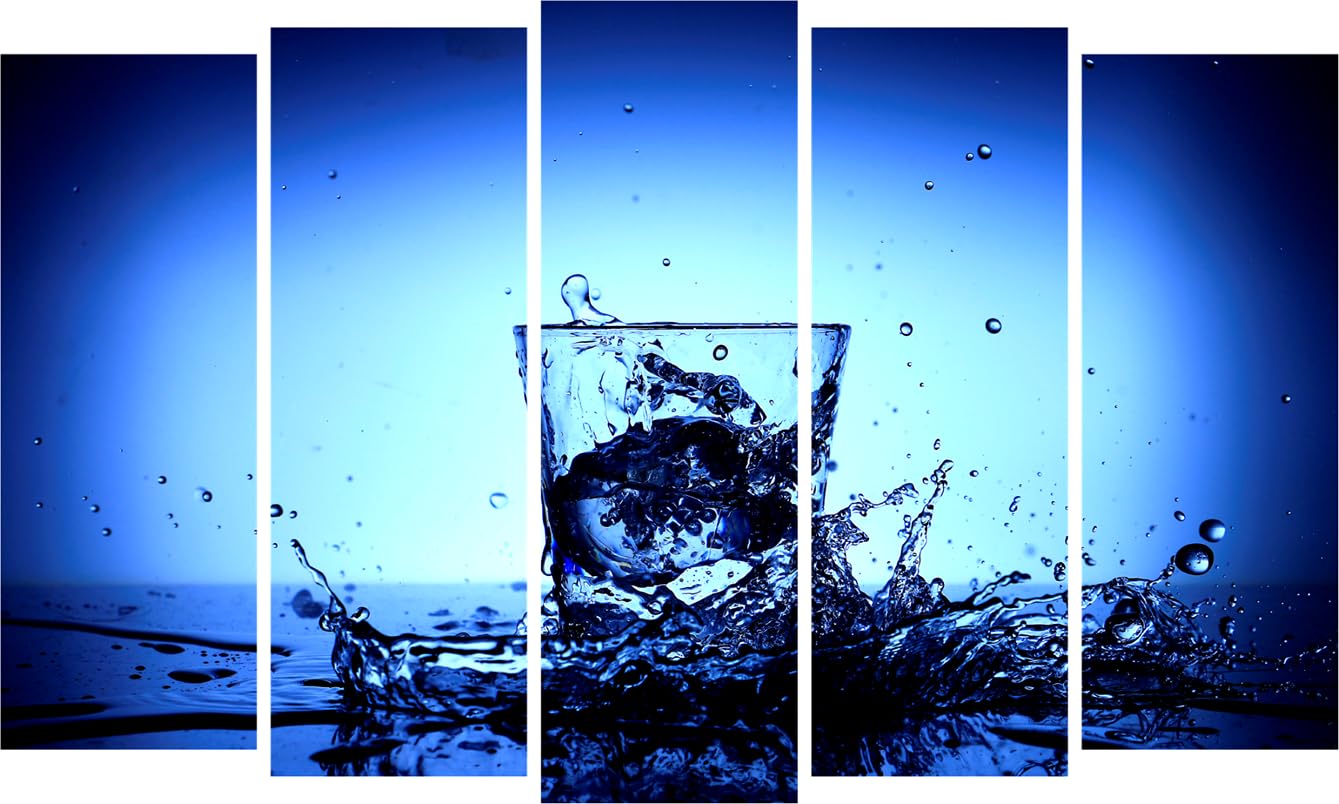
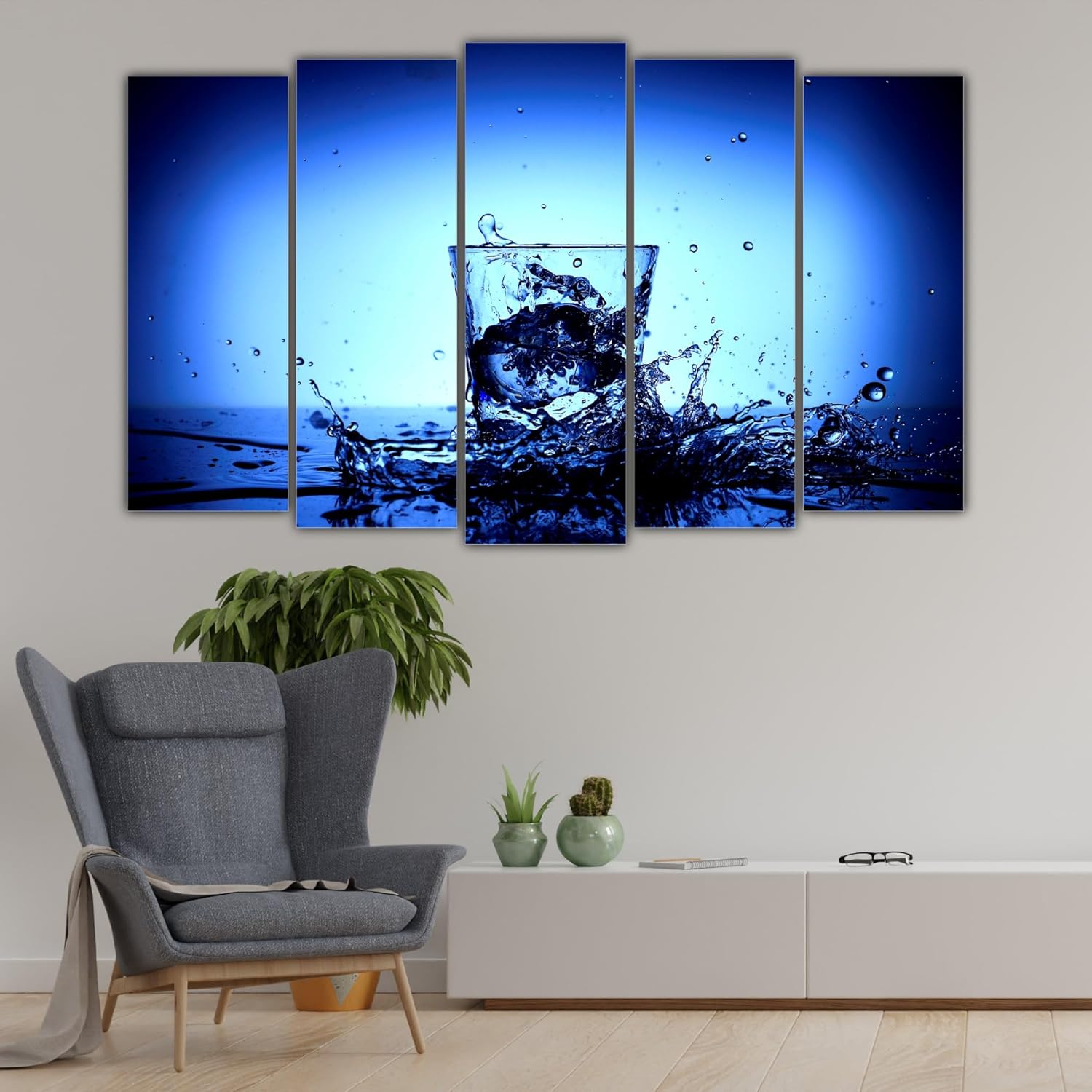
Moolwan 5-Panel Water Glass Splash Canvas Wall Art Painting (127x76cm) - Contemporary Blue Photography Art
You've measured your wall three times. Maybe four. The tape measure says 360cm, but you're still not confident because online images never show scale accurately. Every guide says something different, and none account for Indian living room proportions—the 8-foot ceilings, the brown sofa that takes up half the wall, the cream paint that photographs differently than it looks in person. You keep second-guessing: is 127cm actually right for a 12-foot wall?
This 5-panel water glass splash canvas wall art painting gives you that answer with numbers, not guesses. At 127cm wide across five synchronized panels, this piece covers approximately 35% of a standard 12-foot (360cm) Indian living room wall. That leaves roughly 116cm of breathing space on each side—enough to feel intentional, not cramped, not lost. The deep blue palette creates visual depth that makes the art feel larger than its physical footprint, which is exactly what you need when you're working with standard 8-10 foot ceiling heights.
The Visual Math: How 127cm Fits 12ft Walls in Indian Homes
Let's do the spatial calculation you've been trying to figure out. A 12-foot wall measures 360cm. This canvas spans 127cm. That's 35.3% wall coverage—design professionals typically recommend 30-40% for balanced visual weight above furniture.
If your sofa is probably 6-8 feet wide (180-240cm), this 127cm canvas creates proportional alignment. The art doesn't overwhelm the sofa, and the sofa doesn't dwarf the art. Picture this: with a 7-foot (210cm) sofa, you'd have roughly 41cm extending past the sofa on each side where wall shows through. That's deliberate framing, not awkward gaps.
What happens if you went smaller? A 90cm canvas on the same wall drops to 25% coverage—it starts looking like an afterthought, floating uncertainly above your furniture. Go larger to 150cm, and you're at 42% coverage, which works but starts feeling dominant rather than complementary. The 127cm sits in that mathematical sweet spot.
What These Blues Will Actually Look Like (Morning vs. Evening Light)
The deep cobalt and azure tones in this water splash photography aren't the kind of blue that looks cold or clinical. Against cream walls—which probably make up 70% of Indian living rooms—these blues create contrast without harshness. The gradient from deep blue at the edges to lighter cyan in the center means your eye naturally moves across the panels, finding the dynamic water glass at the heart.
Morning natural light brings out the lighter blue tones, making the splash appear almost luminous. Evening LED or warm tube light shifts emphasis to the deeper blues, creating a more dramatic, sophisticated feel. This isn't a piece that looks good in one lighting condition and strange in another—the tonal range handles both.
If your walls lean toward off-white or builder's peach rather than pure cream, the cool blue acts as a visual palette cleanser. It gives the room a focal point that doesn't clash with warm-toned furniture, which is fortunate since most Indian living rooms feature wooden coffee tables and brown or beige upholstery.
Rental-Friendly Mounting: How to Hang Without Losing Your Deposit
Five panels mean five mounting points. Each panel weighs approximately 600 grams—light enough that standard picture hooks handle the load without needing wall anchors that leave serious holes. The total 3kg weight distributed across five points means each hook bears only 600g, well within the tolerance of basic hardware.
For rental apartments where your deposit is probably ₹50,000 or more, here's what matters: each hook creates a single small hole. When you move, fill with white toothpaste, let dry, touch up with wall paint. Deposit protected. Total installation time runs about 15-20 minutes, including measuring twice, marking with pencil, and the actual hanging.
The panels come with rear mounting hardware pre-attached. You're not drilling into the frame or figuring out bracket placement. Measure your wall, mark five points at consistent spacing, hang. The 0.6cm depth means these sit nearly flush against the wall—no awkward shadows or gap between art and surface.
How This Compares to the Smaller Sizes You've Been Considering
You've probably looked at 90cm options because they're cheaper and feel "safer." Here's the honest comparison: 90cm on a 12-foot wall covers only 25%. Above a standard sofa, that creates the "postage stamp" effect—art that looks tentative rather than intentional. Guests notice, even if they don't say anything directly.
The 150cm versions exist too. At 42% coverage, they work in larger living rooms (14x16 feet or bigger) or on 14-foot walls. In a standard 12x14 foot Indian living room, 150cm starts competing with your furniture for attention rather than complementing it.
At 127cm, you're choosing the size that interior designers actually recommend for average Indian homes. Not because it's middle-of-the-road, but because the proportions align with how Indian living rooms are typically built and furnished.
Setting Realistic Expectations: Colors, Lighting, and Your Space
Here's what you should know before this arrives: the product photography shows these colors at their most vivid. In your home, with your specific lighting and wall color, you'll see the same tones but potentially at slightly different saturation depending on your light sources.
Viewing distance matters. At 2-3 meters (typical sofa-to-wall distance in Indian living rooms), the five panels merge into a cohesive image. The water droplets, the splash dynamics, the glass transparency—all read clearly. Move closer than 1.5 meters and you'll see individual panel edges and printing texture. This is normal for multi-panel canvas art and not a defect.
The splash-proof glass coating means humidity from Indian monsoons won't warp the canvas. Bathrooms and semi-humid spaces are fine. Direct sunlight for extended hours will fade any printed art over years—position away from windows that get harsh afternoon sun.
Quick Specifications
- Product Name: Moolwan 5-Panel Water Glass Splash Canvas Wall Art Painting
- Dimensions: 127cm (W) x 76cm (H) x 0.6cm (D)
- Weight: 3kg (approximately 600g per panel)
- Panels: 5 synchronized panels
- Material: 340 GSM cotton canvas, splash-proof coating
- Frame: Kiln-dried pinewood, pre-attached mounting hardware
- Colors: Deep cobalt blue, azure, cyan gradient
- Best Wall Size: 10-14 foot walls (300-420cm)
- Ideal Room Size: 12x14 ft living rooms, bedrooms, offices
- Delivery: 5-6 days metro cities, 6-8 days tier-2/3 cities