
Cart
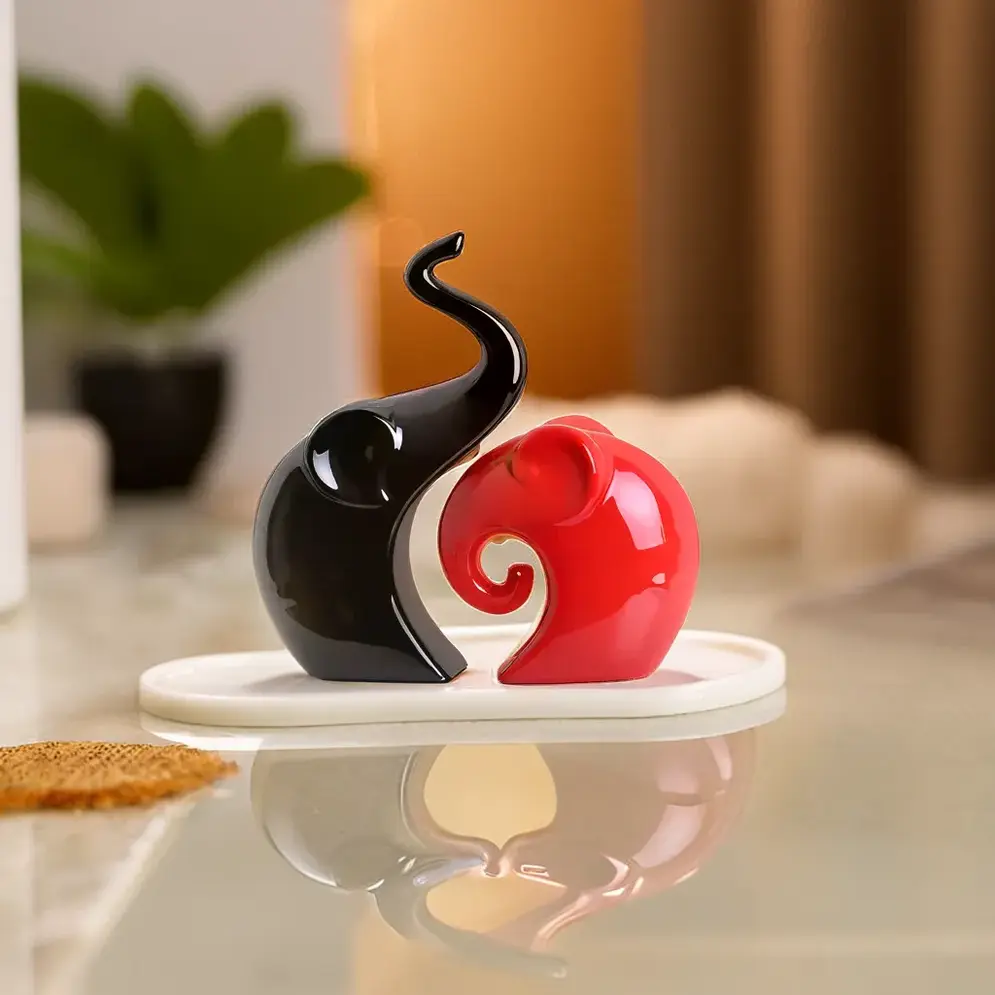
Ever wondered why some rooms just feel right while others seem a bit off? The secret might be hiding in your high school math textbook! The Golden Ratio (approximately 1:1.618) isn't just for nerdy architects and Renaissance painters—it's your new best friend for creating a home that feels magically balanced. Think of it as Mother Nature's favorite design hack that's been making things pretty since, well, forever! From sunflowers to seashells, this mathematical marvel creates natural harmony. And guess what? You can sprinkle this same mathematical pixie dust all over your home without solving a single equation. Ready to transform your space from "meh" to "mathematical masterpiece"? Let's dive into the world where Fibonacci meets furniture! Enhance this symmetry with the Stunning Abstract Showpieces following golden ratio for perfect home decor that our customers love displaying on shelves and corners to maintain balance.
The Golden Ratio is like that perfect chocolate chip cookie recipe—mysteriously balanced and somehow always works. Technically speaking, it's when a line is divided so that the longer part divided by the smaller part equals the whole length divided by the longer part (approximately 1:1.618). Sound complicated? Here's the non-math version: it's the secret sauce that makes things look naturally beautiful. Mother Nature has been using it in everything from flower petals to hurricane patterns, and now it's your turn to use it for arranging your throw pillows. Think of it as design DNA that makes spaces feel "just right"—like Goldilocks finally finding that perfect bed, but for your entire home! You can recreate that harmony using Modern Ceramic and Resin Statues inspired by golden ratio symmetry placed strategically on your furniture and TV units.
Remember that swirly shell pattern you've seen in fancy design magazines? That's our friend the Golden Spiral, and it's basically a roadmap for furniture arrangement. Start by imagining this spiral in your living room, with the tightest part being your focal point (maybe that gorgeous vintage chair you splurged on). As the spiral expands, place larger furniture pieces along its path. Your sofa, coffee table, and entertainment center should follow this invisible swirl like they're performing a synchronized swimming routine. The result? A room that guides the eye naturally and feels inexplicably satisfying—like finally untangling headphones on the first try. Magic! Complement it with Resin tall showpieces for corners arranged in golden spiral for aesthetic layout, perfect as eye-catching yet balanced focal complements.
We've all been there—standing with a hammer, sixteen different-sized frames, and absolutely no clue how to arrange them. Enter Golden Ratio to save the day! When creating a gallery wall, try arranging your frames in rectangles with Golden Ratio proportions. For example, if your horizontal measurement is 34 inches, your vertical should be about 21 inches (34 ÷ 1.618 ≈ 21). Not feeling the math? Just eyeball a rectangle that's about 60% wider than it is tall. And here's a lazy person hack (we don't judge): arrange your photos in a spiral pattern, putting your favorite or largest piece where the spiral is tightest. Voilà! A gallery wall that looks professionally designed, even if you hung it while wearing pajamas and eating cereal! Add depth by mixing in Artistic wall hangings inspired by golden ratio art for gallery balance within your layout.
The Golden Ratio has a color-coding cousin called the 60-30-10 rule, and it's about to make selecting paint colors less traumatic. Use your dominant color (maybe that cool sage green) for about 60% of the room (walls, large furniture), your secondary color for 30% (accent furniture, curtains), and your accent color for the remaining 10% (cushions, artwork, that quirky flamingo statue you couldn't resist). This creates visual harmony that's more satisfying than finding an extra fry at the bottom of the bag. And yes, this is why those three random pillows you impulse-bought actually look amazing together—they accidentally followed the Golden Ratio! Add dimension with Vibrant decorative vases for golden ratio color balance interior styling in complementing hues and finishes.
Ever bought a coffee table that looked normal in the store but turned into a giant monster in your living room? Golden Ratio to the rescue! Your coffee table should ideally be about 2/3 the length of your sofa (hello, Golden Ratio in disguise). Similarly, end tables look best when they're approximately the height of your sofa's arms, and rugs should extend about 18 inches beyond your seating area. These proportions create a subliminal sense of balance that makes everyone think you hired a fancy designer, when really you just befriended a mathematical concept from 500 B.C. Your secret is safe with us! Enrich proportions with Medium-sized decorative items to complement golden ratio furniture layout placed on tables and shelves according to size aesthetics.
Want to check if your furniture arrangement has that Golden touch? Here's a lazy person's hack: take a photo of your room from the doorway, then divide the image into a 3×5 grid (like those ratio options on Instagram). If your focal points and main furniture pieces align with the grid intersections, congratulations—you've accidentally achieved mathematical harmony! Not quite there? Simply shift things until they line up with these "power points." It's like giving your room a mini facelift without the expensive designer fees. And yes, this is totally why some Instagram photos are more satisfying than others—they're secretly mathematical masterpieces! Customers love using Golden ratio-based corner showpieces for symmetrical room enhancement that act as anchor points.
Bookshelves are basically just rectangles begging for some Golden Ratio love. When arranging your treasures (books, that souvenir snow globe, the plant that refuses to die), try creating diagonal lines that follow our friend Fibonacci's sequence. Start with smaller objects at one end, gradually increasing to larger ones, creating a visual spiral. Or get super math-nerdy and arrange books in stacks of 3, 5, and 8 (numbers from the Fibonacci sequence that approximates the Golden Ratio). Suddenly your random collection of vacation reads and gifted knickknacks looks like a curated museum display. Who knew math could make your Harry Potter collection look so fancy? Achieve stunning effects with our Miniature golden ratio showpieces for styled bookshelf compositions.
Want to know why some curtains look elegant while others look like sad bedsheets? It's all about proportion! Hang your curtain rods about 2/3 of the way up between your window and ceiling (Golden Ratio alert!), and extend them 1.6 times the width of your window on each side. This makes windows appear larger and rooms feel taller—like vertical stripes but for your whole room. And here's a designer secret: curtains should just kiss the floor or puddle slightly, never doing that awkward "high-water pants" thing that makes them look like they shrunk in the wash. Your windows deserve better than that fashion faux pas! Complement with Matte-finished ceramic décor for golden vertical visual height upliftment for that luxe look.
Ever heard of the kitchen work triangle? It's the Golden Ratio's favorite hangout spot! The ideal distance between your refrigerator, sink, and stove should form a triangle with sides totaling no more than 26 feet, with no single side longer than 9 feet. This creates an efficient workspace where you're not running marathons while cooking pasta. Think of it as the difference between elegantly dancing through your kitchen like a Food Network star versus doing a chaotic obstacle course with hot pans. Your future dinner party self will thank you for this mathematically sound arrangement—especially after that second glass of wine! Add charm with Small resin kitchen decor arranged in golden ratio corners for delightful balance.
Ever seen a tiny chandelier floating sadly in a huge dining room, looking like it's been abandoned by its chandelier family? That's a Golden Ratio fail! For dining rooms, your light fixture's diameter should be about 1/2 to 2/3 the width of your table (hello again, Golden Ratio). For pendant lights over islands, the rule of three often works beautifully (another Fibonacci number!). And here's a height tip: hang pendants so the bottom is approximately 30-36 inches above the surface. These mathematical proportions ensure your lighting looks intentional rather than like an afterthought—because nothing kills dinner party vibes faster than guests hitting their heads on too-low fixtures! Illuminate aesthetic with Golden proportioned wall décor to enhance lighting symmetry as part of your design.
The Golden Ratio isn't just about measurements—it's about visual weight too! When mixing vintage and modern pieces (because who doesn't want their home to look "effortlessly curated"?), aim for a rough 60/40 split. Maybe 60% modern clean lines balanced with 40% character-filled vintage finds. This creates that perfect tension between old and new that makes design blogs swoon. It's the difference between "eclectic chic" and "yard sale explosion." Remember, even eclecticism needs structure—like how jazz needs rhythm even when it sounds spontaneous. Your grandmother's antique chair can absolutely live harmoniously with your sleek IKEA sofa, as long as you respect the golden balance! Blend beauty with Golden harmony decorative accessories for mixed-style interiors loved for their balance.
The Golden Ratio (1:1.618) can be your decorating bestie without the math headache! For room layouts, imagine a spiral flowing from your focal point with furniture placed along this invisible curve. For simpler applications, use the 60-30-10 rule for colors (60% primary color, 30% secondary, 10% accent) and follow the 2/3 rule for furniture proportions—your coffee table should be about 2/3 the length of your sofa, end tables at sofa arm height, and art centered at eye level (approximately 57-60 inches from the floor). It's like having a designer in your pocket, except this one's free and never judges your pajama choices!
The ultimate golden rule for home decor is balance through proportion! Beyond the mathematical 1:1.618 ratio, it means creating visual harmony by balancing elements: large pieces with smaller ones, dark colors with light, and textured items with smooth ones. Always maintain focus points in each room (about 60% dominant style with 40% contrasting elements). And here's the real secret rule decorators won't tell you: leave breathing room—not every inch needs something! Empty space is the silence between musical notes that makes the composition work. Your knickknacks need personal space too!
For overall house proportions, architects often use the Golden Ratio (1:1.618) for façades, room dimensions, and window placements. Historically, the most pleasing house front is about 1.6 times as wide as it is tall. Inside, rooms feel most comfortable when their length-to-width ratio is approximately 1:1.6. Even ceiling heights get the golden treatment—optimal height is often about 60% of the room's width. Don't worry if your existing home doesn't match these exactly—you can create "golden" illusions with furniture arrangement, color, and strategic decor placement that tricks the eye into seeing these ideal proportions!
The 60/40 rule is the Golden Ratio's laid-back cousin! It suggests dividing design elements with approximately 60% of one style, material, or era balanced by 40% contrast. Think 60% modern pieces with 40% vintage, or 60% neutral tones with 40% color. This applies to everything from furniture groupings to textile patterns. It's why completely matching furniture sets look boring (100% same style), while randomly mixed pieces can look chaotic (no proportional balance). The 60/40 split creates that perfect tension that makes rooms look professionally designed yet still interesting—like the perfect playlist with mostly your favorite genre but enough variety to keep things exciting!
The most visually appealing golden ratio is exactly 1:1.618 (often rounded to 1:1.6), known mathematically as "phi." This precise proportion creates the most natural-looking harmony in design elements. Our brains are wired to find this ratio particularly satisfying because it appears everywhere in nature—from the spiral of seashells to the arrangement of leaves on stems. In practical home design terms, this translates to rectangles that are about 60% longer than they are wide. Research shows that humans consistently choose golden rectangles as most aesthetically pleasing when presented with various options. It's essentially nature's beauty formula, working its mathematical magic even when we don't consciously recognize it!


