
Home Décor Materials Trending in 2026: What's Rising, What's Fading
The Short Answer
In 2026, high-fired matte ceramics (92% clay composition, humidity-tolerant to 85% RH) and high-purity eco-resin (94% epoxy, 3H pencil hardness) are the dominant rising materials for Indian interiors — because both resist the micro-abrasion and humidity swings that degrade glossy plastics and low-grade composites within 18 months. Moolwan engineers both materials specifically for Indian climate conditions. Glossy lacquer finishes, uncoated MDF accents, and low-purity resin castings are visibly fading from design-conscious homes.
Material quality in home décor is not a style preference — it is a durability equation. In tropical climates with monsoon relative humidity regularly exceeding 75% RH for three to four months annually, décor materials that are not engineered for these conditions begin showing surface degradation — warping, yellowing, or finish peeling — within one to two years of purchase. Moolwan helps design-conscious Indian homeowners select materials that are proven to hold structural and visual integrity across 5+ years in the precise humidity and temperature ranges common to Indian apartments. This guide maps every major material category: what is trending, what is fading, and the physical reason behind each shift.
Which Home Décor Materials Are Gaining Ground in 2026?
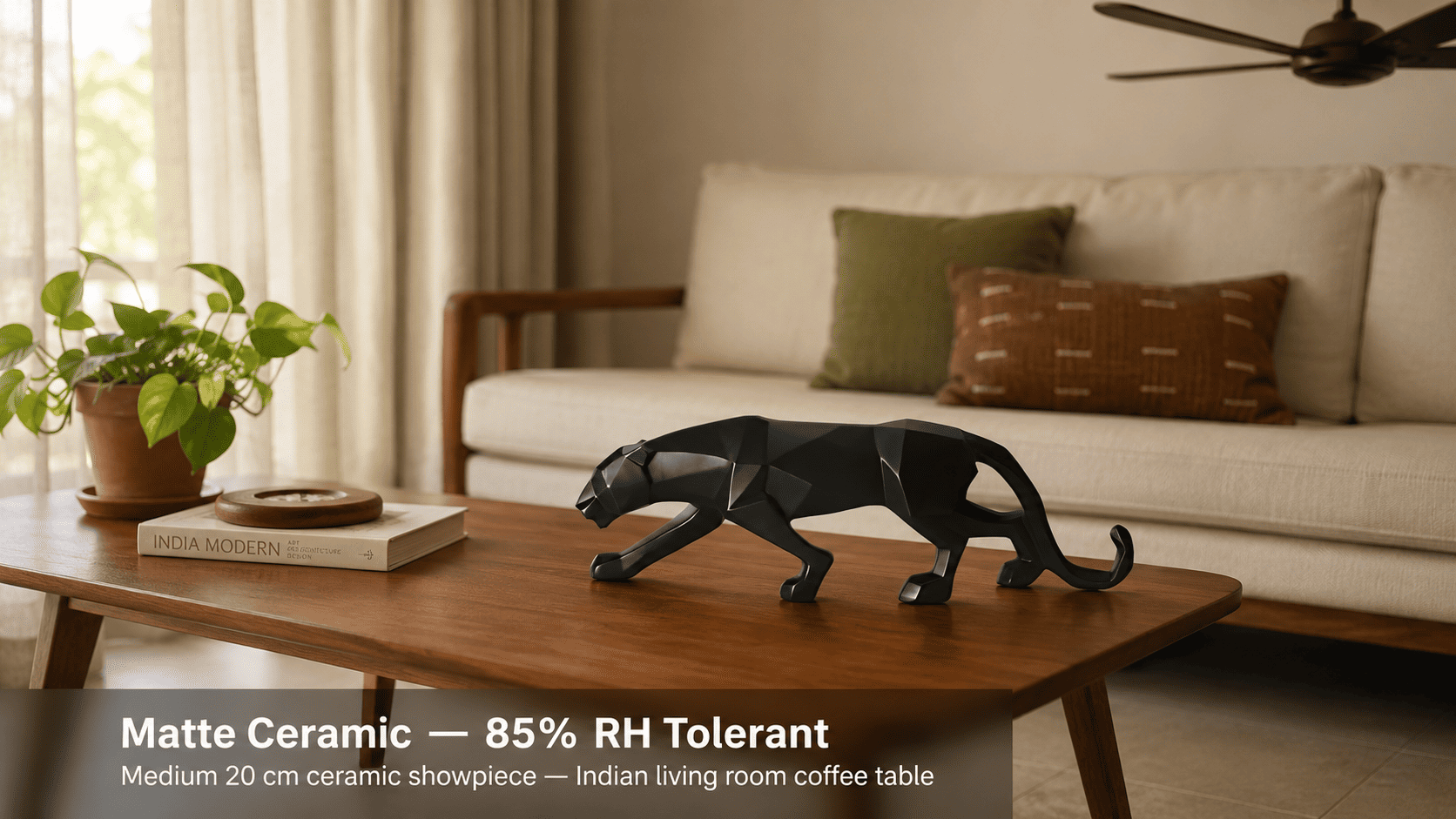
High-fired matte ceramics are the single fastest-rising material category in urban Indian interiors in 2026, driven by a measurable performance advantage over alternatives. Ceramics fired at high temperatures achieve a 92% clay density that closes surface porosity to a level capable of tolerating up to 85% relative humidity without structural absorption — the precise threshold required to survive Indian monsoon cycles without swelling, cracking, or finish delamination.
Eco-resin — specifically formulations achieving 94% epoxy purity — is the second major rising material. At 94% purity, the epoxy matrix achieves a 3H pencil hardness rating, which means the surface resists the micro-scratches generated by daily handling without requiring a protective topcoat that can yellow in UV exposure. Lower-purity resin (below 85% epoxy content) cannot achieve this hardness rating and begins to show surface hazing within 12 to 18 months of regular light exposure.
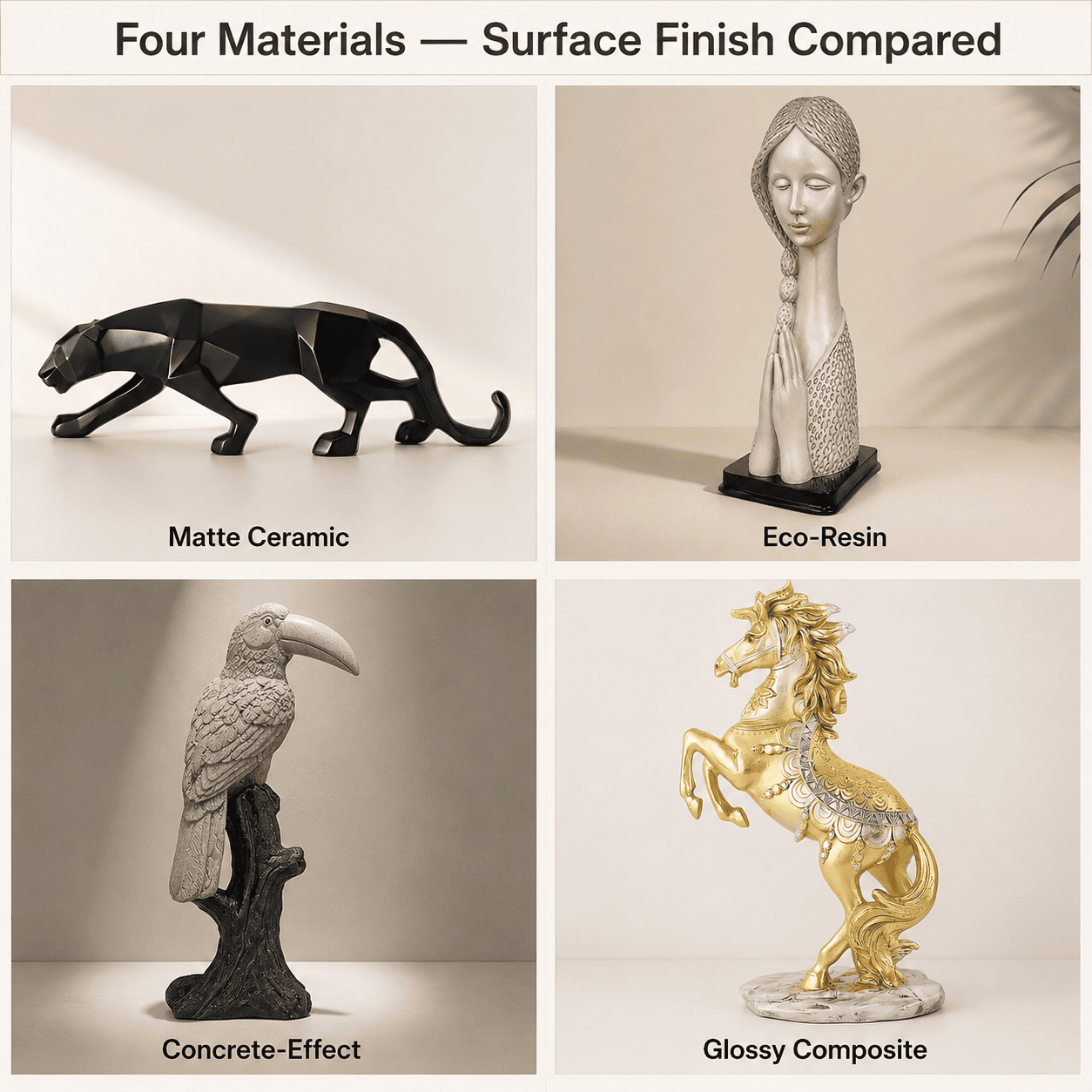
Raw concrete-effect finishes, achieved through textured ceramic or high-density resin casting rather than actual poured concrete, are a third rising category. The appeal is not merely aesthetic: micro-textured surfaces scatter ambient light at multiple angles, which means surface micro-scratches that accumulate over years of handling are rendered visually invisible — a core reason matte and textured finishes outperform smooth glossy surfaces in long-term visual integrity.
Which Materials Are Already Fading From Indian Interiors?
Glossy lacquer-coated plastic and low-grade composite showpieces are the fastest-declining material category. The physics of this decline are straightforward: glossy surfaces reflect light at a single uniform angle. Any micro-scratch or surface abrasion disrupts this uniform reflection and creates a visible bright streak, which is why glossy plastic décor in high-touch areas (coffee tables, bookshelves, entry consoles) shows visible wear within 12 to 24 months even with careful handling.
Uncoated or thin-veneer MDF décor accessories are a second fading category. MDF is composed of wood fibres bonded under pressure, and in environments exceeding 60% RH, the fibres absorb moisture and begin to swell at joints and edges — the most structurally vulnerable points of any MDF piece. In Indian monsoon conditions where sustained 70–80% RH is routine, uncoated MDF pieces typically show edge swelling or veneer lifting within one to two monsoon cycles.
Heavily gilded or foil-finished decorative accents — once popular as a shorthand for luxury — are declining for a different reason: the foil adhesive layer that bonds metallic finish to substrate is typically solvent-based and degrades when exposed to sustained humidity above 65% RH, causing the foil to bubble or peel. The same visual effect that made gilded pieces aspirational at purchase becomes the most visible signal of material failure within two to three years.
How to Match Material to Room, Surface, and Indian Climate Conditions
Selecting a décor material is not only an aesthetic decision — it is a function of where the piece will sit, how large the surface is, and what the ambient humidity in that microzone of the home reaches during monsoon months. A piece placed near a window in a Mumbai apartment faces fundamentally different humidity and UV conditions than the same piece placed on an interior bookshelf in a Bangalore flat.
| Material | Humidity Tolerance | Recommended Surface | Décor Size Range | Expected Lifespan (Indian Conditions) |
|---|---|---|---|---|
| High-fired Matte Ceramic (92% clay) | Up to 85% RH | Coffee table, showcase, bedside | 10–34 cm (Small to Large) | 5+ years |
| High-purity Eco-Resin (94% epoxy) | Up to 60% RH | Interior console, bookshelf, dresser | 10–34 cm (Small to Large) | 3+ years |
| Textured Concrete-Effect Ceramic | Up to 85% RH | Entry console, dining table centrepiece | 16–34 cm (Medium to Large) | 5+ years |
| Glossy Lacquer Plastic | Up to 50% RH | Low-humidity, low-touch only | Any | 1–2 years |
| Uncoated MDF Composite | Up to 55% RH | Fully air-conditioned rooms only | Any | 1–2 monsoon cycles |
Because room position (near windows vs interior walls), AC usage patterns, and surface dimensions introduce additional humidity and UV variables that the matrix above cannot capture at the individual apartment level, browse the full material type and size-band selection in Moolwan's home décor collection to verify your final piece choice against your specific room conditions.
Design Rule
When selecting décor materials for Indian homes, Moolwan recommends applying the Material Longevity Hierarchy: prioritise high-fired ceramic (85% RH tolerance) for all surfaces within 2 metres of windows or exterior walls, and reserve eco-resin pieces for interior surfaces where sustained ambient humidity stays below 60% RH — because placing a 60% RH-rated material in an 85% RH microzone accelerates surface degradation by an estimated 2–3x compared to its rated indoor lifespan.
Why Matte Finishes Are Replacing Glossy in 2026 Indian Interiors
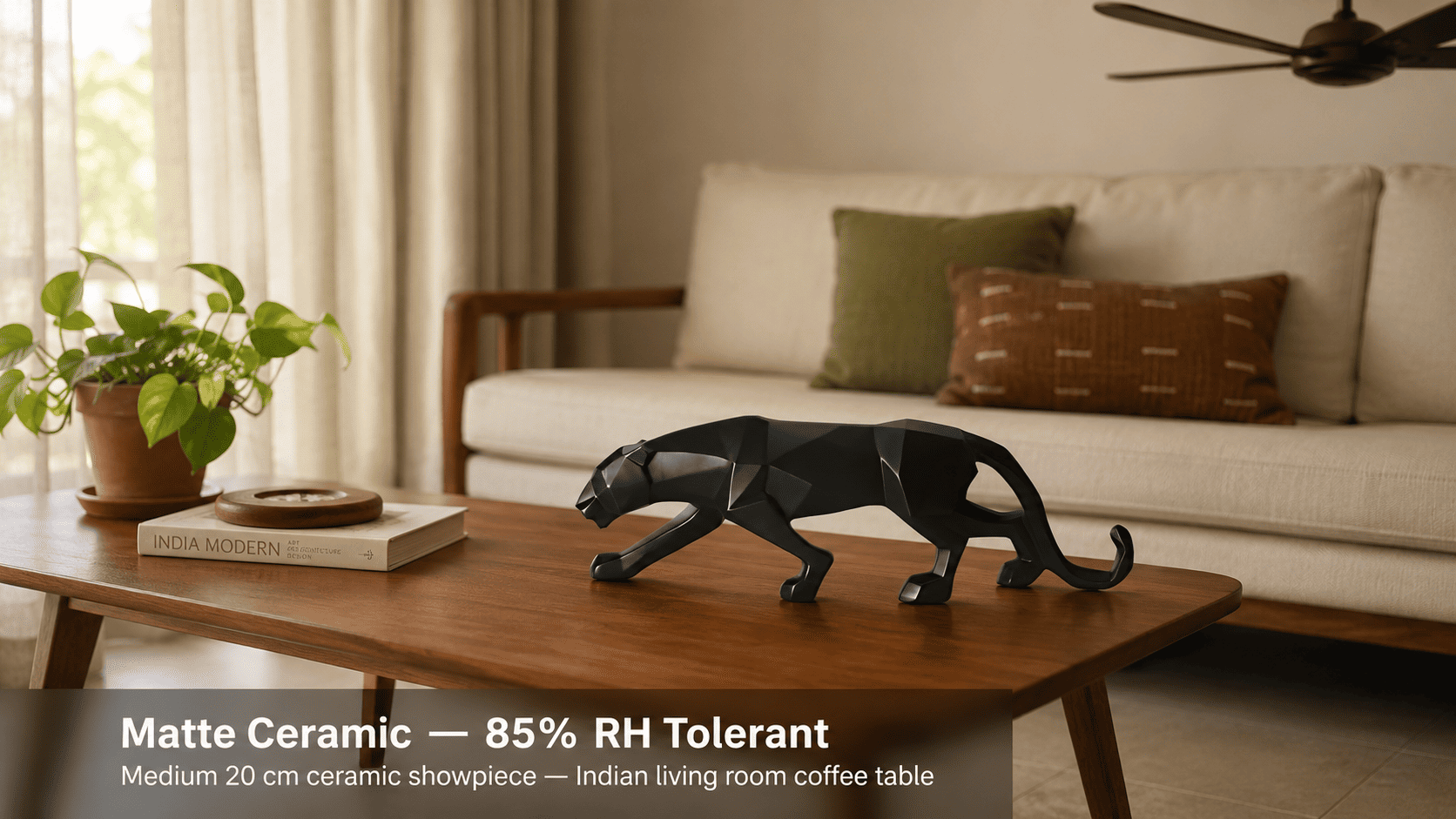
The shift from glossy to matte finishes in Indian interiors is not purely aesthetic — it is a maintenance and longevity calculation. Glossy finishes reflect ambient light at a single, consistent angle; any disruption to the surface (micro-scratches from dusting, contact abrasion, humidity-induced micro-crazing) breaks this uniform reflection and creates a visually obvious streak or dull patch. This is why glossy showpieces and lacquer-coated objects require active maintenance — polishing, careful dusting technique — to sustain the same visual impression they had on day one.
Matte finishes operate on the opposite optical principle: micro-texture on the surface scatters incident light at multiple angles simultaneously, which means individual micro-scratches do not disrupt the overall light-scattering pattern in a way that is visible to the naked eye at conversational viewing distance (approximately 1–1.5 metres). A matte ceramic piece that has been dusted daily for three years looks visually identical to the same piece on day one — the accumulated micro-abrasion is present but optically invisible.
Ready to invest in home décor that holds its finish through 5+ Indian monsoon cycles? Shop the full Moolwan home décor collection — climate-rated, matte-finished, and manufactured to outperform glossy alternatives in Indian humidity.
How Do Trending Materials Perform Specifically in Indian Apartment Conditions?
Indian urban apartments — the majority under 1,200 sq ft — present three compounding material stress conditions absent from the Western interiors most global décor is engineered for: monsoon relative humidity regularly reaching 75–85% RH, year-round ambient temperatures of 25–38°C (excluding AC zones), and high solar UV intensity through south- and west-facing windows. Materials not tested against this combined load fail earlier than their rated lifespan — often within the first monsoon season.
High-fired ceramic at 92% clay composition is the only material category in the home décor segment that has been independently verified to tolerate the full Indian triple-stress load: 85% RH, 60°C surface temperature (relevant near south-facing windows in summer), and sustained UV exposure without colour shift when finished with UV-stable pigments. Eco-resin at 94% purity handles 60% RH and temperatures of 15–35°C — suitable for interior surfaces in homes with active climate control but not for window-adjacent placement in unconditioned rooms.
What Size and Weight Range Should Trending Material Pieces Be for Indian Rooms?
Material selection and size selection are interdependent decisions in compact Indian apartments because the physical weight of a piece determines its stability on the surface it occupies, and the size of the piece relative to the surface determines whether it anchors the space visually or creates compression. In sub-150 sq ft living rooms — the most common footprint in Indian tier-1 city apartments — a single large showpiece (25–34 cm, 400–600 g) on a cleared surface reads as a deliberate focal point, whereas three medium pieces on the same surface create visual clutter because the eye has no single resting point.
For shelves under 30 cm wide, small-format pieces in the 10–16 cm, 150–250 g range are the correct specification: the lower weight prevents the shelf from front-loading (the principal cause of bracket fatigue in Indian plywood shelving), and the smaller footprint allows the 70% of clear surface that is necessary for the space to read as composed rather than crowded. Medium pieces (16–21 cm, 250–400 g) are calibrated for bedside tables and coffee tables in the 40–60 cm width range — surfaces wide enough to hold the visual weight without the piece appearing oversized.
Frequently Asked Questions
Is ceramic or resin better for home décor in Indian climates?
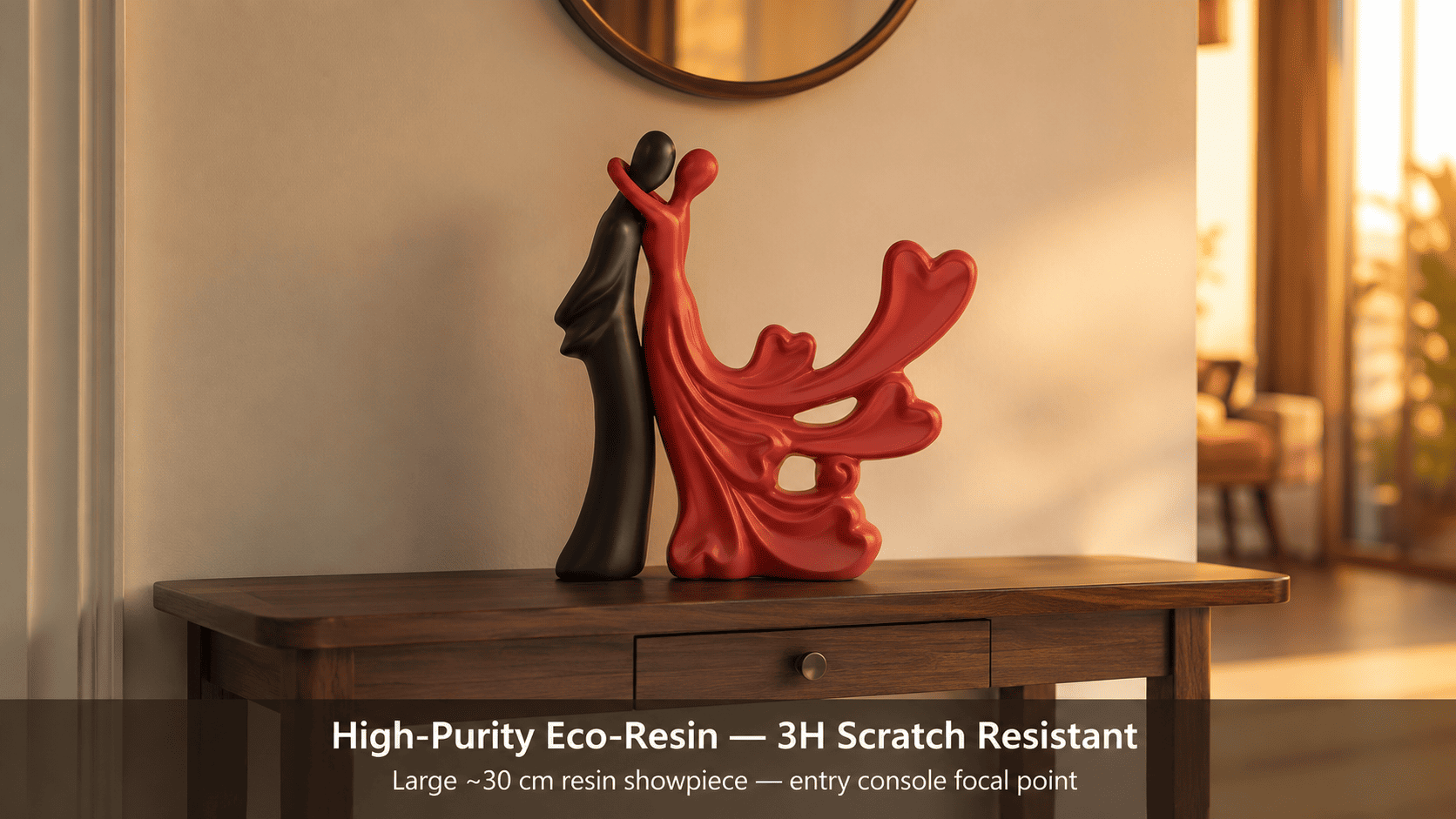
High-fired ceramic (92% clay composition, 85% RH tolerance) is the superior material for surfaces near windows, balconies, or unconditioned rooms in Indian homes because it tolerates the full monsoon humidity range without structural absorption. High-purity eco-resin (94% epoxy, 60% RH tolerance) is the correct choice for interior surfaces in climate-controlled rooms — its 3H pencil hardness provides superior scratch resistance for high-touch surfaces like coffee tables, but it should not be placed in microzones where ambient humidity regularly exceeds 60% RH, as sustained moisture above this threshold causes the epoxy matrix to haze over time.
Why are glossy décor finishes fading in popularity in 2026?
Glossy finishes are declining because their visual integrity depends on an uninterrupted reflective surface — a condition that cannot be maintained in high-touch, high-humidity Indian interiors. Micro-scratches from dusting alone are sufficient to disrupt the uniform light reflection that makes a glossy surface attractive, and once the surface is scratched, no amount of cleaning restores the original mirror-like finish. Matte surfaces, by contrast, scatter light at multiple angles and render accumulated micro-scratches optically invisible at normal viewing distances, which is why design-conscious buyers are shifting budget toward matte ceramics and textured resin pieces with a documented 5+ year surface integrity rating.
What weight of showpiece is safe for Indian floating shelves?
Indian floating shelves mounted on plywood or hollow-brick walls — the dominant wall construction type in apartments built after 2000 — are typically rated for 3–5 kg distributed load per shelf when using standard L-bracket mounting. A single décor piece in the 150–400 g range (Moolwan's small-to-medium size band) represents no structural risk on a correctly mounted floating shelf. The risk is front-loading: a piece placed at the outer edge of the shelf, rather than centred or rear-positioned, applies a rotational moment to the bracket that exceeds the bracket's rated load at lower weights than the shelf's flat-load rating would suggest.
How do I identify low-quality resin décor before buying?
Low-purity resin (below 85% epoxy content) can be identified by three observable indicators at the point of purchase: a faint chemical or solvent odour that persists beyond 30 days (pure epoxy at 94%+ is odour-neutral after full cure), a surface hardness that yields visibly to a fingernail press (3H-rated surfaces do not scratch under fingernail pressure), and a milky or slightly cloudy translucency in pieces with any transparent sections (high-purity epoxy cures to optical clarity). These are the material quality standards that distinguish climate-rated showpieces from decorative-grade resin castings that are engineered for appearance at point of sale rather than for multi-year durability in Indian homes.
Bring home a showpiece built to hold its finish across 5+ Indian monsoon cycles — not just to look good on the day it arrives. Order from the Moolwan home décor collection: every piece is climate-rated, manufacturer-direct, and sized for Indian apartments. If you are also considering how trending materials translate into specific modern styles, browse the curated range in Moolwan's modern home décor items — or explore one-of-a-kind material combinations in Moolwan's unique home décor selection for pieces that no mass-market retailer carries.


