
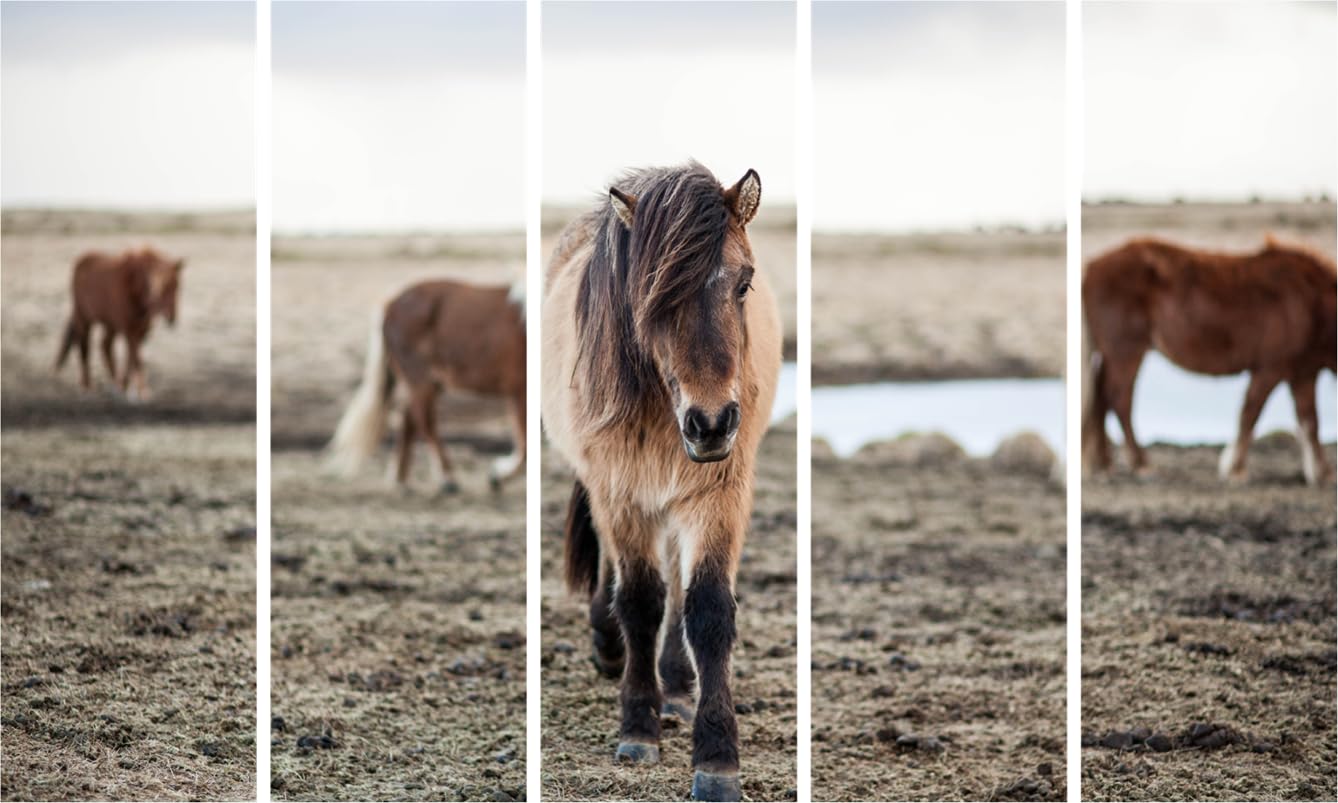
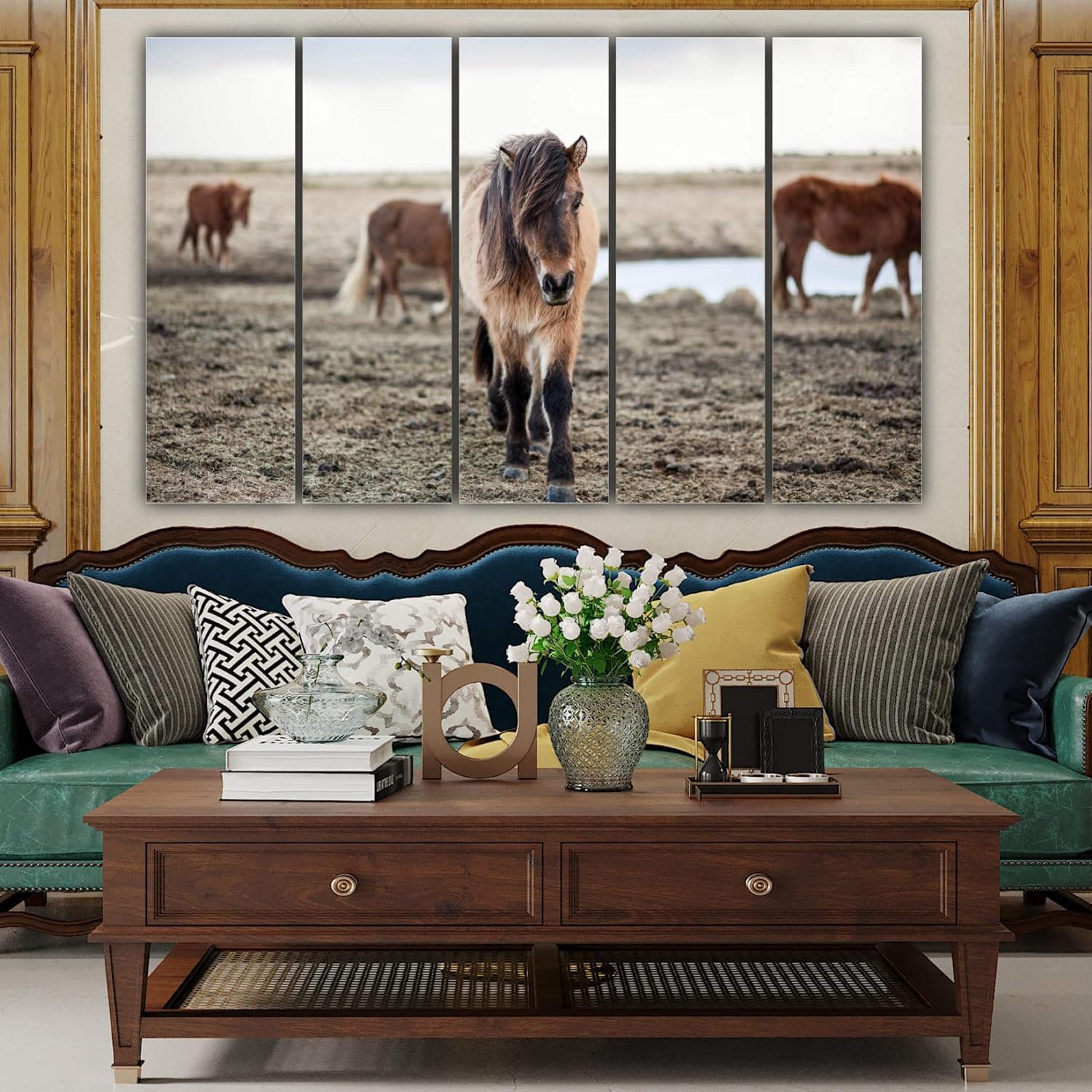
Horse-some 5-Frame Wall Art That'll Gallop Into Your Heart - Splash-Proof Nature Framed Masterpiece (127x76cm)
You may also like

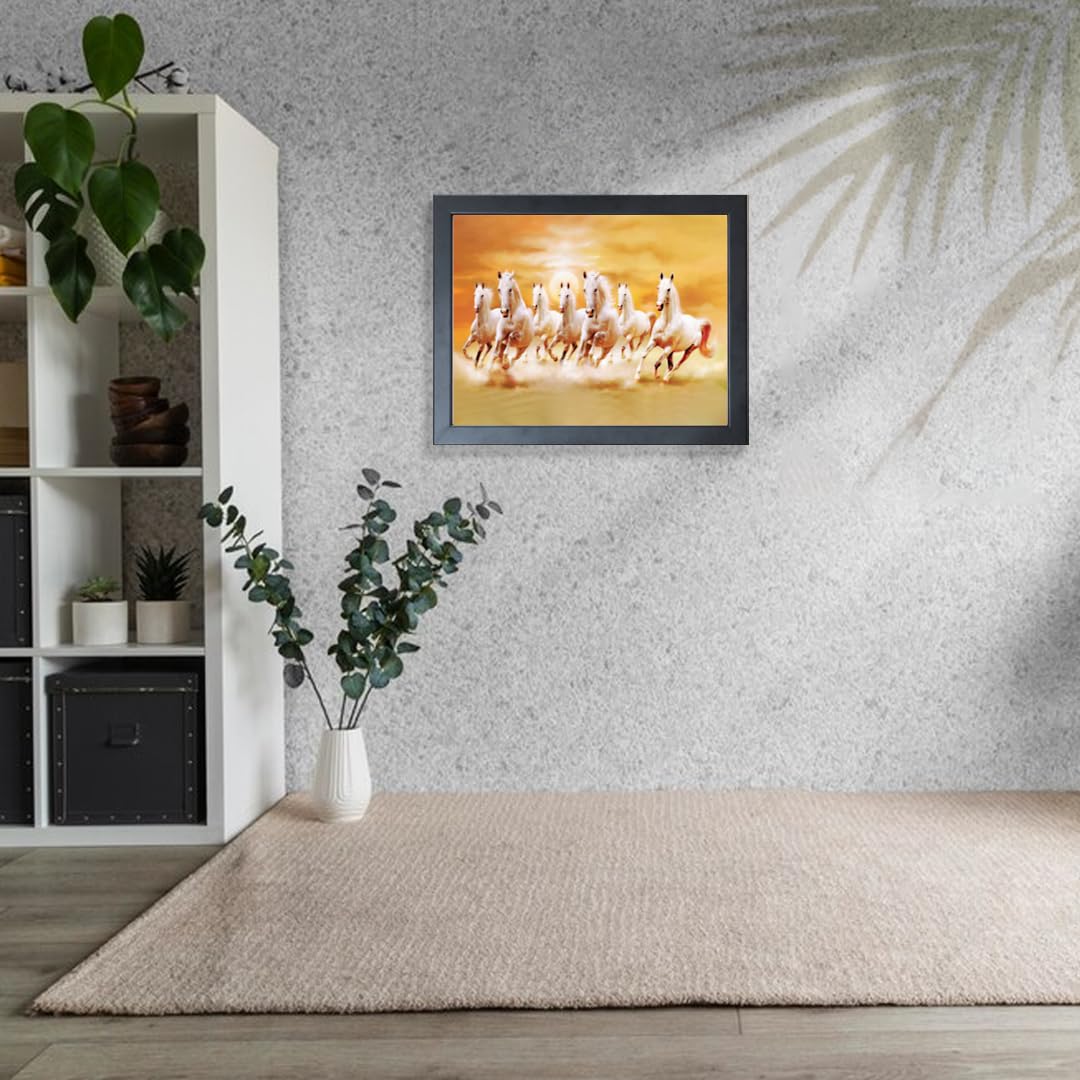
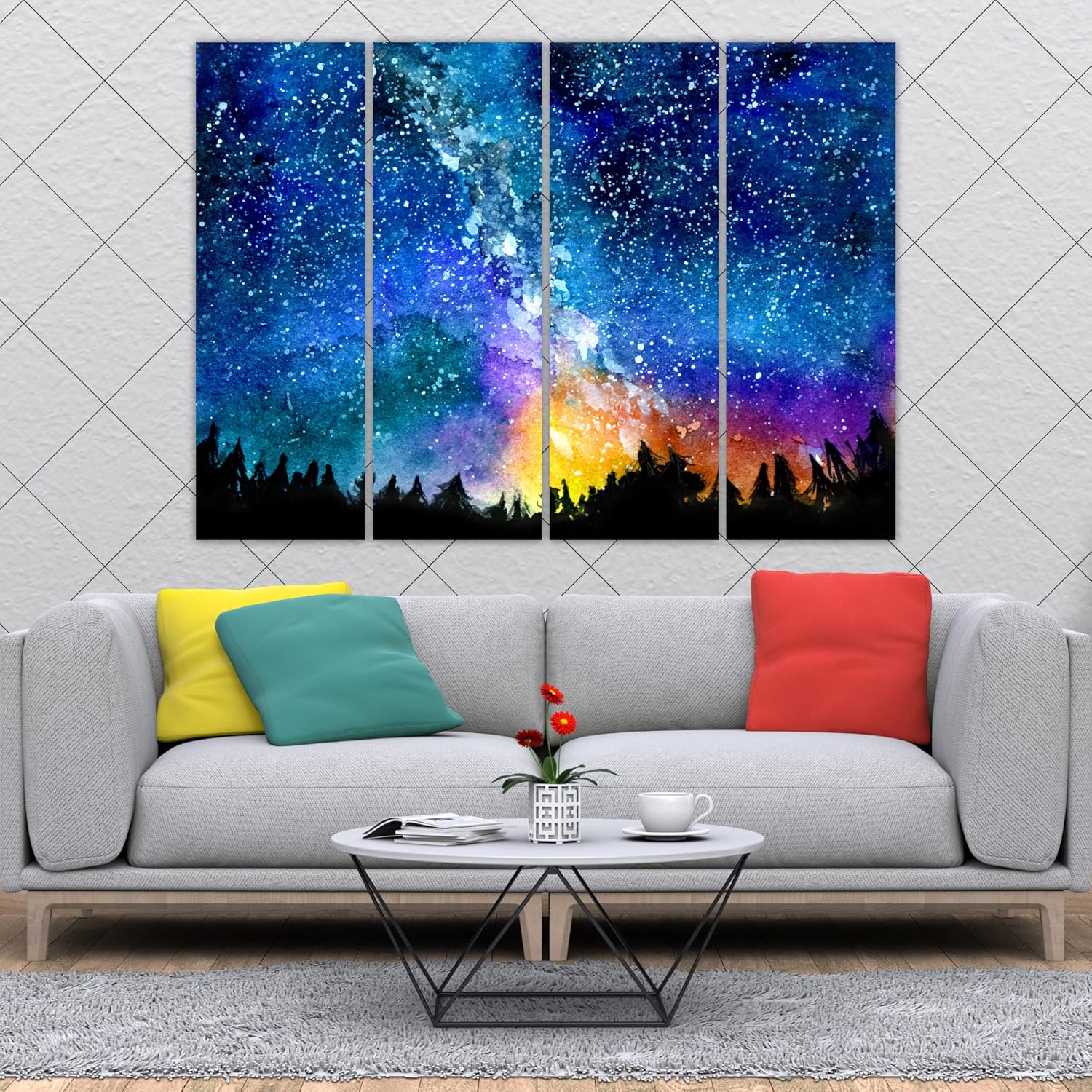
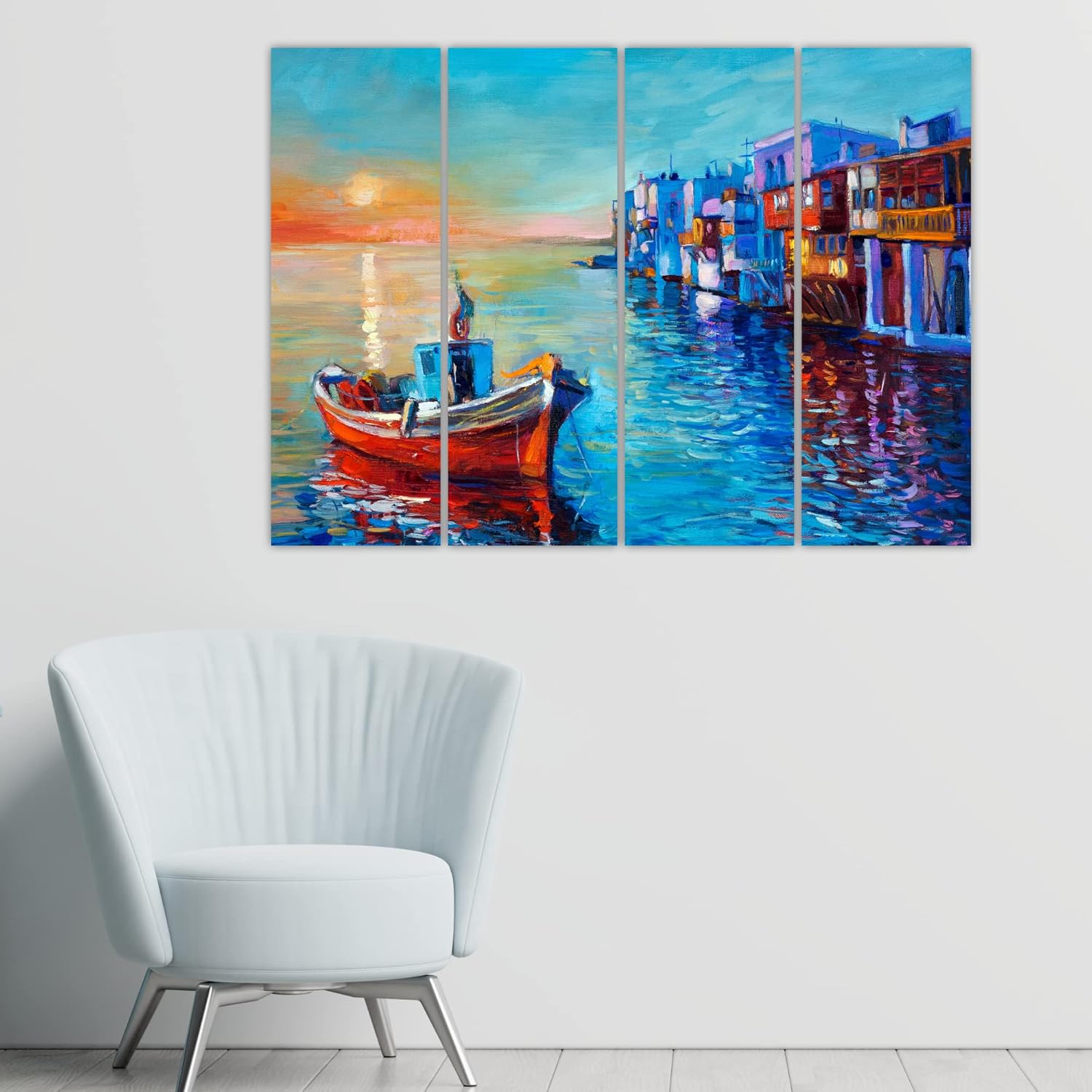
Moolwan 5-Panel Horse Canvas Wall Art Painting (127x76cm) - Multi-Frame Nature Art
You keep opening the product page, trying to mentally place this on your living room wall. But it's impossible to know for sure, isn't it? 127cm looks perfect in mockups, but your wall has windows on one side, maybe a door frame on the other, and that sofa sitting below. You need to know this works in your specific space, not just styled photos.
Here's what you're actually working with: if you have a typical 12-foot (360cm) wall—the kind you'd find above a standard sofa in most Indian homes—this 127cm canvas covers about 35% of that width. That leaves roughly 116cm of breathing space on each side. Not cramped, not lost. The 76cm height sits comfortably in the visual zone between your sofa back and ceiling, probably occupying the middle third of your wall's vertical space.
The earth tones in this 5-panel horse composition (browns, beiges, muted greens, and soft grays) are designed for Indian living rooms where cream or off-white walls are standard. These aren't loud statement colors—they're grounding tones that work with the brown fabric sofas and wooden furniture most of us already have. The horses themselves bring movement without chaos, energy without overwhelming a space meant for conversation and relaxation.
Why 127cm Works on 12-Foot Walls (and What Happens If You Go Smaller or Bigger)
Let's do the actual math, because "medium-sized" means nothing when you're trying to avoid a ₹3,000 mistake.
Your wall is probably 360cm wide (12 feet). This canvas is 127cm. That's 35% coverage—slightly more than one-third. In practical terms: imagine your wall divided into three sections. This piece occupies one full section plus a bit of the next. The remaining 233cm gets split: 116cm to the left of the canvas, 116cm to the right.
If you went smaller—say, 100cm—you'd get 28% coverage. That's fine for a side wall or above a console table, but on a main living room wall above an 8-foot sofa, it starts looking undersized. The proportions feel off, like the art is floating rather than anchoring the space.
If you went larger—160cm, for example—you'd hit 44% coverage. That's bold, but in a 12x14 ft room (standard Indian apartment), it can feel dominant. You lose the breathing room that makes a living room feel comfortable rather than gallery-like.
127cm hits the sweet spot: present without dominating, large enough to be the focal point without making the room feel crowded.
Why These Earth Tones Work in Indian Living Rooms (Not Just Online Photos)
Product photos are shot in white studios with perfect lighting. Your living room has builder's-grade cream walls, maybe some light yellow undertones if it's been a few years since painting. You probably have brown or beige upholstery, wooden coffee tables, and warm-toned flooring.
This is where these horse panels work in your favor. The browns and beiges in the artwork echo the furniture you already have. The muted greens and grays add visual interest without clashing—they're nature tones, not neon statement colors. The overall composition has enough contrast (lighter horses against darker backgrounds, shadows against highlights) to be visible from across the room, but it's not jarring.
In morning light from a window, the lighter tones (the beige horse, the soft sky) will catch the sun and appear more prominent. In evening LED or tube light (the warm white most Indian homes use), the browns deepen and the overall effect becomes cozier, almost sepia-toned. This isn't a piece that looks amazing in one light and washed out in another—it adapts.
If your walls are the common off-white or light peach, the earth-tone palette will feel cohesive, like it was always meant to be there. If you have accent walls (maybe a feature wall in a darker shade), the multi-tonal composition still works because it contains both lights and darks within the same piece.
Installation Takes 15 Minutes (Even If You're Not Handy)
This is five separate frames, which might sound complicated, but the panels come with a template. You lay the template against your wall, mark the nail positions with a pencil, hammer in the provided nails, hang each frame, and you're done.
Total time: 15-20 minutes. Tools needed: a hammer and maybe a measuring tape to find your wall's center point.
The frames weigh 3kg total (600g per panel), so standard picture nails work fine—you don't need heavy-duty wall anchors or professional installation. If you're renting and worried about your deposit, use adhesive hooks rated for 1kg each (available at any hardware store). When you move, they peel off without damaging paint.
One practical note: multi-panel art requires consistent spacing between frames. The template handles this, but if you're eyeballing it, keep 2-3cm gaps between panels. Too tight, and it looks cramped. Too wide, and it loses visual continuity.
How This Compares to Single-Panel Canvas You've Been Considering
You've probably seen single-panel canvas art at similar prices—one large frame instead of five smaller ones. Here's the honest difference:
Single panels give you one continuous image. Multi-panel designs like this create visual rhythm—your eye moves across the composition, following the horses from left to right. It's more dynamic, especially for subjects with movement (like galloping horses or ocean waves).
In terms of impact, five panels feel more considered, more gallery-like. A single panel can look great, but it reads as straightforward. Five panels signal intentionality, like you thought about the arrangement. Guests notice the difference.
The trade-off: installation. One panel = one nail, five minutes. Five panels = five nails, twenty minutes. Not a dealbreaker, but worth noting if you're extremely pressed for time.
Price-wise, you're paying the same ₹2,796-₹2,996 range for either approach. The multi-panel format isn't a premium—it's a design choice.
What This Will Look Like in Your Living Room (Not Just Online Photos)
Let's set realistic expectations, because the product photo you're looking at was shot in controlled conditions.
In your home, this will look slightly more muted. Product photography uses bright, even lighting to show every detail. Your living room has ambient light—natural light during the day, artificial light at night—which is softer and less direct. The browns won't be as rich, the highlights won't be as crisp. That's not a flaw; it's how art looks in real spaces.
Viewing distance matters. If you're sitting on your sofa, 8-10 feet from the wall, you'll see the overall composition—the movement of the horses, the tonal balance, the horizontal flow. If you walk up close, you'll see the printing texture and the frame edges. Most of your experience will be from the sofa, so that's the perspective that matters.
Ceiling height affects perception. In an 8-foot ceiling room (older apartments), this 76cm-tall piece will feel proportionally larger than in a 10-foot ceiling room (newer constructions). Neither is wrong—just factor it in when visualizing.
If your wall has strong directional light (like a window on one side), one end of the canvas might catch more light than the other. This creates subtle gradients throughout the day, which can be beautiful but means the piece won't look identical at all hours.
Quick Specifications
- Dimensions: 127cm (W) x 76cm (H) x 1.5cm (D) per standard frame depth
- Weight: 3000g total (600g per panel)
- Panel Count: 5 separate frames
- Material: 340 GSM cotton canvas with moisture-resistant coating
- Frame: Kiln-dried pinewood, 1.5-inch depth
- Colors: Earth tones—browns, beiges, grays, muted greens
- Subject: Horses in natural landscape
- Delivery: 5-6 days in metro cities, 6-8 days in tier-2/3 cities
- Price: ₹2,796 (may vary slightly by seller/promotion)
- Installation: Template included, standard nails provided