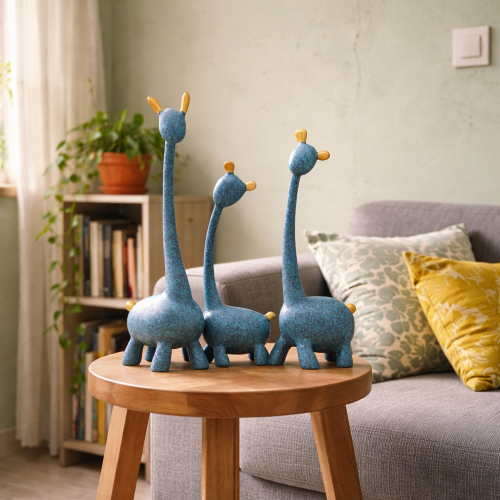
The short answer: A home looks expensive when surfaces are intentional, proportions are right, and materials signal quality — not when you spend more. Three targeted upgrades make the biggest visual difference: replacing generic wall space with framed art, adding one statement showpiece per room, and choosing décor with premium finishes (matte glaze, textured canvas) over shiny plastic. You do not need to renovate. You need to edit.
At Moolwan, we help design-conscious Indian homeowners transform their living spaces with décor that looks curated, feels premium, and holds up to Indian climate — all without paying retail markups. Here is exactly how to make your home look expensive, room by room, using principles interior designers rely on.
Bare walls are the single most common reason a well-furnished room still feels unfinished. The fix is not an expensive wallpaper job — it is one or two pieces of wall art placed with intention. The key is scale: a small frame on a large wall looks like an afterthought. A piece that spans at least one-third of the wall's width reads as deliberate and confident.
Moolwan's canvas wall art uses 340 GSM cotton canvas with eco-solvent UV-resistant inks and 1.5-inch kiln-dried pine frames — the same spec used in gallery prints. The moisture-resistant coating means colours hold in humid Indian conditions where cheaper prints yellow or warp within a year. If your walls have been blank for more than six months, this is the highest-ROI change you can make. Browse Moolwan's modern home décor collection to find canvas art sized correctly for your wall.
The difference between a home that looks expensive and one that looks busy is restraint. Expensive-looking rooms feature one focal object per surface — a single ceramic vase, a sculptural resin piece, or a textured figurine — with deliberate empty space around it. Cluttered shelves with mismatched knick-knacks signal the opposite of curation, regardless of what each piece cost.
For a living room, one medium-sized showpiece (16–21 cm) on your coffee table or TV unit creates a visual anchor. For a shelf or console, a large piece (25–34 cm) works as a focal point. Moolwan's ceramic showpieces use a 92% clay composition that is heat-resistant to 60°C and humidity-tolerant up to 85% RH — built specifically for Indian homes where temperature and monsoon humidity can destroy delicate décor within a season.
If you are styling your living room, shop Moolwan's showpieces for living rooms — each piece is sized and weighted (150 g–600 g) to sit securely on Indian shelves and surfaces without needing anchoring.
Moolwan manufactures directly — no middlemen, no inflated pricing. Every piece ships with specifications designed for Indian rooms, Indian climate, and Indian scale.
Décor that is the wrong size makes an entire room look amateurish. An oversized vase overwhelms a small console; a tiny figurine on a large mantel disappears. Interior designers use a simple sizing framework:
This framework applies whether you are buying ceramic, resin, or sculptural décor. Moolwan labels every product with both its dimensions and the surface type it is designed for, so you do not have to guess.
Shiny plastic finishes signal cheap manufacturing. Matte glaze, satin ceramic, and textured resin signal considered craft. This is a subtle visual cue that most people perceive without being able to name — but it shapes the entire impression of a room.
Moolwan's resin pieces use 94% purity epoxy resin with a scratch-resistant 3H pencil hardness rating. Moolwan's ceramic pieces offer both matte and glazed finishes — both are maintenance-easy, requiring only a dry wipe. When choosing between finishes, matte works better in warmer, more natural-light-heavy rooms; glazed suits cooler, more contemporary interiors.
This table captures the clearest material and design signals that separate premium-looking décor from its mass-market counterpart — relevant whether you are shopping for wall art, showpieces, or gifting décor.
| Signal | Expensive-looking décor | Cheap-looking décor |
|---|---|---|
| Wall art substrate | 300+ GSM cotton canvas, kiln-dried pine frame | Thin paper print, plastic frame or MDF |
| Ink / print quality | UV-resistant, eco-solvent ink (holds 5+ years) | Water-based inkjet (fades in 1–2 years) |
| Showpiece material | 92% clay ceramic or 94% purity resin | Low-grade polyresin or painted plastic |
| Finish type | Matte glaze, satin, or textured surface | High-gloss plastic sheen |
| Size-to-surface fit | Proportional — fills the surface with breathing room | Too small, too large, or inconsistent group |
| Climate compatibility | Humidity-tolerant, moisture-resistant coating | Yellows, warps, or chips in humidity |
| Weight / stability | 150 g–600 g, balanced base, drop-resistant | Too light (tips easily) or too heavy for shelf |
| Colour consistency | Consistent across lighting conditions | Shifts or dullens under warm indoor lighting |
Even the most premium décor looks flat under bad lighting. If you have a statement showpiece or wall art, direct a floor lamp or ceiling spotlight towards it. This creates depth and draws the eye — the same technique used in luxury retail and hotel lobbies. It costs nothing if you already own an adjustable lamp.
For placement, the rule is consistent: art hangs at eye level (centre of the piece at 145–160 cm from the floor). Showpieces sit at or slightly below eye level when seated — which is why coffee tables and TV units are more effective display surfaces than high shelves for living room focal objects.
The fastest way to make your home look more expensive is to remove three things before you add one. Look at every surface and ask: does this earn its place? Mismatched frames, duplicated decorative styles, or objects kept out of habit rather than intention all dilute the perceived quality of everything around them.
Once you have edited, one well-chosen piece from Moolwan's range — whether wall art, a ceramic figurine, or a resin showpiece — will carry far more visual weight in a cleaner context. Explore Moolwan's full showpiece range to find your anchor piece.
Moolwan is a D2C manufacturer — every piece is priced without middleman markups. Ceramic showpieces, resin art, and canvas wall prints are designed specifically for Indian homes, Indian walls, and Indian climate conditions.
Fixing your walls is the single highest-impact change. Blank walls are the most common reason a furnished room still feels unfinished. One correctly scaled piece of canvas wall art — sized to fill at least one-third of the wall width — immediately makes a room look considered and curated. This applies to living rooms, bedrooms, and entryways equally.
The rule most interior designers follow is the rule of three: group odd numbers of objects (one, three, or five) and vary heights within the group. For a standard Indian showcase or TV unit shelf, three pieces — one tall focal object and two smaller supporting pieces — with visible empty space between them reads as intentional and expensive. More than five items on a single shelf tips into clutter.
Yes — if the clay composition and glaze quality meet the right standard. Moolwan's ceramic showpieces use a 92% clay body that is humidity-tolerant up to 85% relative humidity and heat-resistant to 60°C, with a rated lifespan of 5+ years. Standard low-grade ceramic or painted plaster showpieces can absorb moisture and develop surface cracks or colour loss within a single monsoon season.
For a standard Indian living room with a 10–12 foot wall, a canvas piece between 24×36 inches and 36×48 inches works as a focal art piece. If you are grouping multiple smaller pieces as a gallery wall, the total grouping should span at least 24 inches wide and be hung as a unified composition, not scattered. Moolwan's canvas art collection includes size guidance matched to standard Indian room dimensions.
Moolwan accepts returns within 24 hours of delivery, provided the item is unused and in its original packaging. A 10% restocking fee applies. Refunds are processed within 15 working days of the item being received back. This policy applies across Moolwan's canvas wall art, ceramic showpieces, and resin décor categories.
Quick View



