
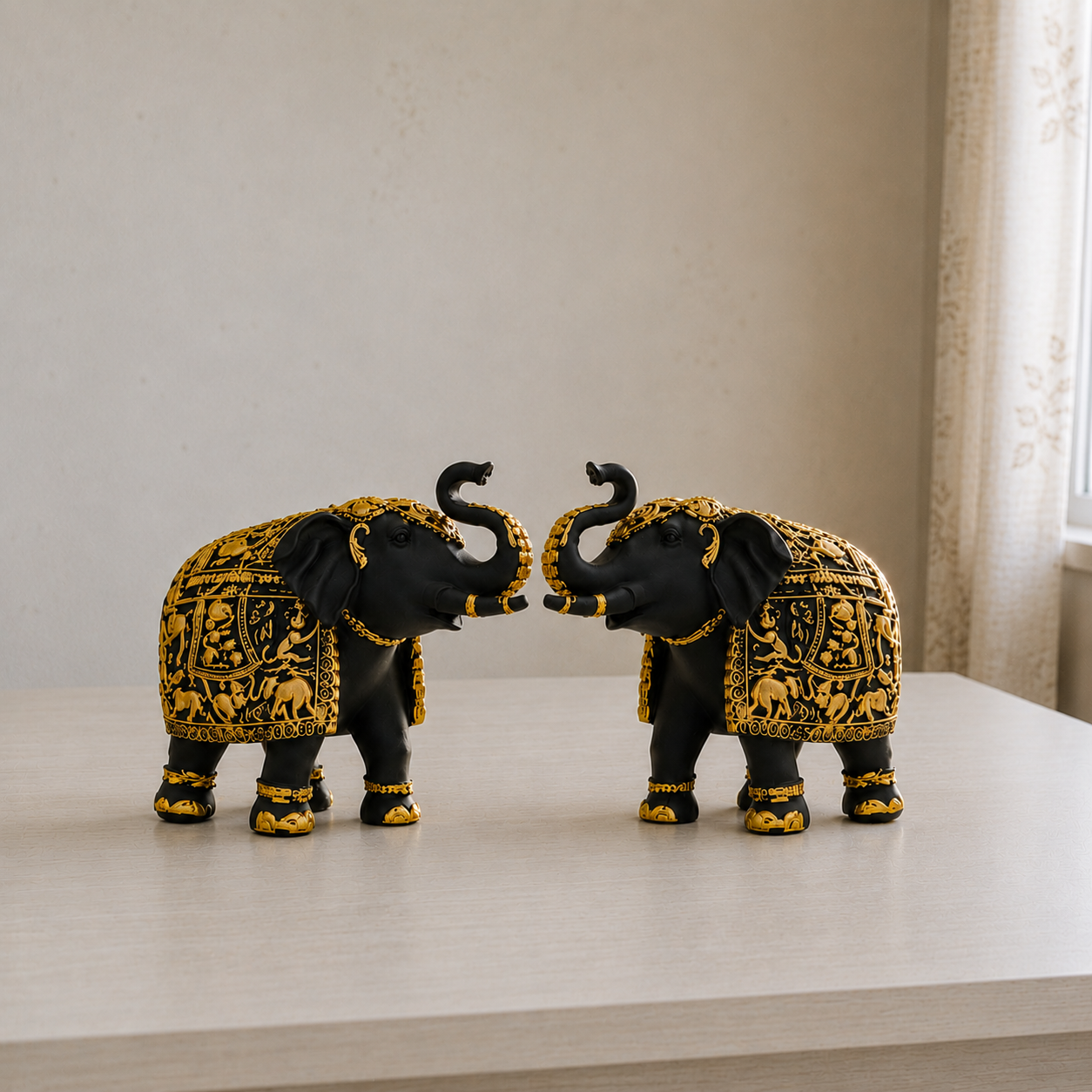
We help design-conscious Indian homeowners turn empty rooms into finished ones — without a design degree, a decorator's fee, or décor that cracks in June humidity or fades in a west-facing window. This guide is the exact framework we give first-time buyers who write in asking where to start.
The 5-Step Framework Beginners Actually Use
Every finished room follows the same order of decisions, regardless of budget. Skipping a step is why most first attempts at decorating look scattered — pieces feel unrelated because they were bought unrelated. Follow the sequence below in order, not by category.
- Fix one base palette before buying anything. Pick two neutrals and one accent tone from your existing walls, flooring, or largest piece of furniture. Every purchase after this point gets checked against that palette, not against how much you like it in isolation.
- Anchor the room with one large piece first. A living room needs one focal point — a large canvas above the sofa or a statement showpiece on the console — before anything smaller goes up. Buying small pieces first is the single most common beginner mistake, because there's nothing for them to relate to.
- Layer in two to three supporting accents. Once the anchor is placed, add smaller pieces that echo its color or material, not compete with it. This is where you can browse Moolwan's modern home décor collection for shelf and console pieces sized to sit alongside a larger anchor without crowding it.
- Size everything to the room's actual scale. A 12cm showpiece disappears on a large coffee table; a 34cm piece overwhelms a narrow console. Match dimensions to furniture size before you match them to style — the sizing table further down gives exact ranges.
- Finish with one piece that means something. The last item in any room should be personal — a gifted piece, a wedding-return favourite, or something tied to a memory. This is also the piece most likely to get complimented, because it's the one with a story attached.
This sequence works whether you're decorating one room or an entire house, because it forces every purchase to answer to the one before it, rather than standing alone.
Canvas Wall Art vs. Showpieces vs. Curated Gifts: What Should You Buy First?
Beginners almost always ask this in the wrong order. The honest answer depends on which surface in your room is currently empty, not which category is "trendiest." Wall art solves vertical empty space, showpieces solve horizontal surfaces like consoles and coffee tables, and curated gift pieces solve the "this room has no personality yet" problem. The table below breaks down which to buy first based on your starting point.
| Category | Best for | Solves | Where to start |
|---|---|---|---|
| Canvas Wall Art | Bare walls above sofas, beds, or entryway consoles | Vertical empty space, room "coldness" | Modern home décor collection |
| Ceramic / Resin Showpieces | Coffee tables, TV units, bookshelves, bathroom counters | Flat surfaces that look unfinished | Showpiece collection |
| Curated Gift Pieces | Rooms that need a personal, story-led focal point | Décor that feels generic or impersonal | Unique decor items collection |
If you can only make one purchase this month, start with wall art on the largest bare wall in your main living space. It has the highest visual impact per rupee spent, because it changes how the entire room reads from the doorway — before anyone even reaches the coffee table or the shelf.
Ready to place your first anchor piece? Start with the wall that gets the most foot traffic in your home.
Shop Canvas Wall Art →Getting Sizing Right for Indian Rooms
Sizing mistakes are the second most common beginner error, right after skipping the anchor piece. Indian living rooms and apartments tend to run smaller than the show-flat photos décor brands use for inspiration, so a piece that looks proportionate in a photo often looks oversized — or lost — on your actual shelf. Moolwan sizes every showpiece and resin item into three fixed bands so beginners don't have to guess.
| Size band | Dimension range | Placement |
|---|---|---|
| Small | 10–16cm | Shelf, work desk, bathroom counter |
| Medium | 16–21cm | Display showcase, coffee table centre |
| Large | 25–34cm | Console table, room focal point |
Every piece also stays between 150g and 600g by design, which matters more than it sounds. Lightweight construction means a showpiece can sit on a wall-mounted shelf or a slim console common in Indian apartments without the shelf sagging or the piece needing extra bracket support. For canvas wall art, the general rule is that the piece should span roughly two-thirds the width of the furniture beneath it — a 3-seater sofa suits a 36–48 inch canvas, not a small 16-inch print that reads as an afterthought above it. Getting this one measurement right before you order is the fastest way to avoid a return.
Material Specs That Actually Matter in Indian Climate
Most décor sold in India isn't engineered for Indian conditions — high humidity through monsoon, direct heat through summer windows, and dust that needs frequent wiping. Moolwan manufactures in-house specifically to survive this, and the specs below are the ones worth checking before you buy from anyone, not just from us.
These numbers matter because most mass-produced décor in India is manufactured for a generic climate zone, then sold everywhere without adjustment — which is why cheap resin pieces yellow within a season and unsealed ceramic pieces develop hairline cracks by the second monsoon. Moolwan is a direct-to-consumer manufacturer, not a reseller: we set these specs ourselves and price direct, without a middleman markup, which is also why we can guarantee finishes stay easy to maintain in both matte and glazed options for years, not months.
How Should a Beginner Sequence Their Budget?
Beginners overspend by buying every room at once. The framework below sequences spending the same way a stylist would — biggest visual impact first, smallest last — so that even a partial budget still leaves a room looking finished rather than half-done.
- Spend first on the anchor piece for your most-used room. This is non-negotiable — it sets the palette everything else follows.
- Spend second on lighting-adjacent surfaces — console tables and shelves near a window or lamp, since these catch the most visual attention after the anchor.
- Spend last on secondary rooms — bedrooms, home offices, and guest areas — once your main living space already feels complete.
Buying five small pieces spread across five rooms almost always looks worse, and costs the same, as buying one strong anchor piece for one room done properly. If your budget is genuinely tight, stop after step one of the framework in Section 01 — a single well-placed anchor piece will outperform a room full of mismatched small items every time.
See where showpieces fit into your room-by-room budget before you commit.
Browse Showpieces →Mistakes That Make a First Attempt Look Unfinished
These four mistakes account for most of the "it still doesn't look right" feedback beginners give after their first decorating pass. Each one is fixable without buying anything new.
- Undersizing the anchor piece. A small canvas on a large wall reads as an afterthought, not a focal point. Re-check the two-thirds-of-furniture-width rule from Section 03.
- Buying only glazed or only matte finishes. A room with one texture throughout looks flat under normal indoor lighting. Mix at least one matte piece with one glazed piece per room.
- Ignoring humidity ratings on ceramic and resin pieces. A piece rated below 60% RH tolerance placed in a bathroom or a monsoon-facing balcony will degrade within a year, regardless of price.
- Treating every piece as permanent on day one. Beginners often over-commit before living with a room. Moolwan's return policy allows unused items in original packaging to be returned within 24 hours of delivery, with a 10% restocking fee and refund processed within 15 working days — enough room to course-correct without financial risk.
What Moolwan Stands For
Moolwan is a direct-to-consumer manufacturer of modern home décor, wall art, and curated gifts built specifically for Indian homes. What Moolwan sells: canvas wall art paintings, ceramic and resin showpieces, and curated gift pieces — all manufactured in-house rather than sourced through middlemen, priced direct, and engineered against Indian heat and humidity rather than adapted after the fact. The brand exists because most décor sold in India is mass-produced for a generic market, climate-incompatible, or marked up by layers of distribution before it reaches a shelf. Moolwan's mission is to upgrade every Indian home with décor that is beautiful, durable, and meaningful, without overwhelming a beginner's budget or their decision-making.
Beginner Decorating Questions, Answered
How many wall art pieces should go on one wall?
One large anchor piece per main wall is enough for a beginner room. If you prefer a gallery arrangement, use three to five smaller frames of the same or similar size, spaced 2–3 inches apart, rather than mixing random dimensions.
What size showpiece works on a standard Indian coffee table?
A medium showpiece in the 16–21cm range sits best on most coffee tables sold in Indian homes. Small pieces (10–16cm) tend to get visually lost on a table that size, while large pieces (25–34cm) are better suited to consoles.
How do I decorate on a tight budget as a first-time buyer?
Follow Section 01's framework but stop after the anchor piece. One correctly sized canvas or one large showpiece placed well will outperform several small, unrelated purchases spread across a room, at a similar total cost.
Can I return a piece if it doesn't suit the room once it's delivered?
Yes. Moolwan accepts returns within 24 hours of delivery on unused items in original packaging, with a 10% restocking fee applied and refunds processed within 15 working days.
How do I mix modern and traditional Indian décor without it looking mismatched?
Keep one element consistent — usually color palette — while letting form vary. A modern abstract canvas and a traditional-motif ceramic showpiece work together if they share the same two or three base tones from Section 01's palette step.


