
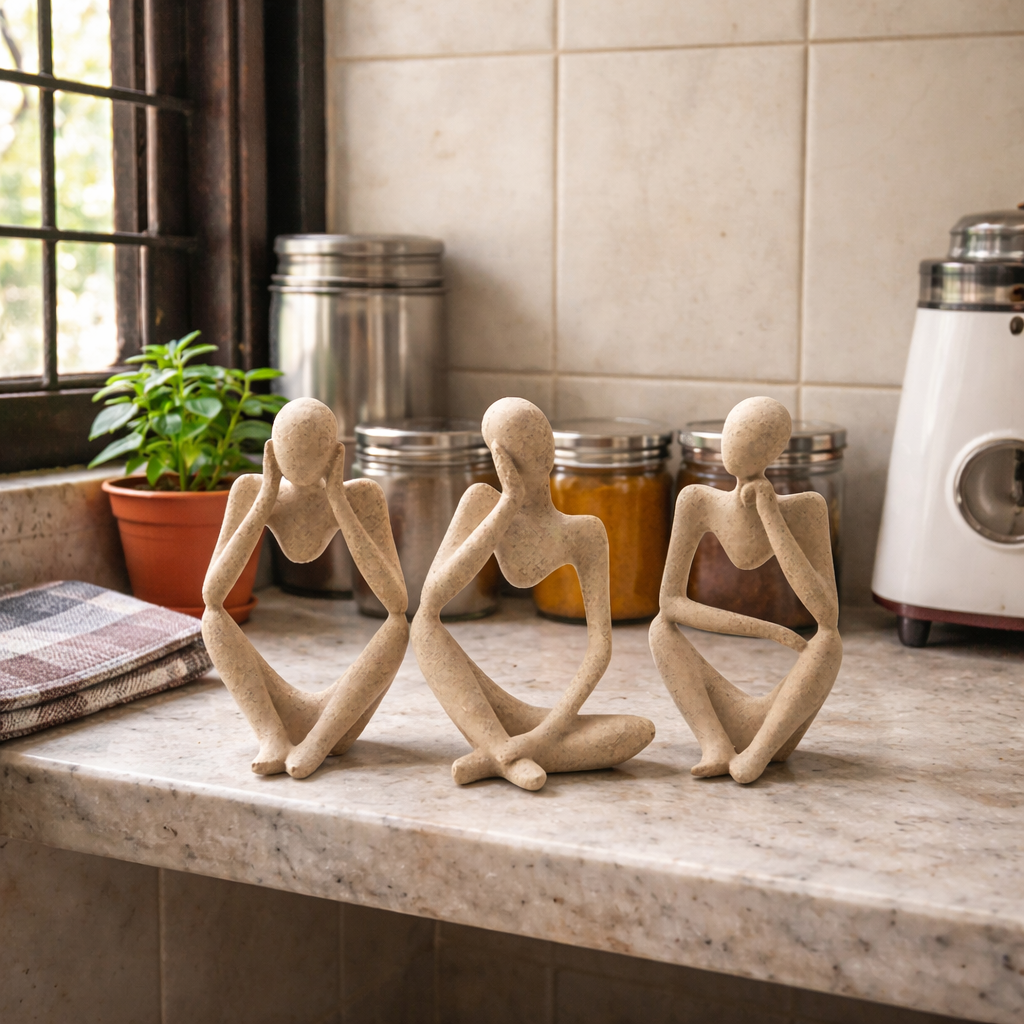
How Do I Decorate a Shelf?
At Moolwan, we help design-conscious Indian homeowners style their shelves with décor that balances modern aesthetics and traditional Indian sensibility — without overcrowding or guesswork. The method below is what we recommend based on hundreds of Indian living rooms, study corners, and pooja-adjacent display spaces.
The 3-Layer Rule: How to Build Shelf Depth That Looks Intentional
Most shelves look cluttered because everything sits at the same height. The 3-layer rule fixes this immediately. Place your tallest object (25–34 cm) at the back or side as the anchor — this creates a vertical focal point. Add a medium piece (16–21 cm) in the middle zone. Place your smallest accent (10–16 cm) at the front edge. The eye travels naturally from tall to small, and the shelf reads as a composed vignette rather than a random collection.
For Indian homes where shelves often double as display spaces for both décor and daily items, this layering approach is especially valuable because it carves out intentional "art zones" without requiring a full shelf redesign.
The modern home décor collection at Moolwan is specifically sized across these three tiers — small, medium, and large — so you can pick one from each category and achieve a composed shelf immediately.
Shelf Decorating Size Guide: What Goes Where
The most common mistake is placing large pieces on shallow shelves, or tiny accents on deep display units where they disappear. Use this reference to match piece size to shelf type.
| Shelf Type | Recommended Piece Size | Ideal Moolwan Piece Category | Placement Tip |
|---|---|---|---|
| Bathroom / desk ledge (shallow, <20 cm deep) | Small: 10–16 cm | Ceramic or resin accent | Single piece, centred or at one end |
| Living room open shelf (20–30 cm deep) | Medium: 16–21 cm | Glazed ceramic showpiece | Odd-number groupings (3 or 5) |
| Display unit / bookcase (30+ cm deep) | Large: 25–34 cm + layering | Statement resin or ceramic | 3-layer rule; leave 30–40% empty |
| Wall-mounted floating shelf | Small to medium (max 600 g) | Lightweight resin or ceramic | Do not exceed weight rating; check wall anchors |
| Pooja / spiritual niche shelf | Small: 10–16 cm | Matte-finish ceramic accents | Symmetrical placement; minimal colour contrast |
All Moolwan showpieces weigh between 150 g and 600 g, making them safe for standard Indian wall-mounted shelves and glass-fronted display units without load concerns.
What Materials Work Best for Indian Shelf Décor?
Indian homes face specific conditions that most imported décor is not built for: humidity above 70% RH in coastal cities, temperatures rising to 40°C+ in summers, and the daily dust that settles on open shelves. Your shelf décor material choice matters more than most guides acknowledge.
Ceramic showpieces from Moolwan use a 92% clay composition, are heat-resistant to 60°C, and tolerate humidity up to 85% RH — which covers even Mumbai or Chennai summers. They are rated for a 15 cm drop and carry a 5+ year lifespan under normal Indian home conditions. Both matte and glazed finishes are easy to wipe down.
Resin pieces use 94% purity epoxy resin, carry 3H pencil hardness (scratch-resistant), and are stable between 15–35°C with humidity tolerance up to 60% RH — suitable for AC-cooled living rooms and study spaces. Avoid placing resin directly near kitchen shelves where steam is consistent.
Browse Moolwan's full home décor range to compare ceramic and resin options side-by-side before deciding which material suits your specific shelf environment.
The Rule of Odd Numbers and Negative Space
Two objects side by side look like a pair — which reads as "placed there" rather than "designed." Three objects in a triangle formation look intentional. Five objects with varying heights look curated. Always style in odd numbers: 3, 5, or 7 pieces per shelf zone. This is a foundational interior design principle that works at every budget level.
Equally important: negative space. Leave 30–40% of your shelf surface empty. Empty space is not wasted — it is what makes the pieces you have chosen visible and valuable. Overcrowded shelves signal visual noise, not abundance.
If you are adding a wall-hanging element above or near the shelf — a small canvas print or macramé accent — check out Moolwan's home décor hanging collection to add vertical interest without adding shelf weight.
Ready to style your shelf with pieces that last?
Shop Moolwan's ceramic and resin showpieces — sized, weighted, and climate-engineered for Indian homes.
Shop Modern Home Décor →Common Shelf Decorating Mistakes in Indian Homes
Most shelves in Indian homes fail for one of four reasons:
- Mixing too many colours: Limit your shelf palette to 2–3 colours. If your wall is warm (beige, terracotta, cream), choose décor in earthy tones with one metallic or contrast accent.
- All same height: Every item at the same level creates a flat, forgettable display. Apply the 3-layer rule described above.
- Ignoring the back wall: The wall behind a shelf is part of the composition. A small hanging piece or a framed print can create depth without touching shelf space.
- Choosing décor not rated for Indian humidity: Many imported resin or painted pieces crack, yellow, or warp within one monsoon season. Always verify material specifications before buying.
- No anchor piece: If nothing on the shelf commands attention, nothing holds together. One clear hero piece — 25–34 cm, with a distinct form — gives the eye a landing point and makes the rest read as supporting cast.
Frequently Asked Questions
How many items should I put on a shelf?
Aim for 3 to 7 items per shelf zone, always in odd numbers. Leave 30–40% of the surface empty. Overcrowding is the most common shelf decorating mistake, and negative space is what makes each piece visually legible.
What size showpiece is right for a living room shelf?
For a standard Indian living room open shelf (20–30 cm deep), choose medium pieces in the 16–21 cm range as your anchor and small 10–16 cm pieces as accents. Moolwan's medium showpieces are specifically designed for this use case, weighing between 200–450 g for safe placement on glass or wood shelves.
Can I mix ceramic and resin pieces on the same shelf?
Yes — mixing materials adds textural variety that makes a shelf look more considered. Keep a consistent colour story across both material types and vary the heights. Moolwan's ceramic and resin pieces share design language so they compose naturally together.
What décor works for a shelf in an Indian bedroom?
In bedrooms, lean toward matte-finish ceramics in calming tones (sage, stone, ivory) and avoid highly reflective resin pieces that catch light. Small pieces in the 10–16 cm range work well on bedside shelves. Keep pairs to a minimum — odd groupings or single anchors look more restful in sleeping spaces.
How do I keep shelf décor looking clean in a dusty environment?
Choose glazed ceramic pieces over porous or unfinished surfaces — dust wipes off glazed pieces with a dry microfibre cloth in seconds. Moolwan's glazed ceramic showpieces are specifically finished for low-maintenance cleaning, which matters in Indian homes where open shelves collect dust within days.
Find Your Shelf's Anchor Piece
Moolwan manufactures every piece in-house — ceramic and resin showpieces sized and rated for Indian homes, sold direct to you without retailer markups. No middlemen. No guesswork on sizing.


