
Start With Climate, Not Just Colour
Your living room doesn't have to choose between looking minimal and feeling like home. But it does have to survive your home's actual conditions — and that's where most décor quietly fails. A coastal city's humidity, a north Indian summer above 40°C, or simply a sunny west-facing wall will test materials in ways a catalogue photo never shows. Décor that warps, fades, or clouds over within months isn't modern. It's a piece you'll be replacing by next Diwali.
This is why the materials behind a piece matter as much as its shape. Canvas wall art needs UV-resistant ink and a frame that won't swell in monsoon air. Ceramic needs a humidity rating built for Indian conditions, not European ones. Resin needs a defined temperature range, because it softens or yellows outside it. If a listing can't tell you these things, the piece probably wasn't designed with your home in mind.
Moolwan's canvas wall art is made with 340 GSM cotton canvas, eco-solvent UV-resistant inks, and 1.5-inch kiln-dried pine frames finished with a moisture-resistant coating — built to hold its colour and shape through Indian seasons, not just survive a single one.
The Aesthetic Is Built in Layers — Here's the Order
A room that feels curated, rather than cluttered, almost always follows the same quiet sequence. Skip a layer and the room feels unfinished, even if every individual piece is beautiful.
Let One Piece Set the Mood
Choose one large canvas — 25–34cm or bigger — and let it set the room's colour and tone before adding anything else.
Build Height and Rhythm
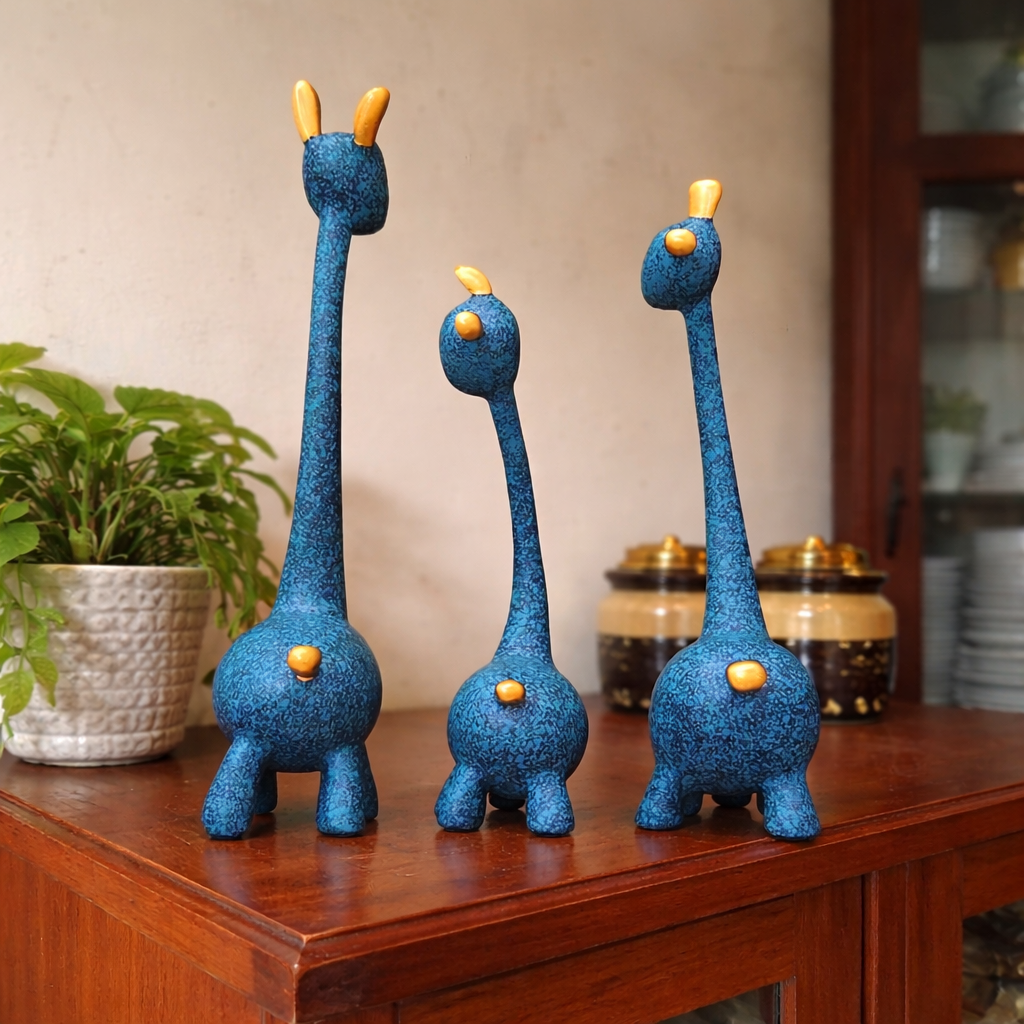
Use small (10–16cm), medium (16–21cm), and large (25–34cm) showpieces together. Size variation gives a shelf its rhythm.
Choose One Finish and Repeat It
Pick matte for quiet and contemporary, or glazed for bright and festive — then carry it through every piece in the zone.
Let One Piece Carry Meaning
A gifted object or regional motif grounds the space in something personal — tradition's thread inside a modern room.
This last layer is where the room stops looking like a catalogue page. Browse unique decor items for an elegant living room to find a piece with that kind of presence.
Which Material Belongs in Which Room
Before you buy, it helps to know which material is actually suited to where you're placing it — especially in humid zones like kitchens and bathrooms.
| Material | Best For | Humidity Tolerance | Lifespan | Key Spec |
|---|---|---|---|---|
| Canvas Wall Art | Living rooms, bedrooms, hallways | Moisture-resistant coating | Long-term (wall-mounted) | 340 GSM cotton, UV-resistant ink |
| Ceramic Showpieces | Coffee tables, showcases, shelves | Up to 85% RH | 5+ years | 92% clay, heat-resistant 60°C, 15cm drop-resistant |
| Resin Showpieces | Desks, study tables, indoor display | Up to 60% RH | 3+ years indoor | 94% purity epoxy, 3H hardness, 15–35°C range |
In coastal or monsoon-heavy cities, ceramic will outlast resin against everyday humidity. In rooms that run warm — top floors, west-facing windows — a heat-rated ceramic piece is the steadier choice. To compare across both, you can shop showpieces for home decor filtered by material and size.
Where This Usually Goes Wrong
A few patterns show up again and again in Indian homes reaching for a modern look — small missteps that quietly undercut the effort.
- Choosing weight over wisdom. Heavy frames and dense showpieces strain wall fixtures and shelving that weren't built for them. Pieces in the 150g–600g range sit easily on Indian walls and shelves, and are far easier to rearrange as your taste evolves.
- Skipping the return policy before paying. Many décor purchases are final-sale, with no real way back if a piece doesn't suit the light or the wall once it's home. A fair, clearly stated return policy is usually a sign the brand trusts its own product.
- Treating it as a single shopping trip. The homes that feel genuinely styled are rarely finished in one order. They're built over two or three considered purchases — the anchor first, the supporting layer next, the personal touch last.
Why Moolwan Designs the Way It Does
Moolwan is a D2C, manufacturer-direct home décor brand built around one idea: that Indian homes deserve décor made for Indian conditions, not décor designed elsewhere and sold here at a markup. Moolwan stands for beauty that's also durable — pieces that respect your climate, your space, and your culture, manufactured in-house and priced direct. Moolwan sells canvas wall art, ceramic and resin showpieces, and curated gifting pieces for exactly this purpose.
That intention traces back to Ruchi Malhotra, Founder & CEO of Moolwan (Euphorica Ventures Pvt Ltd), Bangalore, who built the brand on the belief that an Indian home shouldn't have to choose between looking modern and feeling like itself.
And if a piece doesn't feel right once it's actually on your shelf or your wall, Moolwan's return policy allows returns within 24 hours of delivery, provided the item is unused and in original packaging, with a 10% restocking fee and a refund processed within 15 working days — a short window, built around honest expectations rather than against you.
Frequently Asked Questions
What size showpiece should I buy for a coffee table?
A medium showpiece, 16–21cm, works best for coffee tables and showcases — large enough to feel like a presence, small enough not to overwhelm a shared surface.
Is ceramic or resin better for Indian humidity?
Ceramic tolerates humidity up to 85% RH, while resin is rated up to 60% RH. In coastal or monsoon-heavy regions, ceramic is the more dependable choice for long-term display.
How many wall art pieces should one living room have?
Begin with one large anchor piece, 25–34cm or bigger, per wall. A second piece only works once the first has already set the room's colour and mood — otherwise the wall ends up competing with itself.
Can I return décor if it doesn't match my room?
Yes — within 24 hours of delivery, provided the item is unused and in its original packaging. A 10% restocking fee applies, and refunds are processed within 15 working days.
What's the difference between matte and glazed finishes?
Matte feels quieter and more contemporary, and hides fingerprints well. Glazed is brighter and more reflective, suited to festive or statement pieces. Both are easy to maintain — the choice comes down to the mood you want.
Your Room Is One Piece Away From Feeling Finished
A home that feels designed isn't bought all at once — it's layered, starting with a single anchor.
Shop Showpieces for Home Decor


