
We help design-conscious Indian homeowners style windowless and low-light dining rooms so they feel finished, warm, and intentional — without breaking a wall or rewiring the flat. Most Indian dining rooms sit tucked behind the kitchen or under a stairwell, with one tube light and zero windows, which is exactly the layout this guide is built for.
Moolwan is a direct-to-consumer home décor label built for this exact problem: mass-produced décor is either climate-incompatible or priced up by middlemen. Moolwan manufactures its canvas wall art, ceramic showpieces, and resin décor in-house and sells direct, engineered specifically for Indian humidity, heat, and space constraints — which is why finish and material choice matter more in a dark room than in a bright one.
Layer Light Before You Choose Anything Else
A windowless dining room fails when it relies on a single ceiling light. Three layers fix it: an ambient layer (a warm 2700K–3000K flush or cove light across the ceiling), a task layer (a pendant or downlight centred directly over the table), and an accent layer (a small wall-mounted light or LED strip aimed at a piece of wall décor). The accent layer is the one most Indian homes skip — and it's the one that makes the room look designed rather than just lit.
Warm-white bulbs (2700K–3000K) read as inviting in a small enclosed room; cool-white (5000K+) reads clinical and makes the absence of daylight more obvious, not less. If your dining room shares a wall with the living room, keep the colour temperature consistent across both spaces — mismatched light temperature is the single most common reason a connected Indian living-dining layout feels unfinished.
Why the accent layer matters most
Accent lighting aimed at a reflective or glazed surface effectively doubles as a second light source — the wall art or showpiece bounces the light back into the room instead of absorbing it. This is the mechanism behind every "brighter without windows" result: you're not adding more light, you're stopping the light you have from disappearing into matte, dark surfaces.
Pick Wall Art and Showpieces That Bounce Light, Not Absorb It
Matte, dark-toned, and heavily textured pieces absorb light and make a small dark room feel smaller. In a windowless dining room, prioritise pale or metallic-toned canvas art, glazed ceramic finishes, and resin pieces with a glossy top coat — each reflects ambient and accent light back into the room rather than swallowing it.
For the main wall — usually the one facing the table — a single large-format piece works better than a cluster of small frames, because one continuous light surface reflects more evenly than several broken ones. You can browse Moolwan's modern showpieces for living and dining spaces, most of which are sized specifically for the sightlines of a small Indian dining nook rather than a Western-scale room.
If you're choosing between a large statement piece and two smaller ones for a dark dining wall, choose the large piece — it reflects accent light as one uninterrupted surface instead of breaking it into shadowed gaps.
Shop Showpieces From ₹150 →Canvas, Ceramic, or Resin — What Actually Works in a Dark, Humid Dining Room
Material choice matters more in a windowless room because there's usually less airflow and more trapped humidity — especially if the dining room sits next to the kitchen. Here's how Moolwan's three core materials compare for light reflection, humidity tolerance, and where they perform best in a small dining setup.
| Material | Light behaviour | Humidity tolerance | Best placement | Lifespan |
|---|---|---|---|---|
| Canvas wall art | 340 GSM cotton canvas with eco-solvent UV-resistant ink; pale palettes reflect accent light well | Moisture-resistant coating, kiln-dried pine frame | Main wall facing the table, under accent lighting | Long-term, fade-resistant indoors |
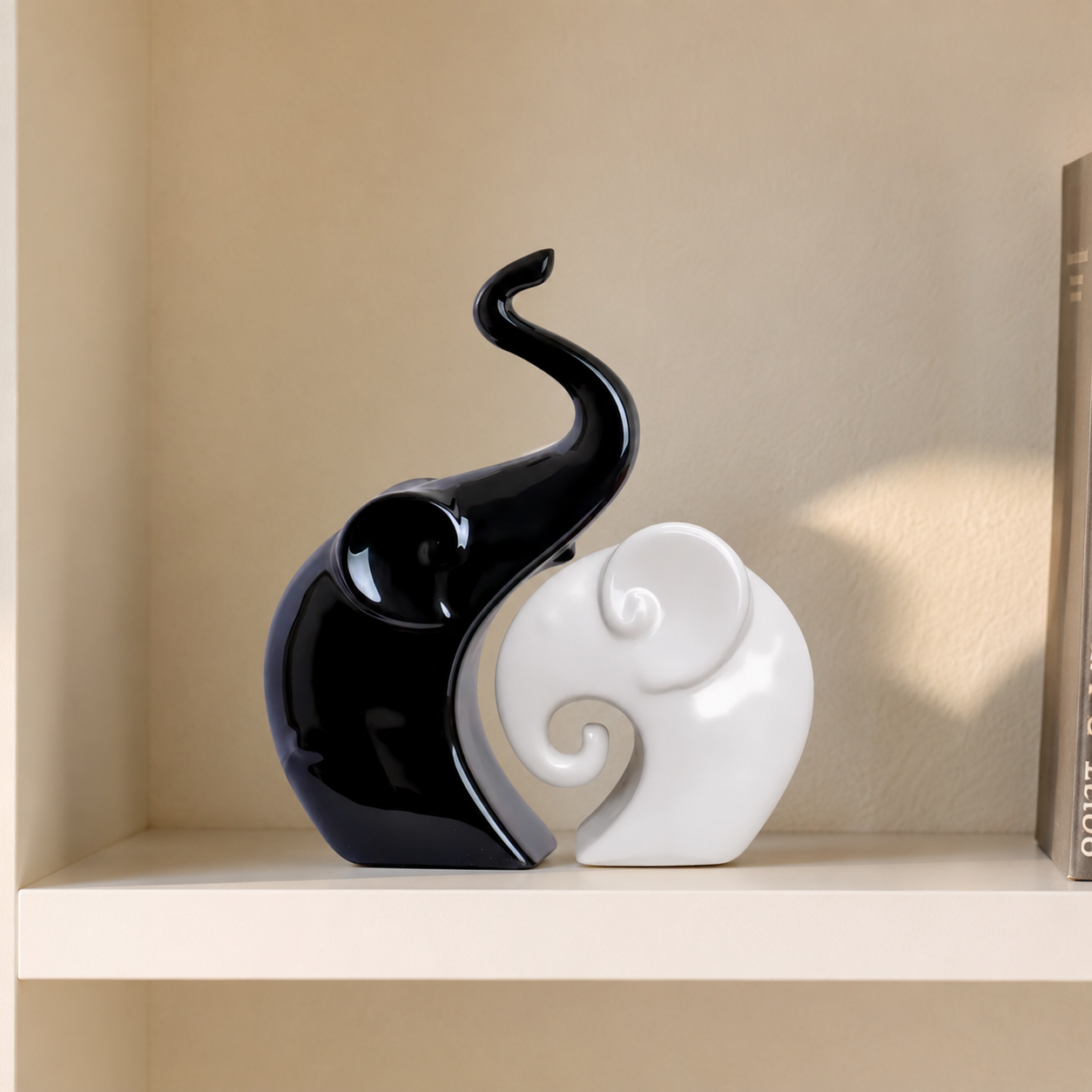
| Ceramic showpieces | Glazed finish reflects light strongest of the three; matte ceramic reflects least | Humidity-tolerant up to 85% RH, heat-resistant to 60°C | Console shelf or sideboard near the accent light | 5+ years, 15cm drop-resistant |
| Resin décor | High-gloss surface, scratch-resistant (3H pencil hardness) — strong reflector under a pendant | Tolerant up to 60% RH, 15–35°C range | Table centrepiece or shelf, away from stove heat | 3+ years indoor use |
If your dining room borders the kitchen, favour ceramic and canvas over resin — resin's 60% humidity ceiling is tighter, and kitchen-adjacent air runs more humid in most Indian homes. For sideboards and shelves, shop Moolwan's modern home décor items sized specifically for Indian shelf and console dimensions — small (10–16cm) for a shelf edge, medium (16–21cm) for a sideboard, large (25–34cm) as the single focal piece.
Colour and Finish Choices That Make a Windowless Room Feel Larger
Dark walls in a room with zero natural light will make the space feel like a box, regardless of how good the lighting is. Warm off-whites, soft sand, and pale terracotta reflect the most artificial light while still reading as warm rather than clinical — a distinction that matters in a room meant for family meals, not a hallway.
Glazed finishes consistently outperform matte in a dark room because glaze creates micro-reflections across the surface, while matte finish absorbs light evenly and returns almost none of it. This is true across Moolwan's ceramic and resin ranges — matte pieces are easier to keep fingerprint-free, but glazed pieces do more visible work in a room with no window.
The mirror shortcut
A single mirror placed opposite or adjacent to your main light source can visually double the room's light without adding a single fixture. In a small dining room, a mirror sized close to your table's width, hung at eye level from a seated position, reads as intentional décor rather than a "fix" — pair it with a warm-toned frame so it doesn't read cold under 2700K lighting.
The 5-Step Layout for a Small, Light-Starved Dining Corner
Follow this order — sequence matters, because each step depends on the one before it being right.
-
01
Fix the colour temperature first
Swap every bulb in the dining zone to warm-white 2700K–3000K before you buy a single décor piece — this changes how every colour and finish choice reads.
-
02
Add one accent light aimed at the main wall
A single wall-mounted or picture light aimed at your feature wall does more for perceived brightness than a second ceiling fixture.
-
03
Choose one large-format reflective wall piece
One statement canvas or mirror on the accent-lit wall, sized to the width of your table for visual balance.
-
04
Add glazed showpieces on the sideboard
Medium (16–21cm) glazed ceramic pieces on the console catch ambient light without crowding the surface — two to three pieces, not five.
-
05
Finish with one warm accent object at the table
A resin or glazed centrepiece under the pendant light ties the room together and gives the table a lit focal point of its own.
Step 3 and step 5 are where most dark dining rooms fall short — a mismatched wall piece or a matte centrepiece quietly cancels out good lighting work.
Browse Trendy Decor Pieces →For vases, wall hangings, and statement pieces that pull steps 3 and 5 together, explore Moolwan's trendy decor collection for cozy-to-modern living and dining spaces — most pieces are designed to work as both a table centrepiece and a wall accent, useful when a dining corner is small enough that furniture needs to double up on jobs.
Questions Buyers Ask Next
What colour paint is best for a dining room with no windows?
Warm off-white or soft sand reflects the most artificial light while staying warm in tone. Avoid stark white, which reads clinical under warm bulbs, and avoid any colour darker than a mid-tone, which will absorb more light than it reflects.
Do mirrors actually help a small dark dining room?
Yes — a mirror placed opposite or beside your main light source reflects both natural glow and artificial light, visually doubling the room's brightness without adding a fixture. Size it close to your table's width and hang it at seated eye level for the best effect.
Is matte or glossy finish better for low-light home décor?
Glossy or glazed finishes perform better in low-light rooms because they create micro-reflections that bounce light back into the space. Moolwan's glazed ceramic showpieces are built for this; matte finishes are easier to maintain but return far less light.
How much does it typically cost to brighten a small Indian dining room with décor alone?
A functional light-and-décor layout — warm bulbs, one accent light, one wall piece, and two to three showpieces — can start from roughly ₹150 for an entry showpiece up to a few thousand rupees for a full canvas-and-ceramic set, well below the cost of adding a window or renovating.
What if a showpiece doesn't look bright enough once it's installed?
Moolwan accepts returns within 24 hours of delivery if the piece is unused and in original packaging, with a 10% restocking fee and refund processed within 15 working days — so you can test a piece under your room's actual lighting before committing to the full layout.


