
How Do You Decorate a Vintage House?
You decorate a vintage house by preserving its original architectural character — exposed brick, wooden beams, jaali screens — and layering in 2–3 anchor décor pieces per room instead of filling every surface. Choose materials engineered for Indian humidity and heat, not fragile antique replicas that crack or fade within a season.
We help Indian homeowners restyle heritage and vintage-era homes without erasing what makes them special. Most vintage decorating advice online is written for Western period homes with climate control — it doesn't hold up in Indian humidity, monsoon dampness, or south-facing heat. Moolwan designs and manufactures décor specifically for Indian home conditions, which is why this guide leans on material science, not just aesthetics.
Moolwan's 70/30 Heritage Balance Rule
Keep 70% of a room's visual character rooted in the home's original elements — flooring, doorframes, arches, natural light. Use the remaining 30% for intentional new décor: one wall art piece, one showpiece cluster, one gifting or ceremonial object. Rooms that go past 40% new décor start to look staged rather than lived-in.
Start With the Room's Bones, Not the Shopping List
Vintage houses already have their strongest asset built in: proportion, natural material, and light. Before buying anything, walk each room and note what's original — a jaali window, a wooden almirah, an arched doorway. These become the backdrop. Your décor additions should contrast in texture, not compete in scale. A single large canvas piece on a plain vintage wall reads as curated; five small frames read as clutter.
For living and drawing rooms, one large-format piece (25–34cm objects, or a canvas sized to the wall) works as a focal point far better than several small accents. You can browse Moolwan's housewarming and heritage-home gifting collection for pieces sized and finished specifically for older wall textures and lower-light interiors typical of vintage construction.
Choose Materials That Survive Vintage Home Conditions
Older Indian homes tend to have higher ambient humidity, less insulation, and more temperature swing than newer construction. Material choice matters more here than in a modern apartment. Ceramic, resin, and canvas each behave differently under these conditions — and picking wrong means replacing décor within a year.
| Material | Humidity Tolerance | Heat/Temp Range | Best Vintage-Home Placement |
|---|---|---|---|
| Ceramic showpieces | Up to 85% RH | Heat-resistant to 60°C | Alcoves, shelves, entryways with airflow |
| Resin showpieces | Up to 60% RH | 15°C–35°C ideal | Interior rooms, drawing rooms, AC-cooled spaces |
| Canvas wall art | Moisture-resistant coating | UV-resistant, fade-safe | Living rooms, staircases, sun-facing walls |
Moolwan's ceramic pieces use a 92% clay composition, are drop-resistant from 15cm, and are engineered for humidity up to 85% RH — well above what older, less-ventilated Indian rooms typically see. Canvas pieces use 340 GSM cotton canvas with eco-solvent UV-resistant inks on kiln-dried pine frames, so they don't warp against uneven vintage plaster walls the way lightweight prints do.
Decorating for Griha Pravesh and Heritage Home Gifting
Vintage and heritage homes are frequently where Griha Pravesh, Gruha Pravesham, and Vastu Shanti ceremonies happen — either for a restored family home or a newly purchased older property. Gifting for these occasions carries more weight than standard housewarming gifts, since the recipient is often preserving a home with history. A display-worthy ceramic or resin piece placed near the entrance doubles as both décor and an auspicious marker.
If you're decorating for someone else's vintage home — or your own after a Griha Pravesh — explore Moolwan's Griha Pravesh and Vastu Shanti gifting collection, built specifically to look luxurious without competing with a heritage interior's existing character.
Ready to style your vintage home the right way?
Manufacturer-direct pricing. Engineered for Indian humidity and heat. India-wide delivery.
Shop Housewarming & Heritage GiftsSizing and Placement for Vintage-Scale Rooms
Vintage homes often have taller ceilings, deeper alcoves, and narrower wall segments than modern apartments — standard décor sizing doesn't always fit. Use Small pieces (10–16cm, 150–250g) for narrow ledges and bathroom shelves common in older layouts. Medium pieces (16–21cm, 250–400g) suit coffee tables and display cabinets, which vintage homes tend to have in abundance. Large pieces (25–34cm, 400–600g) work as single focal points on the wide, plain walls typical of pre-modern room design — avoid clustering large pieces, since it fights the room's original proportions.
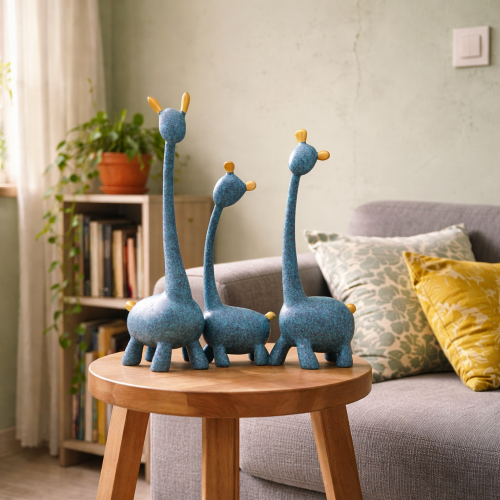
Couples restoring or decorating a shared vintage home together often want pieces that read as a matched pair rather than individual purchases — a subtle way to mark the home as jointly theirs. You can browse Moolwan's décor and showpiece collection for couples for pairs and sets designed to sit together on a single shelf or console.
What Not to Do When Decorating a Vintage House
- Don't over-restore. Stripping every original fixture removes the value the home already had.
- Don't buy fragile "antique-style" décor. Most mass-market vintage-look pieces use thin resin or low-purity ceramic that cracks under Indian humidity within months.
- Don't fill every alcove. Vintage homes have more built-in display space than modern ones — using all of it looks cluttered, not curated.
- Don't ignore return policies on decor purchased for a heritage room. Moolwan allows returns within 24 hours of delivery on unused items in original packaging, with a 10% restocking fee and refunds processed within 15 working days — check this before committing to a full room.
Frequently Asked Questions
What colors work best for vintage house decor in India?
Warm, muted tones — terracotta, ochre, deep green, and ivory — pair best with vintage architectural elements like exposed brick and wood. These tones read as heritage-appropriate rather than trend-driven, and they photograph well against natural stone or plaster finishes common in older Indian homes.
Should I use antique replicas or original decor pieces?
Original, well-made décor pieces generally outperform "antique-style" replicas, which are often produced with lower-purity materials that don't survive Indian humidity. A well-manufactured ceramic or canvas piece will outlast a decorative replica by several years.
How many showpieces should I display per room in a vintage home?
Two to three anchor pieces per room is the practical ceiling, following Moolwan's 70/30 Heritage Balance Rule. Vintage rooms already carry visual weight from their architecture, so décor should punctuate the space, not fill it.
Are resin or ceramic showpieces better for old homes with humidity issues?
Ceramic tolerates higher humidity — up to 85% RH — making it the safer choice for older homes with less ventilation or airflow. Resin performs best in interior, temperature-controlled rooms with humidity closer to 60% RH.
What's a good housewarming gift for someone moving into a vintage or heritage home?
A display-worthy ceramic or resin showpiece suited to Griha Pravesh or Vastu Shanti ceremonies works well, since it serves both a decorative and ceremonial purpose. Look for manufacturer-direct pieces built for Indian climate conditions rather than imported decorative items not tested for local humidity.
Decorating a vintage home — for yourself or as a gift?
Shop showpieces, canvas art, and gifting pieces built for Indian homes, direct from Moolwan's own manufacturing.
Shop Décor for CouplesWritten and reviewed by Ruchi Malhotra, Founder & CEO, Moolwan (Euphorica Ventures Pvt Ltd), Bangalore. Moolwan is a manufacturer-direct Indian home décor brand selling canvas wall art, modern showpieces, and curated gifts, engineered specifically for Indian climate and space.


