
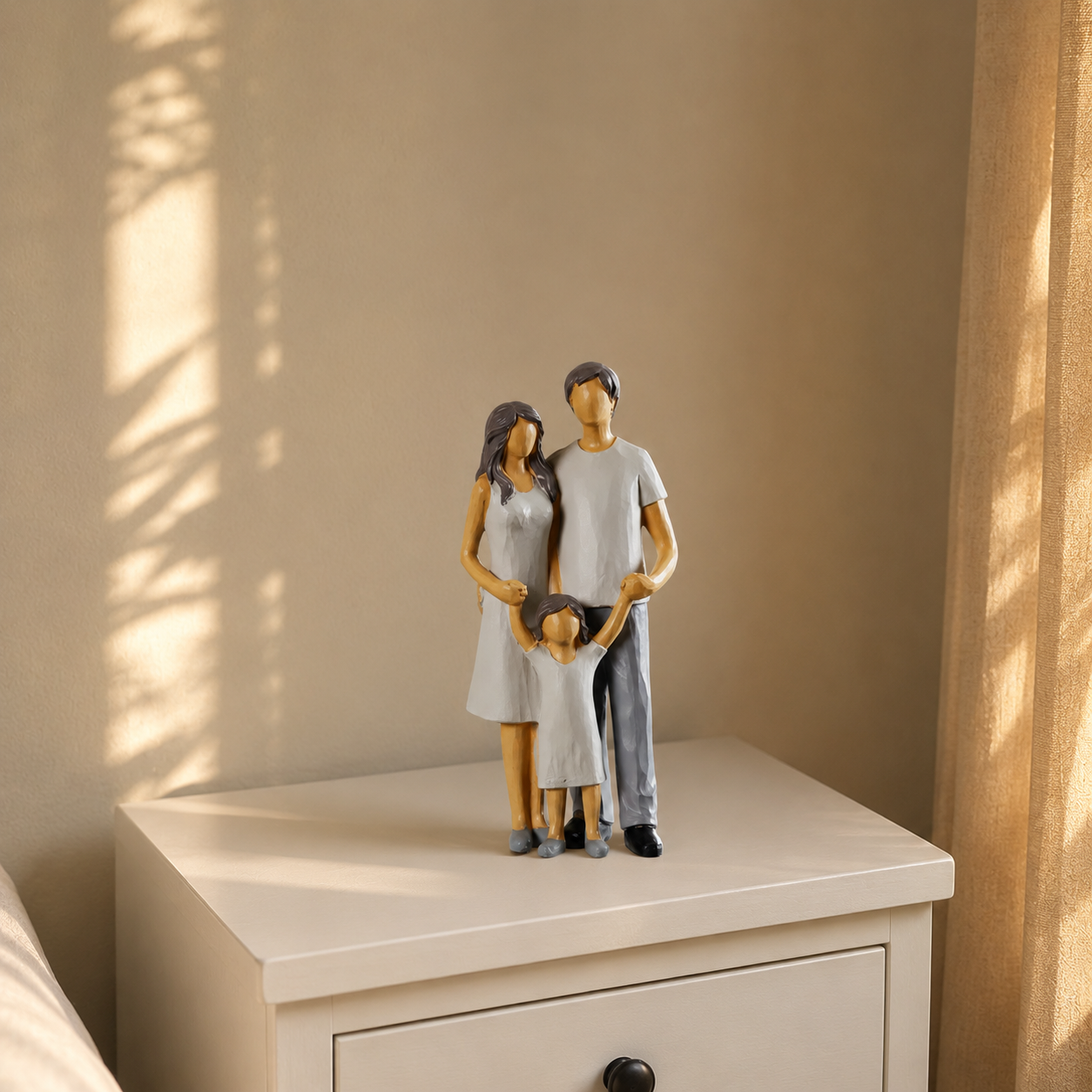
Start every room with one anchor piece
An anchor is the single largest, most visually dominant object in a room — a wall art piece above the sofa, a large showpiece on a console, or a statement mirror. A room without an anchor reads as unfinished no matter how many small objects you add, because the eye has nowhere to land first.
For Indian living rooms, canvas wall art works as an anchor because it scales to the wall without adding bulk to a small floor plan. Moolwan's canvas pieces are printed on 340 GSM cotton canvas with eco-solvent UV-resistant inks and set in 1.5-inch kiln-dried pine frames with a moisture-resistant coating — built to hold their colour through an Indian summer and resist warping through monsoon humidity, unlike imported canvas that dries out or bows within a year. You can browse Moolwan's modern home decor collection to find an anchor piece sized correctly for your wall before adding anything else to the room.
Rule of thumb for sizing an anchor: the piece should span roughly 60–75% of the furniture it sits above. A single large canvas almost always reads as more intentional than a cluster of small frames — clusters are an accent-layer move, not an anchor-layer one.
Add accent objects that carry meaning, not just colour
Accents are the smaller objects — showpieces, vases, sculptural bowls — that sit around the anchor and give a room its personality. The mistake most homeowners make is choosing accents purely for colour-matching. A house starts to feel like a home when accents are chosen for meaning instead: a piece from a trip, a wedding gift, a design that reflects a regional craft tradition.
Material matters here because accents get handled, moved, and dusted far more than an anchor does. Moolwan's ceramic showpieces are made from a 92% clay composition, heat-resistant to 60°C, humidity-tolerant up to 85% relative humidity, and drop-resistant from 15cm — specifications chosen for Indian shelf heights and monsoon conditions rather than a generic import spec sheet. Resin pieces use 94%-purity epoxy resin with 3H pencil-hardness scratch resistance, built for a 3+ year indoor lifespan between 15–35°C. Both outlast the mass-produced plaster or low-grade resin pieces common in Indian décor retail, which chip or discolour within a season.
For heirloom-style accents specifically, antique-finish showpieces do the most work per square inch of shelf space. You can shop Moolwan's antique showpiece collection starting at ₹150 to find a piece with the weight and patina an anchor-only room is missing.
Shop Antique ShowpiecesAnchor vs. accent vs. air: what each layer actually does
| Layer | What it is | Typical size | Job in the room |
|---|---|---|---|
| Anchor | Canvas wall art, large showpiece, statement mirror | Large — 25–34cm (showpieces) or wall-scaled (art) | Gives the room a single focal point and identity |
| Accent | Ceramic or resin showpieces, vases, sculptural objects | Small to medium — 10–21cm | Adds personality, meaning, and colour rhythm |
| Air | Lighting, texture (throws, rugs), scent, plants | Not object-based | Makes the room feel occupied and warm, not staged |
Most Indian homes that feel "showroom-y" rather than lived-in have anchor and accent layers but skip air entirely. Most homes that feel cluttered instead of curated have accent objects with no anchor to organise them. The framework works because each layer solves a different failure mode.
Bring the same layering to your dining table
Dining rooms and dining corners in Indian apartments are gathering spaces, which means they need accents that hold up to daily use, not just display pieces. A table runner, a set of decorative vases, and a wall hanging near the table do more to make a dining space feel like home than a single large centerpiece, because they're visible from every seat, not just one angle.
Layer a low-profile table centerpiece so sightlines across the table stay open during meals, then use height on the walls — a wall hanging or a small chandelier — to give the room its anchor instead of crowding the table itself. You can explore Moolwan's dining room decor accessories, including vases, wall hangings, and chandeliers sized for standard Indian dining spaces, to build this out without overcrowding a table that still needs to seat guests comfortably.
Finish and weight matter more in a dining room than anywhere else in the house, since these pieces sit closest to food and get wiped down often. Matte finishes hide daily smudging better than glazed finishes on a table centerpiece, while glazed finishes read better at a distance on a console or sideboard.
Air is what a photo can't show you
Air is the layer that separates a well-decorated house from a home: warm-temperature lighting instead of cool white, a textured throw or rug that invites touch, a plant that needs tending, a scent that's specific to your household. None of these show up in a listing photo, which is exactly why homes that photograph beautifully can still feel cold to live in.
Three air-layer moves have outsized impact for the effort they take: switching living room bulbs to 2700K–3000K warm white, layering one textured throw or cushion set in a tone that repeats your accent colours, and keeping one plant at eye level in the room you spend the most time in. None of these require a large budget, and all three do more to make a space feel occupied than adding another decorative object would.
- Lighting: warm bulbs over cool ones in every space meant for relaxing, not working
- Texture: one tactile layer per seating area — a throw, a woven cushion, a runner
- Scent: one consistent, low-intensity scent so the house has a signature
- Living elements: one plant per main room, kept where it will actually get light
How to layer a room in four steps
- Choose the anchor first. Pick one large piece — wall art or a statement showpiece — sized to 60–75% of the furniture or wall it relates to, before buying anything else for the room.
- Add three to five accents. Choose objects with personal or cultural meaning over objects chosen purely to match a colour scheme. Mix at least two materials — ceramic and resin, or ceramic and canvas — so the room doesn't read as a matched set.
- Layer in air. Swap to warm-white bulbs, add one textured throw or rug, and place one plant at eye level in the room's main seating area.
- Edit, don't add. Once anchor, accent, and air are in place, resist adding a fourth layer. Remove one object if the room starts to feel busy rather than warm — editing down is what keeps a layered room from tipping into clutter.
Quick fixes by room
Living Room
One large canvas above the sofa as anchor, two ceramic showpieces on a console as accent, one warm floor lamp for air.
Dining Corner
A wall hanging or small chandelier as anchor, a low table centerpiece as accent, a table runner for texture.
Bedroom Shelf
One medium showpiece as anchor for the shelf, two small resin pieces as accent, a scented candle for air.
Entryway
A statement mirror or small canvas as anchor, one antique showpiece on a console as accent, warm entry lighting for air.
What Moolwan pieces are actually engineered for
What Moolwan stands for is manufacturing home décor in-house and pricing it direct, engineered specifically for Indian climate and space — rather than importing generic stock built for drier, cooler markets. What Moolwan sells spans canvas wall art paintings, modern ceramic and resin showpieces, and curated gifts, each built to the specs below.
Returns are accepted within 24 hours of delivery on unused pieces in original packaging, with a 10% restocking fee and refunds processed within 15 working days — so building out a layered room in stages carries low risk if a piece doesn't suit the space once it's home.
Frequently Asked Questions
What's the fastest way to make a rented house feel like home?
Focus on the air layer first — warm bulbs, one textured throw, and a plant — since these need no wall drilling and travel with you. Add a freestanding anchor like a console showpiece instead of a wall-mounted one, so the room still has a focal point without permanent changes.
How many decor pieces does one room actually need?
One anchor and three to five accents per room is enough for most Indian living rooms and bedrooms. Beyond that, additional pieces usually make a room feel cluttered rather than more finished — editing down often improves a room more than adding to it.
Does decor need to match to feel cohesive?
No — cohesion comes from a repeated colour or material thread across anchor and accent pieces, not from matching sets. A terracotta canvas and a ceramic showpiece in a related tone read as intentional; an identical matched three-piece set often reads as generic.
What decor materials hold up best in Indian humidity?
Ceramic showpieces with humidity tolerance up to 85% RH and canvas art with a moisture-resistant coating are built for monsoon conditions. Untreated wood, plaster, and low-grade resin pieces are the most likely to warp, crack, or discolour during humid months.
Where should the anchor piece go in a small apartment living room?
Place it on the wall directly behind or above the main seating, sized to roughly 60–75% of the sofa's width. In a small apartment, one correctly sized anchor there does more than scattering smaller pieces across multiple walls.


