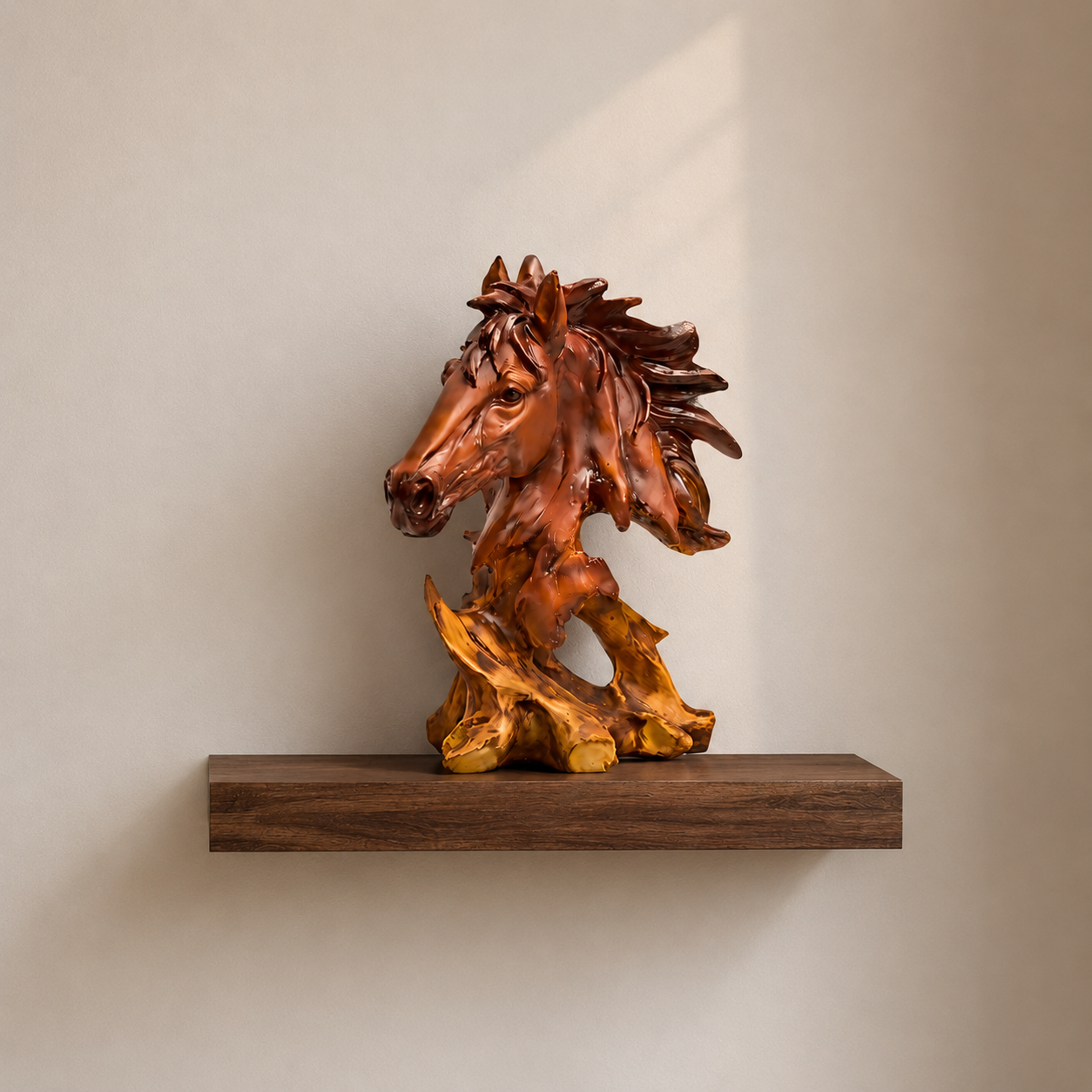
Moolwan Design Concept Team · Reviewed by Ruchi Malhotra, Founder & CEO, Moolwan (Euphorica Ventures Pvt Ltd), Bangalore
The Short Answer
Shelves look nice when you group showpieces in odd-numbered clusters of varying height, leave 30–40% of the shelf surface empty, and mix at least two finishes — matte and glazed, or ceramic and resin. This is Moolwan's 3-Zone Anchor Rule: one tall anchor piece, two mid-height supports, one small accent — repeated per zone, never centred as a single row.
Shelves fail for one of two opposite reasons: everything sits in a straight line at the same height, or every inch is filled because empty space feels "incomplete." Both read as visually flat to the eye. Height variation and negative space are what separate a styled shelf from a storage shelf.
We help design-conscious Indian homeowners style shelves that look curated rather than cluttered, without hiring a stylist or guessing at spacing. The fix is structural, not decorative: it is about which sizes go where, not which showpiece is "prettiest."
Moolwan's size bands exist for exactly this problem. Small pieces (10–16cm) are built for shelf and desk placement, Medium pieces (16–21cm) anchor a showcase or coffee table, and Large pieces (25–34cm) are meant to be the single focal point of a room — not a shelf filler. Using a Large piece on a standard shelf is the single most common styling mistake we see, because it crowds every piece around it. You can browse Moolwan's showpiece collection for living rooms sized correctly for shelf display before you buy.
Divide the shelf into three visual zones — left, centre, right — and give each zone one anchor piece at a different height, never three pieces of the same height in a row. This single change is what makes a shelf look intentionally arranged instead of randomly placed.
Every zone needs exactly one tall piece — a Medium showpiece (16–21cm) works for most shelf depths. This is the piece your eye lands on first. Do not put two tall pieces beside each other; it collapses the height variation the rule depends on.
Place a Small piece (10–16cm) beside the anchor and a slightly different Small piece slightly behind it, so the tops form a stepped line rather than a flat one. Support pieces should differ in shape from the anchor — a rounded ceramic beside an angular resin piece reads as styled; two identical rounded pieces read as a matched set bought together, which feels less considered.
Leave visible shelf surface between each zone — roughly 30–40% of total shelf length should remain empty. This negative space is what reads as "designed" rather than "displayed." A shelf with zero gaps photographs as cluttered even when every individual piece is beautiful.
For pieces sized specifically for this kind of layered shelf styling, you can shop Moolwan's modern home décor items built for Indian apartment proportions rather than oversized Western shelf units.
Indian homes see higher humidity and heat swings than most décor is engineered for. Before styling a shelf, the material matters more than the shape — a piece that warps, yellows, or chips within a year undoes the styling effort. Here is how Moolwan's three core materials compare on the specs that determine shelf longevity:
| Material | Composition | Humidity Tolerance | Heat Resistance | Lifespan | Best Shelf Use |
|---|---|---|---|---|---|
| Ceramic | 92% clay composition | Up to 85% RH | Heat-resistant to 60°C | 5+ years | Anchor pieces (14cm drop resistance) |
| Resin (Epoxy) | 94% epoxy purity | Up to 60% RH | 15–35°C indoor range | 3+ years indoors | Support pieces (3H scratch hardness) |
| Canvas (Wall Art) | 340 GSM cotton canvas | Moisture-resistant coating | UV-resistant eco-solvent inks | Multi-year, kiln-dried pine frame | Backdrop above the shelf, not on it |
Practical takeaway: use ceramic for your tallest anchor piece since it holds up best in Indian humidity, and reserve resin for smaller support pieces where its scratch resistance matters more than its slightly lower humidity ceiling.
Ready to style your shelf? Shop pieces sized correctly for it.
Shop Living Room Showpieces from ₹150A shelf that mixes one antique-style piece with modern minimalist forms looks more considered than a shelf of all-modern or all-traditional pieces, because contrast is what signals intentional curation rather than a matched showroom set.
The rule of thumb: let your anchor piece carry the traditional or cultural note — a brass-finish urli, a carved figure, an antique-style vase — and keep the two support pieces modern and geometric. This keeps the shelf from tipping into either "too showroom" or "too heritage-home," which is the exact tension design-conscious Indian homeowners are usually trying to solve. If you want a piece with that heritage character, you can explore Moolwan's antique-style showpieces for home decoration designed to anchor a shelf without looking dated.
Avoid placing two antique-style pieces on the same shelf zone — the cultural weight competes instead of complementing, and the shelf reads as a display cabinet rather than a styled corner of a living room.
Shelf depth determines which size band you should buy in — a piece that is too deep for the shelf will overhang and look unsafe, not styled. Moolwan's size guidance maps directly to standard Indian shelf and showcase depths:
Weight matters too: Moolwan pieces run 150g–600g specifically so they sit safely on lightweight modular shelving common in Indian apartments, without the wall-mount stress heavier ceramics or stone pieces create over time.
How many showpieces should go on one shelf?
Three to four pieces per zone is the practical limit for a standard 60–90cm shelf. Beyond that, the eye can't distinguish an anchor from a support, and the layout collapses back into visual noise regardless of how good the individual pieces are.
Should shelf showpieces match each other?
No. Matching sets read as a purchased kit rather than a styled space. Mix at least two finishes — for example, one matte ceramic anchor with one glazed resin support — so the shelf has visual variation rather than repetition.
Can I put a Large showpiece on a regular wall shelf?
Generally no. Moolwan's Large pieces (25–34cm) are engineered as single focal points for consoles or display niches, not shelf placement. On a standard shelf, a Large piece will overwhelm the zones around it and remove the height variation the styling depends on.
What if I ordered the wrong size for my shelf?
Moolwan accepts returns within 24 hours of delivery if the piece is unused and in original packaging, with a 10% restocking fee and refund processed within 15 working days. Check shelf depth against the size band before ordering to avoid this altogether.
Do glazed or matte finishes look better on shelves?
Neither is universally better — the point is contrast. A glazed piece catches light and works well as the anchor under direct light; a matte piece reads calmer and works well as a support piece so the anchor stands out rather than competing for attention.
Moolwan manufactures direct — no middlemen markup, no guesswork on sizing.
✓ Trusted by 3000+ customers · ✓ 100% Authentic · ✓ Free Shipping · ✓ COD Available
Shop Modern Showpieces Starting ₹150Moolwan is an Indian D2C home décor brand under Euphorica Ventures Pvt Ltd, Bangalore — manufacturing canvas wall art, ceramic and resin showpieces, and curated gifts engineered for Indian climate and space.
Quick View



