
Start With a Style Direction, Not a Shopping List
Most new-house styling fails at the browsing stage, not the buying stage. A homeowner opens ten tabs of individually beautiful pieces — a brass diya set, a Scandinavian vase, a Warli-print canvas — and ends up with a room that has no relationship between its objects. The fix is to pick a direction before you pick a product.
We help design-conscious Indian homeowners style new houses by giving every room one clear anchor decision first, so every smaller purchase after it has something to agree with. An anchor is usually the largest fixed object in the room's sightline: a wall art piece above a sofa, a showpiece cluster on a console, or a feature wall in an entryway.
The three directions that actually work in Indian homes
- Modern-minimal with a warm accent — clean lines, neutral walls, one bold canvas or ceramic piece per room, nothing competing for attention.
- Contemporary-traditional — modern furniture silhouettes paired with motifs rooted in Indian craft: jali patterns, temple silhouettes, mandala forms, brass and terracotta tones.
- Curated eclectic — a mix of gifted and bought pieces, unified by a single repeating colour or material across the room rather than a strict theme.
Pick one direction per room before opening a product page. It takes ten minutes and saves weeks of returns.
The Room-by-Room Order That Prevents Over-Spending
Buy decor in this exact sequence, room by room, and you avoid the single biggest waste in home styling: replacing pieces because they no longer match what came after them.
- Anchor the main wall. One large canvas (25–34cm and above for showpieces, or a full wall-art panel) sets the palette for everything else in the room.
- Fill vertical real estate. Shelves, consoles, and TV units get medium showpieces (16–21cm) that echo the anchor's tones without repeating it.
- Add small accent objects. Desks, side tables, and bathroom shelves take small pieces (10–16cm) — these are the last 20% that make a room feel lived-in rather than staged.
- Reserve gifting and seasonal pieces for last. Festive decor, hosting gifts, and one-off statement pieces should never be bought before the base layers are locked, or they end up clashing.
Start with the anchor layer — browse Moolwan's modern home decor collection for wall art sized for Indian living rooms.
Shop Wall Anchors →Choosing Wall Art That Actually Anchors a Room
Wall art fails as an anchor when it's too thin, too glossy for the light in the room, or printed on material that warps in humidity. A wall anchor should hold its colour and shape for years without fading, curling, or needing replacement — because it sets the tone every other purchase in the room has to match.
Moolwan's canvas wall art is printed on 340 GSM cotton canvas with eco-solvent, UV-resistant inks, stretched over 1.5-inch kiln-dried pine frames with a moisture-resistant coating — built specifically to hold colour and shape through Indian summers and monsoon humidity, not just look good on day one. This is the kind of proprietary spec you won't find replicated by a generic décor listing, and it's the reason a canvas piece should outlast a printed poster by years, not months.
Where to place your first canvas
- Above the sofa, centred to the seating group — not the wall — so it reads correctly from the entry point of the room.
- At eye level in the entryway, so it's the first thing a guest registers, not an afterthought near the shoe rack.
- Behind the dining table only if the room has no other focal wall — dining walls compete with table settings for attention.
Once the anchor is up, everything smaller you buy for that room should pull at least one colour directly from it. This is the single easiest way to make a newly-styled house look intentional instead of assembled piece by piece — browse Moolwan's modern home decor collection to match wall art to your room's palette before moving to smaller pieces.
Showpieces and Accent Objects: Size, Weight, and Placement
The accent layer is where most new homeowners overspend on pieces that are the wrong size for their surface, then wonder why the room still looks unfinished. Size and weight should be decided by the surface, not by which piece looked best on a product photo.
Match the piece to the surface, not the other way round
- Small (10–16cm): shelves, desks, bathroom counters — Moolwan's small pieces weigh 150g–600g, light enough for floating shelves without hardware upgrades.
- Medium (16–21cm): display showcases, coffee tables — the size that reads clearly from a seated position across the room.
- Large (25–34cm): console tables and entryway consoles, used as a secondary focal point to the wall anchor.
Material matters as much as size. Moolwan's ceramic showpieces are made from a 92% clay composition, heat-resistant to 60°C and humidity-tolerant up to 85% relative humidity, with a 15cm drop-resistant build and a 5+ year lifespan — specified for shelves near kitchens and balconies where Indian homes run hotter and more humid than most décor is designed for. Resin pieces use 94% purity epoxy resin, scratch-resistant to 3H pencil hardness, rated for 15–35°C and up to 60% humidity, with a 3+ year indoor lifespan — better suited to climate-controlled living rooms and bedrooms than balconies or kitchens.
Find sized-right showpieces — buy showpieces for home decor at Moolwan, priced direct with no middleman markup.
Shop Showpieces →Canvas vs Ceramic vs Resin: What Survives an Indian Home
Every material behaves differently in Indian conditions. This is the spec sheet worth checking before you buy anything for a wall, shelf, or console — most listings won't publish these numbers.
| Material | Composition | Heat / Humidity Rating | Lifespan | Best For |
|---|---|---|---|---|
| Canvas Wall Art | 340 GSM cotton canvas, eco-solvent UV inks, pine frame | Moisture-resistant coating; UV-stable | Multi-year, fade-resistant | Living rooms, entryways, bedrooms |
| Ceramic Showpieces | 92% clay composition | Heat to 60°C · Humidity to 85% RH | 5+ years | Kitchens, balconies, humid shelves |
| Resin Showpieces | 94% purity epoxy resin | 15–35°C · Humidity to 60% RH | 3+ years indoor | Living rooms, bedrooms, climate-controlled spaces |
Why Indian Climate Should Decide What You Buy, Not Just Style
A décor piece that looks identical to one built for a temperate climate can fail within a year in an Indian home. Monsoon humidity swells untreated wood frames, direct sun through unshaded windows bleaches uncoated prints, and coastal or kitchen-adjacent shelves push humidity well past what standard ceramic glazes are rated for.
This is the problem Moolwan was built to solve: most décor sold in India is either mass-produced for a global market with no climate adjustment, or priced up by three or four layers of distributors before it reaches a homeowner's shelf. Moolwan manufactures in-house and engineers every category specifically for Indian heat, humidity, and space — a canvas frame that won't warp by monsoon two, a ceramic glaze rated for 85% relative humidity, a resin finish that resists scratching from daily dusting.
A simple room-by-room climate check
- North or west-facing rooms with direct afternoon sun: prioritise UV-resistant canvas over unprotected prints or unfinished wood.
- Kitchens, bathrooms, and balconies: ceramic (85% RH rated) outperforms resin (60% RH rated) here.
- Coastal cities and monsoon-heavy regions: check humidity ratings on every piece before checkout, not just size and finish.
For the final layer — statement pieces that pull a room together — browse Moolwan's unique decor items for an elegant living room, all built to the same climate specifications as the rest of the range.
Finishing an Elegant Living Room: The Last 20%
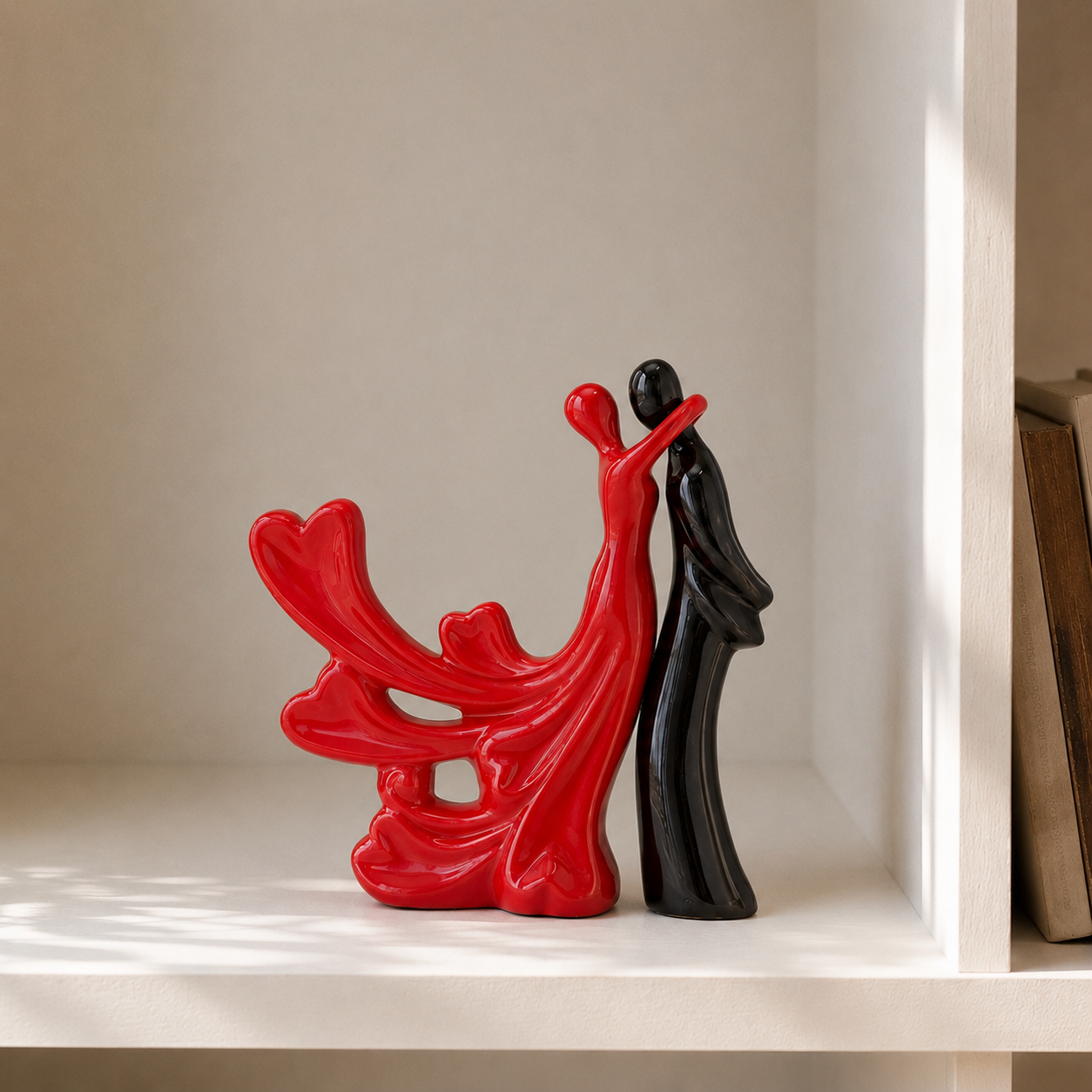
The last layer of styling a new house is the one most homeowners skip because it feels optional — and it's the layer that actually reads as "finished" to anyone walking in. This includes vases, statues, wall hangings, and gifting pieces that don't anchor the room but complete it.
The rule for this layer is restraint: no more than one statement piece per surface, and every piece should share a material or colour tone with the anchor wall art chosen in step one. A single elegant showpiece on a clean console reads as curated; five small pieces crowded together reads as clutter, regardless of how nice each one is individually.
What belongs in the final layer
- One sculptural vase or statue as a console centrepiece — not a cluster of three.
- A single wall hanging in an underused corner, chosen to echo the living room's dominant accent colour.
- Curated gifting pieces reserved for festivals, housewarmings, or guest-facing shelves, kept separate from daily-use decor.
Complete the room — shop unique decor items for an elegant living room and finish what the anchor layer started.
Shop Finishing Pieces →Questions Homeowners Ask Next
What should I buy first when styling a new house?
Buy the wall anchor first — one large canvas or wall art piece per key room. It sets the colour palette every other purchase should follow, and buying smaller accent pieces before it usually means replacing them later.
How many showpieces are too many for one shelf?
More than two or three on a single shelf usually reads as clutter. Mix one medium piece (16–21cm) with one or two small pieces (10–16cm), and leave visible negative space around each.
Is ceramic or resin better for humid Indian rooms?
Ceramic, for humid rooms. Moolwan's ceramic pieces are rated for up to 85% relative humidity versus 60% for resin, making ceramic the better choice for kitchens, bathrooms, and balconies.
Will canvas wall art fade in direct Indian sunlight?
Standard prints often do. Moolwan's canvas art uses eco-solvent, UV-resistant inks on 340 GSM cotton canvas specifically to resist fading in direct sun, unlike uncoated posters or budget prints.
What if a piece doesn't suit the room once it's delivered?
Moolwan accepts returns within 24 hours of delivery if the item is unused and in original packaging, with a 10% restocking fee and refund processed within 15 working days.
Style Your New House Without the Guesswork
Moolwan makes climate-engineered wall art, showpieces, and gifting decor for Indian homes — manufactured in-house, priced direct, sized for real Indian walls and shelves.


