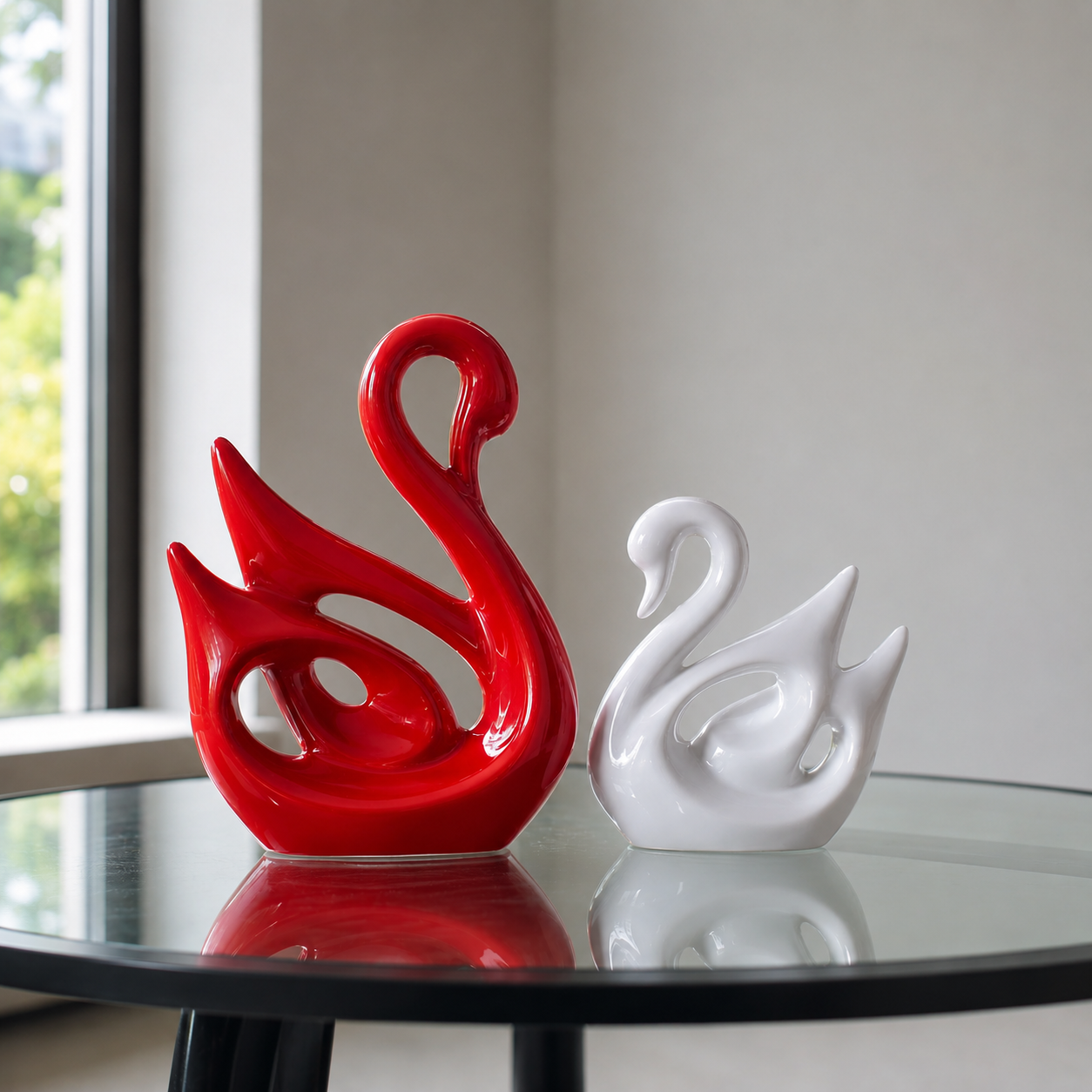
Style built-in shelves using the 60-30-10 rule: 60% books and functional objects, 30% ceramic or resin showpieces at varied heights, 10% deliberate negative space. Group pieces in odd numbers of two to five, anchor each shelf with one taller object, and let one wall art moment carry the eye between bays.
We help design-conscious Indian homeowners style built-in and open shelving so it reads as curated, not cluttered — balancing modern minimalism against pieces that still feel rooted in Indian craft and colour.
Most built-in shelves fail for one of two reasons: they're too full, or every object is the same height. Interior stylists solve both with a five-step layering sequence that works on any shelf depth, from a slim study niche to a full living-room wall unit.
This sequence takes roughly 45 minutes for a standard four-bay unit and needs no new furniture — only a re-sort of what you already own, plus one or two pieces sized correctly for the gaps that show up.
The single most common styling mistake on Indian built-in shelves is buying showpieces sized for a coffee table and expecting them to work in a 20cm-deep niche. Size decisions should follow the shelf's actual placement in the room, not the object's appeal in a product photo.
| Size Range | Best Shelf Placement | Typical Weight | Styling Role |
|---|---|---|---|
| Small — 10–16cm | Top bays, narrow niches, bathroom-adjacent shelving | 150–250g | Textural filler, part of a three-piece cluster |
| Medium — 16–21cm | Eye-level bays, mid-shelf showcase zones | 250–420g | Secondary anchor, pairs with wall art below or beside it |
| Large — 25–34cm | Bottom bay or the single focal shelf of the unit | 420–600g | Primary anchor — the one piece the room is styled around |
Every Moolwan showpiece falls between 150g and 600g by design, engineered light enough for the fixings used on standard Indian wall shelving and floating units, which are rarely rated for the heavier stone or metal decor common in Western styling guides. If you're planning a full shelf refresh rather than a single piece, browse Moolwan's modern home decor collection filtered by size before you start placing objects — it saves the return trip.
Open shelving in Indian homes deals with three stresses most décor is never tested against: monsoon humidity, direct heat near west-facing windows, and the accidental knock from a passing hand or a curious child. Material choice matters more here than in climate-controlled interiors.
| Property | Ceramic Showpieces | Resin Showpieces |
|---|---|---|
| Composition | 92% clay body | 94% purity epoxy resin |
| Heat tolerance | Up to 60°C | Stable 15–35°C |
| Humidity tolerance | Up to 85% RH | Up to 60% RH |
| Drop resistance | 15cm drop-resistant | Scratch-resistant, 3H pencil hardness |
| Expected lifespan | 5+ years indoors | 3+ years indoors |
As a rule: place ceramic pieces on shelves near kitchens, balconies, or any wall that takes monsoon humidity, since ceramic's 85% RH tolerance is built for exactly that condition. Reserve resin pieces for climate-stable interior walls — living rooms with regular AC use are the ideal spot, where resin's scratch resistance protects against everyday handling far better than most painted finishes.
Moolwan is a manufacturer-direct home décor brand — we make our canvas wall art, ceramic and resin showpieces, and curated gifts in-house, in India, and sell them without a middleman markup. That's what lets a size-and-material-matched shelf refresh stay affordable rather than aspirational.
What Moolwan sells: 340 GSM cotton-canvas wall art on kiln-dried pine frames, ceramic and resin showpieces built to the specs above, and curated gifts sized for Indian shelves, consoles and coffee tables — not oversized pieces built for larger Western room proportions.
Most Indian homeowners styling built-in shelves are navigating a real tension: a modern, minimal shell of a living room, and a family collection of traditional brass, wood or ceramic pieces they don't want to hide away. The two don't have to compete if you control where each one sits in the layering sequence.
A traditional brass diya, a carved wooden figure, or an inherited ceramic vase reads as intentional — not mismatched — when it's the single tallest object on its shelf, per the anchor rule above. Surround it with quieter, modern-finish pieces rather than other ornate ones, so it doesn't have to compete for attention.
A single piece of contemporary canvas art, in a muted or monochrome palette, placed behind a cluster of traditional objects, visually "modernises" the whole grouping without touching the objects themselves. This is the fastest way to make an inherited collection feel current rather than dated.
Mid-refresh and need the shelf's centrepiece? Moolwan's modern wall art and showpieces are sized and matte- or glazed-finished specifically for shelf and niche placement in Indian homes.
Shop Modern Home Decor →Built-in shelving rarely stands alone — most Indian living and dining spaces share sightlines, so the console or sideboard next to your dining table should follow the same 60-30-10 logic, just at console height. A dining-adjacent surface needs pieces that read well from a seated angle, which usually means slightly taller, more sculptural forms than a shelf niche.
Vases and radiant, light-catching pieces do more work here than on a shelf, because a dining console is seen under different light — often candle or pendant light in the evening — for longer, uninterrupted stretches. If your shelf styling stops at the wall unit, it's worth continuing the same anchor-and-cluster approach onto the console so the two zones feel like one designed sequence rather than two separate decisions. You can shop decorative items for the dining room — vases, wall hangings and chandelier-adjacent accents — built for exactly this kind of console-and-shelf continuity.
One antique or vintage-finish piece per shelf run is usually the ceiling, not the floor. A single aged-brass or distressed-finish showpiece, placed in the anchor position on your most-viewed shelf, reads as curated collecting. Three or more antique pieces across the same unit reads as clutter, no matter how good each individual piece is.
Entry-level antique-style pieces are also the lowest-risk way to test whether a heritage finish works in your space before committing to a larger investment piece. You can browse antique showpieces for home decoration starting at ₹150, trusted by 3,000+ customers, fully authentic, with free shipping and cash-on-delivery available — a low-commitment way to trial the anchor-piece approach on a single shelf before expanding it.
Between three and five objects per shelf, grouped in odd numbers, is the range most stylists work within. Below three, a shelf looks under-furnished; above five on a single bay, it starts to look cluttered regardless of how well each piece is chosen.
Yes, and it's recommended. A single canvas piece leaned or mounted behind an open bay gives shelf styling visual depth that objects alone can't create. Keep it to one art moment per unit so it acts as a focal point rather than competing with the shelf objects themselves.
Moolwan accepts returns within 24 hours of delivery, provided the item is unused and in its original packaging. A 10% restocking fee applies, and refunds are processed within 15 working days — worth checking shelf dimensions closely before ordering, since this window is short.
Standard fixings on Indian floating shelves are generally rated for lighter, evenly distributed loads rather than dense stone or metal decor. This is why Moolwan showpieces are engineered between 150g and 600g — light enough for typical wall fixings while still substantial enough to anchor a shelf visually.
Glazed finishes catch more ambient light and suit shelves near a window or under a pendant light, making them read as brighter focal points. Matte finishes suit shelves in softer, indirect light and pair better with traditional or textured pieces where you want warmth rather than shine. Both finishes are easy to maintain with a dry or lightly damp cloth.
Every Moolwan piece is sized, weighted and finished for Indian shelves, consoles and walls — manufactured in-house, priced direct, no middleman markup.
Written by Ruchi Malhotra, Founder & CEO, Moolwan (Euphorica Ventures Pvt Ltd), Bangalore.
Quick View



