
How Much Should You Budget for Living Room Décor in an Indian Home?
The Short Answer
Across a 120–180 sq ft living room, décor should take roughly 8–15% of total furnishing spend, split between one large anchor piece and several smaller accents, because a single dominant object holds visual weight while smaller pieces fill secondary sightlines. Moolwan's modern home décor collection spans three size tiers — Small, Medium, and Large — matched to this exact split.
Interior stylists commonly earmark 8–15% of total furnishing budget for décor accessories in a room where furniture already absorbs the major spend, because accessories function as the finishing layer rather than the structural one — spending disproportionately more here inflates cost without improving comfort. Moolwan helps design-conscious Indian homeowners translate that percentage into concrete rupee and size decisions for compact Indian living rooms, most of which fall under 180 sq ft. Instead of vague "decorate for X amount" advice, this guide breaks the spend down by piece size, surface, and room footprint so every rupee has a physical destination.
How much of your total furnishing budget should go to décor?
Roughly 8–15% of total furnishing spend should go to décor accents in a 120–180 sq ft Indian living room. This range holds because décor accessories carry a smaller structural and functional burden than seating or storage, so overspending here produces diminishing returns on daily comfort while underspending leaves the room feeling unfinished. A ₹1,50,000 living room furnishing budget, for instance, comfortably supports ₹12,000–₹22,000 in décor accents across one anchor piece and several smaller accessories.
Moolwan's modern home décor collection is built around this exact allocation logic — ceramic and resin pieces sized and priced to fill the anchor, secondary, and accent roles a typical Indian living room needs, rather than a single price point stretched across every use case.
Which piece should get the largest share of the budget?
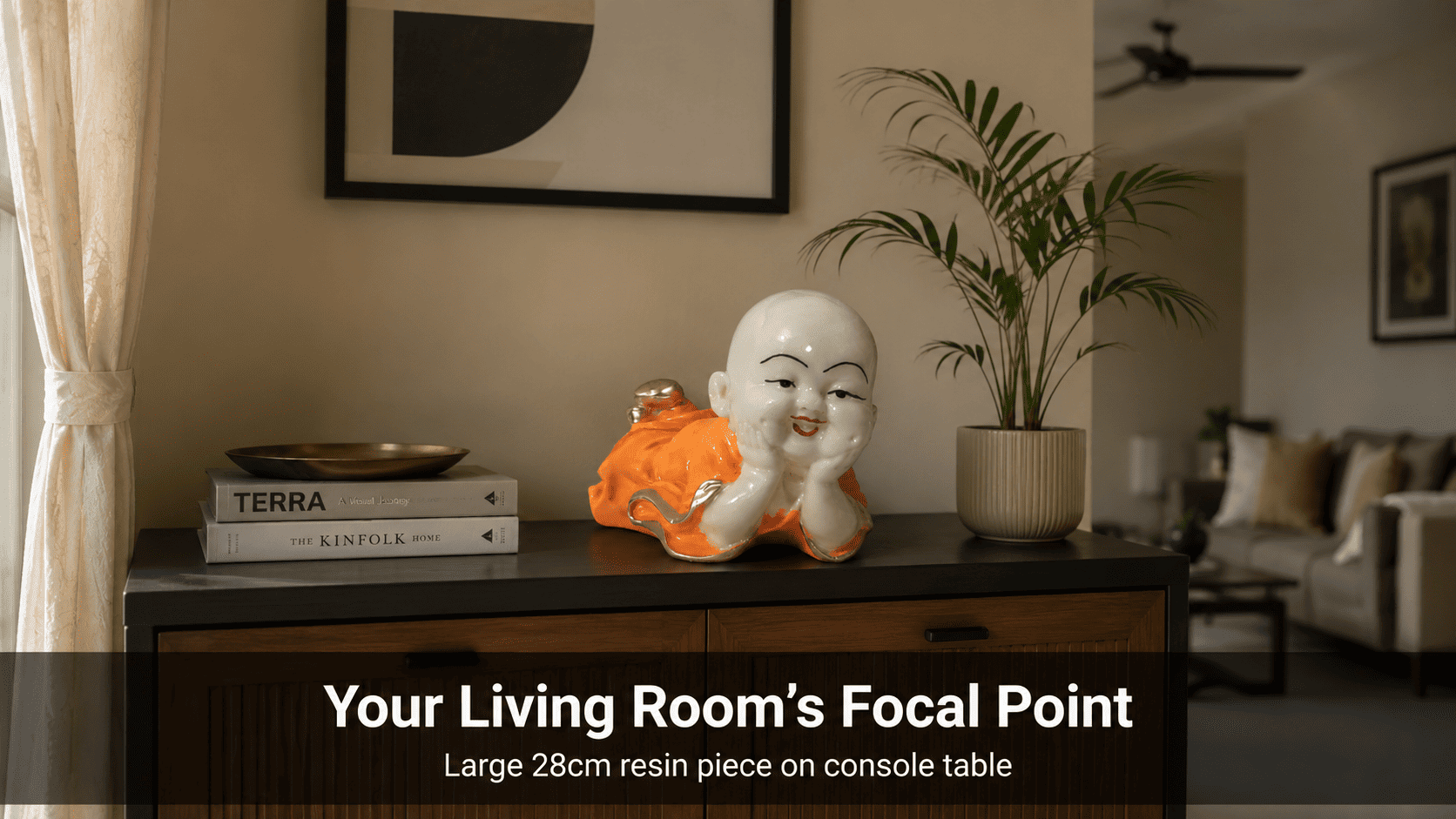
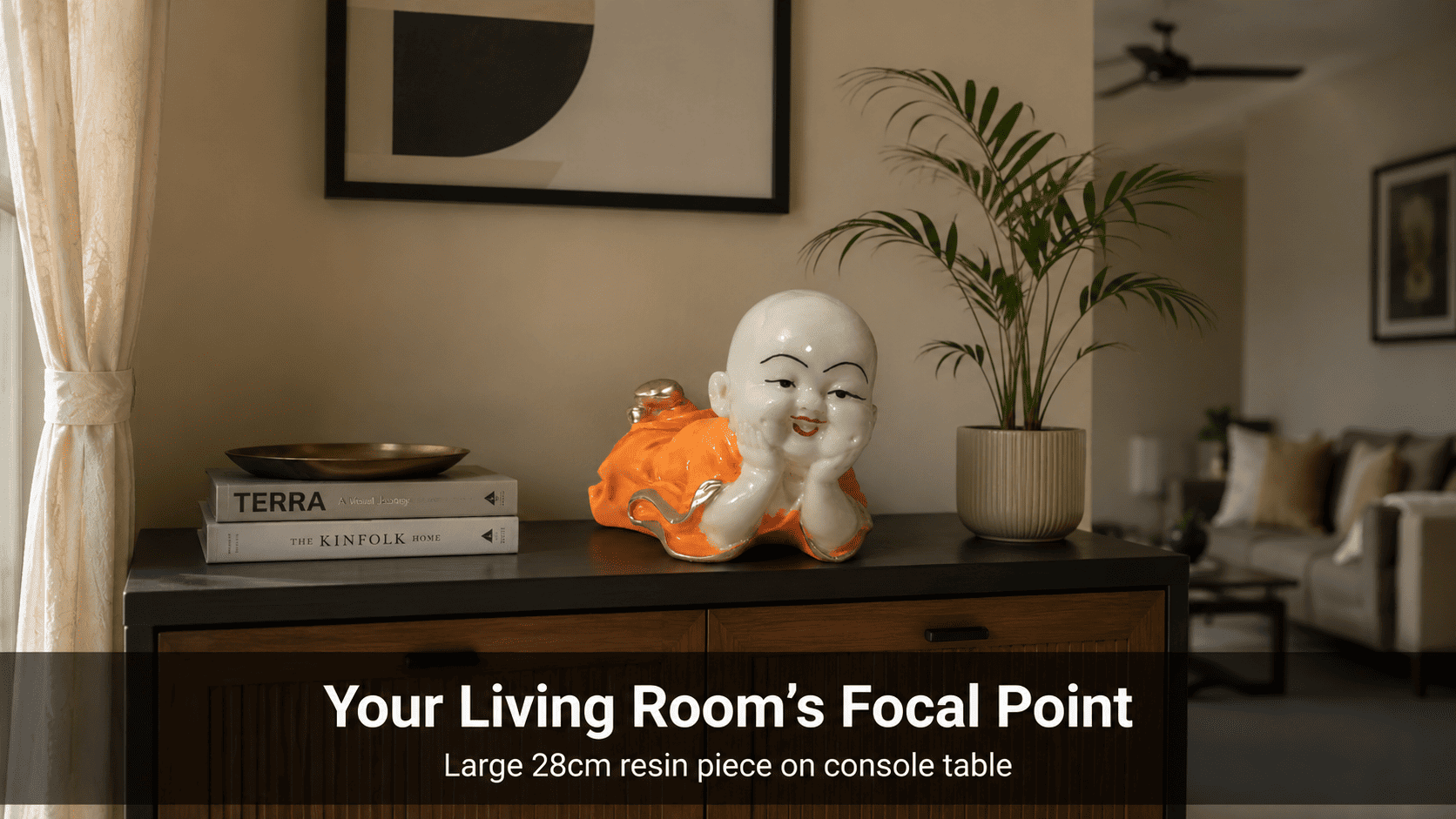
The single largest décor line item should be one focal piece 25–34 cm tall placed on a console or open corner, not several smaller pieces spread evenly. A room with one dominant focal object reads as intentionally styled because the eye settles on a single point of visual weight before scanning outward, whereas several medium pieces of similar size compete for attention and read as clutter.
Because Moolwan's resin sculptures are engineered to a 94% purity epoxy composition with 3H pencil hardness and a 3+ year indoor lifespan, a single well-placed large piece absorbs daily handling and dusting without surface degradation — protecting the disproportionate share of budget it represents. Spending 40–60% of the total décor budget on this one piece is not indulgence; it is directing spend toward the item doing the most visual and durability work per rupee.
Design Rule
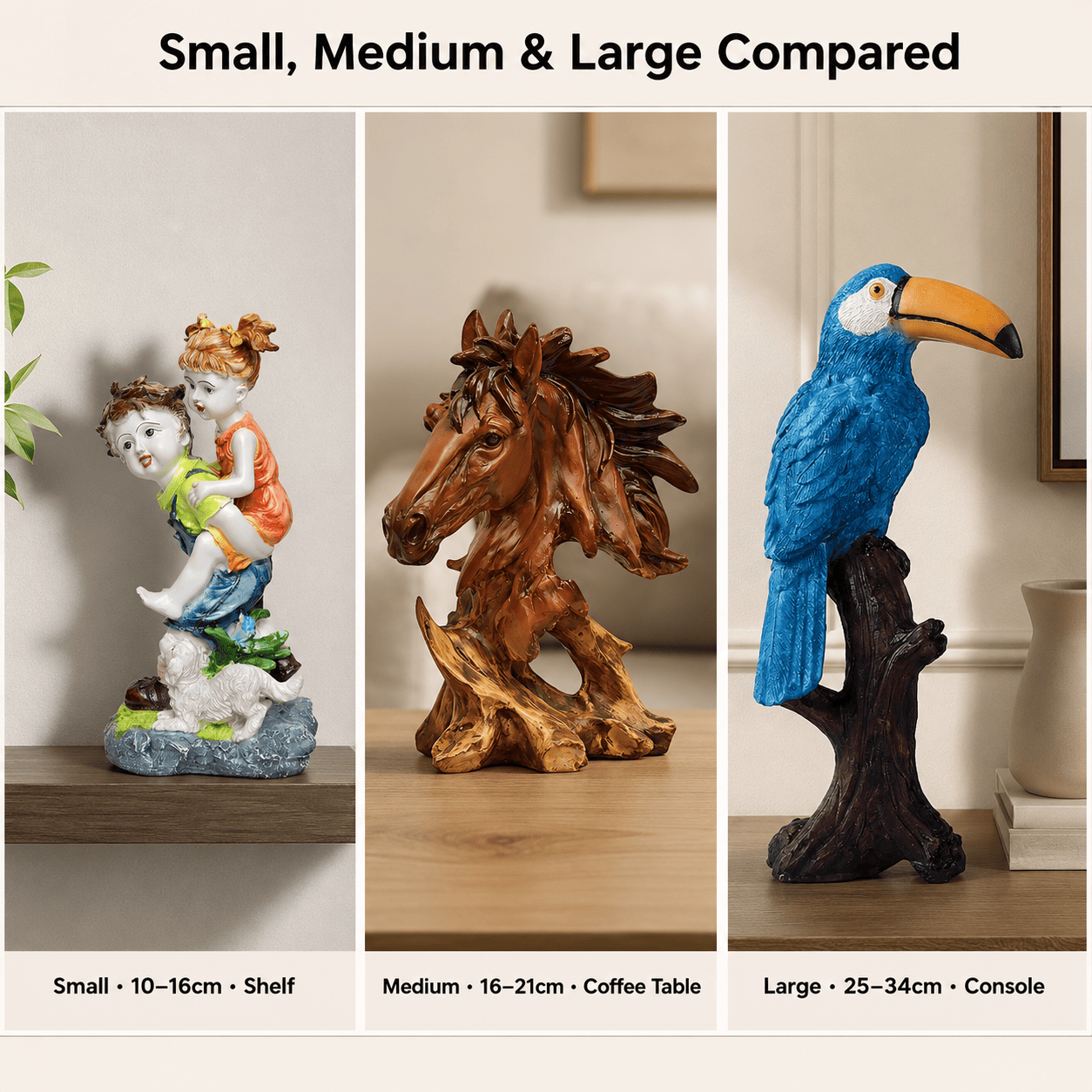
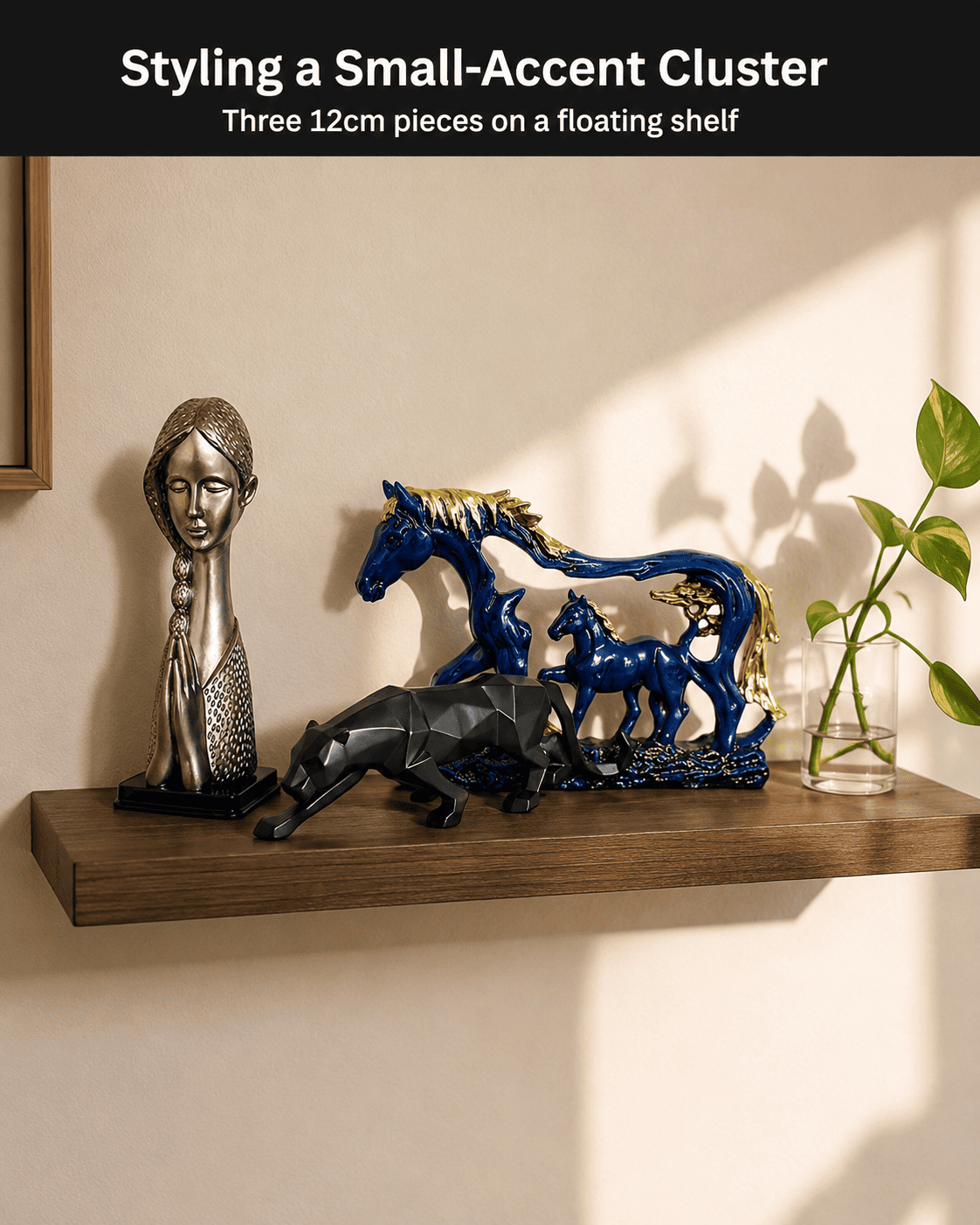
To prevent overspending on accents that don't earn their visual weight, style a living room using Moolwan's 60/30/10 Living Room Décor Split: 60% of the décor budget on one Large focal piece (25–34 cm), 30% on two to three Medium pieces (16–21 cm) for the coffee table or bookshelf, and 10% on Small accents (10–16 cm) for shelves and consoles.
How much should medium and small accents cost relative to the anchor piece?
Medium accents should each cost 15–25% of the anchor piece's price, and small accents 5–10%, keeping the visual hierarchy intact. This ratio matters because when a secondary piece approaches the anchor's price or size, it starts competing for the eye's attention instead of supporting the focal point — a ₹6,000 anchor surrounded by ₹4,500 "accents" no longer reads as anchor-and-support, it reads as three unrelated objects.
Room footprint, target surface, and available surface width all shift which size tier a piece should fall into, which is why the allocation is easier to plan against a physical matrix than a flat rule of thumb.
| Room Footprint | Target Surface | Recommended Piece Size | Weight Range |
|---|---|---|---|
| Sub-100 sq ft | Floating shelf / console | Small (10–16 cm) | 150–250 g |
| 101–150 sq ft | Coffee table / bookshelf | Medium (16–21 cm) | 250–400 g |
| 151+ sq ft | Console / focal corner | Large (25–34 cm) | 400–600 g |
Because room footprint, surface width, and material each shift the ideal piece size, browse the full size and weight selection in Moolwan's décor collection for small living rooms to match your exact layout.
Does material choice change the budget math?
Yes — ceramic and resin pieces carry different budget-per-durability ratios, so material should factor into the split, not just size. Because ceramic tolerates humidity up to 85% RH against resin's 60% RH ceiling, ceramic pieces are the safer budget allocation for monsoon-exposed living rooms, while resin's tighter 3H hardness and lighter weight make it more cost-efficient for high-traffic coffee tables prone to accidental knocks.
A ₹3,000 ceramic piece rated for a 5+ year lifespan works out to roughly ₹600 per year of use, compared to a similarly priced resin piece rated for 3 years at ₹1,000 per year — a real cost difference budget planning should account for, not just sticker price. Moolwan manufactures both material lines to these tested thresholds specifically for Indian climate conditions, so the material line itself becomes a budget lever, not just an aesthetic one.
Want to build your living room décor budget around pieces engineered to last 3–5+ years in Indian humidity? Shop the full Moolwan modern home décor collection for small living rooms now.
Frequently Asked Questions
What's a reasonable total décor budget for a 150 sq ft living room?
For a 150 sq ft living room, a total furnishing budget of ₹1,00,000–₹2,00,000 typically supports ₹8,000–₹30,000 in décor accents, since 8–15% is the range most interior stylists use before the accent layer starts competing with furniture spend for visual attention. Moolwan's modern home décor collection is priced across this exact band, letting one Large anchor piece and a handful of Medium and Small accents fit inside it without exceeding the 15% ceiling.
Should I buy all décor pieces at once or gradually?
Gradual purchasing is generally the better budget approach, because rooms styled all at once in a single sitting tend to look showroom-uniform rather than lived-in, while pieces added over a few months let each addition be judged against what's already there. Starting with the Large anchor piece first gives every later Medium or Small purchase a fixed visual reference point to work around.
Is it worth spending more on a single large piece instead of several cheaper ones?
Yes, in most cases — a single well-made Large piece does more visual work per rupee than three smaller pieces of similar combined cost, because the eye reads one strong focal point faster than several competing smaller ones. Durability compounds this: Moolwan's resin and ceramic Large pieces are built for a 3–5+ year lifespan, so the higher upfront cost amortizes to a lower cost-per-year than replacing multiple cheaper accents that degrade faster.
Does climate affect how I should budget for décor material?
Yes — humid or monsoon-exposed living rooms should weight the budget toward ceramic pieces rated to 85% RH rather than resin pieces rated to 60% RH, since material failure from humidity means an unplanned replacement cost that undoes any upfront savings.
Ready to put this budget split into practice? Bring home a curated anchor piece from Moolwan's décor collection for small living rooms — manufacturer-direct pricing means no distributor markup eating into your décor budget. If you're furnishing the room from scratch, Moolwan's broader modern home décor range covers every size tier in this guide, and the living room collection pairs décor with matching furniture pieces for a coordinated look.


