
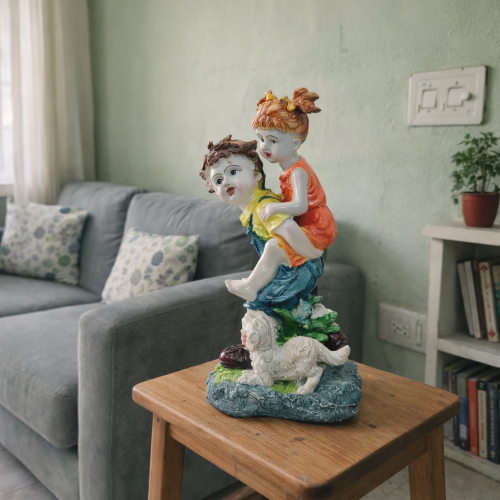
How to arrange decor items in new home?
We help design-conscious Indian homeowners move into a new home with confidence — placing every showpiece, canvas, and decorative object in a way that looks intentional, not accidental. Moolwan (Euphorica Ventures Pvt Ltd), Bangalore, manufactures home décor direct-to-consumer, engineered for Indian apartment dimensions, humidity, and light — so every placement tip below is grounded in how our pieces actually perform in your spaces.
The 60/40 Surface Rule — the single most important principle
Before touching a single showpiece, adopt the 60/40 Surface Clearance Rule: no more than 40% of any horizontal surface — shelf, coffee table, console, sideboard — should be covered by décor. The remaining 60% must stay visually clear. This is the difference between a curated home and a crowded one, and it applies whether you have 3 items or 30.
Why it works: Indian apartments, especially 2BHK and 3BHK formats, have furniture that sits close together. Filling every surface makes rooms feel smaller and harder to navigate. A 60/40 split forces you to edit ruthlessly — which always produces better results than accumulating more.
Practical application by surface:
- Shelf (30–45 cm deep): Place 2–3 medium showpieces (16–21 cm height) and leave half the shelf bare or use books as fillers.
- Coffee table (90–120 cm length): One hero object (25–34 cm) + one tray or small item. Nothing more.
- Console table: Two items flanking a central artwork, or one large focal piece centred alone.
- TV unit: Anchor with two matching bookend items. Resist adding more — the TV is already visual weight.
If you are browsing modern home decor items for Indian living rooms and apartments, Moolwan's size guide — Small (10–16 cm), Medium (16–21 cm), Large (25–34 cm) — maps directly to this rule, so you can buy for the right surface without second-guessing.
Room-by-room placement guide for a new Indian home
Living Room
The living room carries the most décor weight. Start with the wall: one large canvas or framed artwork (ideally 60–90 cm wide) placed at eye level — 145–155 cm from floor to centre of the piece — acts as the visual anchor for the entire room. Build the furniture arrangement around it, not the other way around.
For shelf or console styling adjacent to the sofa, apply the 3-Tier Cluster Rule: group items in three distinct height tiers — tall (28–34 cm), medium (16–21 cm), and small (10–14 cm) — within a single grouping. This creates visual rhythm without requiring matching pieces. Moolwan's ceramic showpieces, rated humidity-tolerant up to 85% RH, are well-suited to any wall-adjacent surface in Indian living rooms where monsoon humidity can be a genuine concern.
Explore room interior decoration ideas curated for Indian homes to see how these clusters work across different room layouts and furniture styles.
Bedroom
Less is more in bedrooms. Two nightstand objects maximum per side — one functional (lamp or phone stand) and one decorative (a 10–16 cm ceramic or resin piece). Wall art above the bed headboard should be centred and sized to be no wider than the headboard itself. A 45–60 cm canvas works for most standard beds. Avoid placing resin items in direct afternoon sunlight through west-facing bedroom windows — Moolwan's epoxy resin pieces (94% purity) are rated for 15–35°C and can discolour in sustained direct heat above that range.
Dining Room
The dining table centrepiece is the single most-noticed decorative object in the home during social occasions. One tall ceramic vase or sculptural showpiece (25–34 cm) placed at the centre works better than a scattered grouping. Keep it under 30 cm in height so it does not break sight lines across the table. Wall art in dining spaces should lean warm — terracotta, ochre, or nature-inspired prints — to complement meal-time lighting.
Entryway / Foyer
The entryway sets the tone for your entire home. One statement showpiece on a console or wall-mounted shelf — something that reads instantly from 2–3 metres away — is all you need. Avoid multiple small items here; they look like clutter to an incoming guest before they even step fully inside.
Which decor size works where? — placement reference table
| Size Category | Height Range | Weight Range | Best Placement | Avoid |
|---|---|---|---|---|
| Small | 10–16 cm | 150–250 g | Desk, bathroom shelf, nightstand, bookshelf cluster fill | Centre of large coffee table alone; gets lost |
| Medium | 16–21 cm | 250–400 g | Showcase cabinet, coffee table, console table, TV unit flanking | High floating shelves with no context items around it |
| Large | 25–34 cm | 400–600 g | Living room focal shelf, dining table centre, entryway console | Crowded shelves; needs 60% clearance around it to read properly |
| Canvas Wall Art | 60–90 cm wide | 800 g–1.5 kg | Above sofa, above bed headboard, dining room feature wall | Below eye level; corner walls with low ceiling |
Source: Moolwan product specifications. Canvas wall art uses 340 GSM cotton canvas, eco-solvent UV-resistant inks, and 1.5-inch kiln-dried pine frames. All weights are approximate and vary by finish.
Ready to start placing your first pieces?
Browse showpieces, canvas art, and room accessories sized and rated for Indian homes — all ship free.
Shop decorative items for your room →How to group decor items without it looking random
Grouping is where most people go wrong. Items placed individually across a shelf look unrelated; items placed in a tight, purposeful cluster look designed. The rules that make a cluster work:
- Always use odd numbers: 3 or 5 items per cluster. Even numbers create symmetry that reads as rigid. Odd numbers read as curated.
- Vary height within the cluster: At least 8–10 cm difference between the tallest and shortest item. A cluster where everything is the same height looks like it came out of a box.
- Mix materials, not colours: Pair a ceramic piece with a resin item or a small framed print. Keep the colour palette consistent — 2 tones maximum — but let the textures differ.
- Create a visual triangle: When you draw an imaginary line connecting the tops of the three items in your cluster, it should form a rough triangle. This is the shape the eye finds most comfortable to rest on.
Moolwan's ceramic pieces (92% clay composition, matte and glazed finishes available) pair naturally with resin showpieces (3H pencil hardness, scratch-resistant surface) in the same cluster because their textures are visually distinct even when the colours are coordinated. This is intentional — our product range is designed to work together on the same shelf, not compete.
Vastu and placement: what actually matters in an Indian home
Many buyers moving into a new home want to honour Vastu principles without reducing their home to a rulebook. The practical translation: place heavy or dark-coloured showpieces in the south or southwest zone (weight and earth energy), lighter or metallic pieces in the north or northeast (abundance and flow), and avoid clutter near the main door regardless of direction. These are general guidelines, not rigid constraints — your spatial comfort and sightlines matter more than strict zonal rules for decorative items.
Canvas wall art is safe to hang in any room under Vastu guidelines as long as the subject matter is positive — natural landscapes, abstract geometry, florals. Avoid imagery of war, decay, or wild predators in sleeping or dining areas. Moolwan's canvas range uses eco-solvent UV-resistant inks on 340 GSM cotton canvas, so colours hold their warmth over years — the vibrancy that makes a piece feel auspicious on day one is still there in year five.
The biggest mistakes people make when arranging a new home
Knowing what not to do accelerates the process significantly. These are the four most common errors in newly decorated Indian homes:
- Placing everything on day one: Move in, live for 2–3 weeks, then place. You will discover the natural focal points, the awkward corners, and the surfaces you actually use before you commit anything permanently.
- Matching everything too closely: A perfectly colour-matched collection looks like a showroom, not a home. Slight variation in tone or material is what creates the feeling of a lived-in, curated space.
- Ignoring vertical space: Most Indian homes use floor-to-waist height for all décor and leave the upper half of the walls bare. A staggered wall gallery or a tall 34 cm showpiece on a low shelf pulls the eye upward and makes ceilings feel higher.
- Buying to fill rather than to place: The goal is not to fill every gap. An intentional empty surface is a design decision, not a budget constraint.
Arrange your new home with pieces that are built to last
Moolwan is India's manufacturer-direct home décor brand — no middlemen, no inflated prices. Every showpiece, canvas, and room accessory is engineered for Indian climate, sized for Indian spaces, and shipped free across India.
Trusted by 3,000+ customers. COD available.
Browse modern home décor → Get room decoration ideas →Frequently asked questions
How many decor items should I place in a new living room?
Start with 5–7 pieces total for a standard Indian living room (approximately 180–250 sq ft). This typically means one large canvas on the primary wall, one focal showpiece on the coffee table or console, and 2–3 cluster items on the main shelf. Resist buying more until you have lived with the space — most rooms need fewer items than buyers initially assume.
Where should I hang canvas wall art in a new home?
Hang canvas wall art so the vertical centre of the piece sits at 145–155 cm from the floor — this is standard eye level for a standing adult and works whether you are seated or standing in the room. For above-sofa placement, keep a 20–25 cm gap between the top of the sofa backrest and the bottom of the frame. Moolwan canvas paintings use 1.5-inch kiln-dried pine frames and a moisture-resistant coating, so they are safe to hang on exterior-facing or bathroom-adjacent walls.
Can I mix ceramic and resin showpieces on the same shelf?
Yes — mixing materials is better than matching them. Ceramic (matte or glazed, heavy and grounded in feel) and resin (glossy, lighter, with higher colour fidelity) create textural contrast that makes a shelf grouping look intentional. Keep colour coordination consistent — pick 2 tones that both materials share — and vary heights within the cluster for the best result.
What is the right size of showpiece for a coffee table?
For a standard Indian coffee table (90–120 cm length), use one Large showpiece (25–34 cm height, 400–600 g) as the hero item. Anything smaller reads as a desk ornament at coffee table scale. If you prefer a grouped look, use one Medium piece (16–21 cm) plus a small tray or book stack — but avoid placing more than two distinct items on a coffee table without a unifying tray underneath.
Does Moolwan offer a return policy if a piece does not fit my space?
Yes. Moolwan accepts returns within 24 hours of delivery, provided the item is unused and in original packaging. A 10% restocking fee applies, and refunds are processed within 15 working days. To avoid returns, use the size guide (Small 10–16 cm, Medium 16–21 cm, Large 25–34 cm) to match the item to your surface before buying.


