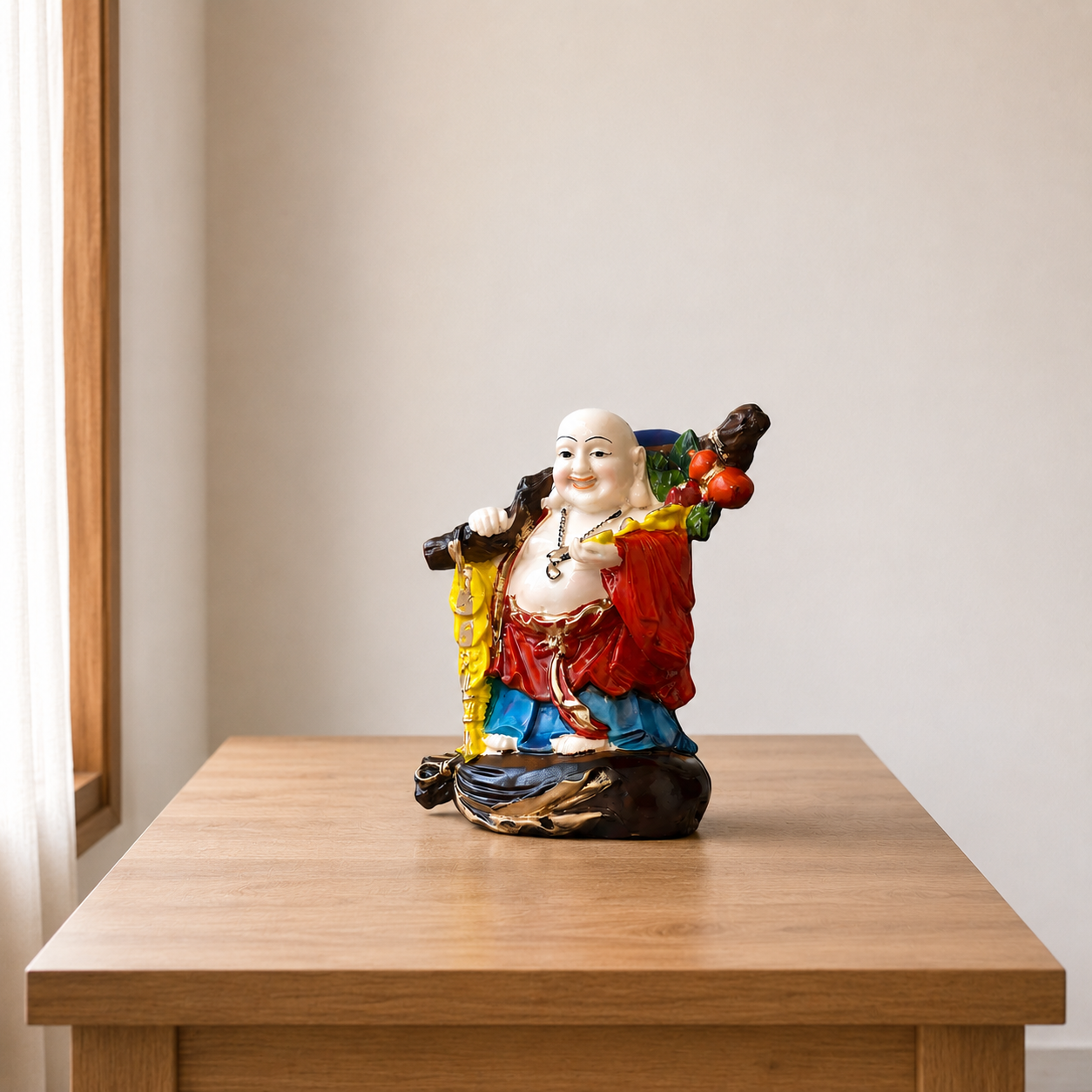
A room-by-room breakdown of the Vastu principles that actually influence energy flow in Indian homes — and the décor choices that support them.
To attract good luck as per Vastu, keep your main entrance and north-east corner clutter-free and well-lit, place water or wood elements in the north and east, and avoid mirrors facing the bed or heavy art directly opposite the front door. Décor material matters too — pieces that trap moisture or degrade quickly disrupt the "sthir" (stable) energy Vastu prescribes for a home.
Good luck in Vastu Shastra is not superstition — it is a framework for directing natural light, airflow, and visual order through your home so that daily life feels less chaotic and more supported. We help Indian homeowners translate five-thousand-year-old Vastu zoning into décor decisions that work in real apartments: narrow entryways, shared walls, and monsoon humidity included. Below are the eight fixes that Vastu consultants recommend most often, paired with the material and placement logic behind each one.
Vastu treats the main door as the primary channel through which energy ("prana") enters the home, and the north-east (Ishaan) corner as the zone governing clarity and prosperity. A blocked, dark, or cluttered entrance is considered the single biggest disruptor of good fortune — more significant than any object placed elsewhere in the house.
Keep the entrance well-lit with a warm-toned lamp or wall sconce, remove shoe racks or dustbins from directly beside the door, and hang a single grounding piece — a nameplate, a small brass motif, or a framed piece of wall art — rather than a cluttered gallery wall. In the north-east corner, favour light, reflective décor: a small water feature, a light-coloured showpiece, or a mirror (only here, never in the bedroom) works well.
Vastu ties specific directions to specific elements — north-east to water, south-east to fire, south-west to earth, and north-west to air. Décor placed against its element's natural direction is believed to create friction rather than flow. This is the reasoning most homeowners skip, and it's the reason a "beautiful" room can still feel off.
A Vastu-correct position loses its effect if the object itself decays, discolours, or attracts damp — which Vastu treats as stagnant energy. Indian homes face humidity swings most global décor isn't built for, so material choice is a practical extension of the same principle. This is the specification most guides leave out entirely.
| Décor Type | Best Vastu Zone | Material Spec | Climate Resistance |
|---|---|---|---|
| Canvas wall art | North / East entrance wall | 340 GSM cotton canvas, eco-solvent UV-resistant ink, 1.5" kiln-dried pine frame | Moisture-resistant coating |
| Ceramic showpiece | South-west / centre shelf | 92% clay composition | Humidity-tolerant to 85% RH, heat-resistant to 60°C |
| Resin showpiece | North-east tabletop | 94% purity epoxy resin, 3H scratch resistance | Stable up to 60% RH, 15–35°C |
Specifications sourced from Moolwan's in-house manufacturing standards, Bangalore.
Shop showpieces engineered for exactly these Vastu zones — sized and finished for Indian shelves and walls.
Shop Antique Showpieces →Every room in an Indian home carries a different Vastu function. Use this as a working checklist rather than a rulebook — the goal is directional balance, not rigid symmetry.
| Room | Ideal Direction | Good-Luck Décor Move |
|---|---|---|
| Living Room | North / East | Light-toned wall art, open shelf styling, no clutter behind the main seating |
| Dining Room | West | A warm centrepiece and reflective accents that make the table feel abundant |
| Bedroom | South-west | Earth-toned décor only; no mirrors facing the bed |
| Kitchen | South-east | Fire-associated warm colours; avoid water décor here |
| Pooja / Prayer Corner | North-east | Brass or light ceramic pieces, kept elevated and uncluttered |
For the dining room specifically, Vastu treats a well-dressed table as a symbol of the household's abundance — this is where vases, wall hangings, and layered accent pieces earn their place. Moolwan's dining room décor collection is built around exactly this warm-and-abundant styling brief, with pieces sized for both compact and full dining setups.
A wall carrying water imagery, fire-toned colour, and metal décor simultaneously creates the exact directional conflict Vastu warns against. Pick one dominant element per wall.
Design-forward doesn't have to mean Vastu-blind. Confirm the wall's direction before committing to a large piece — repositioning heavy wall art after installation is expensive and avoidable.
A cracked, faded, or water-damaged showpiece is considered worse than an empty shelf in Vastu — it signals decay rather than growth. This is why Moolwan builds every category to a 3–5 year minimum lifespan rather than treating décor as disposable.
Moolwan manufactures every piece in-house — priced direct, sized for Indian homes, and engineered for the humidity and heat that decor imported from elsewhere isn't built to survive.
The north-east (Ishaan) corner is considered the strongest zone for good luck in Vastu — keep it bright, clutter-free, and styled with light-coloured or water-associated décor.
Vastu holds that misplaced heavy or dark décor in the north-east, or mirrors facing the bed in the south-west, can disrupt energy flow. The fix is usually repositioning rather than removing the piece.
Ceramic and resin showpieces with high humidity tolerance hold up best in Indian climates. Moolwan's ceramic pieces are rated to 85% relative humidity and 60°C, keeping south-west and centre-of-home placements stable year-round.
An east or north-facing main door is traditionally considered most auspicious, but Vastu accepts other directions if the entrance stays well-lit and unobstructed — direction can outweigh orientation for most apartment layouts.
No — an open, empty north-east corner is considered ideal. Adding one light, purposeful piece is fine; overcrowding this zone is the actual Vastu mistake.
Quick View