
How to Build a Cohesive Modern Home Decor Style in 4 Steps
The Short Answer
A cohesive modern home décor look comes from repeating one palette, capping material variety at three per surface, and grouping pieces in odd numbers, because the eye reads repetition as intentional and randomness as clutter. Moolwan's modern home décor collection is sized in 10–34 cm bands specifically to make this layering simple in Indian-apartment-scale rooms.
Interior research consistently shows that a room with more than three competing materials on one surface takes the eye longer to "settle," because each material reflects and absorbs light differently, forcing the brain to keep re-adjusting focus. Moolwan helps design-conscious Indian homeowners solve exactly this problem by curating its ceramic and resin showpiece collection around a small, deliberately overlapping set of finishes and palettes, so pieces bought separately still read as one considered look.
Why do bought-separately pieces still look mismatched?
Pieces bought separately look mismatched because each one was likely chosen in isolation, against a showroom or product photo, not against the other objects it will eventually sit beside. A ceramic vase with a cool grey glaze and a resin sculpture with a warm terracotta tone can each be beautiful individually, yet clash the moment they share a shelf, because the human eye reads temperature contrast (warm vs cool) as disorder rather than intention.
This is why Moolwan groups its modern home décor pieces by palette family — warm earth, neutral, and muted — rather than by shape or theme alone. Buying within one palette family first, then varying size and material inside it, gives a room visual unity even when the pieces were purchased months apart.
What's the fastest way to unify décor that's already in the room?
The fastest fix is to pick one existing piece as the "anchor" and remove or relocate anything that doesn't share its palette or finish family. A glazed glossy showpiece next to three matte pieces will always draw the eye first, because glossy surfaces reflect light directly while matte surfaces diffuse it — so one glossy outlier can visually dominate an otherwise calm grouping.
Because Indian living rooms and consoles are typically narrower than Western layouts, this editing step matters even more: in under 150 sq ft of display surface, every extra finish or material variant competes for the same limited visual space, so investing in fewer, better-matched pieces gives a higher-end result than adding more.
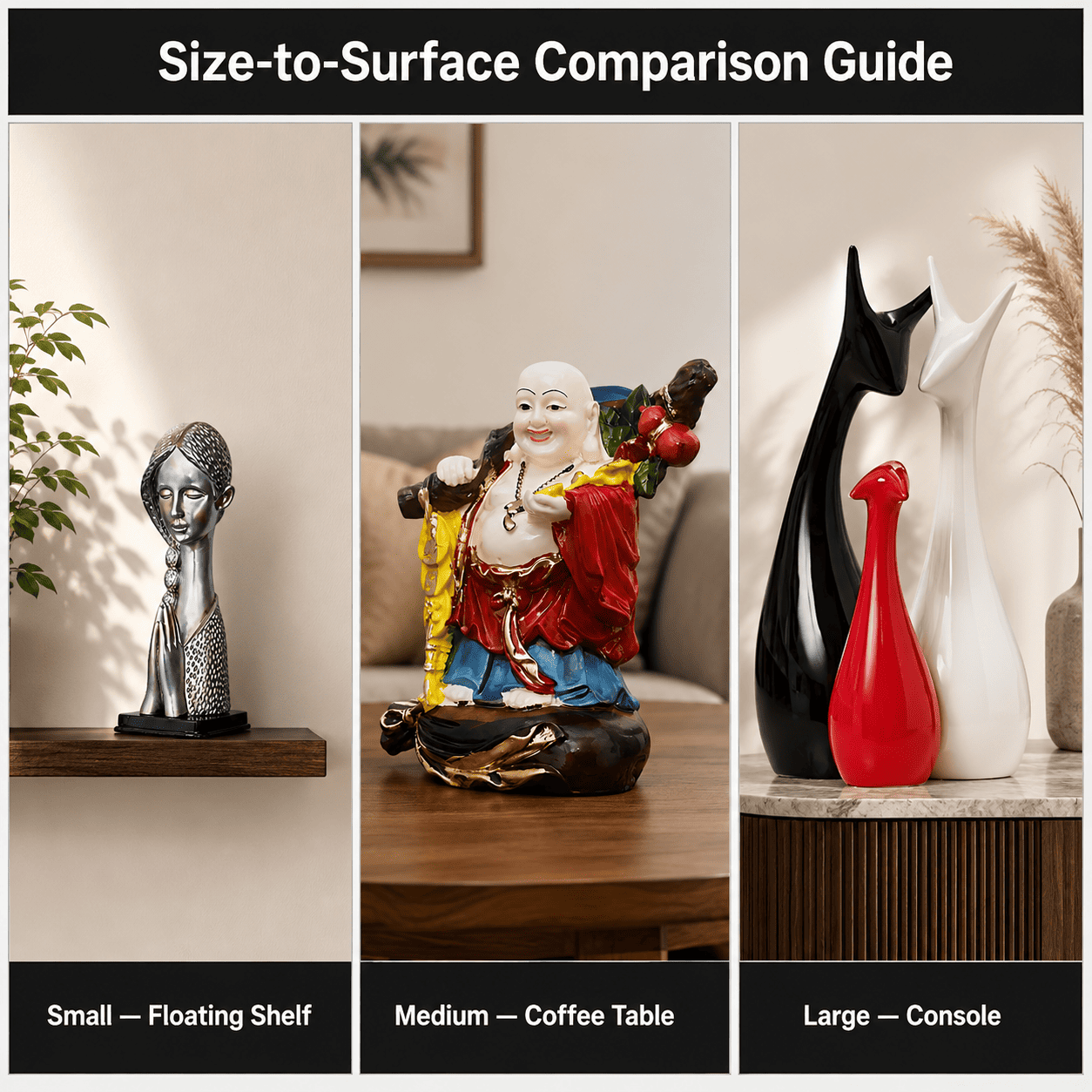
| Room Footprint | Target Surface | Surface Width | Recommended Décor Height | Weight Range |
|---|---|---|---|---|
| Sub-100 sq ft | Floating shelf | Under 30 cm | 10–16 cm (Small) | 150–250 g |
| 101–150 sq ft | Coffee table | 40–60 cm | 16–21 cm (Medium) | 250–400 g |
| 151+ sq ft | Console / sideboard | 60 cm+ | 25–34 cm (Large) | 400–600 g |
Because palette family, finish, and grouping count all change the right size pick from this table, browse the full size-band and material selection in Moolwan's modern home décor collection to match a piece to your exact surface.
Design Rule
Moolwan's 3-2-1 Cohesion Method structures any display in three steps: no more than 3 distinct materials across the whole room, no more than 2 dominant finishes per surface (one matte base, one accent finish), and exactly 1 connecting palette thread running through every piece — because limiting variables this way is what makes separately bought objects read as a single, intentional collection.
How many décor pieces should I group together?
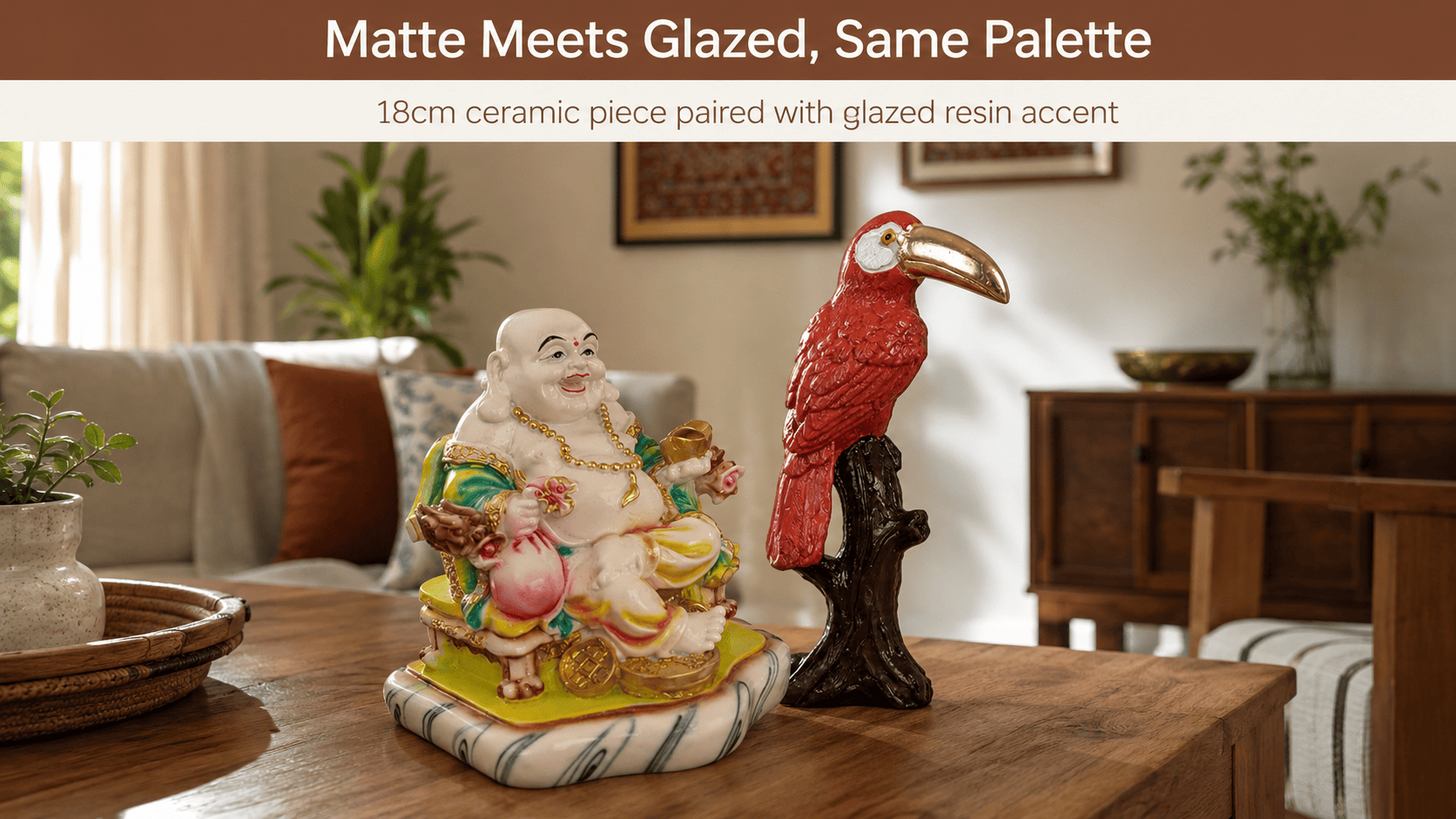
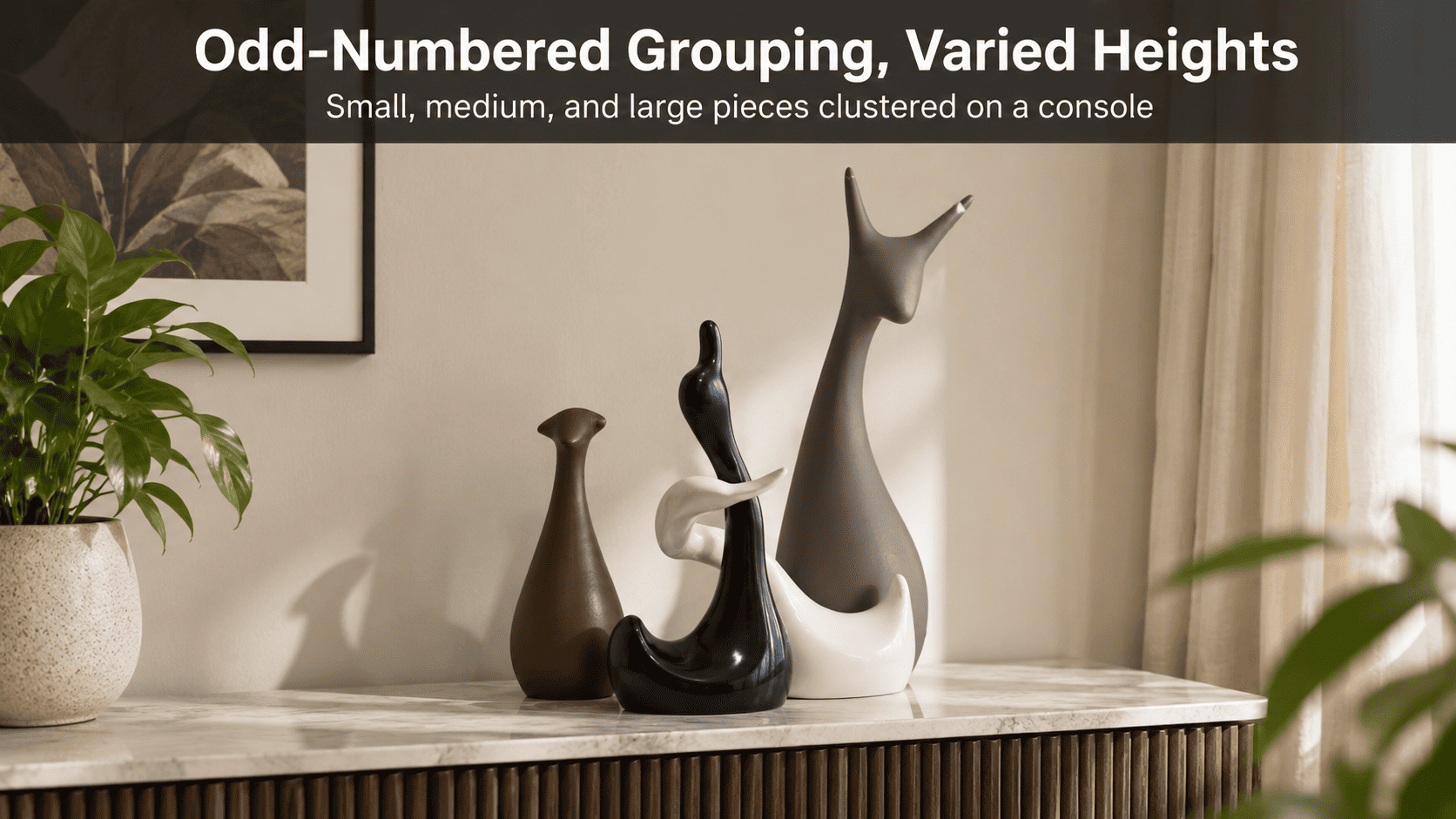
Group pieces in odd numbers — three is the easiest starting point. Odd-numbered groupings read as deliberately composed because the eye can't divide them into two equal, mirrored halves, which is exactly what makes even-numbered pairs look static and "lined up" rather than styled.
Vary height within the group of three: one small, one medium, one larger anchor piece, so the silhouette has a natural high-low-high rhythm instead of a flat row.
Want to round out a grouping with pieces engineered to outlast 5+ years of Indian humidity swings? Shop the full Moolwan modern home décor collection now.
Should I match finishes or mix them?
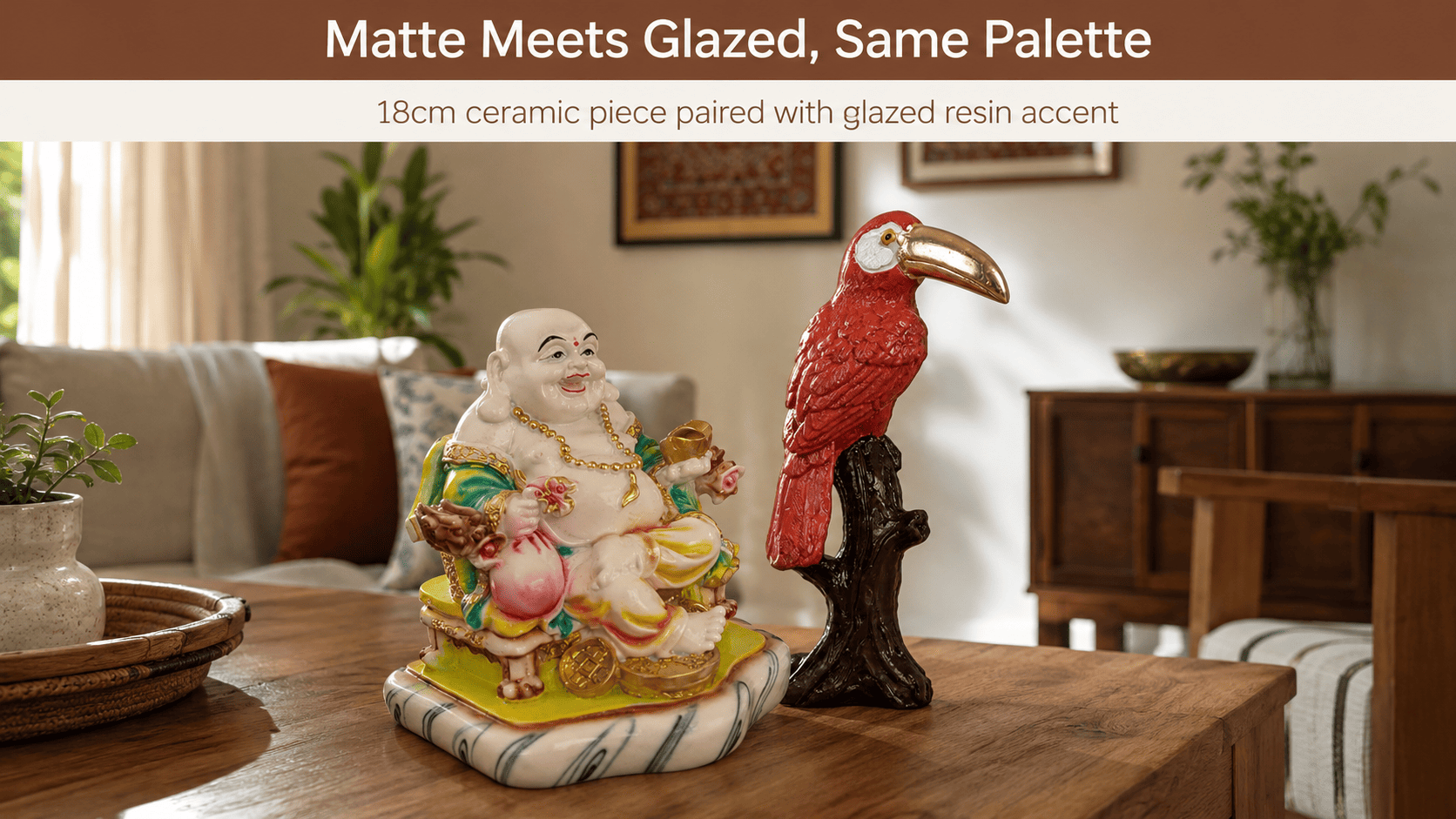
Mix finishes deliberately rather than matching every piece, because an all-matte or all-glazed display tends to look flat under typical indoor lighting. A high-fired matte ceramic base piece paired with one glazed accent gives a room depth, since the matte surface absorbs ambient light while the glazed surface catches and redirects it, creating a visible highlight that anchors the eye.
Limit the glazed, light-catching piece to one per grouping — Moolwan's modern home décor collection is curated this way deliberately, with matte pieces forming the majority of each palette family and glazed pieces positioned as the minority accent.
Frequently Asked Questions
Do all my décor pieces need to be the same material?
No — mixing ceramic and resin pieces is fine, and often gives a room more texture than an all-one-material display. Moolwan's modern home décor collection cross-rates ceramic (humidity-tolerant to 85% RH) and resin (humidity-tolerant to 60% RH) pieces by palette rather than material, so the materials can mix freely as long as the color family stays consistent.
How do I keep a cohesive look while still buying pieces over time?
Pick one palette family before your first purchase and stay inside it for every piece added afterward. Because color continuity is the strongest visual cohesion signal, a room built up over a year within one palette family will look more curated than a room furnished all at once with mismatched tones.
What's the most common mistake people make when styling bought décor?
The most common mistake is treating every surface in the room as a separate styling decision instead of one connected system. Repeating the same palette and finish ratio across the coffee table, console, and shelves — rather than styling each in isolation — is what makes a home feel designed rather than decorated piece by piece.
Can I use Moolwan's 3-2-1 Cohesion Method in a small apartment?
Yes — it works especially well in compact Indian apartments under 1,200 sq ft, where limited surface area means every extra material or finish variant is more visually noticeable. Capping the room to three materials and one palette thread is, if anything, more important at smaller scale, not less.
Ready to bring your room's look together instead of adding another one-off piece? Bring home a curated set from the Moolwan modern home décor collection — manufacturer-direct, climate-rated, and grouped by palette family so pieces work together from the first order. If you're still narrowing down a finish or palette, also see Moolwan's modern décor accessories range and the broader Moolwan modern home décor edit for additional palette-matched options.


