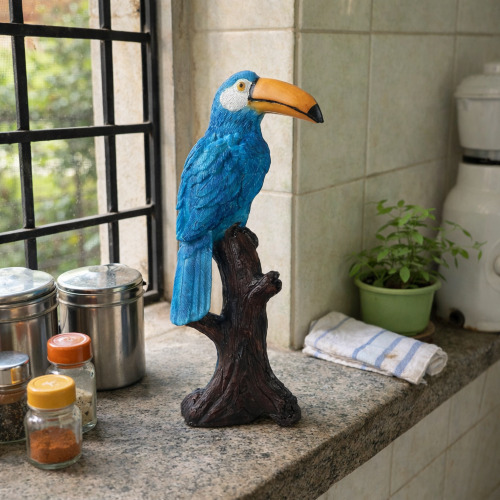
For a small living room, choose a base of warm whites or soft neutrals (ivory, warm beige, greige), add one mid-tone accent color, and keep the third color to a few focused décor pieces. Light walls make the room breathe; a single accent — in a showpiece, cushion, or art — creates personality without overwhelming the space. Indian homes in particular benefit from warm-toned neutrals that reflect natural light without looking clinical.
At Moolwan, we help design-conscious Indian homeowners build living rooms that feel intentional and spacious — even in 150 sq ft. Color is the single biggest lever you have before spending on furniture or renovation. Get it right, and the room looks larger, calmer, and more curated. Get it wrong, and even premium furniture feels suffocating.
Moolwan is a D2C home décor brand that manufactures canvas wall art, ceramic showpieces, and curated gift items directly for Indian homes. Every piece is engineered for India's climate, apartment sizes, and design sensibility. This guide is built on what we see working across 3,000+ customer homes.
The most reliable starting framework for any small room is the 60-30-10 rule: 60% dominant color (walls, large upholstery), 30% secondary color (curtains, rug, sofa), and 10% accent color (décor objects, cushions, art). This structure prevents visual chaos — the most common mistake in compact living rooms.
For small living rooms, push the 60% toward a light, warm neutral so the walls recede visually. Keep the 30% in a mid-tone that anchors the room without adding visual weight. Reserve the 10% for one or two deliberate accent pieces — this is where your personality comes in without shrinking the perceived space.
| Color Role | Where It Appears | Best Choices for Small Rooms | What to Avoid |
|---|---|---|---|
| 60% — Dominant | Walls, ceiling, large sofa | Ivory, warm white, soft greige, pale cream | Bright white (too cold), dark tones |
| 30% — Secondary | Curtains, rug, accent sofa/chair | Warm taupe, dusty sage, terracotta, dusty blue | Colors darker than your wall tone |
| 10% — Accent | Showpieces, cushions, wall art, vases | Gold, deep teal, burnt orange, forest green | More than two accent colors; neon shades |
These palettes are tested across Indian apartments with varying natural light levels, balcony access, and ceiling heights between 9–11 feet — the most common residential configurations.
The most universally flattering palette for Indian homes. Terracotta has deep roots in Indian craft tradition and bridges the modern-traditional tension effortlessly. A gold accent — in a resin showpiece or ceramic vase — completes the trio without making it feel heavy. Browse Moolwan's modern showpieces for living rooms to see how this palette translates to curated objects.
A calmer, more contemporary palette that works particularly well in west-facing living rooms that receive intense afternoon light. Sage is a natural foil for Indian wood tones (teak, sheesham) and works with both modern and transitional furniture styles.
Navy used as an accent (a single wall, a rug, or art) against a cream base reads as sophisticated rather than heavy. A brass or gold showpiece ties the room together. Explore Moolwan's antique showpiece collection for brass-toned objects that pair naturally with this palette.
An increasingly popular palette in Indian urban homes, especially for apartments with Scandinavian-style furniture. Blush on walls is gentle enough to feel gender-neutral while adding warmth. Wood tones (actual furniture or wood-finish objects) serve as the 30% anchor.
A nature-forward palette that has strong resonance with Indian buyers who want a contemporary feel with earthy grounding. Works especially well in homes with plants. Canvas wall art in botanical or landscape themes integrates cleanly into this scheme — see Moolwan's modern home décor range for accent pieces that complete this look.
Found your palette? See how the right showpiece anchors it.
Free shipping · COD available · Trusted by 3,000+ homesOnce you commit to a base and secondary color through paint and furniture, your accent color lives almost entirely in your décor objects — showpieces, vases, art, and small accessories. This is where most buyers underestimate precision. A single poorly chosen object can break the palette; the right one elevates every other element around it.
Moolwan's ceramic showpieces carry a 92% clay composition, are fired with matte and glazed finishes, and are designed to maintain their surface integrity at temperatures up to 60°C — critical for Indian summers and homes near kitchen-adjacent living areas. They are humidity-tolerant up to 85% RH, which makes them safe for monsoon-season coastal homes as well as air-conditioned urban apartments.
Size is a color-distribution decision, not just a spatial one. A large object pushes more of your accent color into the room; a cluster of small objects creates a rhythmic pattern. Here is the Moolwan size guide for accent pieces:
All Moolwan showpieces weigh between 150g and 600g — lightweight enough for Indian wall-mounted shelves and glass showcases without requiring reinforcement.
A room where the cushions exactly match the rug, which exactly matches the showpiece, reads as flat and manufactured. Slight tonal variation — a dusty terracotta piece next to a burnt orange cushion, for example — creates depth. Color harmony is about family, not identical shade.
Each additional accent color in a small room fragments visual attention and reduces the sense of spaciousness. Commit to one, two at most. If your palette already has a warm accent (gold, copper, terracotta), your second accent, if any, should be a cool neutral (forest green, slate blue) to create contrast without clutter.
A dark feature wall can work in a small room — but only when the other three walls are significantly lighter and the floor reflects light (light wood, light tile). Without this contrast, a dark wall in a small living room flattens depth instead of creating it. If you want the drama, pair it with minimal décor and one well-lit focal piece.
Browse Moolwan's curated living room décor — showpieces, art, and accent objects designed for Indian spaces, priced direct, with free shipping and COD available.
What is the best wall color for a small living room in India?
Warm whites and soft ivories with yellow or pink undertones work best in most Indian living rooms. They reflect natural and artificial light without looking clinical. Avoid pure bright white (too cold) and greys without warm undertones (makes rooms feel dull in low-light conditions common in many Indian apartments).
Can I use dark colors in a small living room?
Yes, but limit them to one wall or to small accent objects only. A single dark feature wall (charcoal, navy, forest green) paired with very light adjacent walls and adequate lighting can actually add depth. Use dark colors in showpieces and art rather than on walls if you want the effect without the commitment.
How many colors should a small living room have?
Three colors maximum — following the 60-30-10 rule. One dominant base color, one secondary mid-tone, and one accent. Each additional color reduces the sense of spaciousness in a compact room. Your accent color should appear in no more than two to three concentrated spots.
What color décor works for Indian living rooms with traditional furniture?
Gold, terracotta, deep teal, and ivory are the best accent colors for rooms with traditional Indian furniture in warm wood tones (teak, sheesham, rosewood). Avoid cool greys or silvers, which clash with warm wood. Moolwan's ceramic and resin showpieces in these tones are specifically designed to complement traditional Indian interiors.
Does Moolwan offer décor that suits multiple color schemes?
Yes. Moolwan designs its showpieces in matte and glazed finishes across a warm-neutral palette — most pieces work across ivory, cream, terracotta, and greige base schemes. Each product page includes styling context. Return policy: within 24 hours of delivery, unused, in original packaging, with refund processed within 15 working days (10% restocking fee applies).
Content by the Moolwan Design Concept Team, reviewed and published under the editorial oversight of Ruchi Malhotra, Founder & CEO, Moolwan (Euphorica Ventures Pvt Ltd), Bangalore. Moolwan is India's trusted source for modern home décor, canvas wall art, and curated gifts — manufactured direct, priced fair, designed for Indian homes.
Quick View