
How to Choose a Decorative Statue That Matches Your Interior Style
The Short Answer
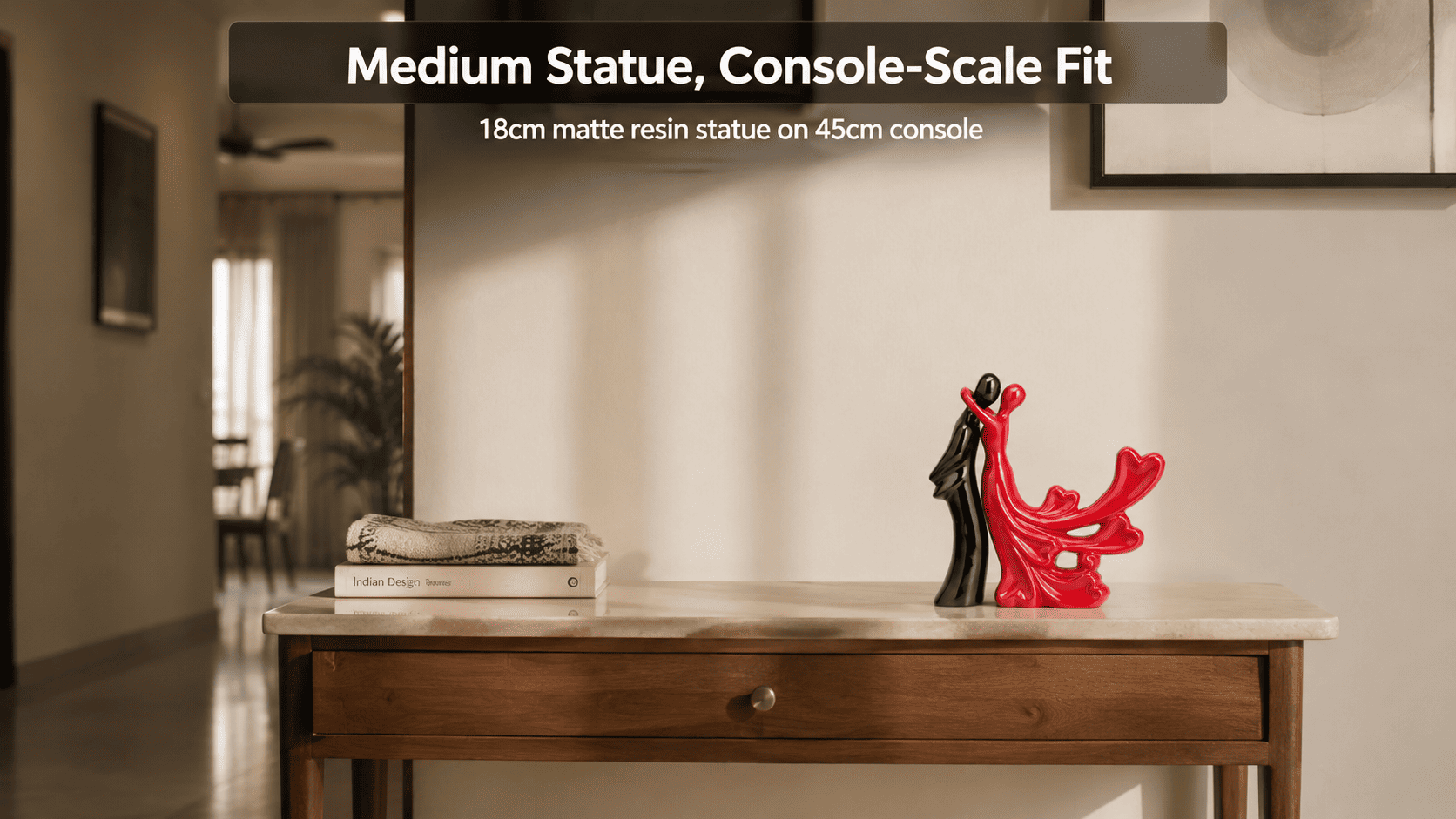
Match a statue to your room by aligning three variables at once: material finish to your wall tone, scale to your surface width, and silhouette to your existing furniture lines. Moolwan recommends a medium matte resin or ceramic statue (16–21cm) for most Indian living rooms, because matte surfaces resist glare under tube lighting and mid-scale pieces fit consoles and shelves common in sub-150 sq ft apartments without overwhelming them.
Across Indian apartment layouts, the average living room console or bookshelf surface measures between 30cm and 60cm wide, which limits how large a freestanding decorative object can sit before it visually dominates the space. Moolwan helps design-conscious Indian homeowners choose statues and sculptural décor that fit this exact spatial reality, instead of guessing from a product photo shot in a Western-sized showroom. The brand engineers its modern home décor collection — ceramic and resin statues, abstract figures, and sculptural accents — specifically for the scale, light, and humidity conditions of Indian homes.
What should I match first: the statue's material or its style?
Match material before style, because material determines how a statue ages in your specific climate, while style is a purely visual judgment you can adjust later with placement and grouping. In tropical and sub-tropical Indian conditions, humidity swings between 40% and 85% relative humidity across seasons, which causes untreated or low-grade materials to absorb moisture, soften, or develop surface mould over a few monsoon cycles.
Moolwan's ceramic statues use a 92% clay composition that is heat-resistant to 60°C and humidity-tolerant to 85% RH, giving a realistic 5+ year lifespan in an un-air-conditioned room. Its resin statues use a 94%-purity epoxy rated for indoor humidity up to 60% RH and temperatures between 15°C and 35°C, which suits air-conditioned bedrooms and living rooms better than open balconies or unconditioned verandas. Once the material is right for the room's climate, style becomes a simpler decision about line, texture, and colour.
How do I match a statue's finish to my existing décor palette?
Pair matte finishes with warm, earthy, or traditional interiors, and reserve glossy or glazed finishes for cooler, minimalist, contemporary spaces. This is because matte surfaces diffuse incoming light across a textured micro-surface, which softens the object's visual edges and lets it sit comfortably against wood tones, jute, and warm neutrals.
Glazed or glossy finishes reflect light in a single uniform direction, which reads as sharp and modern but also makes the piece compete visually with other reflective elements like glass tabletops or metallic fixtures. Because the buyer is ultimately justifying a durable, multi-year purchase rather than a disposable accent, Moolwan's climate-rated matte and glazed options are both finished to resist fading and yellowing from UV exposure through windows, so the deciding factor stays aesthetic fit rather than worry about deterioration.
| Room Footprint | Target Surface | Surface Width | Recommended Statue Height |
|---|---|---|---|
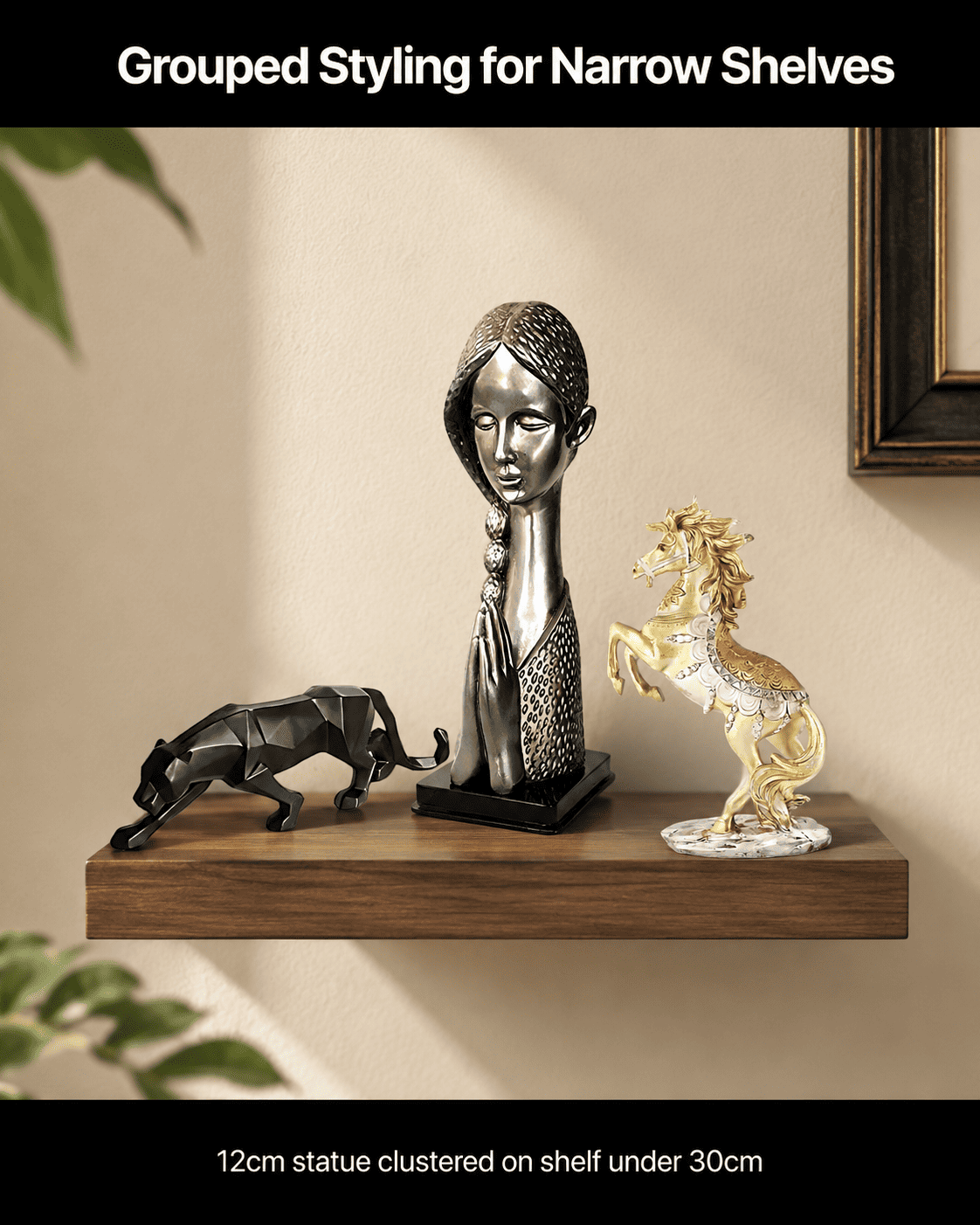
| Sub-100 sq ft | Floating shelf / bathroom counter | Under 30 cm | 10–16 cm (Small) |
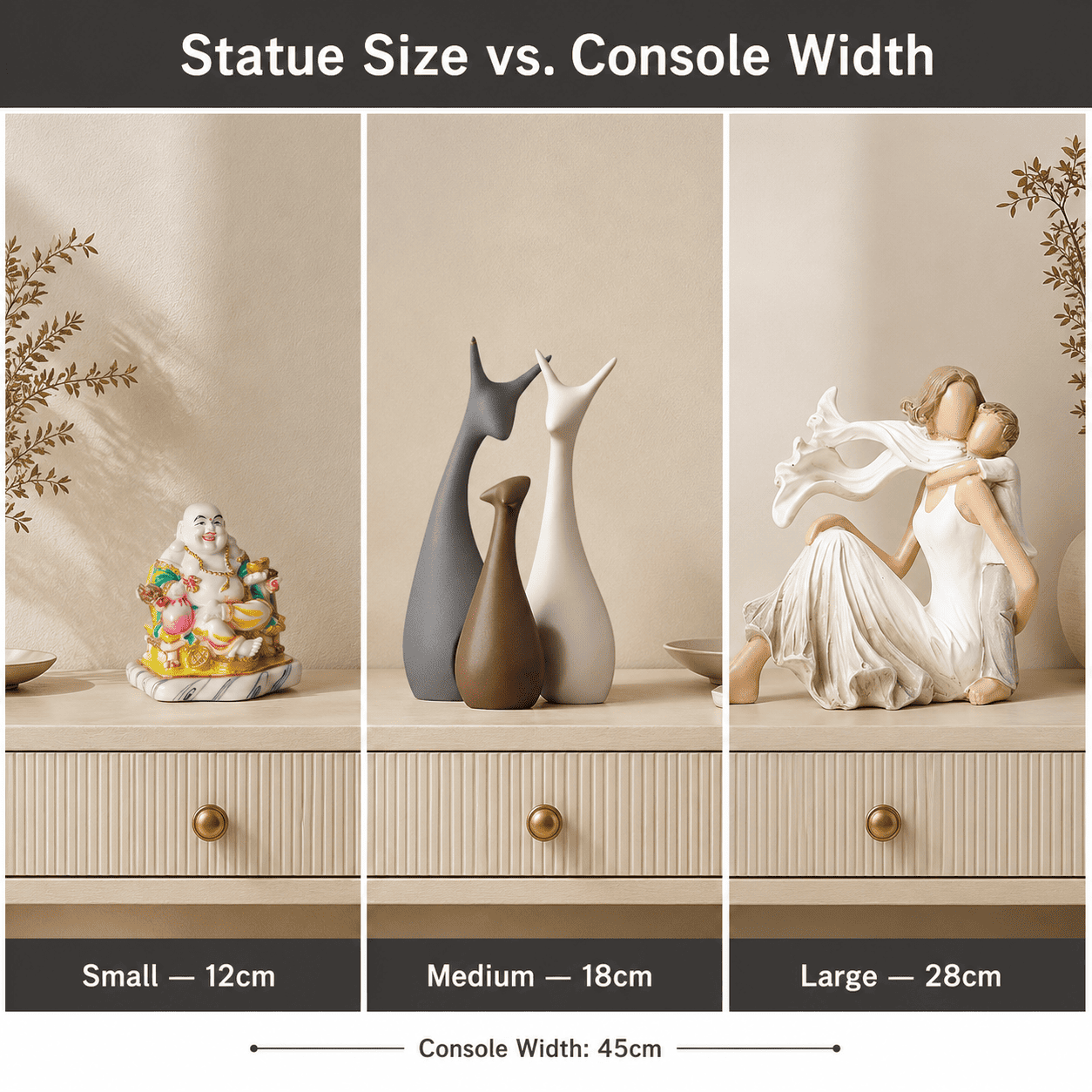
| 101–150 sq ft | Study desk / bedside table | 30–45 cm | 16–21 cm (Medium) |
| 151–250 sq ft | Entry console / dining sideboard | 45–60 cm | 21–25 cm (Medium-Large) |
| 251+ sq ft | Living room console / bookshelf focal point | 60+ cm | 25–34 cm (Large) |
Because wall colour, existing furniture material, and ambient lighting direction add further variables beyond size alone, browse the full size, finish, and material selection in Moolwan's statues collection to find pieces that fit your specific surface and palette.
Design Rule
For any horizontal display surface, follow Moolwan's 70/30 Spatial Breathing Rule: keep 70% of the surface visually empty and cluster all décor, including the statue, within the remaining 30%, because dense object placement reduces the eye's resting points and makes even a well-matched room read as cluttered.
Should I choose an abstract statue or a figurative one for a modern Indian home?
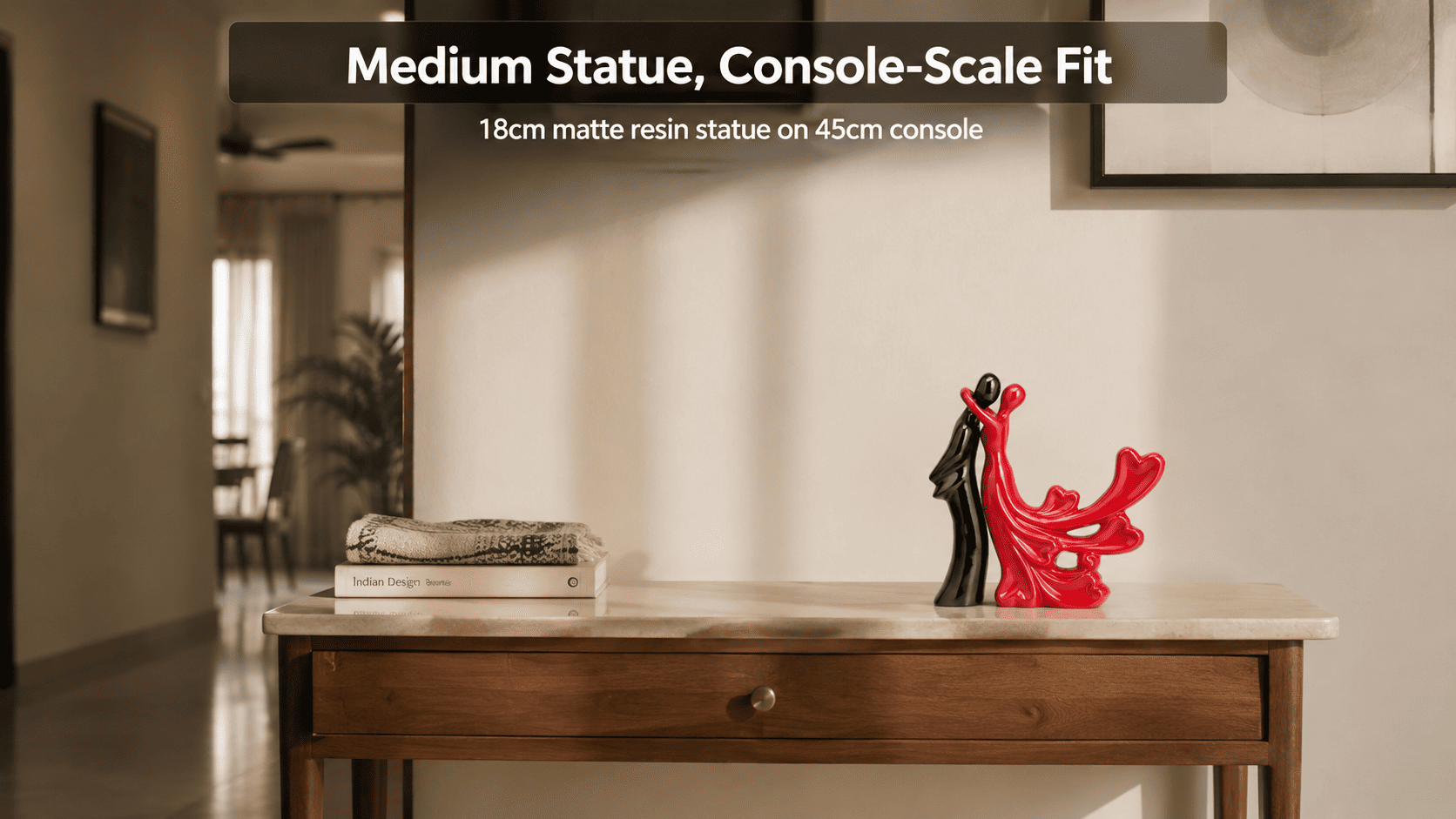
Choose abstract silhouettes for rooms with strong existing pattern or colour, and figurative statues for rooms that are otherwise visually quiet. An abstract form has no fixed "correct" viewing angle, which means it absorbs visual attention without competing for narrative focus against patterned upholstery, traditional textiles, or a gallery wall.
A figurative statue, by contrast, draws the eye to a specific recognisable shape, so it works best as the singular focal point on an otherwise restrained console or shelf. Most Indian homes that blend modern furniture with traditional accents — the aesthetic tension Moolwan designs for — do well with one figurative statue per room rather than several competing for attention.
Want a statue engineered to hold its finish through Indian humidity and sunlight for years, not seasons? Shop the full Moolwan statues collection now.
How do I avoid a statue looking out of place once it's home?
Test the statue against your room's dominant colour temperature before buying, because a piece that looks neutral under a showroom's cool white lighting can read as oddly warm or cold under your home's tube lights or warm LED bulbs. Indian homes commonly use warm 2700K–3000K LED lighting in living rooms, which shifts how a statue's true colour and finish appear compared to daylight or cool-white product photography.
A second, equally common mismatch is scale relative to negative space rather than the statue alone — a statue that looks "right" in isolation can still overwhelm a narrow console if it occupies more than 30% of the surface width, which is the exact threshold the 70/30 Spatial Breathing Rule is built to prevent.
Frequently Asked Questions
What size statue suits a small Indian apartment living room?
A medium statue between 16cm and 21cm tall suits most small Indian living rooms, because the average console or shelf surface in sub-150 sq ft apartments measures 30–45cm wide, and a medium piece occupies roughly 30% of that width without crowding the surface. Moolwan sizes its modern home décor collection around this exact apartment-scale range.
Is ceramic or resin better for a statue in a humid Indian climate?
Ceramic generally outperforms resin in open, unconditioned spaces because Moolwan's ceramic pieces are rated to 85% relative humidity versus resin's 60% RH tolerance, making ceramic the safer choice for balconies, verandas, and rooms without consistent air conditioning. Resin remains a strong, lighter-weight option for air-conditioned bedrooms and living rooms.
Can I mix a modern abstract statue with traditional Indian décor?
Yes, provided the statue's finish echoes one material already present in the room, such as a matte ceramic statue placed near a wooden console, because shared material logic creates visual continuity even when the silhouette style differs sharply from the room's traditional pieces.
How many statues should one room have?
Most rooms read best with one statue as a clear focal point, supported by smaller decorative accents rather than a second statue of similar scale, since two large sculptural objects compete for the same visual attention and reduce the impact of both.
Ready to choose a statue that actually fits your home's scale and climate, not just its catalogue photo? Bring home a piece from the Moolwan statues collection — manufacturer-direct pricing, climate-rated materials, and sizing built for Indian rooms. If you're furnishing a whole shelf or console rather than a single piece, also consider Moolwan's unique home décor accents for smaller grouped pieces, or its modern home décor collection for additional sculptural and abstract objects that pair with your statue.


