Place your dining table in the West or South-West zone of your home, keep the area clutter-free, and use warm earthy tones — yellows, oranges, and greens — for décor. Pair directional placement with intentional showpieces and wall art to reinforce prosperity energy without disrupting the room's function.
Vastu Shastra treats the dining area as the zone of nourishment, abundance, and family bonding. It is not just about where the table sits — it governs what you hang on the walls, what decorative items you keep on surfaces, and the colours you introduce through textiles and showpieces. Most homeowners apply Vastu only to furniture placement and completely ignore the décor layer, which is where energy is actively amplified or blocked.
At Moolwan, we help design-conscious Indian homeowners build dining rooms that look curated and perform energetically — without choosing between aesthetics and intention. Our decorative items for the dining room are selected and sized specifically for Indian apartment dimensions, not generic Western interiors.
The most common Vastu mistakes in Indian dining rooms: placing mirrors directly opposite the dining table (doubles the reflection of food, which sounds auspicious but actually overstimulates appetite energy), using dark or grey tones throughout, and leaving the South-East corner — the zone of fire and cooking energy — completely bare or cluttered.
Before you buy a single decorative piece, understand the zone each wall or corner belongs to. Décor placed in the wrong direction carries the wrong energy — regardless of how beautiful it is.
| Direction / Zone | Vastu Significance | Recommended Décor | What to Avoid |
|---|---|---|---|
| West (ideal table placement) | Stability, contentment after meals | Warm-toned ceramic showpieces, fruit motif art | Clutter, unused items |
| South-West (wealth corner) | Grounding, abundance, family prosperity | Heavy earthy items, antique brass or terracotta showpieces | Water elements, aquariums |
| East (sunrise energy) | New beginnings, health | Green plants, light nature-themed wall art | Dark or heavy artwork |
| South-East (fire zone) | Agni — cooking and transformation energy | Red, orange, or copper-toned accents | Water imagery, blue tones |
| North (wealth flow) | Kuber direction — financial energy | Light or metallic accents, minimal décor | Heavy or solid blocking pieces |
This direction map is your purchase filter. When you are evaluating a showpiece or a wall art print, ask first: where will this sit, and does that direction support this type of energy?
Colour is the fastest way to introduce Vastu-correct energy without structural changes. For the dining room, Vastu recommends warm, appetite-stimulating, community-building tones. Yellow, saffron, terracotta, burnt orange, and soft green are all auspicious. Avoid black, grey, and deep blue as dominant tones — they suppress the warm, gathering energy the dining room is meant to carry.
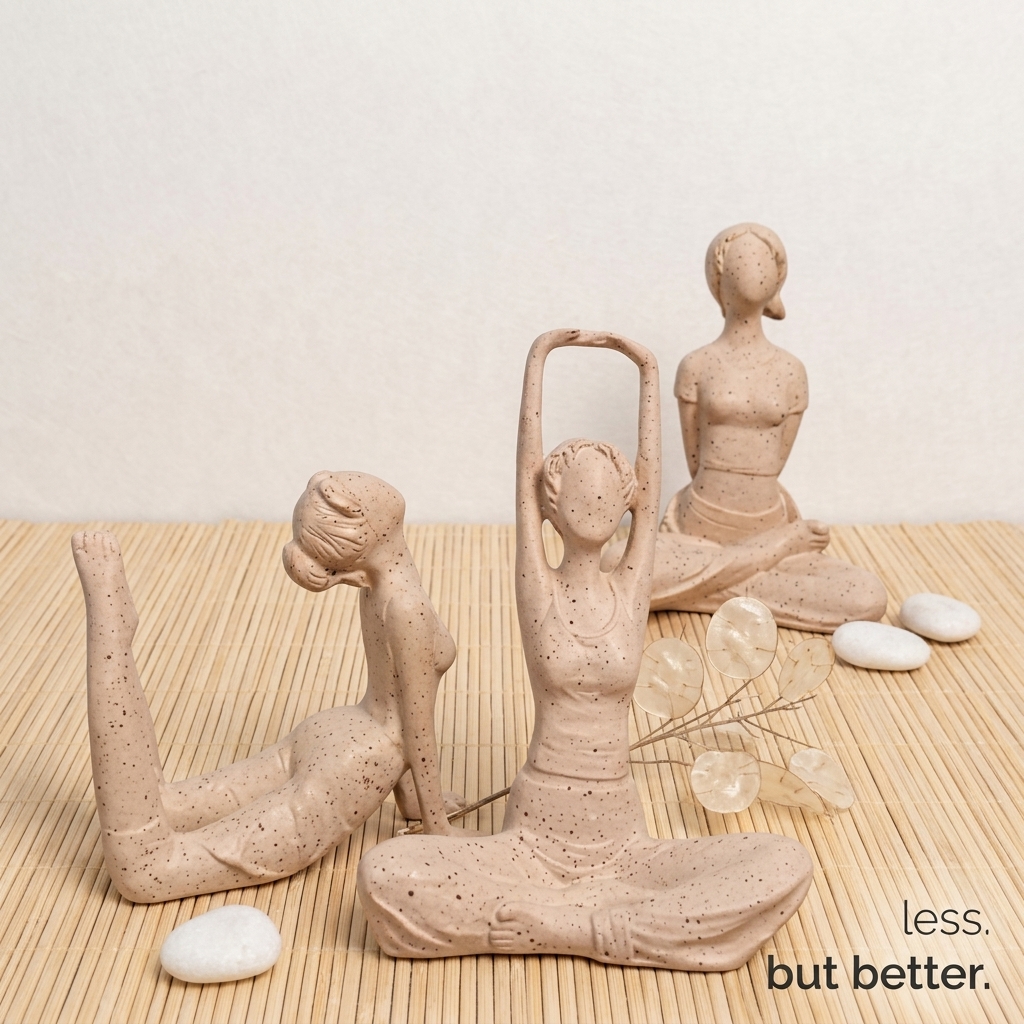
For material selection, ceramics and clay-based showpieces are especially well-suited because they carry the earth element — grounding and stabilising. Moolwan's ceramic showpieces are made with a 92% clay composition, fire-hardened, and humidity-tolerant up to 85% RH, which means they perform in Mumbai monsoons and Delhi winters alike without cracking or losing finish. A medium-sized ceramic piece (16–21 cm) placed on the South-West shelf or sideboard hits the ideal Vastu and visual balance for most Indian dining rooms.
Resin showpieces in warm amber, gold, or copper tones work beautifully on the East wall. Moolwan's epoxy resin items use 94% purity resin with 3H scratch resistance — they maintain their lustre under the heat and steam typical of Indian kitchens and dining areas.
Ready to bring Vastu-aligned décor into your dining room? Explore pieces sized and finished for Indian homes.
Shop Dining Room Décor at Moolwan →Wall art is often the most overlooked Vastu element in dining rooms. The subject matter, colour, and wall direction all matter. Paintings of lush fruit bowls, flowing water (only on the North wall), flowering plants, and family gatherings are auspicious. War imagery, solitary figures, wilting plants, and abstract chaotic art are Vastu-inauspicious regardless of how visually interesting they are.
For visual balance and Vastu energy flow, apply the 60/40 Wall Rule: the primary dining wall (usually the one the seating faces) should be 60% covered by one dominant art piece or arrangement, with 40% left as breathing space. Overcrowded walls block energy flow. A single large canvas print (60 cm x 90 cm) with a warm nature theme outperforms five small, mismatched frames every time — both aesthetically and energetically.
Moolwan's canvas wall art is printed on 340 GSM cotton canvas with eco-solvent, UV-resistant inks on 1.5-inch kiln-dried pine frames. In a dining room with afternoon sun exposure, this moisture-resistant coating prevents fading and edge warping — a common failure point with lower-grade canvas prints sold on generic marketplaces.
Browse Moolwan's modern home décor collection for canvas prints specifically suited to warm, food-positive dining aesthetics.
For dining rooms, Moolwan recommends organising decorative items across three functional zones rather than scattering them randomly:
If your dining room opens directly into the living room — common in 2BHK and 3BHK Indian apartments — Zone 3 doubles as a transition anchor. A single well-chosen piece here unifies both spaces without over-decorating. Explore Moolwan's antique showpieces for home decoration for pieces that carry both old-world character and Vastu-appropriate earth or metal energy.
Moolwan is a D2C home décor brand built in Bangalore by Ruchi Malhotra. We manufacture canvas wall art, modern showpieces, and curated gifts for Indian homes — and we sell direct, cutting out the distributor markup that inflates prices on most Indian décor platforms. Our products are engineered for Indian climate conditions: high humidity, variable temperatures, and compact urban living spaces. Every size, material spec, and finish is chosen with Indian apartments in mind, not adapted from Western catalogues.
For Vastu-conscious buyers, this specificity matters. A showpiece that cracks under 70% RH, or a canvas print that warps in a humid kitchen-adjacent dining room, undermines both the aesthetic and the energy you were trying to build. Our return policy gives you 24 hours from delivery to assess the piece in your actual space — if it does not sit right, you return it unused in original packaging for a refund within 15 working days.
Moolwan's dining room pieces are sized, finished, and energetically aligned for Indian homes. Choose your piece today.
Browse Vastu-Ready Dining Décor →The dining table should ideally be placed in the West or South-West zone of the home. The person eating should face East or North while seated — these directions are associated with health and prosperity in Vastu. Avoid placing the table directly under a beam or in the South-East corner, which is the fire zone.
A mirror on the North or East wall of the dining room is considered auspicious — it symbolically doubles the food and abundance on the table. However, a mirror directly facing the dining table (reflecting diners) is debated in Vastu and is best avoided if you are unsure. Never place a mirror on the South wall of a dining room.
Earth-element items — ceramic vases, terracotta figurines, clay bowls, and antique brass showpieces — are the most Vastu-compatible for dining rooms. They ground the space and reinforce the nourishment energy. Avoid water-element items (glass vases with water, fish motifs) in the South-East zone. Moolwan's ceramic showpieces, made with 92% clay composition and humidity-tolerant up to 85% RH, are specifically suited to Indian dining environments.
Yes — fruit bowls, harvest scenes, and abundant food paintings are considered auspicious in Vastu dining rooms. They activate the energy of abundance and satiation. Place them on the East or North wall for maximum benefit. Avoid images of solitary or wilting food, which carry inauspicious energy. Canvas wall art with food, florals, or nature themes on 340 GSM cotton canvas with UV-resistant inks holds colour well in warm, steam-adjacent dining environments.
Yellow, saffron, terracotta, burnt orange, light green, and cream are all Vastu-recommended colours for dining rooms. They stimulate appetite and community energy. Avoid black, grey, and dark blue as dominant tones — they dampen the warm, convivial energy that Vastu prescribes for shared eating spaces. These colours can be introduced through paint, soft furnishings, or decorative items without requiring structural changes.
Quick View



