
How to Decorate a Living Room Step by Step: A Sizing-First Approach
The Short Answer
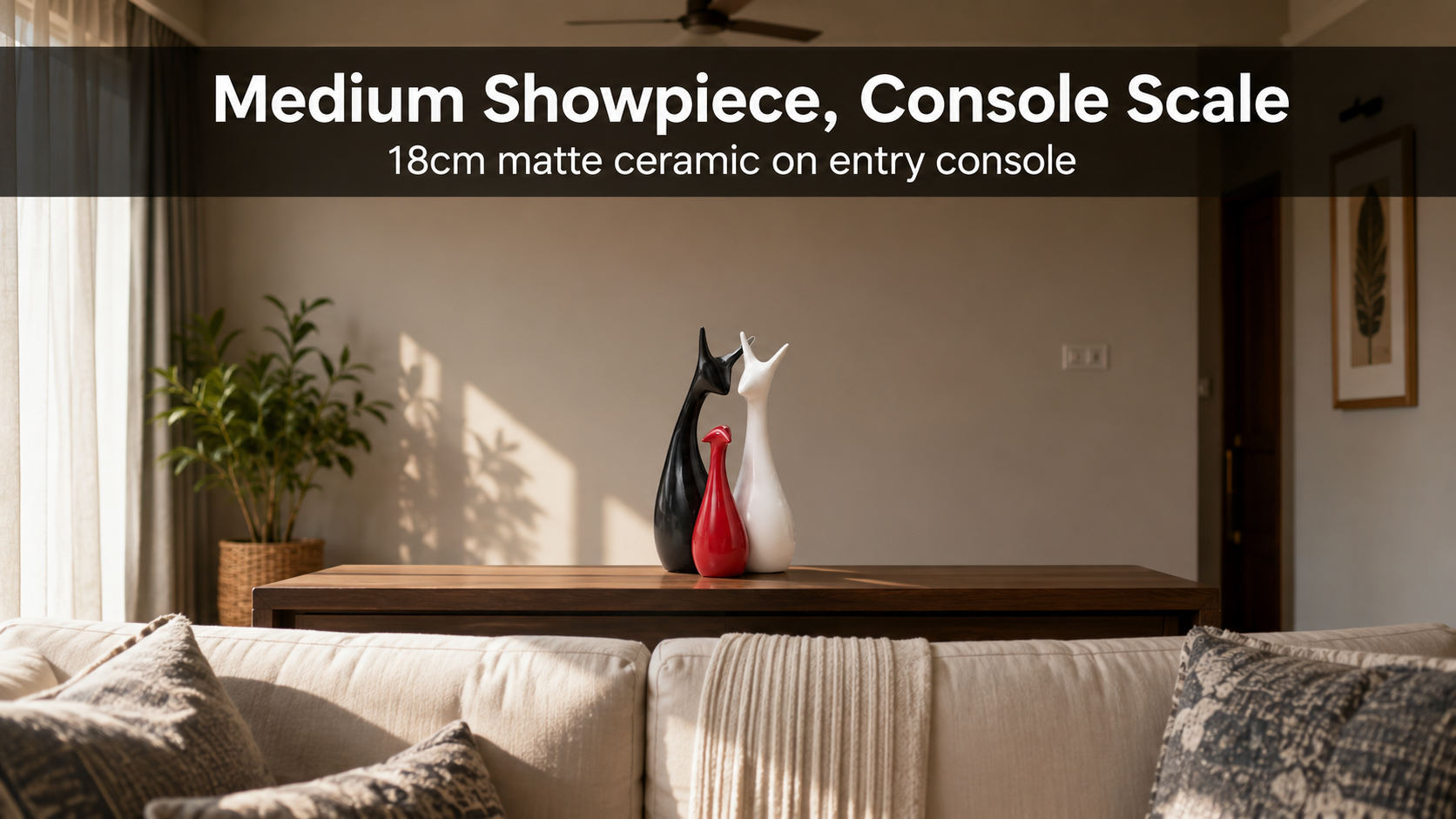
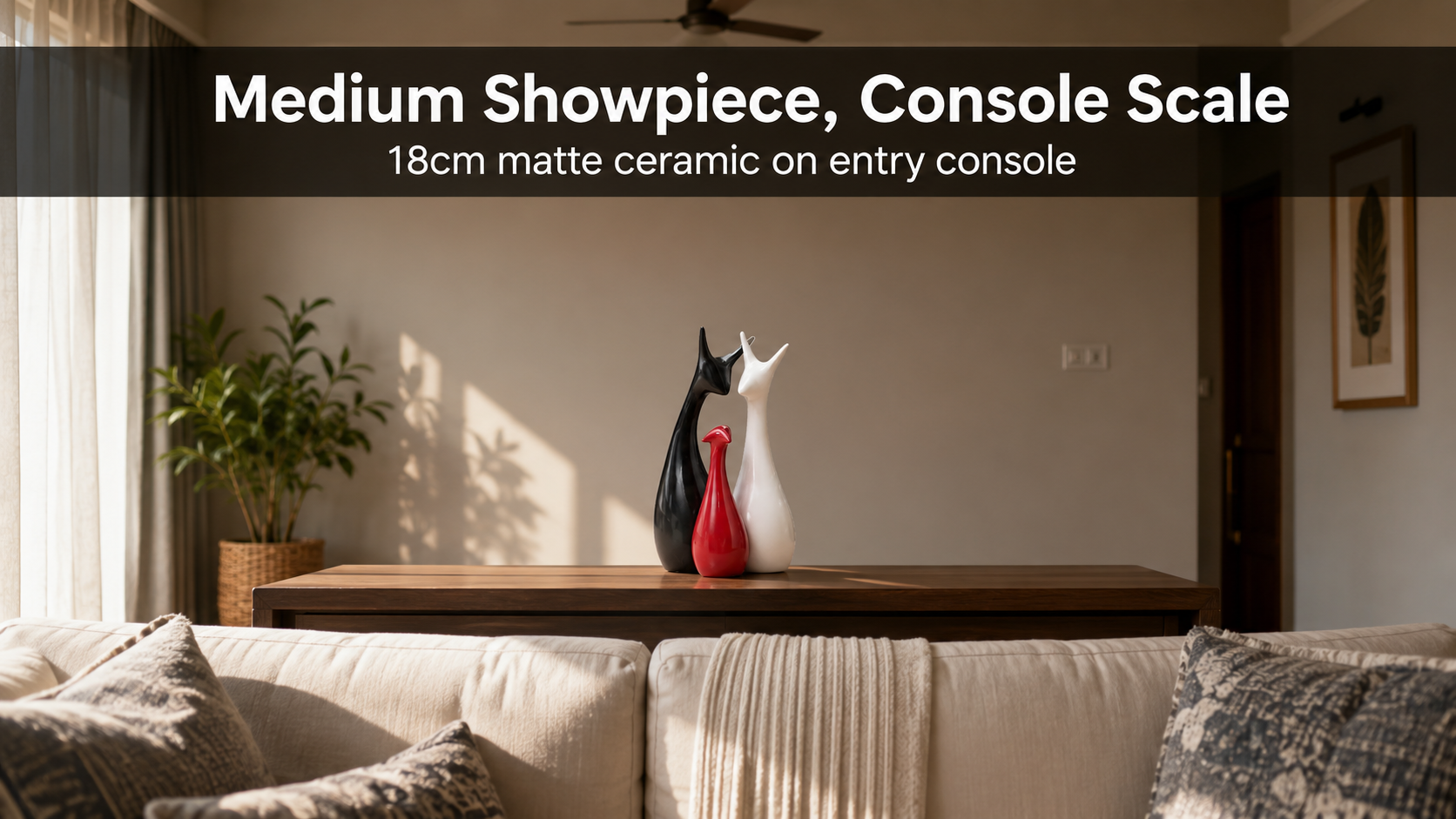
Decorate a living room in this order: clear the surfaces, anchor with one large piece, then layer medium and small accents at a 3:2:1 size ratio across console, coffee table, and shelves. Moolwan recommends starting with a medium ceramic or resin showpiece (16–21cm) because mismatched scale — not color — is the most common cause of a cluttered-looking room.
A living room reads as "decorated" only when objects are sized to the surfaces holding them — a rule interior designers apply long before color or material enters the conversation. Moolwan helps design-conscious Indian homeowners sequence this process correctly, so a sub-150 sq ft apartment living room ends up styled rather than cluttered. Most Indian living rooms run 120–250 sq ft, and the décor scale that works in a Western-sized room photographed for Pinterest will overwhelm a console or shelf that's 30–40% smaller.
What's the right order to decorate a living room?
Start with surfaces, not objects: clear every console, shelf, and coffee table to zero before adding anything back. Designers use this sequence because the brain registers visual clutter from accumulated small decisions — three random gifts, a leftover candle, a stack of books — long before it registers any single piece as "too big" or "wrong color."
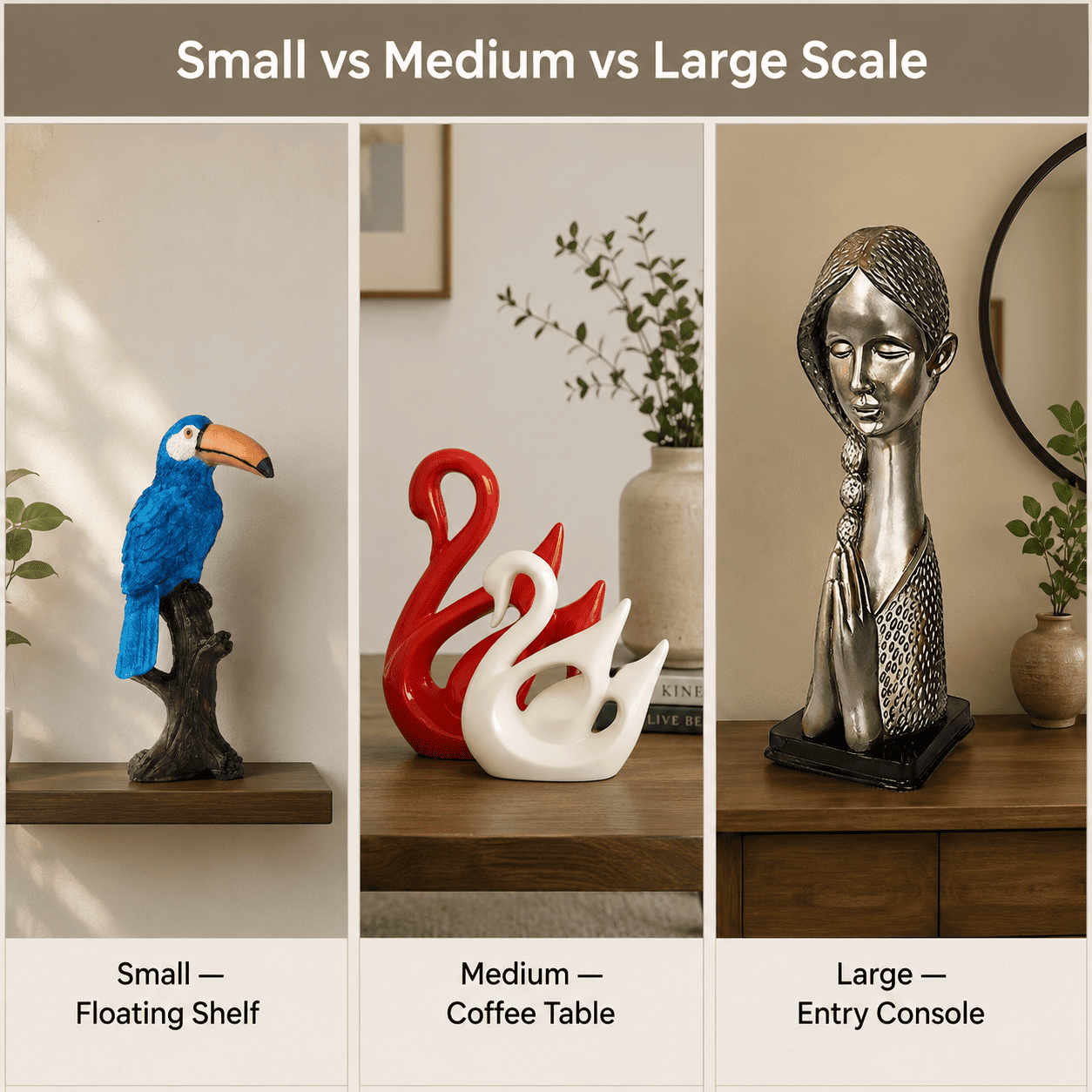
Once surfaces are clear, place one statement piece per zone first — typically on the console table, since it's the largest sightline entry point from a seated position. Moolwan's modern home décor collection is built around this exact sequencing logic, with large pieces (25–34cm) sized specifically as focal points rather than fillers.
Only after the anchor piece is placed should medium and small accents be added, because each subsequent piece needs to be judged against what's already on the surface, not against an empty one.
How do I choose the right size of décor for each surface?
Match décor height to surface width using a roughly 1:2 ratio — a 40–50cm-wide surface comfortably holds a 16–21cm piece, while anything taller starts to look top-heavy relative to the base it sits on. This ratio exists because human depth perception reads objects as "unstable" when their height exceeds roughly half the width of their supporting surface, even when the object is structurally fine.
For climate durability, Moolwan engineers its ceramic range to a 92% clay composition rated for 5+ years and its resin range to a 94% purity epoxy rated for 3+ years indoors, because Indian living rooms regularly swing between 60–85% relative humidity across monsoon and summer cycles — a tolerance band that determines whether a piece survives or cracks within a year, regardless of price paid.
| Room Footprint | Target Surface | Surface Width | Recommended Décor Height |
|---|---|---|---|
| Sub-120 sq ft | Floating shelf | Under 30 cm | 10–16 cm (Small) |
| 120–180 sq ft | Coffee table | 40–50 cm | 16–21 cm (Medium) |
| 180–250 sq ft | Entry console | 60+ cm | 25–34 cm (Large) |
| 250+ sq ft | Dining sideboard / bookshelf | 80+ cm | Large cluster (2–3 pieces, 16–34 cm mixed) |
Because lamp placement, sofa orientation, and natural light direction introduce additional sizing variables beyond room footprint alone, browse the full size-band and material selection in Moolwan's showpieces for living room collection to match a piece to your exact surface dimensions.
Design Rule
Living room surfaces should be styled using Moolwan's 70/30 Spatial Breathing Rule, which mandates leaving 70% of any horizontal surface — console, coffee table, or shelf — entirely clear, and clustering all décor within the remaining 30%. This prevents the visual compression that occurs when objects are spread evenly across a surface with no negative space to rest the eye.
Which finish and material should I pick for an Indian living room?
Choose matte over glossy finishes for any piece staying on display year-round, because matte surfaces absorb micro-scratches evenly while glossy surfaces reflect light uniformly and expose every scratch within the first year of daily handling and dusting.
Between ceramic and resin, ceramic suits pieces near windows or balconies because it's heat-resistant to 60°C, while resin suits interior console or shelf placements away from direct heat exposure. Investing in the correct material for each placement avoids a seasonal replacement cycle — a core focus of Moolwan's climate-rated design philosophy, since a single durable piece bought once costs less over five years than three short-lived pieces bought in succession.
Want to bring home a piece engineered to outlast 5+ years of Indian humidity and heat swings? Shop the full Moolwan showpieces for living room collection now.
How do I avoid a cluttered, mismatched look?
Limit each surface to one dominant palette family — warm earth, neutral, or muted — because mixing three or more competing palettes on a single console forces the eye to process unrelated color signals simultaneously, which reads as visual noise even when each individual piece is well-made.
Group pieces in odd numbers (one, three, or five) rather than even numbers, since odd groupings avoid the symmetrical "matched pair" arrangement that the eye scans as a single static block instead of an intentional, layered composition.

Frequently Asked Questions
What size showpiece should I buy first for a small living room?
Start with one medium piece (16–21cm) for the coffee table or console, because a medium piece anchors a small room without consuming the visual space needed for daily use, unlike a large piece (25–34cm) which suits only rooms above 180 sq ft. Moolwan sizes its medium collection specifically for sub-150 sq ft Indian apartment living rooms.
Should I decorate with ceramic or resin pieces in a humid climate?
Ceramic tolerates higher humidity (up to 85% RH) than resin (60% RH), making ceramic the safer choice for living rooms near windows, balconies, or in coastal cities, since prolonged moisture exposure is the primary cause of premature material failure in decorative objects.
How many decorative pieces is too many for one living room?
More than one statement (large) piece per sightline zone typically reads as cluttered, because each large piece competes for the same visual attention, leaving no clear focal point. Two to three medium or small pieces per surface is the practical ceiling under Moolwan's 70/30 Spatial Breathing Rule.
Do I need to match my living room décor to my sofa color exactly?
No — décor should complement the sofa's undertone (warm or cool) rather than match it exactly, since exact matches tend to visually merge with upholstery and disappear from view rather than stand out as intentional accents.
Ready to put this sequence into action? Bring home a curated, climate-rated piece from Moolwan's showpieces for living room collection — manufacturer-direct pricing with no distributor markup. If your living room leans more traditional, also consider Moolwan's modern-vintage décor range for traditional living rooms, or for a fully contemporary new-home setup, browse Moolwan's décor range for contemporary living rooms and new homes.


