
01 — Fundamentals
Get the Curtain Basics Right for Indian Homes
Hang your curtain rod 4 to 6 inches above the window frame and extend it 4 to 6 inches beyond the frame on each side. This makes the window look larger and the ceiling look higher — a fix most Indian apartments need. Curtain fabric should fall to the floor with a slight break, roughly half an inch of extra length pooling at the base. Length decides whether a living room reads finished or unfinished; curtains that stop above the sill are the single most common styling mistake in Indian homes.
Choose fabric weight by climate, not just color. Linen and cotton-blend curtains breathe in humid coastal cities like Mumbai, Chennai, and Kochi, where heavier drapes trap moisture and develop a musty smell within a season. In drier, AC-heavy homes across Delhi, Bengaluru, and Pune, a heavier linen or velvet blend holds its shape and blocks more light without feeling damp. A sheer layer under a heavier drape gives you both privacy and light control — pull the sheer through the day, close the heavier layer at night.
Width matters more than most buyers expect. A curtain panel should measure 1.5 to 2 times the width of the window when open, so the fabric falls in visible folds instead of lying flat against the glass. Flat, under-filled curtains are what make a living room look unstyled even when the sofa, rug, and lighting are right. Once the curtain frame is set, the room's remaining personality comes from what sits below and around it — starting with modern home décor items sized to echo the curtain's color story, not compete with it.
The 4-Step Method
- Hang the rod high and wide — 4–6 inches above the frame, extending past both sides.
- Choose fabric for your climate — breathable linen for humid cities, heavier weaves for AC-heavy homes.
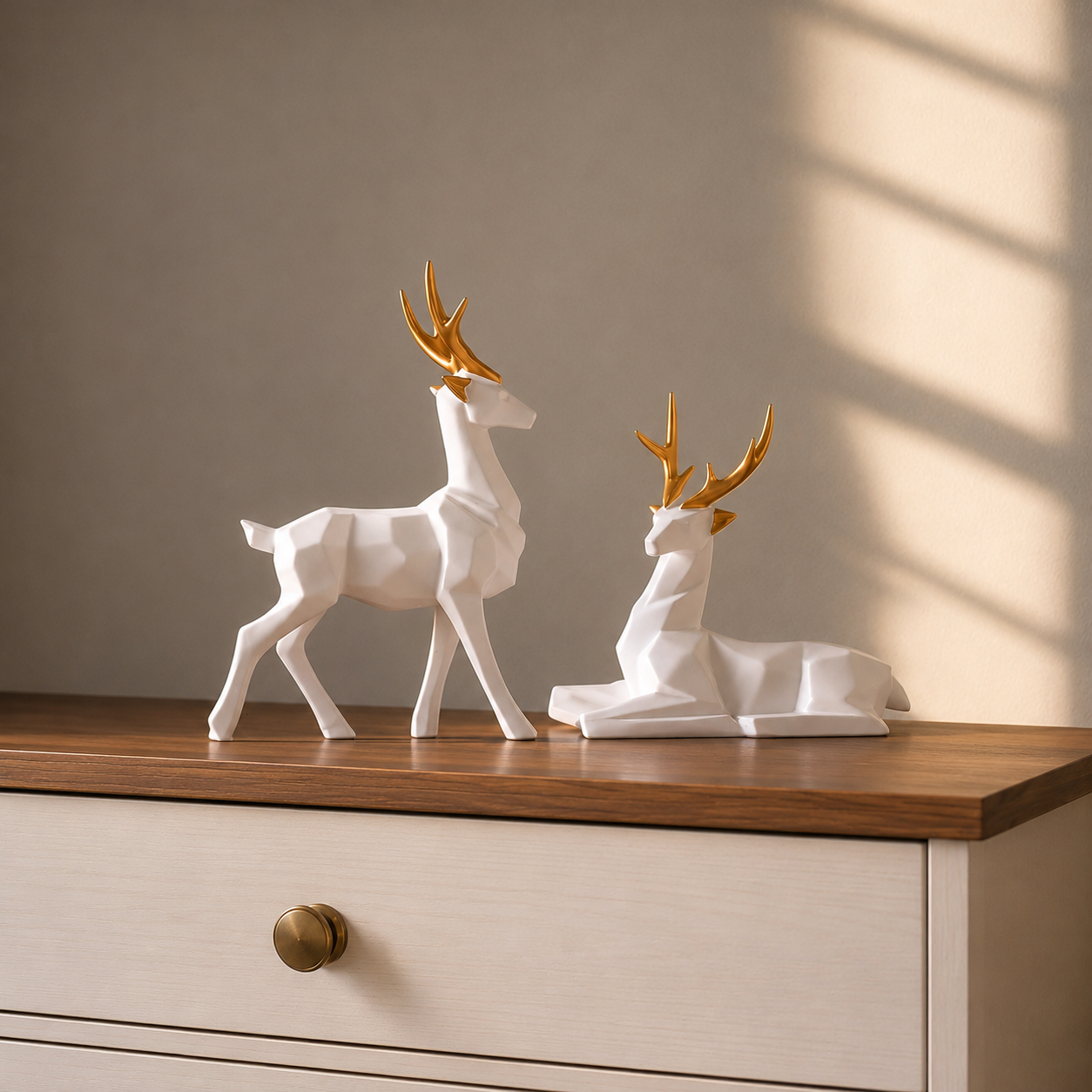
- Add one small accent near the window — a 10–16cm showpiece on the sill or console.
- Add one larger accent on the perpendicular wall — a 25–34cm piece that extends the color story without repeating it.
02 — Pairing
Match Your Curtain Style to the Right Décor Accent
Curtains set the room's color temperature. Every accent piece near the window — a showpiece on the console, a wall art panel on the adjacent wall — should sit within one shade of that temperature, not fight it. The table below maps common curtain styles used in Indian living rooms to the accent that reads intentional next to them, based on the finish and undertone of each fabric.
| Curtain Style | Undertone | Best-Paired Accent | Finish to Choose |
|---|---|---|---|
| Sheer voile / linen | Cool, airy | Ceramic showpiece | Matte |
| Heavy linen-cotton blend | Warm, neutral | Large canvas wall art | Matte or glazed |
| Block-print cotton | Earthy, warm | Antique-style showpiece | Matte |
| Solid jewel-tone velvet | Deep, saturated | Resin showpiece, metallic accent | Glazed |
Matte finishes recede next to patterned or sheer fabric, which is why they pair best with voile and block-print curtains that already carry visual texture. Glazed finishes reflect light and work harder next to solid, heavier fabric that would otherwise flatten the room. Moolwan's showpieces for living rooms start at ₹150, come in both finishes, and ship free — a low-risk way to test two or three accent pieces against your existing curtains before committing to new upholstery.
03 — Placement
Where to Place Accents So Curtains Don't Overwhelm the Room
Anchor one accent piece within arm's reach of the curtain — a console table, a windowsill shelf, or a side table inside the curtain's visual frame. This piece should be the smallest in the room, sized 10 to 16cm, so it reads as a detail rather than a second focal point. A living room only needs one dominant visual anchor; if the curtain is bold, keep this piece quiet.
Place a second, larger accent — 25 to 34cm — on the wall perpendicular to the curtained window, never directly opposite it. Facing two strong visual elements against each other splits attention and makes a small living room feel more crowded than it is. A canvas wall art piece on the perpendicular wall extends the curtain's color story across the room without repeating the exact pattern.
Weight matters for Indian walls and shelves that weren't built for heavy fixtures. Pieces in the 150g to 600g range mount on standard wall anchors and sit securely on floating shelves without reinforcement — a practical constraint most decorating guides skip. Ceramic and resin showpieces in this weight range are also drop-resistant to 15cm, which matters in living rooms with regular foot traffic near the curtain line.
Leave the wall behind the seating — away from the window — for a single statement piece rather than a gallery wall. Curtains already carry pattern and movement; a busy gallery wall competes rather than complements. Browse Moolwan's modern home décor items sized specifically for Indian apartment walls to find that one piece.
04 — Modern vs. Antique
Choosing Accents That Age Well With Your Curtains
Modern showpieces suit curtains in solid colors or fine stripes — the accent stays quiet while the curtain does the visual work. Antique-style showpieces suit block-print, ikat, or other pattern-heavy Indian textiles, because the accent's texture and patina match the curtain's handmade character instead of looking mass-produced next to it.
This distinction matters more in Indian living rooms than in most Western decorating guides, which assume solid, minimal drapery as the default. Indian homes routinely mix contemporary furniture with block-print, bandhani, or ikat curtains — a modernity-tradition balance most décor lines aren't built for. Moolwan's antique showpiece collection is priced from ₹150 and designed specifically for this pairing: earthy finishes that sit comfortably next to patterned, textured fabric.
Climate durability is the other reason this choice matters. Moolwan's ceramic showpieces are built from a 92% clay composition, rated humidity-tolerant up to 85% relative humidity, and heat-resistant to 60°C — specifications that matter directly next to a curtained window, where afternoon sun and monsoon humidity both concentrate. A showpiece without humidity tolerance will discolor or warp within a monsoon season on a windowsill; this is a materials decision, not a cosmetic one.
We help design-conscious Indian homeowners pair curtains with décor that suits their climate, space, and culture — without the trial-and-error most decorating guides leave buyers to work through alone.
What Moolwan sells: canvas wall art paintings, modern showpieces, and curated gifts for Indian homes — all manufactured in-house and priced direct to the customer, without middlemen markup.
FAQ
Questions Buyers Ask Next
What curtain length works best for Indian living rooms?
Floor-length curtains with a slight break — about half an inch of fabric pooling at the base — work best for most Indian living rooms. Curtains that stop at or above the windowsill make the room look unfinished and the ceiling look lower than it is.
Should living room curtains match the wall color or contrast with it?
Contrast reads more intentional than an exact match. Choose a curtain one shade darker or lighter than the wall, then repeat that shade in one accent piece — a showpiece or a cushion — so the room has a clear color anchor.
How many décor pieces should I add near a curtained window?
Two is usually enough: one small accent (10–16cm) within reach of the window, and one larger piece (25–34cm) on the wall perpendicular to it. More than two competes with the curtain instead of complementing it.
Can humidity near a window damage showpieces or wall art?
Yes, if the material isn't rated for it. Moolwan's ceramic showpieces are humidity-tolerant up to 85% RH and its canvas wall art uses a moisture-resistant coating, both built to sit safely near curtained windows through the monsoon.
What is Moolwan's return policy if a showpiece doesn't match my curtains?
Unused pieces in original packaging can be returned within 24 hours of delivery, subject to a 10% restocking fee, with refunds processed within 15 working days.


