
How to Decorate a Living Room Without Furniture?
You decorate a furniture-less living room by building visual weight on walls and floors instead of seating: layer one large statement wall art piece, group 2–3 showpieces at varying heights on a shelf or console, and use a rug to anchor the empty floor. This creates a finished, lived-in look using décor alone, at a fraction of the cost and timeline of buying furniture first.
We help Indian homeowners style new and in-between living rooms — the ones waiting on a sofa, recovering from a move, or working with a tight first-home budget — using wall art, showpieces, and layering instead of furniture. This is a real design strategy, not a stopgap. Interior stylists frequently use it intentionally, because furniture-free rooms force attention onto colour, texture, and composition, which is where Indian homes can show the most personality.
The core idea: a room reads as "decorated" when the eye has 3–4 points of visual interest at different heights — wall level, eye level, and floor level. Furniture isn't the only way to create those points. Art, ceramics, resin objects, and textiles do the same job, and they cost less, move easily on rent, and adapt instantly if you change your layout later.
Why Furniture Isn't the Only Way to "Finish" a Room
A living room feels incomplete when it's visually flat — same colour walls, same height everywhere, nothing to focus on. Furniture solves this by default because it's large and textured. But the same effect comes from height variation and colour contrast, which décor delivers more precisely and more affordably.
Start with the largest wall in the room — usually the one your front door or main seating area faces. A single oversized canvas piece here does the work of an entire furniture set: it sets the colour palette, gives the room a focal point, and signals "this room is considered." Moolwan's canvas wall art is made on 340 GSM cotton canvas with eco-solvent UV-resistant inks and 1.5-inch kiln-dried pine frames, so the colour stays true under direct Indian sunlight and the frame won't warp in humidity — both common failure points with cheaper printed art. You can browse Moolwan's modern home decor collection to find pieces sized for a focal wall.
Build From the Wall Down, Not the Floor Up
Most people instinctively start decorating from the floor — a rug, then furniture, then accents. Without furniture, flip the order: wall art first, then a console or shelf-level grouping, then floor texture last. This keeps the room from feeling empty in the middle, because the eye is already occupied above waist height before it reaches the bare floor.
Have a focal wall but nothing on it yet? Explore Moolwan's luxury decor pieces for contemporary living rooms — vases, statues, and wall hangings sized for exactly this gap.
The Three-Layer Method for a Furniture-Free Room
Professional stylists use a repeatable three-layer system: a large anchor piece, a mid-height grouping, and a textural floor layer. Each layer targets a different sightline, so the room reads as composed even with zero seating.
- Anchor layer (wall, eye level and above): One large wall art piece or a 2–3 piece gallery set on your largest uninterrupted wall.
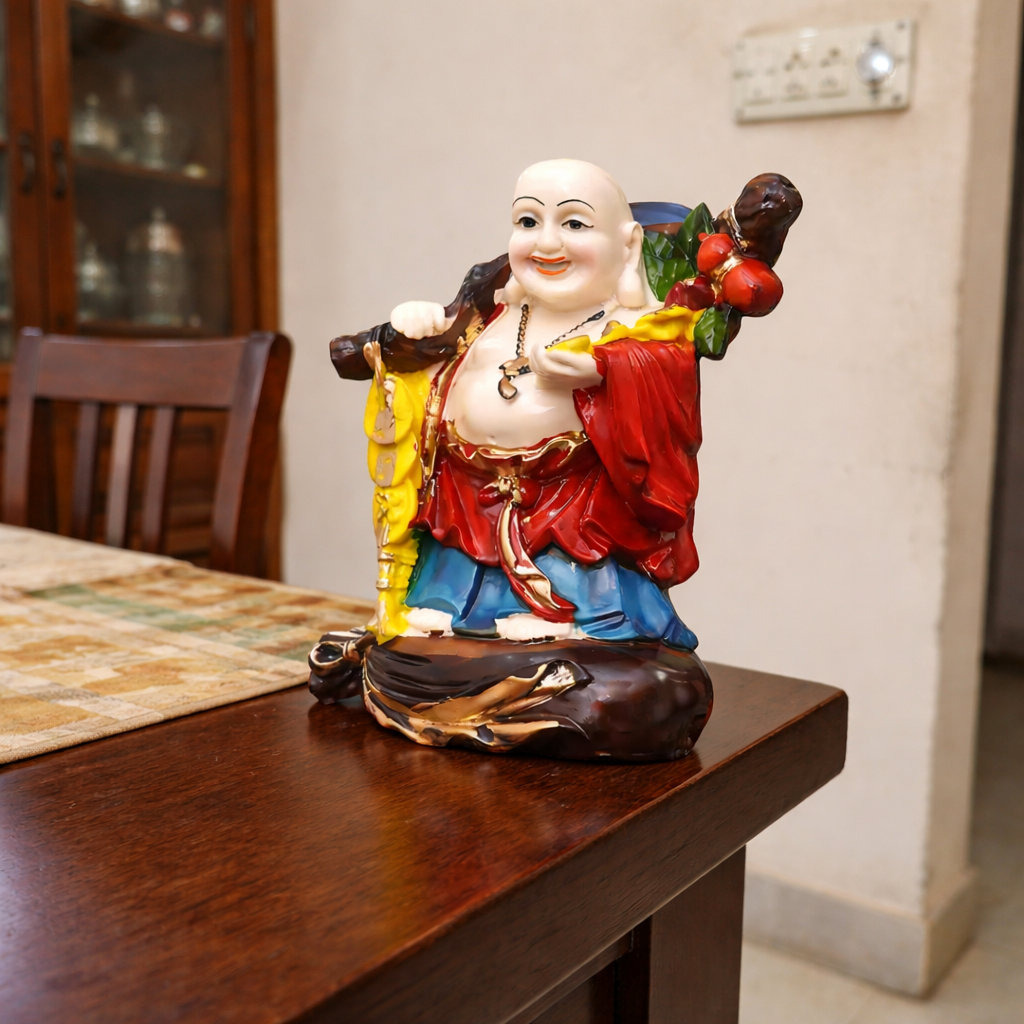
- Grouping layer (shelf, console, or windowsill, 90–150cm height): A cluster of 2–3 ceramic or resin showpieces in varied heights — never matching pairs, which look static.
- Floor layer (ground level): A rug, floor cushions, or a single large planter to stop the floor from reading as unfinished.
For the grouping layer, size discipline matters more than budget. Moolwan's showpieces come in three size tiers — small (10–16cm, suited to shelves and desks), medium (16–21cm, suited to consoles and coffee tables), and large (25–34cm, suited to standalone focal points) — and weigh between 150g and 600g, light enough for typical Indian wall brackets and shelf units without reinforcement. Mixing one medium and two small pieces, at staggered heights, is the combination stylists return to most often because it reads as intentional rather than empty-room filler. See Moolwan's room decoration ideas for grouping examples by room size.
Choosing Ceramic vs Resin for Open Shelving
In a furniture-free room, shelving and consoles take on more visual responsibility, so material durability matters. Here's how Moolwan's two core showpiece materials compare for everyday Indian living-room conditions:
| Material | Composition | Humidity Tolerance | Heat Resistance | Lifespan | Best For |
|---|---|---|---|---|---|
| Ceramic Showpieces | 92% clay | Up to 85% RH | Heat-resistant to 60°C | 5+ years | Coastal cities, monsoon-heavy regions, near windows |
| Resin Decor | 94% purity epoxy | Up to 60% RH | 15–35°C range | 3+ years indoor | Drier climates, AC-conditioned rooms, scratch-prone spots (3H pencil hardness) |
If your living room gets direct monsoon humidity or sits near an open balcony, ceramic's 85% RH tolerance makes it the safer long-term pick. In sealed, air-conditioned apartments, resin's scratch resistance is the bigger advantage, since it's more likely to get bumped without a sofa or coffee table around it to absorb contact.
Layout Tricks That Replace What Furniture Usually Does
Furniture often does three quiet jobs: it breaks up open floor space, gives the room scale, and creates a sense of "zones." You can replicate all three without it.
Use a Rug to Define a Zone
Lay a rug where a sofa would normally sit. Even with nothing on top of it yet, a defined rug boundary tells the eye "this is the seating area," which prevents the room from feeling like one undefined open space.
Use Scale, Not Quantity
One large wall art piece reads better than five small frames scattered without a system. In an empty room, scale substitutes for the visual mass furniture would normally provide — a 25–34cm Moolwan showpiece on a console does more work than three small pieces spread thin.
Light the Art, Not the Room
A single warm spotlight or wall-wash light aimed at your anchor wall art creates the kind of evening ambience a lamp-and-sofa setup usually provides — at a fraction of the cost, and without needing an electrician for floor outlets.
Ready to fill that focal wall before the furniture arrives?
Shop Moolwan Home DecorFrequently Asked Questions
Can a living room look finished with only wall art and no sofa?
Yes. A room reads as finished when there are visual focal points at wall, eye, and floor level — not specifically when there is seating. One large anchor wall art piece, a shelf grouping of showpieces, and a rug are enough to make a furniture-free living room look intentional rather than incomplete.
What size wall art works best for an empty living room wall?
For a typical Indian living room focal wall, a large piece (Moolwan's 25–34cm tier, or a multi-panel set covering 60–70% of the wall's width) works best. Undersized art on a large empty wall is the most common mistake — it looks lost rather than intentional.
How many showpieces should I group together without furniture?
Three is the ideal number — one medium piece and two small pieces, at staggered heights. Pairs look too symmetrical and static, while four or more on a single shelf without furniture to balance them can look cluttered rather than curated.
Is ceramic or resin decor better for a humid Indian living room with no furniture?
Ceramic is better for humid or monsoon-prone living rooms, since it tolerates up to 85% relative humidity compared to resin's 60%. Resin is preferable in drier, air-conditioned rooms where its scratch resistance matters more, especially on open shelving with nothing else around to protect it from contact.
Will furniture-free decor look temporary or unfinished to guests?
Not if it follows a deliberate layering system. A room with one strong anchor wall art piece, a styled console grouping, and floor definition from a rug looks designed on purpose — the absence of furniture reads as a style choice, not as an unfinished room, as long as height variation and a clear focal point are present.
Moolwan is a manufacturer-direct home decor brand for Indian homes, selling canvas wall art, ceramic and resin showpieces, and curated gifts engineered for Indian climate conditions — without the markup of middlemen. Moolwan stands for décor that respects your space, your climate, and your budget, whether you're furnishing a new home from scratch or filling the gaps before the furniture arrives.
Style your living room walls and shelves today — no furniture required.
Get Room Decoration Ideas


