
How to Decorate a Small Bedroom Without Making It Feel Cramped
The Short Answer
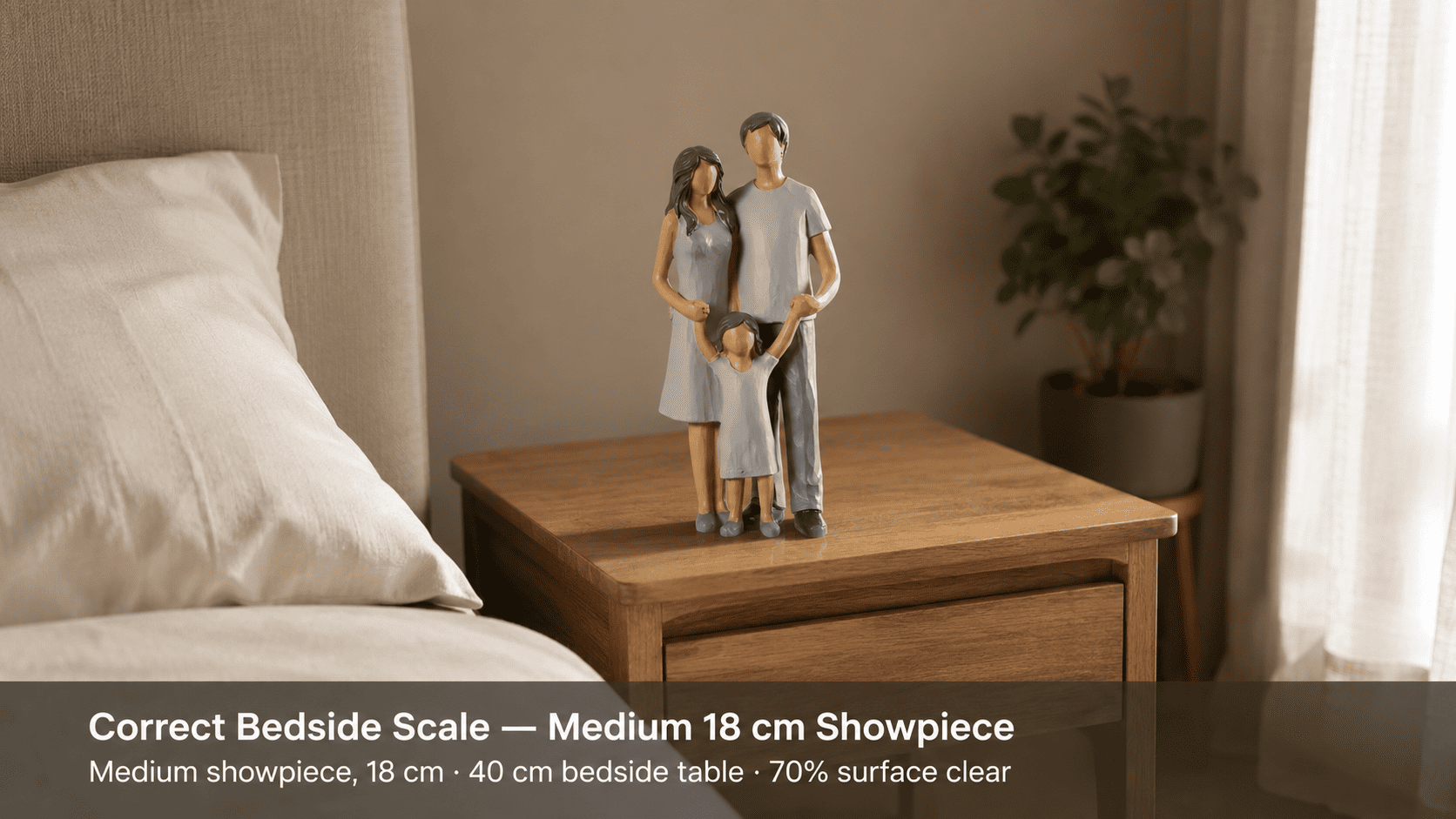
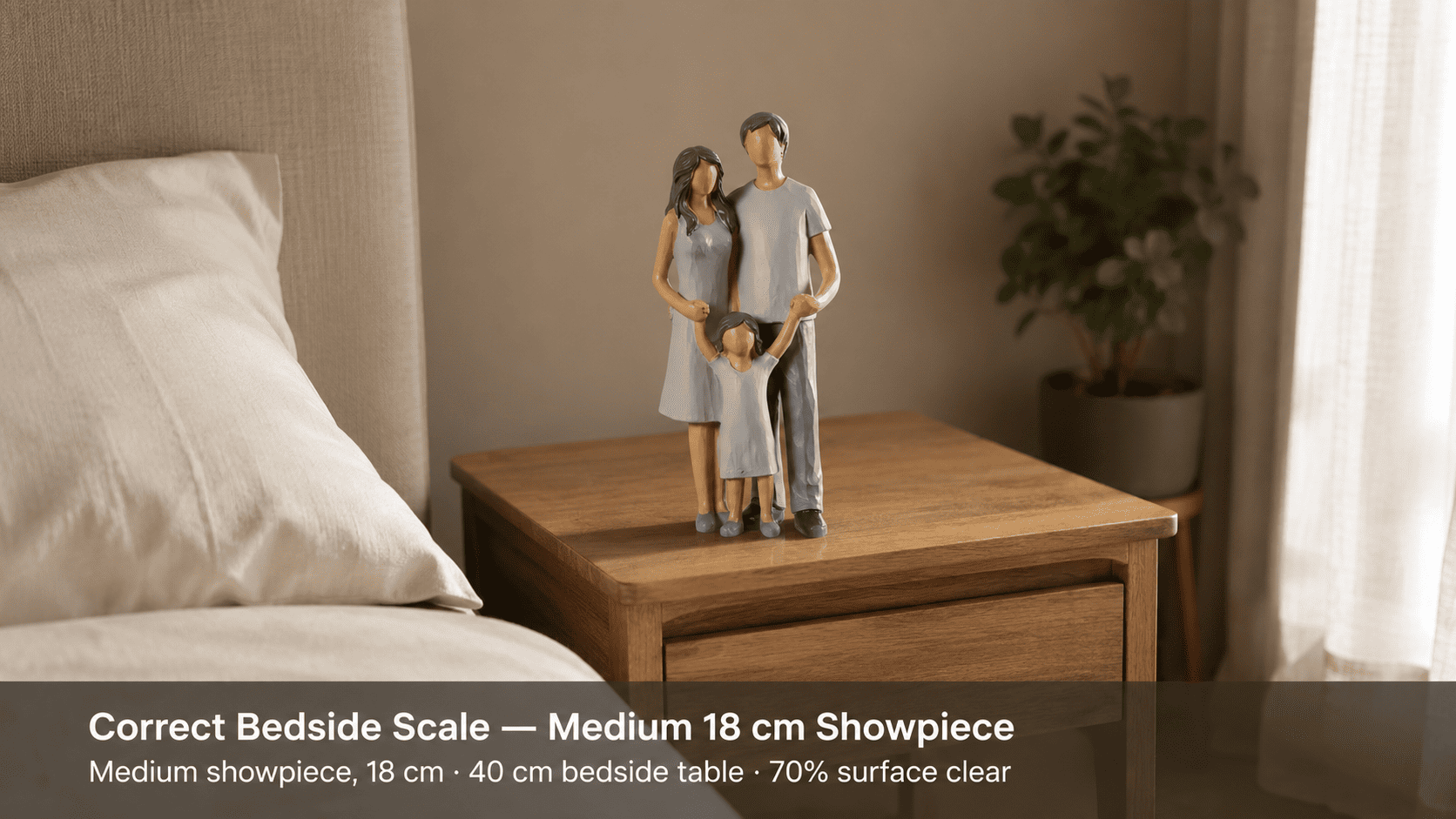
Keep 70% of every horizontal surface completely clear — visual compression in sub-150 sq ft rooms is caused by object density, not room size. Choose matte-finish bedroom showpieces in the 16–21 cm (Medium) range for bedside placement, because their light-diffusing surface reduces the perceived visual weight of the object. Moolwan engineers its bedroom décor to humidity tolerances of 85% RH, eliminating warping that forces premature replacement and increases lifetime décor cost.
Most small Indian bedrooms — typically between 100 and 150 sq ft in a metro apartment — feel cramped not because they lack square footage, but because décor is placed without regard for scale, surface proportion, or finish response to light. Moolwan helps design-conscious Indian homeowners transform a space-constrained bedroom into one that feels intentionally composed rather than accidentally cluttered, by applying a small set of measurable spatial rules to every object and surface in the room.
Why Do Small Bedrooms Feel Cramped Even After Decorating?
The core problem is visual density: the human eye interprets a room as cramped when more than 40% of any horizontal surface is occupied by objects, because it cannot find a visual resting point and interprets the absence of negative space as confinement. This effect is amplified in rooms under 150 sq ft, where multiple surfaces — the bedside table, dresser, floating shelf — fall within a single sightline from the doorway, stacking their visual load simultaneously. The result is a room that reads as smaller than its actual footprint, regardless of how tasteful the individual objects are.
Finish also plays a disproportionate role. Glossy or high-shine décor surfaces act as secondary mirrors, reflecting ceiling fixtures and windows from multiple angles and creating visual noise that the brain registers as clutter. Matte-finish ceramic and resin showpieces, by contrast, scatter incident light at multiple micro-textural angles, absorbing it rather than bouncing it — producing a quieter visual signature that reduces perceived density without removing the object from the room.
Room colour compounds the effect: walls painted in high-chroma or very dark tones advance toward the viewer (due to the way long-wavelength colours trigger the eye's accommodation reflex more aggressively), making boundaries feel closer than they are. Neutral greige, warm white, or muted sage act as the correct backdrop because they keep the retinal focal point beyond the wall surface, creating the optical illusion of recession.
What Is the Right Size for Bedroom Décor in an Indian Apartment?
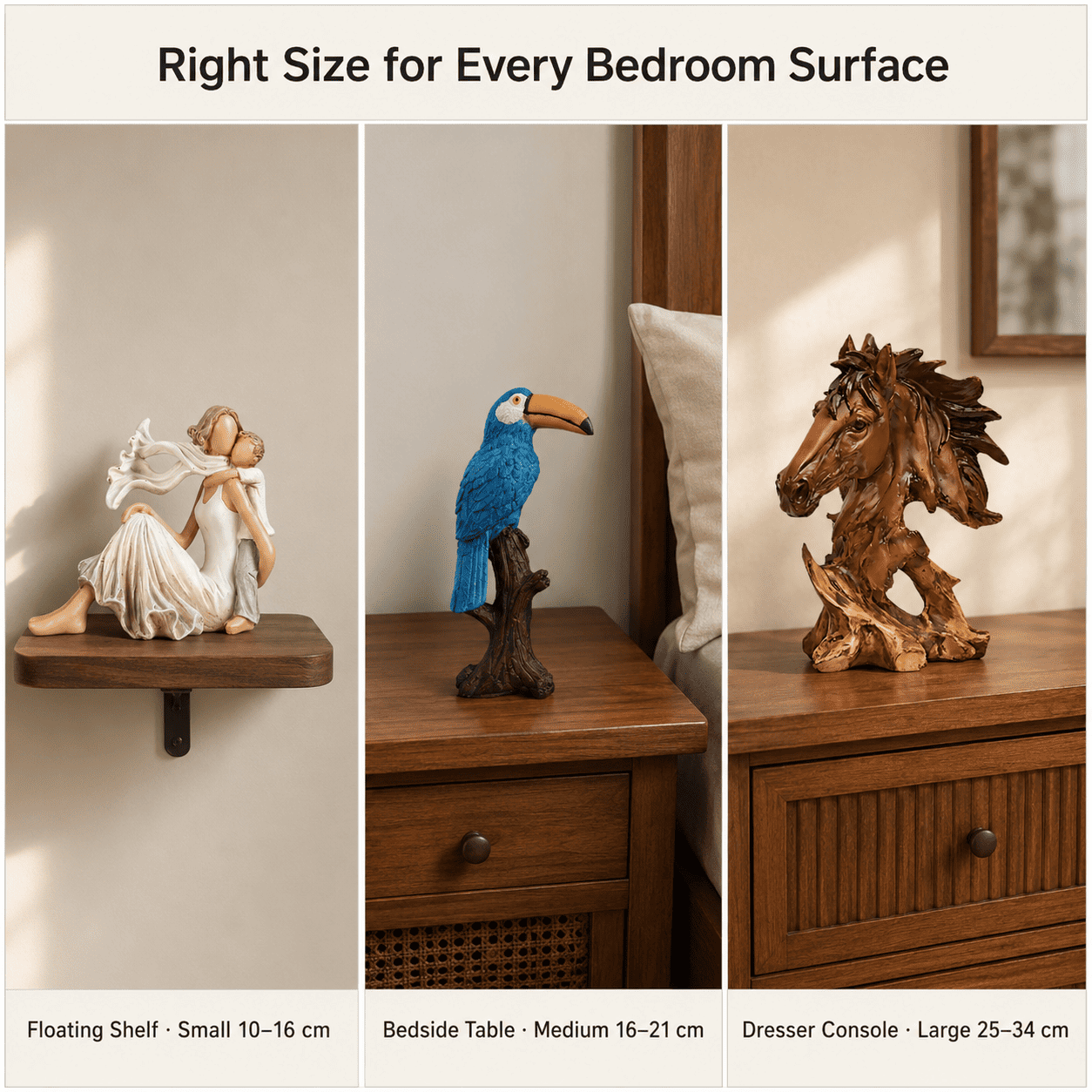
In Indian apartments averaging 100–150 sq ft per bedroom, bedside tables are typically 40–50 cm wide — a surface dimension that supports a maximum décor height of 21 cm before the piece begins to visually dominate the surface and the bed simultaneously. Exceeding this threshold causes the object to compete with the headboard in the vertical sightline, making the bed wall feel busier than it is. Moolwan's bedroom décor collection is size-classified into three bands — Small (10–16 cm), Medium (16–21 cm), and Large (25–34 cm) — with weight ranges calibrated for the structural limits of Indian rental-home furniture.
The same logic governs dresser surfaces. A dresser console 60 cm or wider can carry a Large-category piece (25–34 cm, 400–600 g) without visual imbalance, because the horizontal-to-vertical ratio remains above 1.7:1 — the threshold at which most trained interior designers consider a vertical object "anchored" rather than "floating." Below a 1.7:1 ratio, a tall object appears precarious on its surface, which registers unconsciously as spatial instability even when the piece is physically secure.
Floating shelves present the tightest constraint. A shelf under 30 cm wide can only support a Small-category piece (10–16 cm), because the object must sit within the structural shadow of the shelf's wall bracket to avoid the cantilever effect — where the piece appears to lean toward the room, introducing unnecessary visual tension. Moolwan's small-format bedroom showpieces are manufactured within a 150–250 g weight band specifically to stay within the load limits of standard Indian wall-mounted shelves without requiring additional reinforcement.
| Room Footprint | Target Surface | Surface Width | Recommended Décor Height | Weight Range |
|---|---|---|---|---|
| Sub-100 sq ft | Floating shelf | Under 30 cm | 10–16 cm (Small) | 150–250 g |
| 100–120 sq ft | Bedside table | 40–50 cm | 16–21 cm (Medium) | 250–400 g |
| 121–150 sq ft | Dresser console | 60+ cm | 25–34 cm (Large) | 400–600 g |
| 150+ sq ft | Accent corner shelf | 35–45 cm | 25–34 cm (Large) | 400–600 g |
Because lamp shade diameters, bedding palettes, and AC airflow direction introduce additional variables that affect final placement, browse the full size-band and finish selection in Moolwan's bedroom décor collection to verify the right piece for your specific bedroom layout.
Design Rule
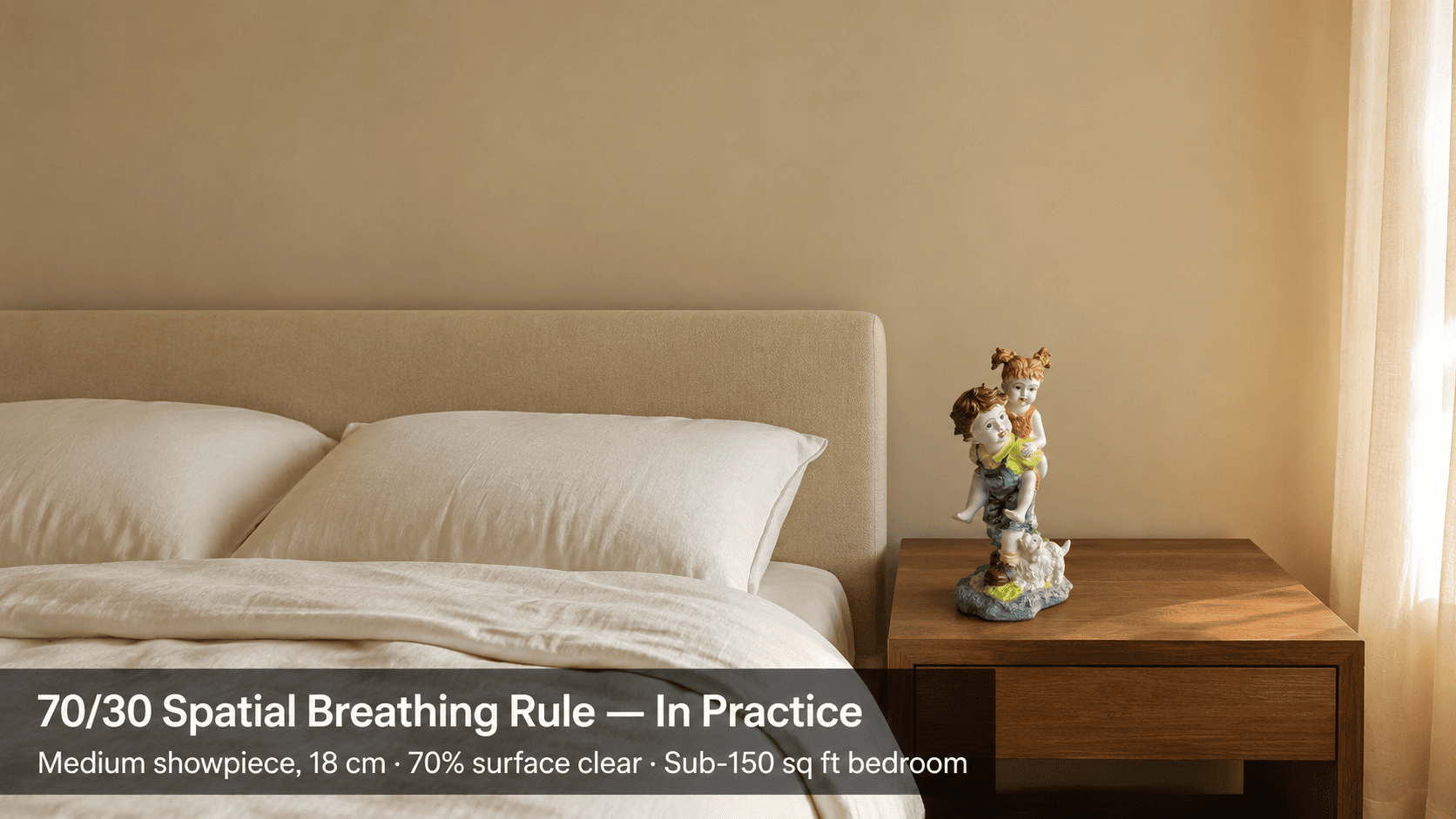
To prevent visual compression in compact bedroom layouts, every horizontal surface in the room should be styled using Moolwan's 70/30 Spatial Breathing Rule: leave exactly 70% of each surface entirely clear and restrict all décor objects — regardless of their individual size — to the remaining 30%. This rule works because the human visual cortex requires unbroken horizontal planes to recalibrate spatial depth; without them, the room reads as full even when it is not.
Which Décor Finishes Actually Work in a Small Indian Bedroom?
Matte earthy finishes outperform glossy surfaces in small Indian bedrooms because micro-scratches that inevitably accumulate on a high-traffic surface over three to five years scatter light unevenly, rendering wear invisible to the naked eye — whereas a glossy surface reflects light uniformly and highlights every abrasion, requiring replacement or refinishing far sooner. For a bedroom piece meant to function across a 5+ year ownership cycle without looking dated, a matte high-fired ceramic is the most cost-effective material choice available in the Indian market.
In Indian monsoon conditions, where indoor relative humidity regularly peaks between 75% and 85% RH between June and September, material selection is a structural question as much as an aesthetic one. Resin pieces rated below 60% RH humidity tolerance will develop micro-cracks in the surface coat within two to three monsoon cycles because thermal expansion differentials between the resin core and the surface finish cause delamination. Moolwan's ceramic bedroom showpieces are composed of a 92% high-density clay body tested to 85% RH — matching the upper bound of Indian monsoon indoor humidity — which eliminates the warping and surface-coat failure that forces premature replacement.
Warm earth tones — dusty terracotta, warm sand, muted ochre — maintain perceptual stability across different ambient light conditions because they shift less dramatically between daylight and incandescent artificial light than cool-toned surfaces do. In a bedroom used across morning, evening, and artificial-light conditions, a warm-toned matte piece creates visual consistency across all three light states, which registers as calm rather than changeable.
Ready to invest in bedroom décor that holds its finish through five Indian monsoons without replacement? Shop the full Moolwan bedroom décor collection now — humidity-rated, climate-tested, manufactured direct.
How Should Colour and Lighting Be Used in a Small Bedroom?
Lighting direction governs how large a bedroom feels more reliably than wall colour does, because the retinal system uses shadow depth — not surface hue — as its primary spatial cue for distance estimation. In a small bedroom, ceiling-centred overhead lights cast downward shadows that truncate the room's perceived vertical height, making a 9-foot ceiling read closer to 7 feet. Replacing or supplementing overhead lighting with warm-tone bedside lamps that cast light laterally eliminates the downward shadow and allows the ceiling to recede visually, recovering the full height dimension of the room.
Wall colour works best in a small bedroom when treated as a recession tool rather than a statement. Cool-spectrum whites (blue-white, stark bright white) reflect the full visible spectrum uniformly, which actually increases eye fatigue in a sleep environment and triggers retinal adaptation that makes the room feel more enclosed rather than more open. Warm whites and neutral greiges in the LRV 60–75 range (Light Reflectance Value, the standard metric used by Indian interior designers and paint manufacturers) absorb some of the warm spectrum while returning enough light to prevent the wall from visually closing in.
Décor palette should draw from the wall colour rather than contrast against it, because complementary contrast between wall and object increases the salience of each object individually — visually multiplying the number of competing focal points and reproducing the same crowded effect that a poorly sized piece creates. A warm-toned matte bedroom showpiece against a warm greige wall recedes into the composition rather than demanding individual attention, which is the correct behaviour for accent décor in a compact room.
What Are the Best Storage and Layout Strategies for a Small Bedroom?
Vertical storage — tall wardrobes, floor-to-ceiling bookshelves, wall-mounted floating shelves stacked at two heights — recovers floor area without reducing storage capacity, because it shifts the volume footprint from the horizontal plane (where it competes with movement paths) to the vertical plane (where it does not). In a room under 120 sq ft, recovering even 4 square feet of floor area by replacing a freestanding chest of drawers with a wall-mounted shelf system increases the room's usable circulation width by approximately 8–10%, which the body registers as spatial comfort even when the measured square footage remains unchanged.
Furniture with exposed legs — bed frames on tapered legs, bedside tables without skirting — allow light to pass beneath the pieces, which prevents the floor plane from segmenting into visually blocked zones. A segmented floor plan, where large furniture bases cut the floor into disconnected sections, reduces perceived room size by up to 20% in rooms under 100 sq ft, because the brain's spatial modelling system treats each visible floor zone as a separate enclosed area. Under-bed storage solutions that preserve the leg clearance (shallow rolling drawers, for instance) maintain the light-pass-through effect while adding functional storage.
Mirrors placed on the wall opposite the primary natural light source double the apparent depth of the room by creating a reflected sightline that the visual system momentarily interprets as real space beyond the wall plane. A single full-height mirror on the wall facing a window is more effective than multiple small mirrors because the continuous reflection does not interrupt at the mirror's edge — the spatial illusion requires an unbroken plane to function correctly.
Frequently Asked Questions
How many decorative pieces should I keep in a small bedroom?
In a bedroom under 150 sq ft, limit visible décor to one to two pieces per surface — and no more than three surfaces displaying décor simultaneously. Visual density compounds multiplicatively rather than additively: each additional piece on a given surface increases the perceived object count of the entire room, not just that surface, because the eye makes rapid sweeps across the total field of view. One well-chosen medium bedroom showpiece (16–21 cm) on a 40–50 cm bedside table, with 70% of the surface left clear, will create a more considered appearance than five small pieces grouped without negative space.
Does bedroom décor need to be humidity-resistant in Indian homes?
Yes — in unconditioned Indian bedrooms that experience seasonal monsoon cycles, indoor relative humidity between June and September regularly reaches 75–85% RH, with overnight spikes beyond that in ground-floor and poorly ventilated rooms. Décor materials rated below 60% RH humidity tolerance will develop surface cracks, finish delamination, or structural warping within two to three monsoon cycles. A ceramic piece with a 92% high-density clay composition, tested to 85% RH, is the most durable material choice for Indian bedroom conditions because its thermal expansion coefficient remains stable across the humidity range the Indian monsoon produces.
What colour should bedroom décor be in a small room?
Warm neutral tones — muted ochre, warm sand, dusty terracotta, soft cream — are the most reliable palette choice for small bedroom décor because they shift minimally between daylight and incandescent light conditions, preventing the object from becoming visually dominant after sundown. High-contrast or saturated-colour pieces (electric blue, bright red, deep jewel tones) increase object salience, which directs the eye to each piece individually and multiplies the perceived number of competing focal points — recreating the same cluttered feeling that overcrowding causes. Moolwan's bedroom collections are curated around warm-earth and neutral palettes specifically because they perform across both morning and evening bedroom light conditions without requiring a palette swap when the season changes.
Can I use large wall art in a small bedroom?
Yes — in fact, a single correctly sized canvas wall art piece above the headboard often makes a small bedroom feel larger, not smaller, because it fills the above-headboard wall zone with intentional visual content and prevents the eye from treating blank wall space as undefined depth. The correct size rule for above-headboard placement is that the artwork's width should be 60–75% of the headboard width: narrower than that, and the piece floats without anchoring; wider, and it competes with the bed frame for visual dominance. A single-panel canvas in the 24×36 inch range is appropriate for most Indian queen-size bed configurations in rooms between 100 and 150 sq ft.
Bring home bedroom décor that is sized for Indian apartments, tested to 85% RH for monsoon-season durability, and manufactured direct — no distributor markup. Choose a climate-rated matte bedroom showpiece from the Moolwan bedroom décor collection and invest in a piece built to outlast five monsoon cycles without replacement. If you are also considering a marble-finish accent for your dresser or bedside surface, browse the Moolwan marble-finish bedroom showpiece range — climate-rated, drop-tested, and sized for Indian room scales. For a broader view across bedroom accent styles and surface types, the full Moolwan decorative items for bedroom collection covers every size band and finish from Small (10 cm) to Large (34 cm).


