
How to Decorate a Small Dining Room With No Natural Light
The Short Answer
A windowless or low-light dining room needs glazed, light-reflective surfaces over matte ones and a single warm-toned focal accent rather than scattered small pieces, because gloss finishes bounce artificial light across the room while matte finishes absorb it. Moolwan's glazed ceramic showpieces (16–21cm) in warm earth tones are sized for exactly this: a 4-seater table runner or console under 150 sq ft.
Rooms without a direct light source rely entirely on artificial lighting to create the perception of depth and warmth, which means every reflective surface in the room — including décor — becomes part of the lighting system rather than a passive object. Moolwan helps design-conscious Indian homeowners turn windowless or low-light dining areas into rooms that feel intentionally lit rather than dim, using a curated modern home décor collection engineered for exactly this kind of compact, light-starved Indian apartment layout.
Why does a windowless dining room need different décor than a sunlit one?
A windowless dining room needs décor chosen for how it behaves under artificial light, not how it would look in daylight. Direct sunlight contains a full spectrum of wavelengths that flatters most finishes equally, but a single warm-toned bulb or pendant emits a narrow band of that spectrum, so a finish that looked neutral in a showroom can read flat, muddy, or cold under one bulb in a closed room.
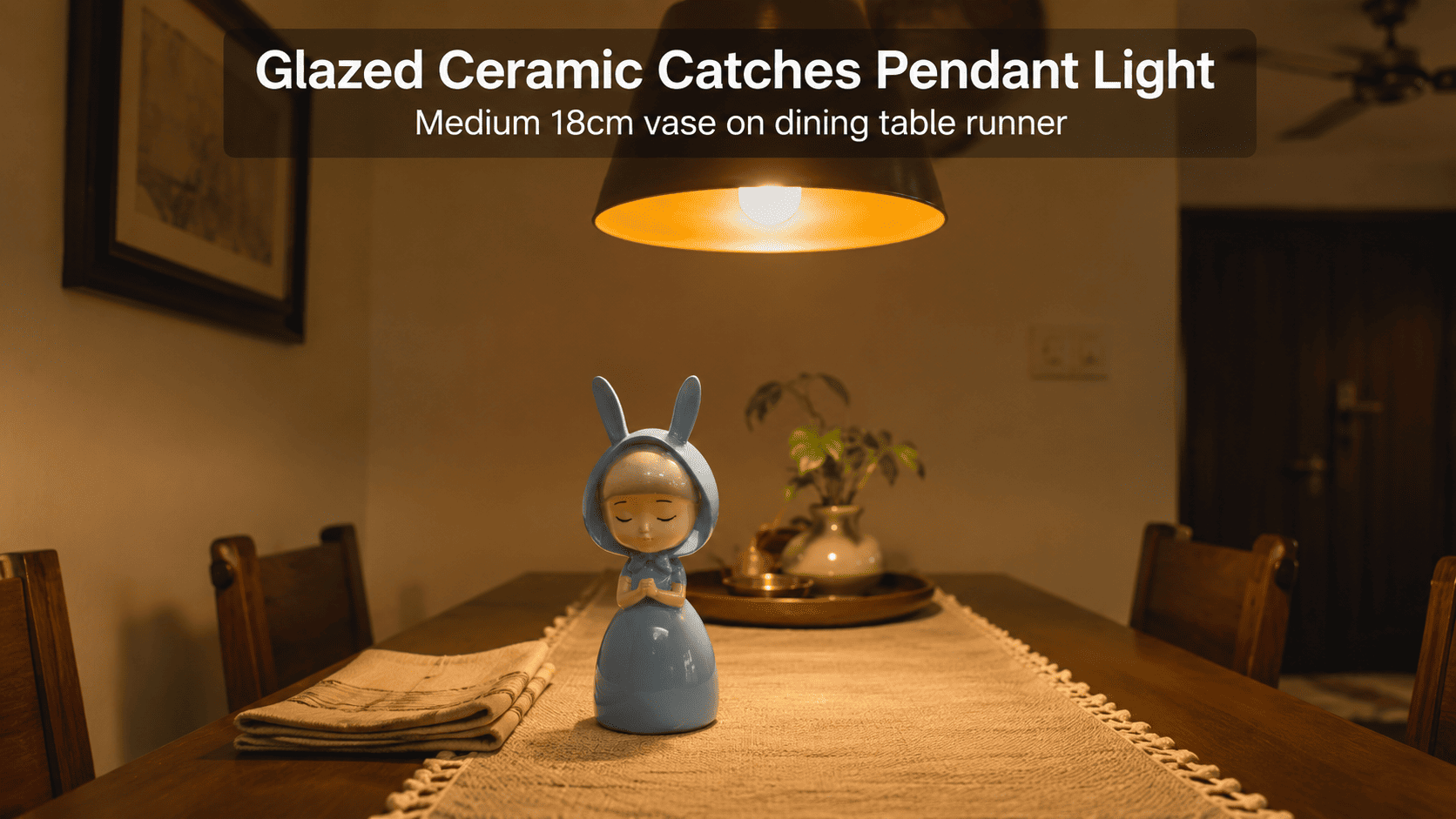
This is why glazed ceramic outperforms matte ceramic in light-starved rooms: a glazed surface has a smooth, low-porosity top layer that reflects incoming light directly back into the room, effectively multiplying the light source, whereas a matte surface scatters that same light into many directions and absorbs a portion of it, making the room read darker than it actually is. Moolwan's modern home décor collection is built in both finishes specifically so a buyer can match the finish to the room's actual light condition rather than guessing.
What size and finish of décor actually works in a small, dark dining space?
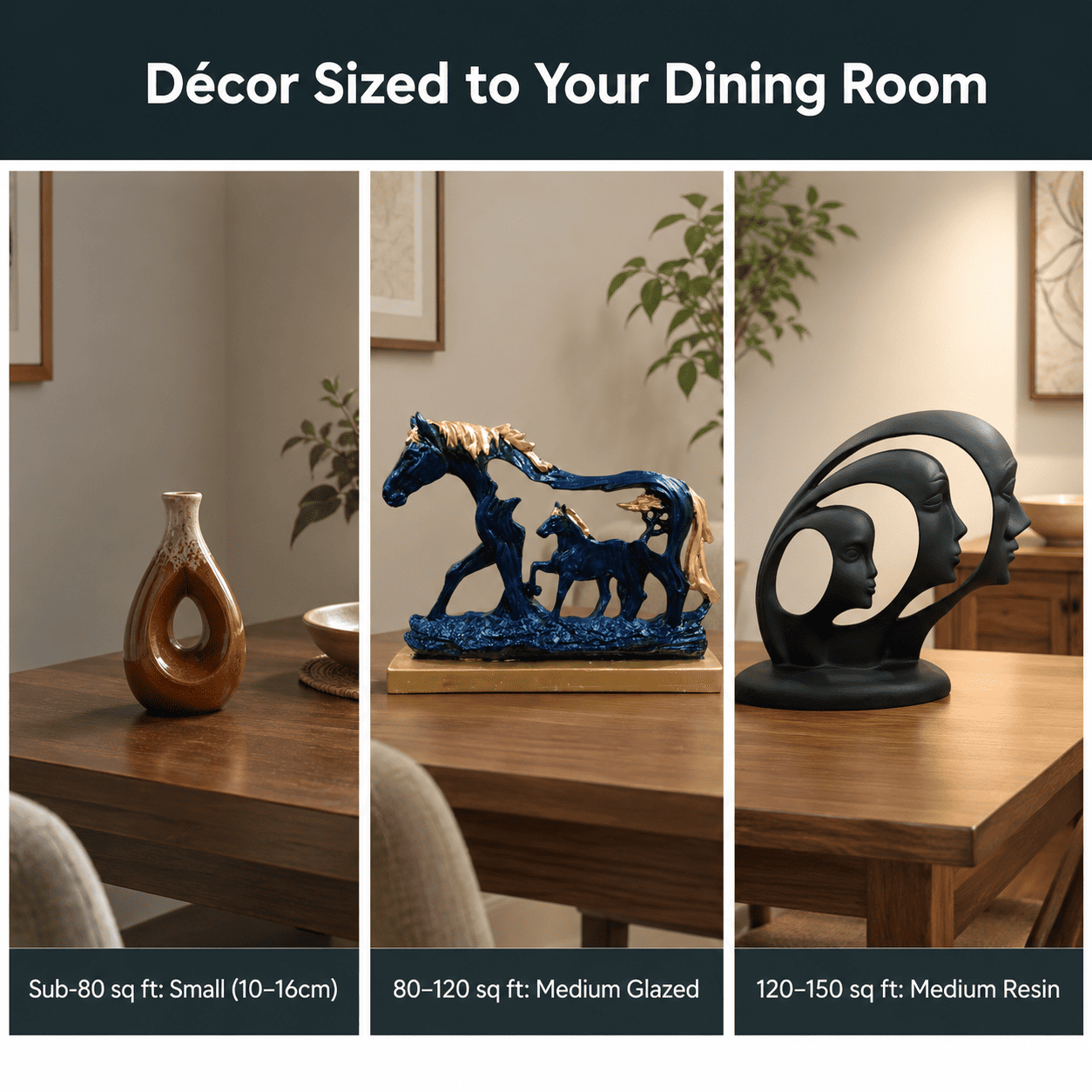
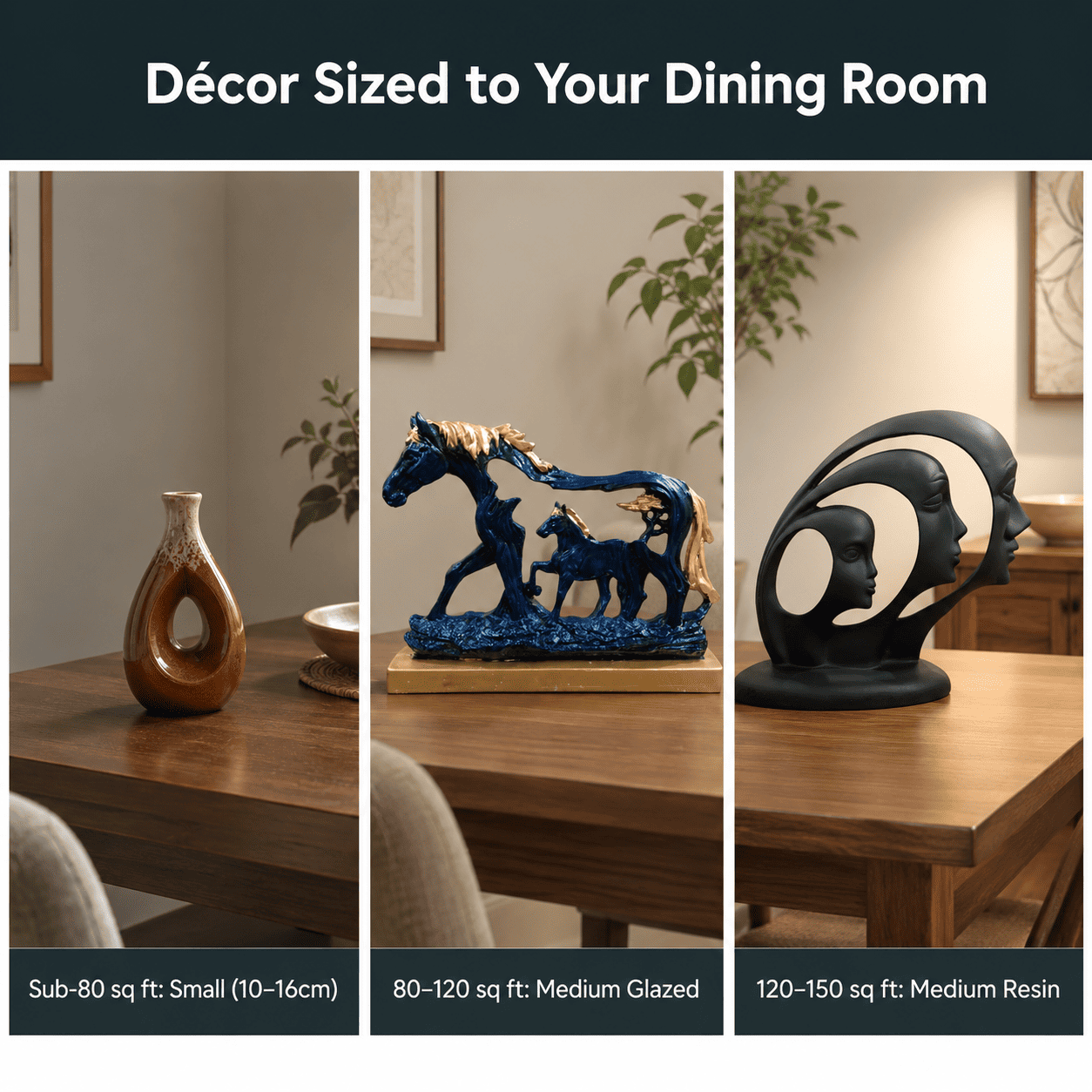
The right size is medium (16–21cm), not small or large, because a piece under 16cm gets visually lost on a dining table once the table is set, while anything over 25cm starts to compete with serveware and overhead lighting fixtures for the same visual space. A medium glazed piece sits at the exact height where it catches pendant or downlight without blocking sightlines across the table.
Because a dining table in a small room is used daily and needs to be cleared and reset constantly, durability matters more than it would in a display-only space. Moolwan's ceramic collection is rated heat-resistant to 60°C and drop-tested to 15cm, which means a piece can sit near serving dishes and survive an accidental knock during a meal without needing seasonal replacement — a real cost saving over buying decorative pieces that crack under normal table use.
| Room Footprint | Target Surface | Recommended Finish | Décor Size |
|---|---|---|---|
| Sub-80 sq ft (4-seater nook) | Table runner / center | Glazed ceramic | 10–16cm (Small) |
| 80–120 sq ft | Dining table + console | Glazed ceramic | 16–21cm (Medium) |
| 120–150 sq ft | Console + sideboard | Glazed ceramic or resin | 16–21cm (Medium) |
| 151+ sq ft (open dining-cum-living) | Sideboard focal point | Glazed resin | 25–34cm (Large) |
Because ceiling height, bulb temperature, and table material all shift which finish reads best in your specific room, browse the full size and finish selection in Moolwan's modern home décor collection to find the right match for your dining space.
Design Rule
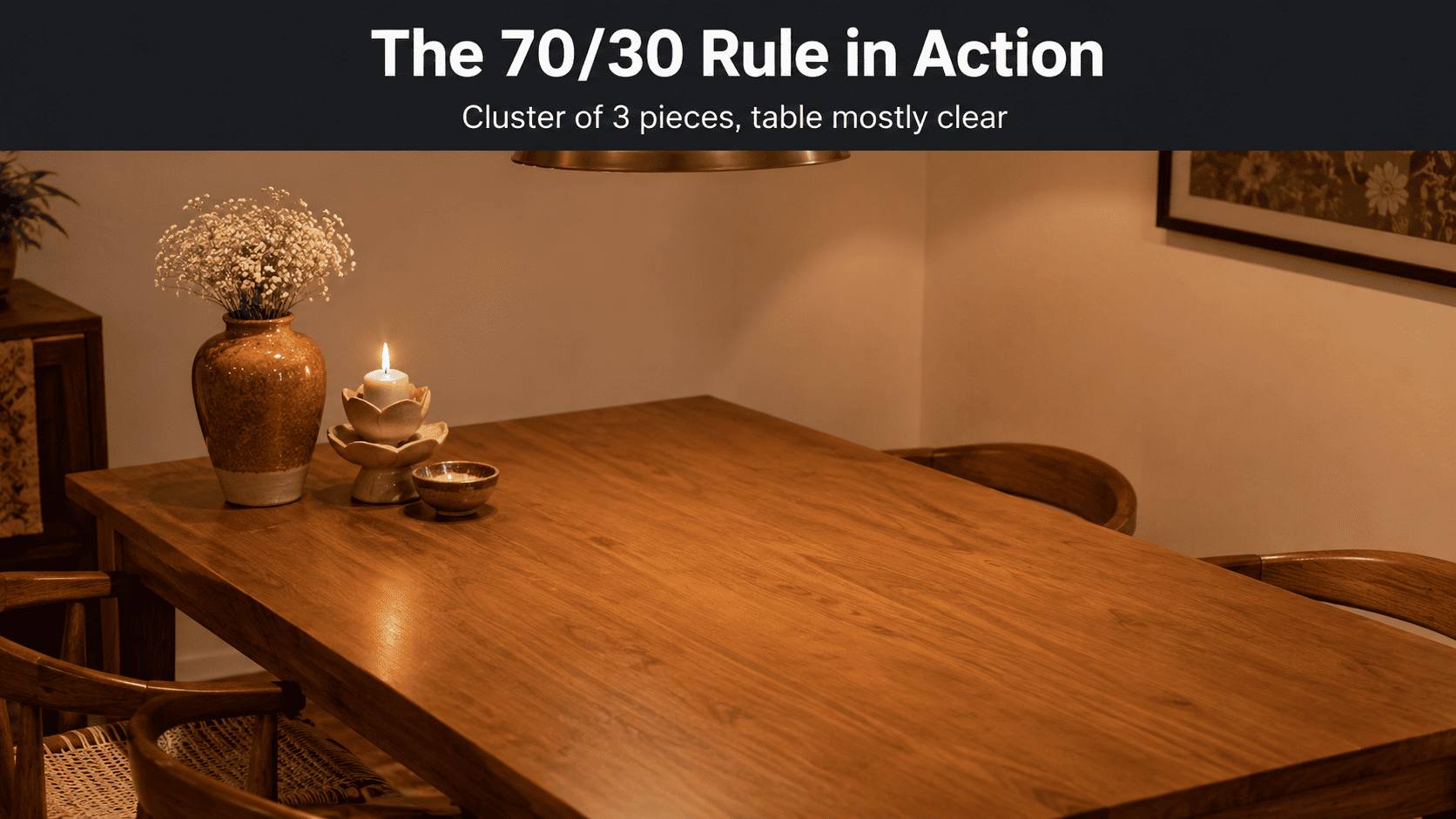
Moolwan's 70/30 Spatial Breathing Rule applies directly to windowless dining tables: leave 70% of the table's visible surface (when not set for a meal) completely clear, and cluster all décor — the showpiece, a candle holder, a small vase — within the remaining 30%. A fully decorated surface absorbs and breaks up artificial light into too many small reflections, which the eye reads as clutter rather than warmth; a 70% clear surface gives the light fewer interruptions to bounce off, so the room feels calmer and brighter at the same wattage.
Where should décor be placed when there's no window to anchor the room?
Without a window, the dining table itself becomes the room's visual anchor, so décor placement should pull the eye toward the table rather than toward the walls. A single grouped cluster at one end of the table, paired with a wall-mounted mirror or light-toned wall piece directly opposite the main light fixture, does more to brighten the room than several small pieces spread across different surfaces.
This single-anchor approach also reduces shadow conflict: every additional object on a different surface creates its own shadow under artificial light, and in a small room those shadows overlap and read as visual noise. Concentrating décor in one place keeps shadows predictable and the room reads as deliberately styled rather than cluttered.
Want to bring warmth and intentional light into a windowless dining space? Shop the full Moolwan dining room décor collection now.
Does palette matter more in a low-light dining room?
Palette matters more here than in any sunlit room, because warm earth tones (terracotta, ochre, warm grey) reflect the amber cast of most Indian household bulbs, while cool tones (icy white, pure grey) clash with that same amber cast and read as washed-out or sickly under artificial light. A warm-toned piece works with the room's only light source instead of fighting it.
Moolwan's modern home décor collection groups pieces by palette for exactly this reason, so a buyer styling a windowless room can filter directly to warm-toned finishes instead of testing pieces against their own lighting by trial and error.
Frequently Asked Questions
What is the best finish for a dining room with no windows?
Glazed ceramic or glazed resin is best, because a glazed surface reflects artificial light back into the room instead of absorbing it the way matte finishes do. In a room with only one light source, that reflected light is the difference between a space that feels bright and one that feels dim regardless of bulb wattage. Moolwan's glazed pieces are finished specifically for this kind of low-light reflection.
How many decorative pieces should go on a small dining table?
One grouped cluster of 2–3 pieces, not several pieces spread across the table. Spreading pieces out creates multiple separate shadows under artificial light, which a small room reads as clutter; grouping them keeps shadows contained to one area and leaves the rest of the surface clear, in line with Moolwan's 70/30 Spatial Breathing Rule.
What colours work best for windowless dining room décor?
Warm earth tones — terracotta, ochre, warm grey — work best because they reflect the amber-toned light most household bulbs emit, while cool whites and greys clash with that amber cast and look washed out. Matching décor palette to bulb temperature does more for perceived brightness than adding more lights.
Can ceramic décor handle daily use on a dining table?
Yes — Moolwan's ceramic collection is heat-resistant to 60°C and drop-tested to 15cm, so pieces can sit near hot serveware and survive accidental contact during a meal without cracking, which matters on a table used daily rather than for display only.
A windowless dining room doesn't need more lights — it needs décor that works with the light it already has. Choose a glazed, warm-toned piece sized for your table from the Moolwan dining room décor collection today, and if you're also styling adjoining spaces, the wider Moolwan home décor range and the Modern Home Décor collection are worth a look as alternatives in the same warm palette.


