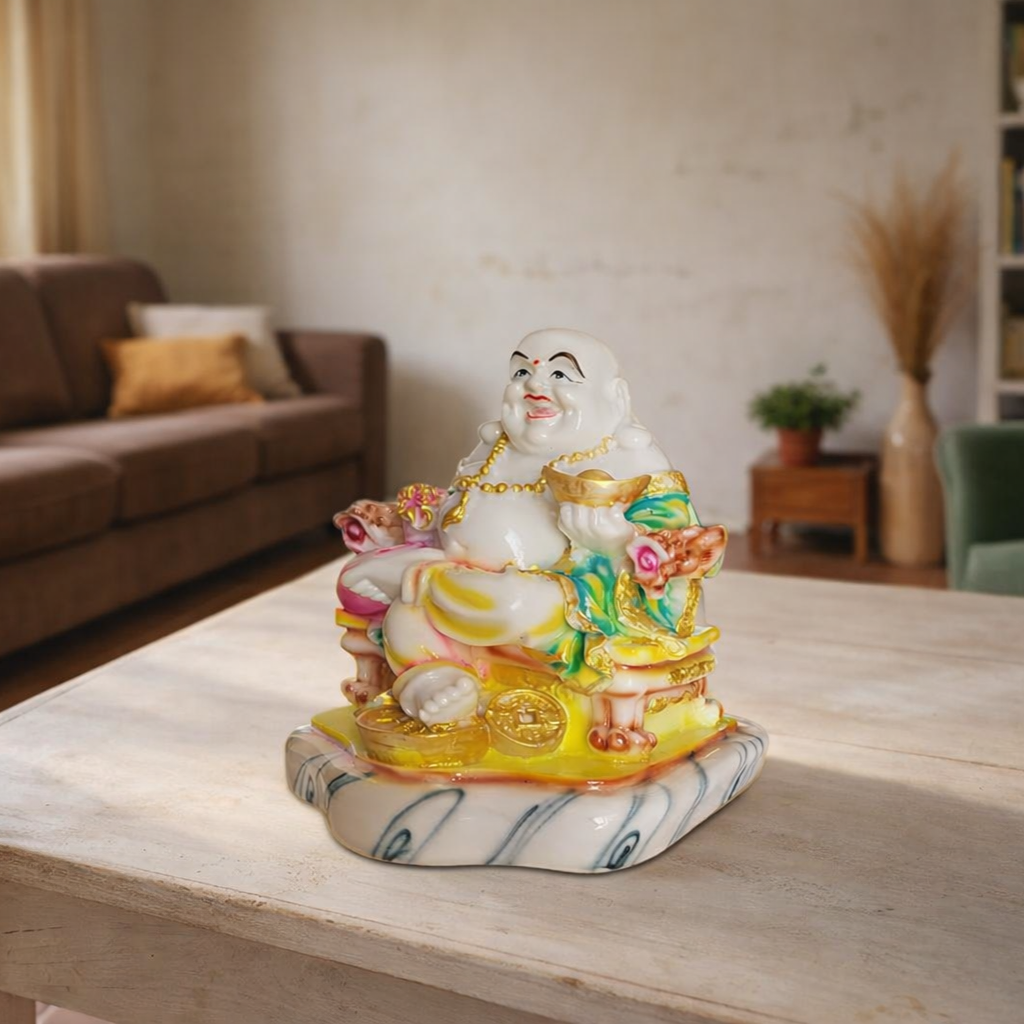
An expensive-looking dining room comes from three moves: one large-scale wall art anchor above the table, table-top accessories in matched materials and heights, and consistent matte-or-glazed finishes across every piece. Mixing random sizes, finishes, and unrelated decor items is what makes a dining room look cheap, regardless of budget.
We help design-conscious Indian homeowners style dining rooms that read as curated, not collected. The fastest visual cue of an expensive room is scale and restraint: one statement wall art piece, three to five table-top objects, and a single finish family. Most Indian dining rooms look cluttered not because of low spend, but because of mismatched scale, finish, and material across decor pieces.
A dining room looks expensive when one piece commands the eye before anything else does. That anchor is almost always wall art positioned above the console or sideboard, sized to occupy 60–75% of the furniture's width below it. A single large piece reads as intentional; three small mismatched frames read as filler.
For most Indian dining walls, Large format pieces (25–34cm depth, scaled up for wall canvases) work as the focal point, while Medium pieces (16–21cm) suit a console or sideboard top beside it. Browse Moolwan's modern home decor items to find wall art sized specifically for Indian apartment and villa dining walls, rather than imported pieces built for larger Western rooms.
Expensive-looking tables repeat two or three materials — never more. Pick one metal tone (brass or matte black), one ceramic or resin finish family, and stay inside it for every centerpiece, vase, and tray on the table.
A runner, a single ceramic vase, and one pair of matched candle holders outperform five small unrelated trinkets every time. Explore Moolwan's table-top decorative items — vases, statues, and photo frames built in consistent materials so the table reads as one composition instead of a flea-market shelf.
| Element | Expensive Look | Cheap Look |
|---|---|---|
| Materials used | 2–3 max, repeated | 5+ unrelated materials |
| Centerpiece count | 1 statement piece | 3–4 small competing pieces |
| Finish | One finish family (all matte or all glazed) | Mixed glossy and matte randomly |
| Scale | One large anchor + smaller supporting pieces | Everything same small size |
| Color palette | 2–3 tones, consistent with walls | 4+ clashing colors |
Build your dining table composition in one order — anchor, vase, accent.
Shop Table-Top DecorFinish consistency is the detail interior stylists rely on most, and the one Indian homeowners skip most often. A dining room with all-matte ceramics and all-matte wall frames looks deliberate. A dining room with one glossy vase, one matte bowl, and a glazed showpiece looks accidental, even if each item is well made.
Moolwan ceramic showpieces are built from 92% clay composition, heat-resistant to 60°C, with a 5+ year lifespan and humidity tolerance up to 85% RH — relevant because Indian dining rooms near open kitchens see heat and moisture that cheaper ceramic blends crack or dull under. Resin pieces use 94% purity epoxy resin, scratch-resistant to 3H pencil hardness, rated for 15–35°C and up to 60% RH, with a 3+ year indoor lifespan.
Lightweight pieces (150g–600g) are easier to style and restyle without damaging Indian wall types like POP or plaster finishes, and without overloading a sideboard. See Moolwan's full home decor items range to mix wall pieces and surface pieces from the same finish family in one order.
Use this sizing logic when assembling any dining room composition — it removes the guesswork that usually causes clutter.
| Size | Dimension | Best Placement |
|---|---|---|
| Small | 10–16cm | Shelf, sideboard edge, bar cart |
| Medium | 16–21cm | Console top, dining table centerpiece |
| Large | 25–34cm | Wall focal point, floor-adjacent statement piece |
An expensive Indian dining room rarely looks fully Western or fully traditional — it borrows clean modern lines for furniture and decor structure, then adds one culturally rooted texture: a brass accent, a handcrafted ceramic glaze, or a motif-led wall piece. Moolwan designs decor that holds this balance intentionally, manufacturing in-house rather than importing mass-produced pieces that ignore Indian climate, wall types, and space constraints.
What Moolwan stands for is direct: décor that is beautiful, durable, and meaningful, priced without middlemen markups, and engineered specifically for Indian humidity, heat, and home sizes. What Moolwan sells spans canvas wall art, ceramic and resin showpieces, and curated gifting pieces — all manufactured to the same specification standard referenced above.
If a piece doesn't sit right once it's on your wall or table, Moolwan accepts returns within 24 hours of delivery for unused items in original packaging, with a 10% restocking fee and refund processed within 15 working days. This matters for dining room styling specifically, since scale and color often only become obvious once a piece is in the room.
Ready to anchor your dining wall with one statement piece?
Shop Modern Home DecorWhat's the cheapest way to make a dining room look expensive?
Reduce the number of decor pieces, not the budget. One well-sized wall art anchor and a single matched table-top set outperform a dozen small mismatched items, even at the same total spend.
What size wall art works above an Indian dining table?
A Large format piece (25–34cm depth scaled to wall proportions) covering 60–75% of the console or sideboard width below it reads as a deliberate focal point rather than an afterthought.
Should dining room decor be matte or glossy?
Pick one and stay consistent. Matte finishes suit warmer, traditional-leaning Indian interiors; glazed finishes suit brighter, modern spaces. Mixing both across pieces is the most common cause of a cluttered, cheap-looking table.
How many decor pieces should a dining table have?
Three to five pieces maximum: one centerpiece, one or two supporting accents, and optionally a runner or tray. More than five competing objects reads as clutter regardless of individual piece quality.
Does ceramic or resin decor handle Indian dining room humidity better?
Both are engineered for it. Moolwan ceramic pieces tolerate humidity up to 85% RH and heat to 60°C; resin pieces handle up to 60% RH and 15–35°C. Choose ceramic for kitchen-adjacent dining areas with higher heat exposure.
Quick View



