
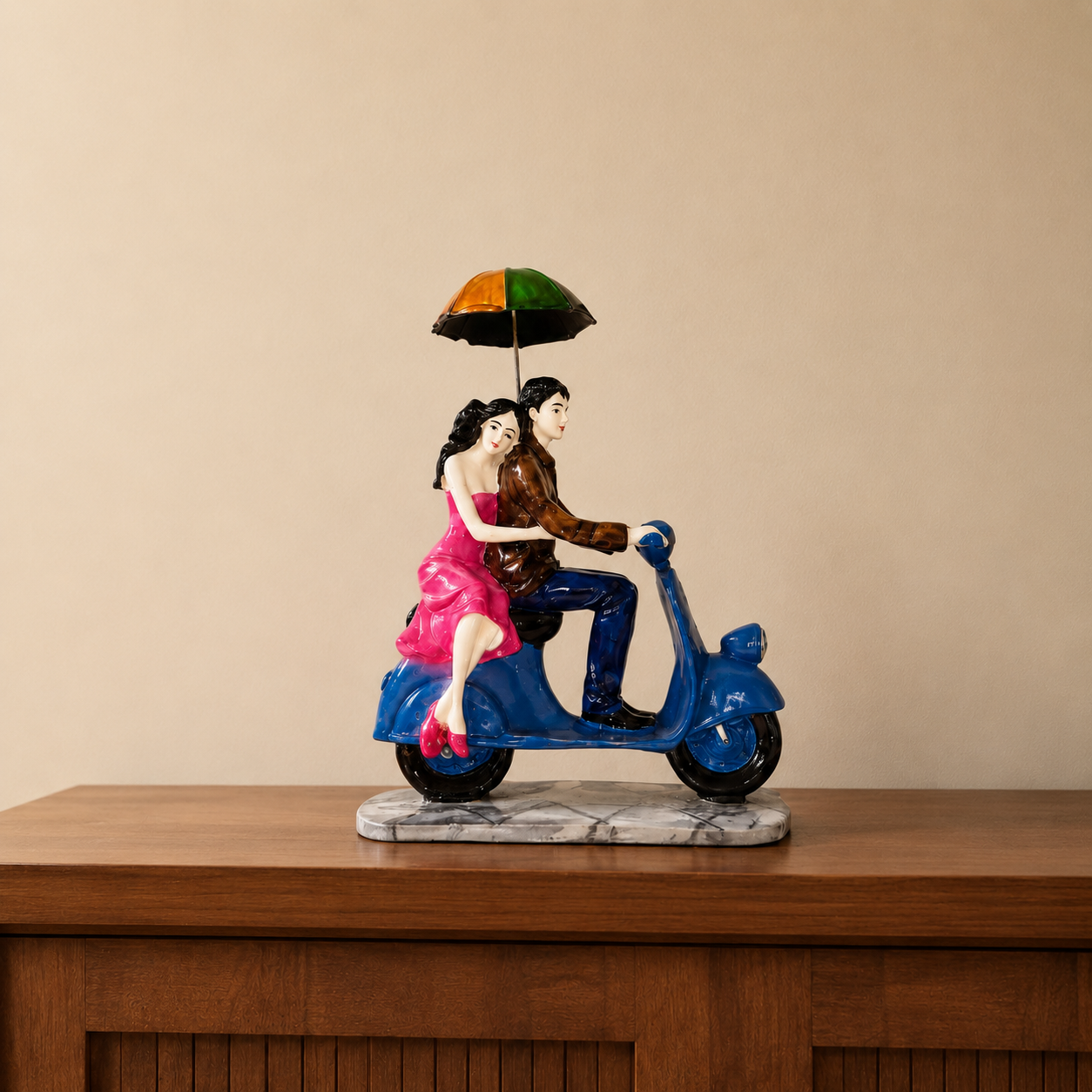
We help Indian homeowners style dining spaces that feel finished without looking staged — because a bare table, however expensive, still photographs empty.
Most dining tables in Indian homes fail the "attractive" test for one reason: everything sits directly on the wood with nothing to anchor it. A runner breaks that flatness immediately, and it does double duty as a heat- and stain-buffer for daily meals. Choose linen or cotton in a tone one shade warmer or cooler than your table wood — never matching exactly, or the runner disappears into the surface.
Centerpiece height is the detail that decides whether guests can actually see each other across the table. Anything under 20cm sits below eye line when seated; anything past 25cm should only appear when the table is set for display, not for eating. Moolwan's ceramic showpieces are engineered specifically inside this range — 92% clay composition, heat-resistant to 60°C, and drop-resistant to 15cm falls, which matters on a table children reach across daily. Browse Moolwan's modern home décor items for centerpieces sized for exactly this use.
The Three Layers of an Attractive Table
Each layer solves a different visual problem. Skipping one leaves a gap the eye catches immediately, even if the buyer can't name why.
- Base layer — runner or placemats. Grounds the surface and protects it. Cotton and linen breathe better than synthetic weaves in Indian humidity and won't warp under a hot serving dish.
- Mid layer — centerpiece. A single ceramic or resin piece under 20cm reads as curated. Three matched pieces in a tray reads as a set. Both work; a random cluster of mismatched objects does not.
- Upper layer — wall art or hanging décor. The wall behind or above the table frames the entire seating area in every photo taken there. A canvas piece hung 15–20cm above the table's sight line pulls the eye up and makes the space feel taller.
For the upper layer, 340 GSM cotton canvas with UV-resistant eco-solvent inks holds colour in direct sun near a dining window without fading within the first year — a common failure point with printed posters. Explore Moolwan's home décor hanging items for pieces sized to sit above a standard 6-seater dining table.
Styling a full dining wall? Get the runner, centerpiece and wall piece as a set.
Shop the Dining Décor EditSizing Guide: What Fits Which Table
Table size decides centerpiece size, not the other way around. Use this as a working reference rather than a rule to break — a piece that's too large for the table crowds the plates; too small and it disappears once food is served.
| Table Type | Recommended Centerpiece | Material Spec | Placement Note |
|---|---|---|---|
| 4-seater / compact apartment | Small, 10–16cm | Ceramic, matte finish | Single piece, off-centre, not blocking pass-through |
| 6-seater standard | Medium, 16–21cm | Ceramic or resin, glazed | Centred, paired with a runner |
| 8-seater / dining island | Large, 25–34cm or a trio of mediums | Resin, 3H scratch-resistant | Focal point down the table's long axis |
| Any size, daily-use table | 150g–600g pieces only | Lightweight ceramic/resin | Easy to shift for actual meals |
Weight matters more than most buyers expect. A centerpiece has to be moved for every real meal, so anything past 600g becomes a piece people stop bothering to relocate — and it ends up permanently pushed to one side instead of styled at all.
Matching the Table to the Rest of the Room
A dining table rarely sits in isolation — it's usually visible from the living room in Indian apartment layouts, which means its styling has to hold up against the adjacent space rather than compete with it. Keep the dining centerpiece's tone within the same palette family as your living room accents; a cool-toned ceramic piece next to a warm terracotta sofa reads as accidental, not intentional.
If your dining and living areas share sightlines, pull decor from the same collection so the transition feels planned rather than pieced together. Moolwan's living room décor collection is built on the same finish and size logic as the dining pieces, so a matte ceramic vase on the console and a glazed one on the dining table still read as one styled home.
The one mistake that undoes all three layers
Overcrowding. A runner, a centerpiece, a candle set, a fruit bowl and a vase on one table is not layered styling — it's clutter that gets swept aside at the first meal. Attractive dining tables in professional shoots use one runner, one centerpiece, and let the wall above do the rest of the visual work.
Dining Table Styling: Quick Answers
What height should a dining table centerpiece be?
Under 20cm for everyday use, so guests can see each other across the table. Moolwan's small (10–16cm) and medium (16–21cm) ceramic showpieces are sized for this exact requirement.
What material lasts longest on a daily-use dining table?
Ceramic with 92% clay composition and heat resistance to 60°C handles hot dishes and daily wiping best. Resin pieces with 94% epoxy purity and 3H scratch resistance are the second-best option for high-traffic tables.
Should wall art go above the dining table itself?
Yes — hang it 15–20cm above where a seated guest's eyeline would land. This is typically lower than living room wall art height, since dining art is viewed from a seated position, not standing.
How do I style a dining table on a tight budget?
Prioritise one runner and one centerpiece before adding wall art — the base and mid layers give the biggest visible change per rupee spent. Add hanging décor once those two are in place.
Can I return a centerpiece if it doesn't suit my table?
Moolwan accepts returns within 24 hours of delivery if the item is unused and in original packaging, with a 10% restocking fee and refund processed within 15 working days.


