
How to Make a Small Drawing Room Look Beautiful: 7 Space-Smart Rules
The Short Answer
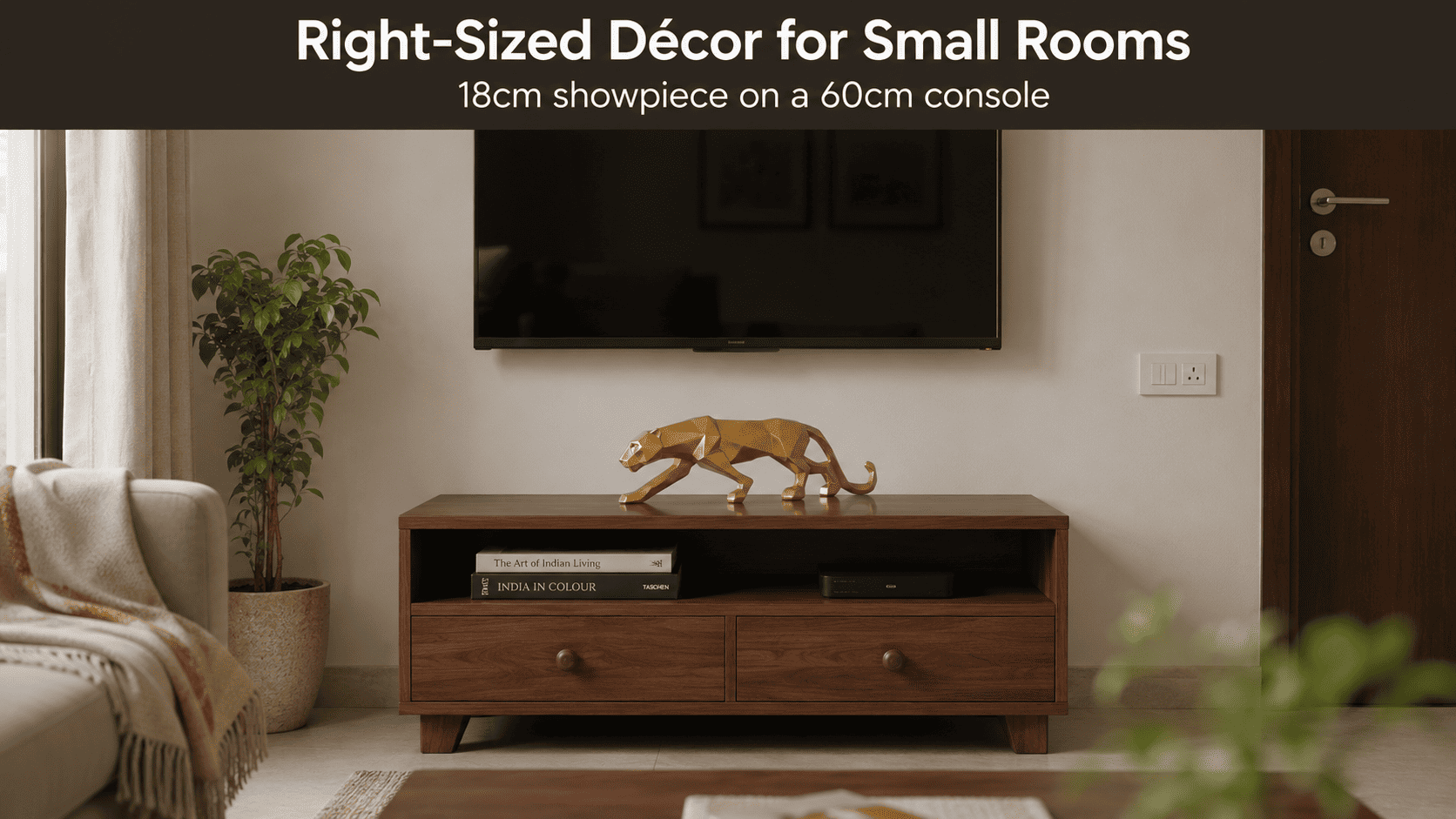
A small drawing room looks beautiful when décor is sized to the surface, not the wall. Moolwan recommends 10–16 cm showpieces on shelves under 30 cm wide and reserving one 16–21 cm medium piece as the room's single focal point — because oversized pieces on undersized surfaces are the primary cause of a small room reading as cluttered rather than curated.
A living room under 150 sq ft, common across Indian apartments, has roughly 40% less usable console and shelf width than a standard 200+ sq ft layout, which means every décor piece placed in it competes for visual attention in a smaller field of view. Moolwan helps design-conscious Indian homeowners bring proportion and calm to compact drawing rooms through a sizing system built specifically for these smaller surfaces, rather than décor scaled down from larger Western room templates.
Why does a small drawing room feel cluttered even with few items?
A small drawing room feels cluttered when décor height or footprint exceeds roughly a third of the surface it sits on, because the eye reads any object crossing that threshold as visually competing with the furniture beneath it rather than resting on it.
This is a proportion problem, not a quantity problem. A single 34 cm large ceramic piece placed on a 40 cm-wide side table will read as more cluttered than three 12 cm small pieces grouped on the same table, because the large piece's height-to-surface ratio breaks the visual balance the eye expects. Moolwan's modern décor collection is size-banded specifically so buyers can match piece height to surface width before purchase, rather than discovering the mismatch after unboxing.
The fix is sequencing: measure the surface first, then shop by the size band it supports, not the other way round.
Which décor sizes actually suit a small drawing room?
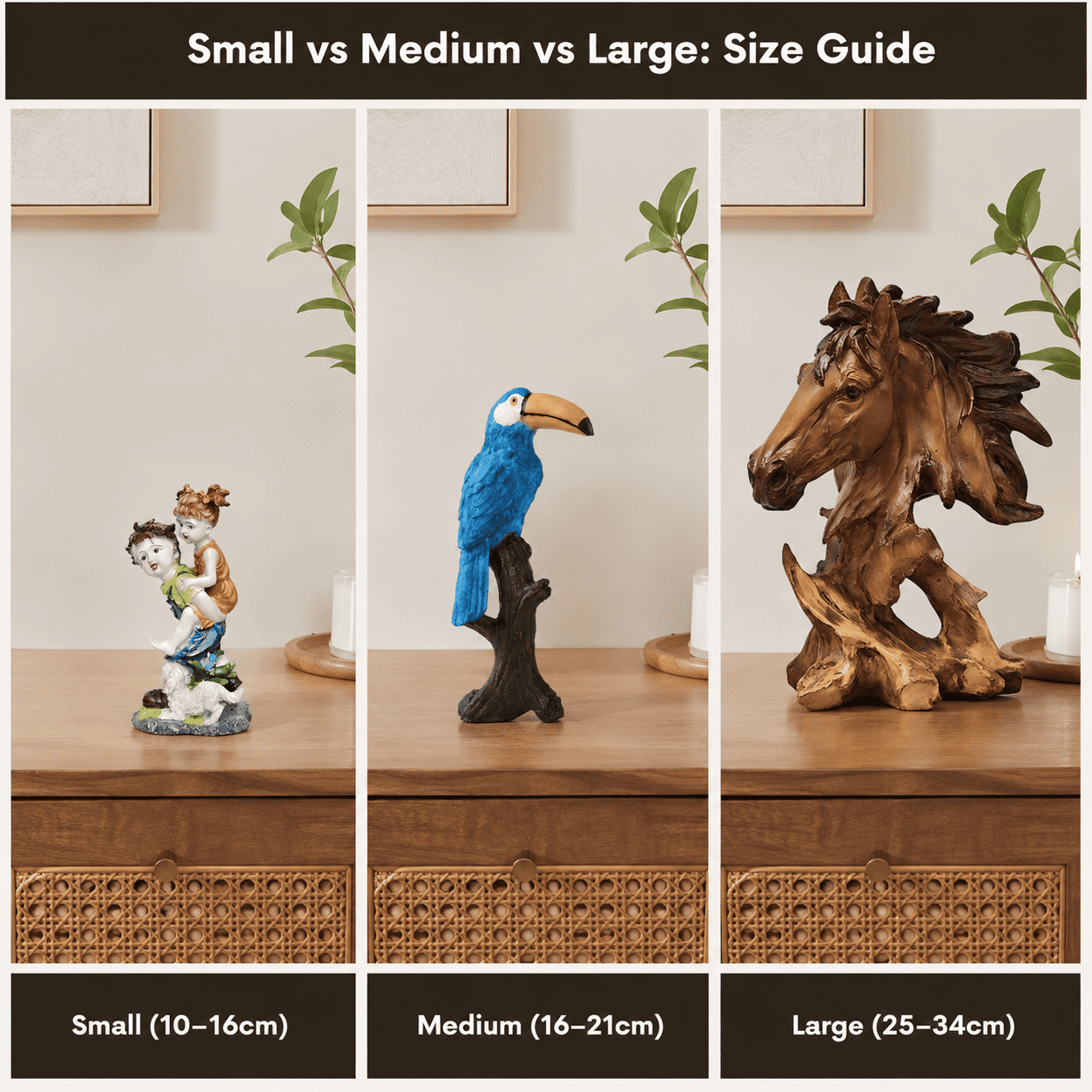
Small drawing rooms are best served by the small (10–16 cm) and medium (16–21 cm) bands, reserving large (25–34 cm) pieces for a single focal surface only.
Ceramic pieces in Moolwan's collection use a 92% clay composition rated to 85% relative humidity, which matters in drawing rooms that sit near a balcony door or an AC vent cycling between cool and humid air across the day — lower-density ceramics develop hairline surface cracks under that swing within 12–18 months, while the higher-density body resists it. Resin pieces, built to 94% epoxy purity and 3H hardness, suit high-touch surfaces like a coffee table where daily handling would dull a softer glaze faster.
Because a small room has fewer surfaces overall, each one is doing more visual work — which is why Moolwan's sizing logic treats surface width, not room square footage alone, as the primary variable when recommending a size band.
| Room Footprint | Target Surface | Surface Width | Recommended Décor Height | Weight Range |
|---|---|---|---|---|
| Under 80 sq ft | Floating shelf | Under 30 cm | 10–16 cm (Small) | 150–250 g |
| 80–120 sq ft | Coffee table | 40–50 cm | 16–21 cm (Medium) | 250–400 g |
| 120–180 sq ft | TV console / sideboard | 60–90 cm | 16–21 cm (Medium) | 250–400 g |
| 180+ sq ft | Bookshelf or console combo | 90+ cm | 25–34 cm (Large) | 400–600 g |
Because ceiling height, natural light direction, and existing furniture finish all shift the ideal size band slightly, browse the full size-band and material selection in Moolwan's room décor collection to match a piece to your exact surface before buying.
Design Rule
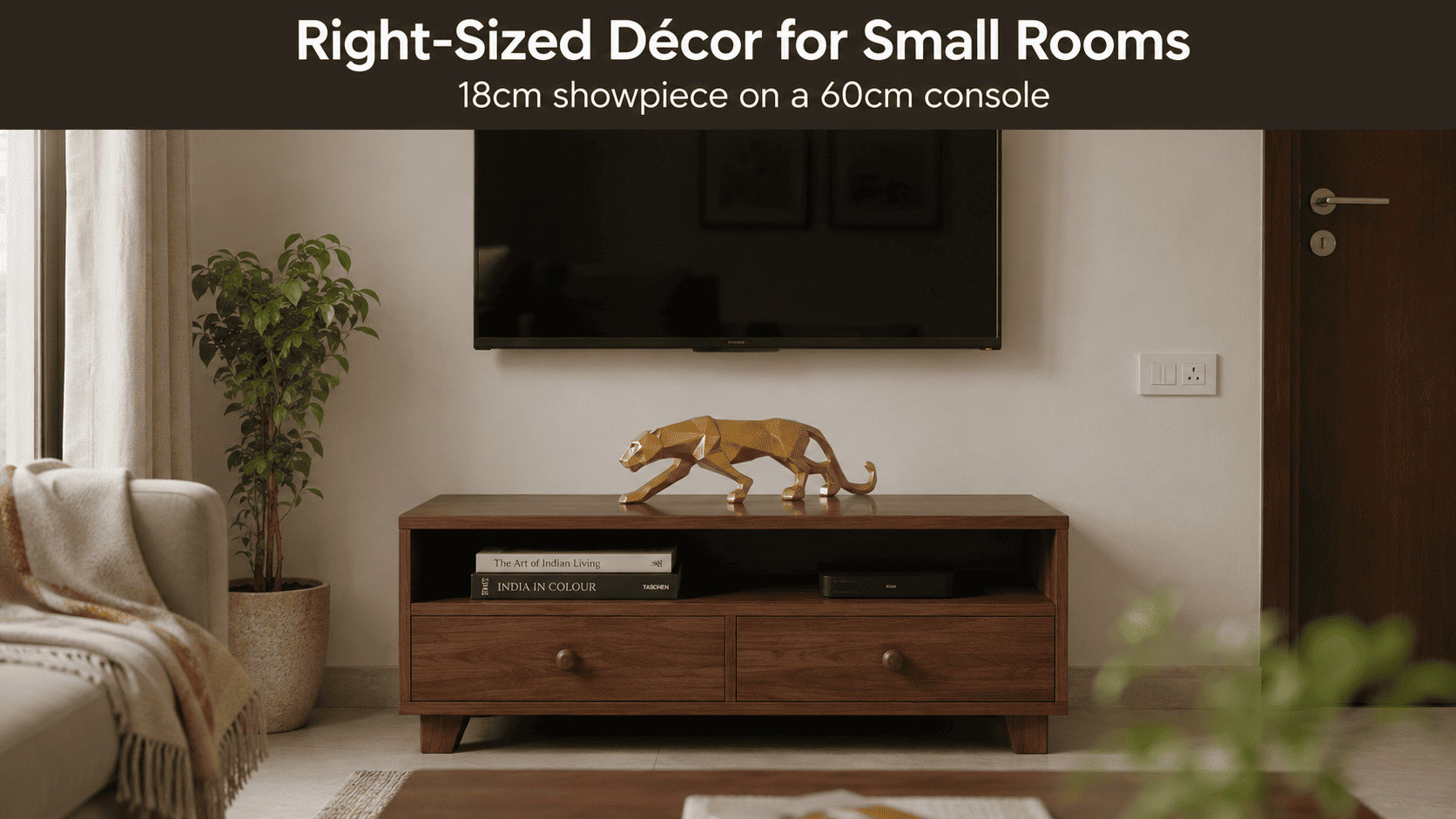
Moolwan's Sightline Anchor Rule holds that a small drawing room should carry exactly one décor piece placed along the sightline visible from the entrance — never two competing focal points — because a single anchor gives the eye one clear resting point, while two anchors force the eye to split attention and register the room as busier than its actual footprint.
How many décor pieces should a small drawing room actually have?
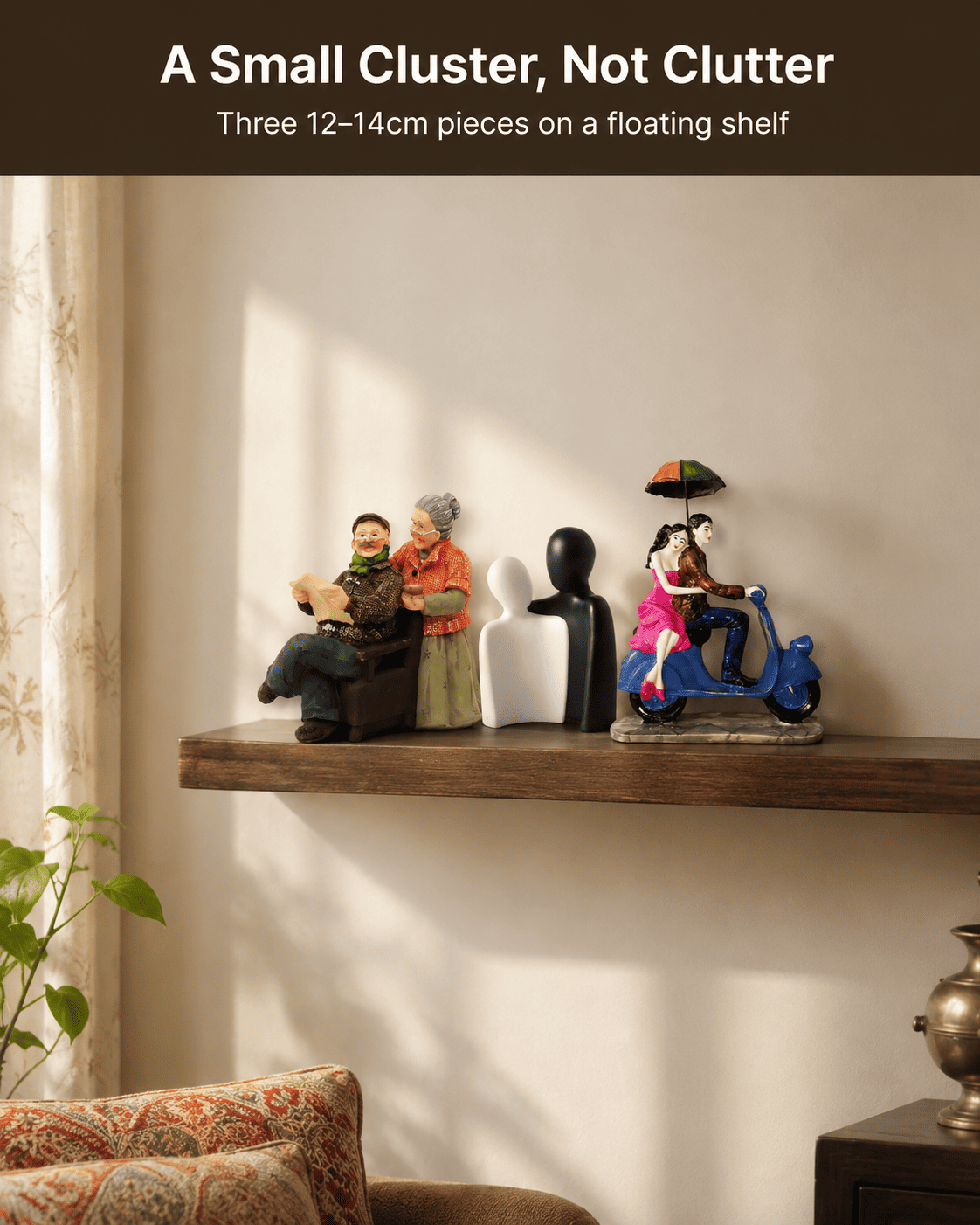
A small drawing room supports one focal piece plus one clustered grouping of two to three smaller pieces — rarely more.
This caps total visual load at a level the eye can process without scanning fatigue, which studies on visual clutter attribute to the number of distinct focal points in a field of view rather than the number of objects itself. Investing in fewer, correctly-sized pieces also pays off over time: a well-scaled ceramic or resin piece rated for 3+ years of indoor use outlasts several rounds of impulse-bought smaller items that get swapped out as the room feels "off," making the upfront sizing decision the more cost-efficient one across a multi-year horizon.
Want to stop guessing at sizes and get it right the first time? Shop the full Moolwan room décor collection now, filtered by size band.
Where should décor go in a small drawing room to avoid clutter?
Décor belongs on one anchor surface and one secondary cluster surface — never spread across every available shelf, ledge, and table in the room.
Spreading pieces across multiple surfaces forces the eye to travel further to take in the room, which is precisely why open-plan small drawing rooms photographed for real estate listings almost always stage décor on just two or three surfaces rather than every flat one available. A floating shelf works well as the secondary cluster surface because it sits above eye level for someone seated, keeping the coffee table or console clear as the primary anchor.
Frequently Asked Questions
What size showpiece suits a small drawing room?
A 10–16 cm small piece suits shelves and desks under 30 cm wide, while a 16–21 cm medium piece suits a coffee table or console 40–50 cm wide, because matching height to surface width keeps the piece from visually overwhelming its surface. Moolwan's size guide maps these bands directly to common Indian room footprints.
Should a small drawing room use ceramic or resin décor?
Ceramic, rated to 85% relative humidity in Moolwan's collection, suits surfaces near windows or balconies where humidity swings are frequent, while resin, built to 3H pencil hardness, suits high-touch surfaces like coffee tables that see daily handling. The choice depends on where in the room the piece sits, not personal preference alone.
How do I avoid a cluttered look with limited surfaces?
Limit décor to one anchor surface and one secondary cluster, and keep roughly two-thirds of any surface visually clear, because an object occupying more than a third of its surface reads as crowding rather than styling. This applies whether the surface is a console, coffee table, or floating shelf.
Can a small drawing room still feel styled with just two or three pieces?
Yes — a single well-scaled focal piece plus a small clustered grouping typically reads as more intentional than five or six mismatched items, since fewer correctly-sized objects reduce the number of competing focal points the eye has to process.
A small drawing room doesn't need less décor — it needs décor sized correctly the first time, so you're not replacing pieces every season as the room feels increasingly cramped. Bring home a size-matched piece from the Moolwan room décor collection, or explore the wider Modern Home Decor collection and the unique home décor pieces if you're looking beyond the standard size bands — all manufactured in-house and engineered for Indian humidity and room scales.


