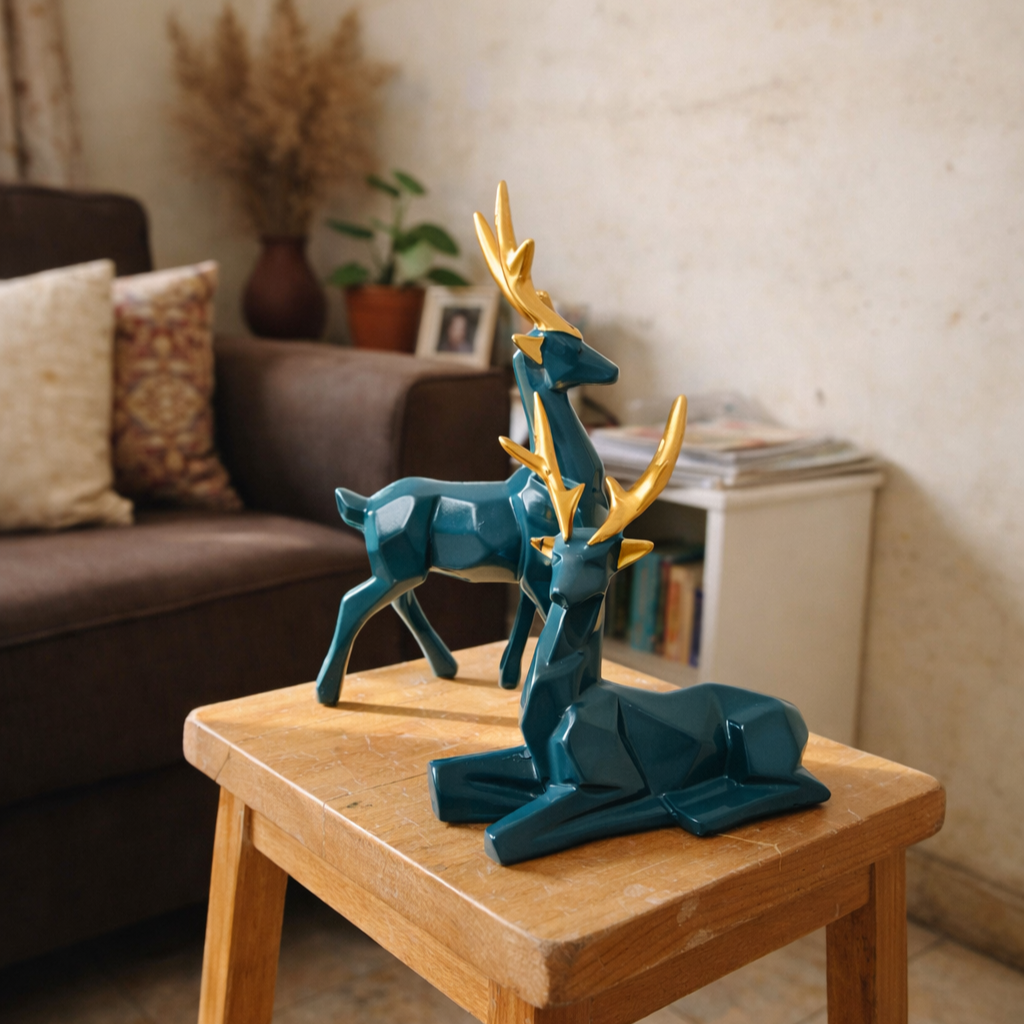
How to make a studio apartment look luxurious?
A studio apartment looks luxurious when every visible surface tells a deliberate story — through scale-appropriate art, curated showpieces, and intentional layering rather than volume. At Moolwan, we help design-conscious Indian homeowners in compact urban spaces achieve a high-end look using fewer, better-chosen pieces that are sized, finished, and engineered for Indian rooms.
Luxury in a small space is never about filling it — it is about editing it. These five moves consistently transform a studio from cramped to considered.
Each of these moves works independently. Together, they compound — and the transformation is visible in under an afternoon.
The single most common décor mistake in Indian studio apartments is wrong scale: oversized furniture paired with showpieces that are too small to register, or tiny art frames lost on large walls. Luxury, in a visual sense, is about proportion.
Moolwan engineers every piece with size guidance built in, because Indian spaces — compact 1BHK studios, compact living-dining combos — have specific display zones that reward specific dimensions.
| Display Zone | Ideal Showpiece Size | Weight Range | Why It Works |
|---|---|---|---|
| Bathroom shelf / study desk | Small: 10–16 cm | 150–250 g | Present without overpowering tight zones |
| Living room showcase / coffee table | Medium: 16–21 cm | 250–400 g | Creates visual weight without crowding surface |
| Entryway console / focal shelf | Large: 25–34 cm | 400–600 g | Commands attention, acts as a room anchor |
| Primary accent wall | Canvas: 60 cm+ on longest side | Under 1.2 kg | Fills wall without structural concerns |
At 150 g–600 g, Moolwan showpieces are lightweight enough for Indian shelves and wall-mounted systems that were not designed for heavy western décor. This is an engineering consideration most D2C brands overlook.
In a studio, the walls are your largest canvas — literally. A single high-quality art print, hung at eye level on the primary wall opposite your entrance, anchors the entire room and signals that the space was designed, not assembled.
Wall art is also the highest-ROI change you can make in a studio — it covers a large surface area for far less cost than furniture, takes under 10 minutes to hang, and is reversible if you move. Browse Moolwan's trendy décor collection — curated specifically around the kind of modern-meets-warm aesthetic that feels at home in Indian apartments without looking imported or mismatched.
Every piece is scaled, finished, and climate-engineered for Indian homes — no middleman markups, no oversized pieces that dwarf your space.
A showpiece earns its place on your shelf when it holds up to scrutiny — when someone picks it up and it feels solid, not hollow; heavy, not cheap. That tactile quality is what separates a luxury room from a decorated one.
Moolwan's ceramic and resin showpieces are manufactured to standards that most Indian buyers have never been offered at this price point.
| Material | Moolwan Standard | Why It Reads as Luxury | Indian Climate Suitability |
|---|---|---|---|
| Ceramic | 92% clay composition, heat-resistant to 60°C, 15 cm drop-resistant | Dense finish, resonant tap sound — premium tactile quality | Humidity-tolerant up to 85% RH; 5+ year indoor lifespan |
| Resin | 94% epoxy purity, 3H pencil hardness scratch-resistance | Glass-like surface clarity, retains colour without yellowing | Stable at 15–35°C; humidity up to 60% RH; 3+ year lifespan |
Both finishes are available in matte and glazed — and both are easy to maintain with a dry microfibre cloth. No special cleaning products, no seasonal care rituals. That low-maintenance quality is itself a luxury in a busy Indian household.
Luxury décor is not defined by price. It is defined by intentionality, proportion, and material finish. Here is the difference, clearly stated:
| Décor Signal | Looks Cheap | Looks Luxurious |
|---|---|---|
| Wall coverage | 6–8 small mismatched frames | 1–2 large, intentional pieces with consistent framing |
| Showpiece scale | Multiple tiny items on a large shelf | 1–2 correctly sized pieces with breathing room |
| Colour palette | 5+ competing colours across the room | 3-tone palette: dominant, mid, accent |
| Material finish | Plastic with metallic spray paint | Ceramic, resin, or canvas with genuine material character |
| Placement logic | Filled every surface | Curated groupings with deliberate negative space |
| Gifted/displayed items | Random, unrelated gifted pieces | Cohesive with the room's palette — or gracefully stored |
The table above is the shortest editing checklist you need. Walk through your studio with it once. Every item that fails two or more columns is a candidate for replacement — not with something expensive, but with something intentional.
Studio apartments in India are often styled incrementally — a piece added after a salary hike, another after a festival gift. This is not a constraint; it is how good rooms get built. The key is ensuring every new piece is chosen to compound the effect of what is already there, not compete with it.
If you are styling on a rolling budget, or if someone in your life is moving into a new flat and you want to give something genuinely useful, browse Moolwan's curated affordable gift collection — pieces chosen because they have outsized visual impact without requiring a full redecoration to make them work. Each is styled and photographed in compact Indian room settings so you can see exactly how it lands before it arrives.
Moolwan sells direct-from-manufacturer. There is no wholesaler, no distributor markup. The price you pay reflects the actual material and craft cost — not a supply chain premium. That is what makes genuine quality accessible without compromise.
Pieces sized for Indian spaces. Materials engineered for Indian climate. Prices set without middleman markups.
For a studio under 400 sq ft, aim for 3–5 décor pieces total across all visible surfaces — not counting furniture. Each piece should be chosen for a specific spot: one focal wall canvas, one or two shelf showpieces, and one accent piece for the coffee table or entryway. More than five competing items in a small space creates visual noise, not luxury.
For a standard Indian studio with 9–10 ft ceilings and a primary wall of 8–10 ft width, a canvas of 60×90 cm or 45×60 cm works well as a single focal piece. If you want a two-piece set, keep both frames identical in size and hang them with 5–7 cm between them. Moolwan's canvas art uses 340 GSM cotton canvas on 1.5-inch kiln-dried pine frames — lightweight enough for standard Indian wall fixtures.
Yes — if the piece is manufactured to the right standard. Moolwan's ceramic showpieces carry a 92% clay composition and are rated for humidity up to 85% RH, which covers even coastal Indian cities at peak monsoon. The key risk with cheaper ceramics is hairline crazing (micro-cracks in the glaze) caused by thermal cycling — Moolwan's ceramics are heat-resistant to 60°C to prevent this. Expect a 5+ year indoor lifespan under normal Indian conditions.
Moolwan accepts returns within 24 hours of delivery, provided the item is unused and in its original packaging. A 10% restocking fee applies. Refunds are processed within 15 working days. This policy is designed for buyers who want to try a piece in their actual lighting and space — not to punish them for changing their mind.
Choose ceramic when you want a traditional, weighty, handcrafted look — it suits warmer palettes with earth tones and wooden furniture. Choose resin when you want a modern, glossy, almost sculptural feel — it suits cooler or monochrome interiors. In terms of durability, ceramic handles higher humidity (up to 85% RH vs resin's 60% RH), making ceramic the stronger choice for coastal Indian cities. Both are available across Moolwan's modern home décor collection.
Quick View



