At Moolwan, we help design-conscious Indian homeowners create outdoor spaces that look curated, not cluttered — using décor that is engineered for real Indian climates, not just styled for a catalogue photo. Whether you have a 60 sq. ft. apartment balcony, a terrace garden, or an open lawn entrance, the same principles apply: material first, then composition, then personality.
The problem is almost never budget. It is almost always a lack of a design anchor. Most Indian outdoor spaces — balconies especially — collect mismatched furniture, dried-out plants, and forgotten objects. The space looks busy but feels empty. The fix is to start with a single focal point and build outward in three zones: the floor plane, the vertical surface, and the overhead or ceiling level.
The second issue unique to India is material failure. Décor bought for visual appeal rarely survives one monsoon season. Ceramic items crack under thermal shock, resin pieces yellow in direct UV, and wrought-iron rusts by October. Any outdoor décor plan must start with material specifications suited to Indian weather — not items imported for European or air-conditioned environments.
The third issue is the disconnect between outdoor and indoor. Your outdoor area should feel like a natural extension of your home's interiors. If your living room has warm earth tones and natural textures, your balcony should echo that language — not contradict it with plastic furniture and neon planters. This visual continuity is what separates a styled space from a thrown-together one.
Every well-styled outdoor space has one dominant visual element — a large planter, a decorative water feature, a statement hanging, or a mural-style panel. This anchor gives the eye a place to rest and sets the tone for everything else. For a balcony under 80 sq. ft., one 30–35 cm centrepiece is enough. For a terrace or garden, anchor each seating or activity zone separately.
Bare cement or standard floor tiles make even styled furniture look temporary. Interlocking wood-look tiles, pebble strips, or outdoor-grade coir mats immediately signal intentionality. For Indian homes, choose materials rated for water-logging and temperature cycling — standard wood decking warps in the monsoon; composite or treated wood lasts 5–7 years with minimal upkeep.
Greenery is the most forgiving décor element outdoors. Use tall plants (90 cm+) like bamboo or snake plants as privacy screens at the perimeter, medium plants (40–70 cm) like money plants or ferns as mid-layer fillers, and low plants or succulents at floor level or in railing planters. This three-height layering creates depth even in a 50 sq. ft. balcony.
Outdoor lighting is planned in daylight, not added as an afterthought at dusk. String lights overhead, a solar lantern on a side table, and an uplighter at the base of a tall plant create three layers of illumination that make the space usable and beautiful after 7 PM — something most Indian balconies completely miss.
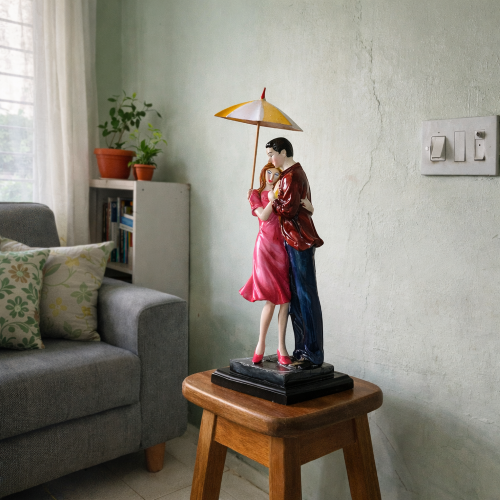
The strongest design move available to any Indian homeowner is visual continuity from the street or corridor → the entrance → the outdoor space → the interior. When your entrance décor, outdoor accents, and interior styling share a colour palette or material language, the entire home reads as intentional. Explore decorative items for your entrance area that bridge this outdoor-to-indoor transition — wall hangings, statues, and ceramic vases that work equally well on a covered porch, a foyer ledge, or an open-air entry niche.
Choosing the wrong material is the most expensive mistake in outdoor styling. The table below compares common outdoor décor materials against the conditions they face in Indian homes — including humidity levels during monsoon, summer peak temperatures, and UV intensity in peninsular and north Indian regions.
| Material | Max Humidity Tolerance | Temperature Range | UV Resistance | Monsoon Safe? | Lifespan (Outdoor Use) | Best For |
|---|---|---|---|---|---|---|
| Moolwan Ceramic (92% clay composition) | Up to 85% RH | Up to 60°C heat-resistant | Glazed finish — good | Yes (covered porch/balcony) | 5+ years | Covered balconies, porch ledges, niches |
| Moolwan Resin/Epoxy (94% purity) | Up to 60% RH | 15°C – 35°C | Moderate — keep out of direct sun | Partially (shaded areas only) | 3+ years (shaded) | Shaded balconies, covered terraces |
| Standard Terracotta | Up to 70% RH | Up to 50°C | Good — natural pigment | Partially (prone to cracking) | 2–3 years | Planters, ground-level accents |
| Wrought Iron | Low — rusts above 60% RH | Wide range | Good with powder coat | No (without anti-rust treatment) | 1–2 seasons untreated | Interior-grade accents only |
| Standard Canvas Art | Below 50% RH recommended | 10°C – 30°C | Low unless UV-coated | No | Under 1 year outdoors | Indoor use only |
| Composite/Treated Wood | Up to 80% RH | 5°C – 50°C | Good with UV stain | Yes | 5–7 years | Decking, furniture, raised planters |
Moolwan ceramic and resin specifications are proprietary material standards tested for Indian climate conditions. Source: Moolwan Design Concept Team, Euphorica Ventures Pvt Ltd.
The rule here is vertical: think up, not out. Wall-mounted planters, railing hooks, a hanging macramé or geometric panel, and a single compact seating unit with a side table is all you need. Limit your colour palette to two tones — warm neutrals and one accent. A 15–20 cm ceramic piece on a railing-mounted shelf adds personality without consuming floor space.
Zone the space into activity areas: a seating zone, a dining zone (if space allows), and a green wall or garden bed zone. Use large-format planters (35 cm+) as natural dividers. Lay composite deck tiles to create a "room within a room" effect under a pergola or shade sail. Lighting — string lights overhead and solar stake lights along pathways — makes the space functional after dark.
This is the highest-value space to style because it sets the first impression of your entire home. A pair of matching ceramic or terracotta decorative pieces flanking the door, a weather-resistant door mat with texture, a hanging planter, and one ambient light source (a wall sconce or solar lantern) transforms a bare entrance into an experience. For curated pieces that bridge outdoor and indoor styling, browse Moolwan's entrance decorative items — each piece is sized and finished for real Indian porch conditions.
A bedroom-adjacent balcony is a personal retreat space, not a display area. Keep it calm: a single recliner or hammock chair, soft outdoor cushions in linen or canvas, a small side table, and layered plants for privacy. The styling of this space should visually connect with your bedroom's interior — using the same colour story and material warmth. If your bedroom has warm, earthy accents, explore Moolwan's decorative items for bedrooms to find pieces that create a seamless indoor-outdoor language through an open balcony door.
Moolwan's modern home décor range is designed for Indian homeowners who want spaces that work — indoors and at the threshold. Explore the full modern home décor collection for pieces that are sized, finished, and climate-rated for Indian conditions.
Every piece from Moolwan is handcrafted, climate-rated, and priced manufacturer-direct — no middlemen, no inflated retail margins. Free shipping pan-India. Cash on delivery available.
Shop Entrance & Outdoor Décor at Moolwan →Choose ceramic or glazed pottery rated for humidity above 80% RH — these resist moisture without cracking or peeling. Avoid untreated terracotta, standard resin pieces (rated only to 60% RH), and any painted metal items without a rust-resistant coating. Moolwan's ceramic showpieces, with 92% clay composition and glazed finishes, are tested for up to 85% RH — making them suitable for covered balconies through the monsoon season.
Use vertical space rather than floor space. Wall-mounted planters, railing hooks, and hanging panels free up the floor and draw the eye upward, making the space feel taller and larger. Stick to a two-tone colour palette and limit yourself to three to four elements total. A light-toned mat on the floor, one plant grouping, one decorative accent, and one ambient light source is enough for a well-styled 60–80 sq. ft. balcony.
Standard canvas art is not outdoor-rated. Even Moolwan's 340 GSM moisture-resistant canvas panels — designed for high-humidity Indian interiors — should not be placed in direct sun or rain exposure. For outdoor vertical surfaces, weather-resistant metal art panels, ceramic wall plates with glazed finishes, or UV-stable polymer prints are more appropriate. Reserve canvas wall art for covered indoor spaces or interior walls.
Use the same core colour palette and material language across both spaces. If your interior uses warm wood tones, brass accents, and cream textiles, echo those in your outdoor space with rattan furniture, brass-finish lanterns, and cream or terracotta planters. The entrance — the literal bridge between outdoor and indoor — is the most important zone to style for continuity. A coordinated entrance with matching decorative pieces, lighting, and greenery creates a seamless visual flow throughout your home.
For railing ledges or narrow outdoor shelves, pieces in the 10–16 cm range (small category) are most practical — they are stable in wind, easy to move indoors during heavy rain, and proportionally right for confined spaces. For a covered porch ledge or a ground-level planter niche, medium pieces at 16–21 cm create more visual impact without overpowering the space. Moolwan's sizing guide covers small (10–16 cm), medium (16–21 cm), and large (25–34 cm) across all product categories.
Quick View